Akrai Archaeological Park: A Greek and Roman Settlement in Southeastern Sicily
Table of Contents
Visitor Information
Google Rating: 3.9
Popularity: Very Low
Google Maps: View on Google Maps
Country: Italy
Civilization: Byzantine, Greek, Roman
Remains: Burial, City, Civic, Domestic, Entertainment, Infrastructure, Military, Religious, Sanitation

Context
Akrai Archaeological Park is situated near the modern town of Palazzolo Acreide in southeastern Sicily, Italy. The site occupies a commanding position atop the Acremonte plateau within the Hyblaean Mountains, approximately 770 meters above sea level. This elevated terrain overlooks the Anapo River valley, providing natural defensive advantages and extensive visibility over the surrounding landscape. The rugged mountainous environment, interspersed with fertile plains, shaped settlement patterns and agricultural practices in antiquity, while nearby freshwater sources and routes connected the interior to Sicily’s southern coast.
Founded in the mid-7th century BCE as a Greek colony by settlers from Syracuse, Akrai maintained continuous occupation through the Classical, Hellenistic, and Roman periods. Its location on the frontier of Syracusan territory made it a strategic military and administrative outpost. Archaeological investigations have revealed substantial urban remains, including fortifications and public buildings, which document the site’s evolving role within regional political and economic networks. Although the city declined during late antiquity, its preserved architectural features provide valuable insights into the historical development of southeastern Sicily.
Systematic excavations began in the 19th century, uncovering well-preserved structures that illustrate Akrai’s urban fabric and defensive systems. Current conservation efforts aim to protect these remains and facilitate ongoing archaeological research. The park functions as an open-air site for scholarly study and public education, contributing to the understanding of Greek and Roman colonial dynamics in Sicily.
History
Akrai’s historical trajectory reflects its foundation as a Greek colonial settlement and its integration into successive political entities in Sicily. Established in the mid-7th century BCE by Syracusan colonists of Corinthian origin, the city functioned as a fortified frontier post overseeing the inland borders of Syracuse. Over time, Akrai developed local administrative and military autonomy while remaining politically linked to Syracuse. The site’s strategic importance persisted through the Classical and Hellenistic periods, during which it experienced urban growth and civic institutionalization. Following the Roman conquest of Sicily in the 3rd century BCE, Akrai—known in Latin as Acre—was incorporated into the Roman provincial system, retaining municipal status. The city endured into late antiquity but was ultimately destroyed during the Arab conquest in the 9th century CE, leading to its abandonment.
Greek Colonization and Archaic Period (7th–6th centuries BCE)
Akrai was founded circa 663 BCE by settlers from Syracuse, themselves of Corinthian descent, as part of Syracuse’s early colonial expansion in Sicily. The site’s selection on the Acremonte plateau within the Hyblaean Mountains was motivated by its defensible elevation and panoramic views over the Anapo River valley, enabling surveillance and control of the surrounding territory. This positioning allowed Akrai to serve as a military outpost guarding Syracuse’s inland frontier. While politically subordinate to Syracuse, Akrai maintained a degree of local administrative and military independence, managing its own affairs within the Syracusan sphere.
During the latter half of the 6th century BCE, Akrai saw the construction of a temple dedicated to Aphrodite, marking the emergence of organized religious life and urban development. The city’s military forces played an active role in regional conflicts, notably participating in the defeat of the Athenian general Nicias during the Sicilian expedition in 421 BCE, underscoring its strategic and martial significance within the wider Greek world of Sicily.
Classical Period (5th–4th centuries BCE)
Throughout the Classical period, Akrai remained a modest yet autonomous settlement under the influence of Syracuse. Its strategic relevance endured, as evidenced by the documented stopover of Dion of Syracuse in 357 BCE during his campaign against the city of Syracuse itself. The nearby latomies—rock-cut stone quarries known as Intagliata and Intagliatella—were exploited from at least the 5th century BCE. Initially serving as sources of building material, these quarries were later adapted as prisons, notably detaining Athenian captives following the failed Sicilian expedition. From the 3rd century BCE onward, the latomies were repurposed for funerary use, featuring elaborate tomb monuments. In late antiquity, they functioned as catacombs and shelters for impoverished inhabitants. The harsh conditions of these rock-cut prisons were remarked upon by Cicero, who described them as deep, secure sites where prisoners were left to perish.
Hellenistic Period (3rd century BCE)
The Hellenistic era brought increased urban development to Akrai, coinciding with the political stabilization under Hieron II of Syracuse following his treaty with Rome around 270 BCE. During this period, the city constructed significant public buildings, including a small theatre architecturally integrated with an adjacent bouleuterion, or council chamber, reflecting an organized civic structure. Akrai reached its peak prosperity under Hieron II’s reign, benefiting from political stability and its strategic location within the Syracusan domain. These architectural and civic enhancements underscore Akrai’s role as a regional center within the Hellenistic Sicilian landscape.
Roman Conquest and Administration (3rd–1st centuries BCE)
Following the Roman conquest of Sicily after the Second Punic War, Akrai was incorporated into the Roman provincial system after the fall of Syracuse in 211 BCE. During the conflict, Akrai remained loyal to Syracuse and provided refuge to Hippocrates of Syracuse after his defeat by Roman forces in 214 BCE. Under Roman administration, the city was known as Acre and was listed by Pliny the Elder among the stipendiary cities, indicating it retained municipal status and some degree of local governance. The geographer Ptolemy also records Acre as a distinct municipal entity, separate from but dependent on Syracuse. The city continued to function within the Roman provincial framework, maintaining its urban character and local institutions throughout this period.
Byzantine Period and Arab Destruction (5th–9th centuries CE)
After the collapse of the Western Roman Empire, Akrai remained under the control of the Eastern Roman (Byzantine) Empire. Although direct archaeological evidence from this period is limited, the site appears to have sustained occupation into late antiquity. The region experienced political and military instability during this era, culminating in the Arab conquest of Sicily. In 827 CE, Arab forces destroyed Akrai, resulting in its abandonment. Subsequently, the site was gradually buried by natural processes and vegetation, disappearing from historical records and collective memory for nearly eight centuries until its rediscovery in the early modern period.
Daily Life and Importance by Period
Greek Colonization and Archaic Period (7th–6th centuries BCE)
During its foundation and early development, Akrai’s population was predominantly Greek, organized into family-based households typical of Hellenic society. The elevated location fostered a militarized community, with local militias responsible for defending the frontier. Economic activities centered on small-scale agriculture exploiting nearby fertile plains, supplemented by quarrying in the surrounding latomies. Religious life was anchored by the temple of Aphrodite, constructed in the late 6th century BCE, which served as a focal point for communal worship and social cohesion. Dietary staples included cereals, olives, and local fruits, consistent with other Greek Sicilian settlements. Trade and transport were limited but facilitated by routes connecting the Anapo valley to coastal Syracuse, enabling exchange of pottery and agricultural products. Civic life involved local administrative autonomy under Syracusan oversight, with military and religious leaders managing communal affairs.
Classical Period (5th–4th centuries BCE)
In the Classical era, Akrai’s population maintained its Greek cultural identity while exercising local autonomy. Social stratification became more pronounced, with elites controlling land and quarry operations, while prisoners of war, notably captured Athenians, were confined in the latomies repurposed as prisons. Economic activities expanded to include intensified quarrying for building materials and funerary monuments. Agriculture remained a subsistence base, with archaeological evidence indicating continued reliance on cereals, olives, and wine. Religious practices deepened, centering on Aphrodite and funerary rites associated with the Feral Temples east of the hill. Civic institutions included assemblies and magistracies, reflecting organized political life. Transport routes supported movement of goods and prisoners, while marketplaces likely served local needs rather than extensive trade.
Hellenistic Period (3rd century BCE)
Under Hieron II’s rule, Akrai experienced demographic growth and urban expansion. The construction of public buildings such as the theatre and bouleuterion indicates an active civic life with organized political institutions and cultural events. Social hierarchy included civic elites who presided over municipal governance and religious ceremonies. Economic life diversified, combining agriculture with quarrying and artisanal production. Dietary habits continued traditional patterns, supplemented by imported goods accessible through regional trade networks. Domestic architecture expanded, with evidence of more complex house plans and decorative elements. Religious practices flourished, with public festivals and rituals likely held in the theatre and temples. The city functioned as a regional center within the Syracusan domain, balancing local autonomy with allegiance to Hieron II’s rule.
Roman Conquest and Administration (3rd–1st centuries BCE)
During Roman rule, Akrai—renamed Acre—maintained a mixed population of Greek-descended inhabitants and Roman settlers, as reflected in inscriptions referencing municipal officials such as duumviri. Family and social structures adapted to Roman municipal frameworks, with local elites integrating into provincial governance. Economic activities included continued agriculture, quarrying, and small-scale manufacturing. Archaeological evidence from residential quarters reveals Greco-Roman houses with courtyards, kitchens, and storage rooms, indicating stable domestic life. Diet incorporated bread, olives, fish, and wine, consistent with Sicilian Roman provincial patterns. Clothing styles blended Greek and Roman fashions. Markets likely offered both local produce and imported goods, facilitated by established road networks connecting Acre to Syracuse and broader Sicily. Religious life incorporated traditional Greek cults alongside emerging Roman practices, with civic festivals and public gatherings held in communal spaces. The city’s municipal status affirmed its role as a local administrative center sustaining regional functions.
Byzantine Period and Arab Destruction (5th–9th centuries CE)
Under Byzantine control, Akrai’s population diminished and became more heterogeneous, possibly including Greek-speaking Christians and local Sicilians. Social structures shifted toward ecclesiastical leadership alongside remaining civic authorities, though archaeological evidence is sparse. Economic activity declined but persisted at a subsistence level, with some reuse of latomies as catacombs and shelters for impoverished residents, reflecting social stratification and hardship. Domestic architecture shows signs of contraction and simplification. Diet remained based on local agricultural products, supplemented by limited trade. Religious practices centered on Christianity, with churches replacing earlier pagan temples, though direct evidence at Akrai is limited. The city’s administrative role waned under Byzantine provincial reorganization, culminating in its destruction by Arab forces in 827 CE, after which the site was abandoned and fell into obscurity.
Remains
Architectural Features
Akrai Archaeological Park preserves a range of urban structures primarily dating from the Greek Archaic through Hellenistic periods, with extensions into Roman times. The site occupies a plateau with rugged topography, influencing the placement of buildings. Construction predominantly employs local limestone ashlar masonry, with some rock-cut elements evident in the latomies. The urban layout includes civic, religious, and defensive structures, reflecting the city’s development as a fortified settlement. Defensive walls and fortifications partially survive, delineating the settlement’s perimeter. Public and religious buildings occupy flatter terraces, while the latomies were adapted for quarrying, funerary, and penitentiary functions. Residential areas have been identified mainly through recent excavations, revealing domestic architecture from the Hellenistic and Roman periods.
Architectural remains show phases of growth and contraction, with the most substantial constructions dating to the mid-3rd century BCE under Hieron II. Later Roman and Byzantine modifications are less visible but indicated by stratigraphic evidence and reuse of earlier structures. Vegetation and natural erosion pose ongoing preservation challenges, particularly in the latomies.
Key Buildings and Structures
Theatre of Akrai
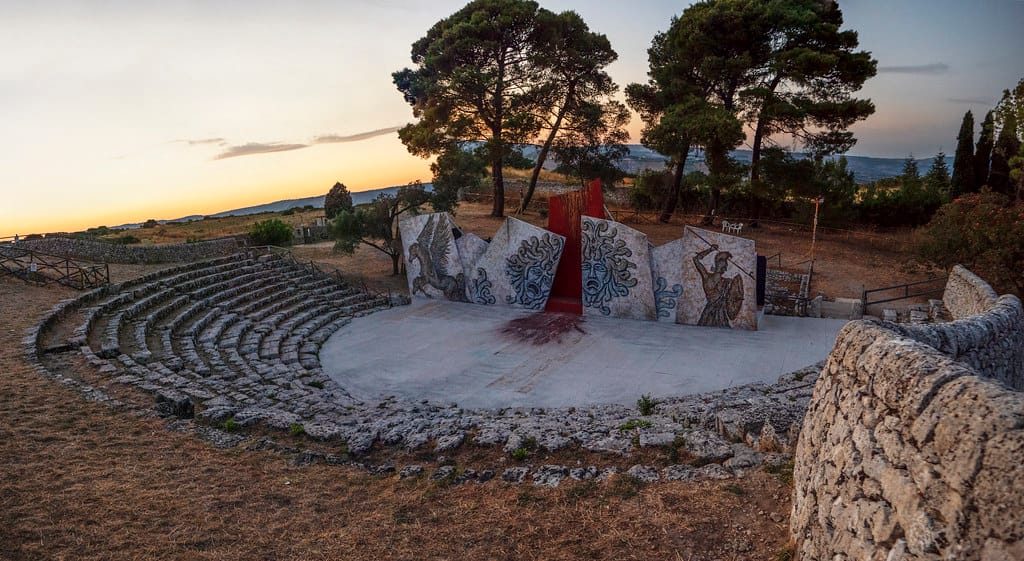
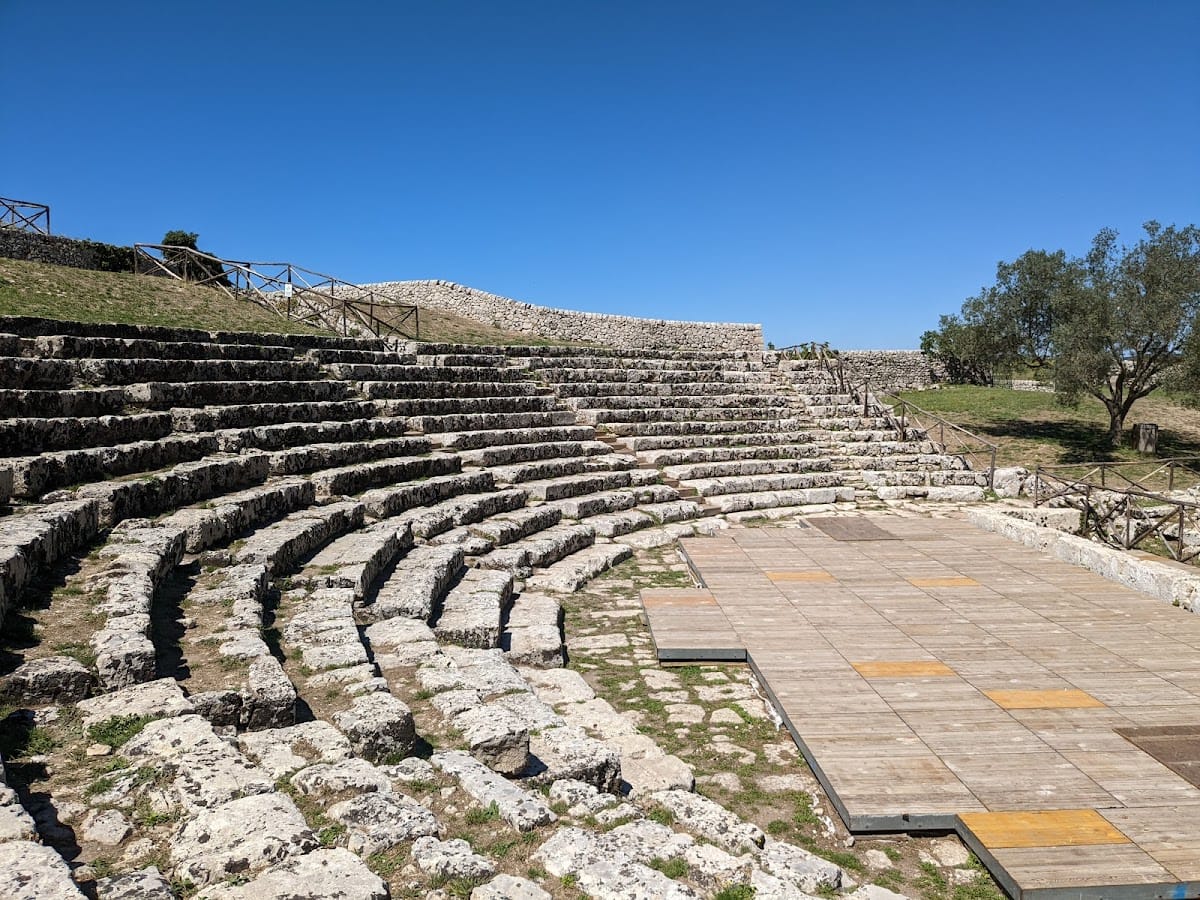
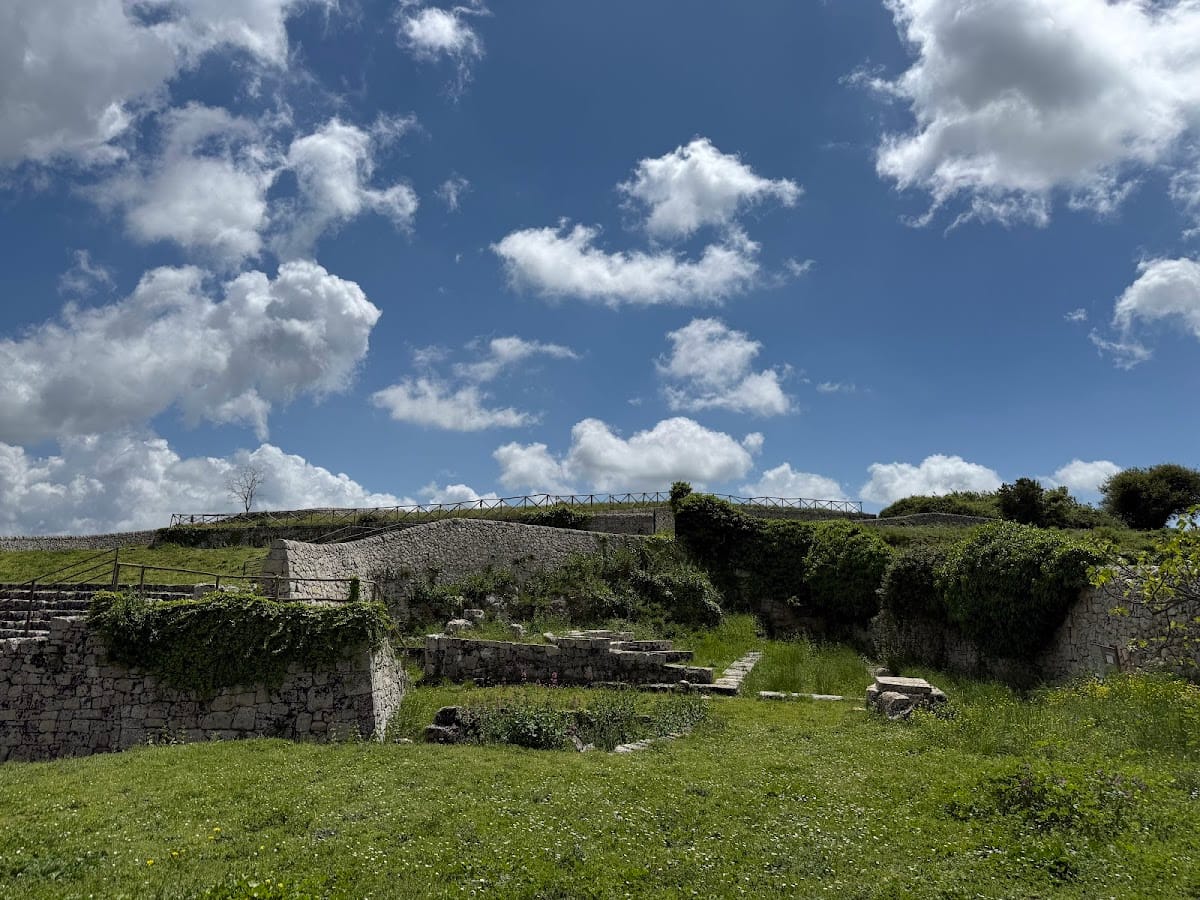
The theatre, dating to the mid-3rd century BCE during the reign of Hieron II, is a modestly sized structure integrated architecturally with the adjacent bouleuterion. Constructed primarily of local limestone, the theatre’s cavea (seating area) shares its upper portion structurally with the council chamber. The remains include portions of the auditorium and stage area, reflecting Hellenistic civic architectural design. The theatre is situated within the public quarter, underscoring its role in cultural and political life. Partial reconstruction efforts have stabilized the structure and clarified its original form.
Bouleuterion
Located at the western end of the site, the bouleuterion served as the meeting place for Akrai’s city council. Dating to the same mid-3rd century BCE period as the theatre, it shares architectural elements such as the top of the theatre’s auditorium. Discovered in 1820, the bouleuterion consists of a rectangular hall with stone seating and entrances aligned with the theatre. Its masonry employs ashlar blocks consistent with Hellenistic construction techniques. Although fragmentary, the remains allow reconstruction of its plan and confirm its function as a political center.
Temple of Aphrodite (Aphrodision)
The temple dedicated to Aphrodite was established in the latter half of the 6th century BCE, representing one of the earliest monumental religious structures at Akrai. Its foundation stones survive on a flat terrace above the Intagliata latomie. The remains include a stone podium and partial wall bases constructed from local limestone blocks. The temple’s location above the quarries suggests deliberate urban placement. While no superstructure elements remain, the foundations indicate a peripteral layout typical of Archaic Greek temples, confirming its dedication to Aphrodite, goddess of love and fertility.
Feral Temples
East of the main hill, a cluster of smaller temples known as the feral temples is preserved. These structures date broadly to the Classical and Hellenistic periods and are associated with chthonic or funerary cults. The remains consist of stone foundations and altars arranged in close proximity. Their simpler construction and location near burial areas align with their funerary function, reflecting religious practices related to the cult of the dead.
Latomies: Intagliata and Intagliatella
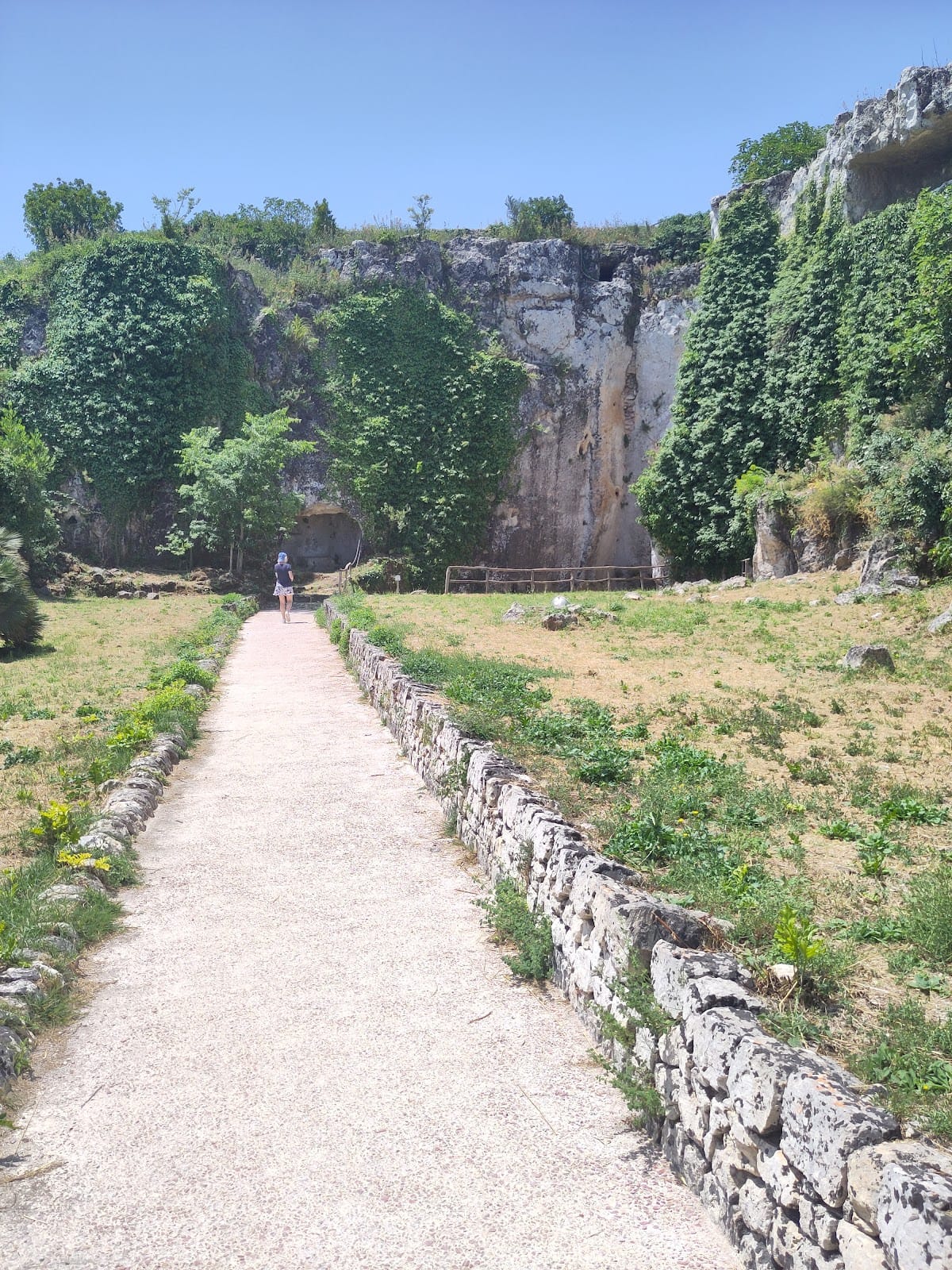
The Intagliata and Intagliatella latomies are extensive rock-cut quarries excavated from at least the 5th century BCE. Initially exploited for building stone, they were later adapted for multiple uses. From the 3rd century BCE, the latomies served as elaborate tomb monuments, featuring carved funerary chambers and niches. In late antiquity, they functioned as catacombs and shelters for impoverished inhabitants. Archaeological and literary evidence confirms their use as prisons during the Classical period, notably for Athenian captives after the Sicilian expedition. The latomies comprise deep, irregular chambers cut into limestone bedrock, with some access points sealed or modified over time.
Other Remains
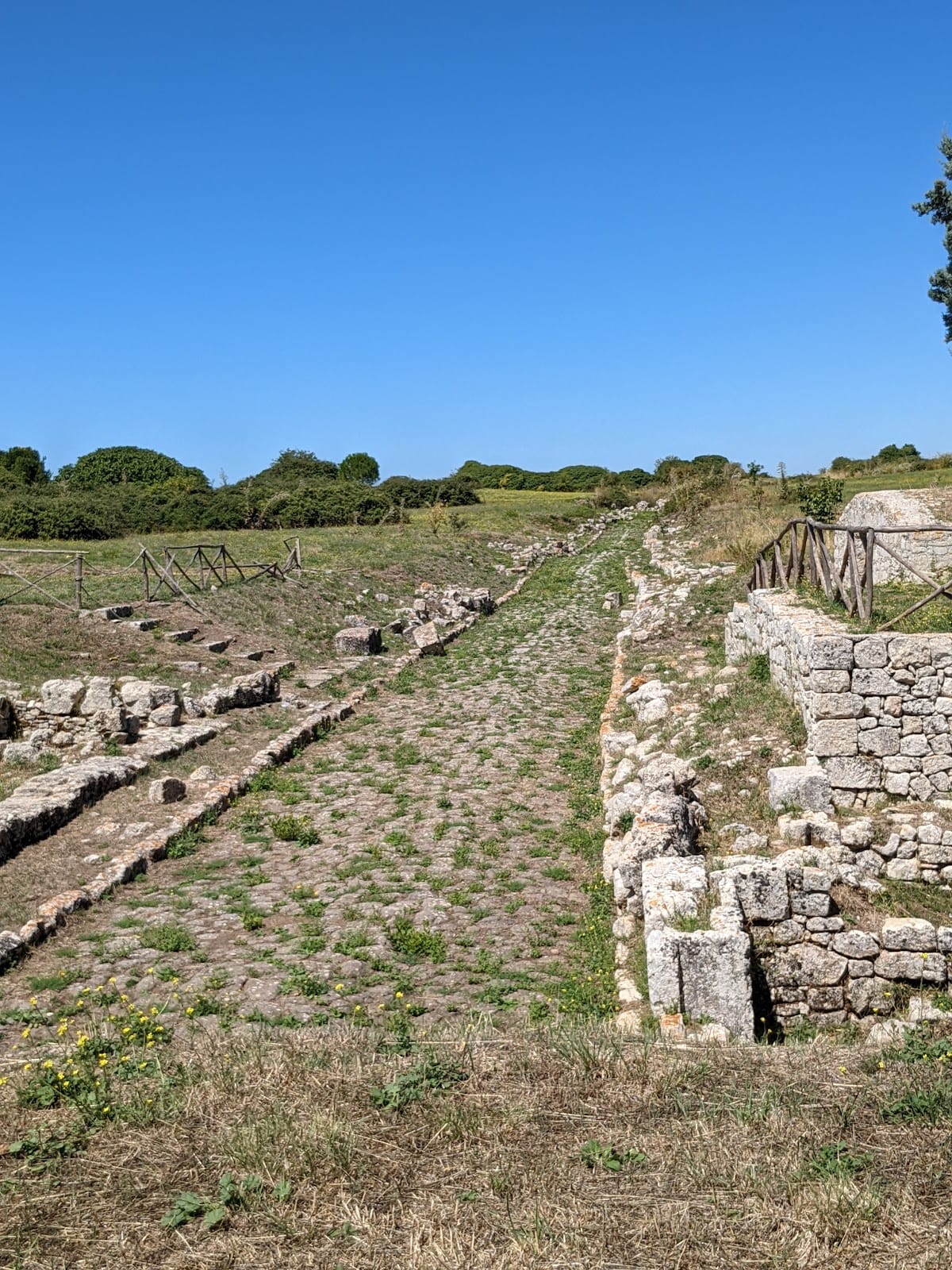
Recent excavations conducted by the Polish archaeological mission from the University of Warsaw have uncovered remains of Greco-Roman domestic houses within the residential sector. These structures date primarily from the Hellenistic through Roman periods and include stone foundations, interior walls, and courtyards. The houses exhibit masonry techniques typical of the era, with some rooms featuring paved floors. Numerous artifacts associated with daily life were recovered, contributing to understanding domestic activities. Additionally, fragments of defensive walls and gates have been documented, though often in a fragmentary state. Surface surveys have identified further building foundations and street layouts, many of which remain unexcavated.
Archaeological Discoveries
Excavations at Akrai have yielded a diverse assemblage of artifacts spanning from the Archaic Greek through late Roman periods. Pottery includes locally produced tableware and imported amphorae, indicating trade connections. Numerous inscriptions, primarily dedicatory texts related to public buildings and religious cults, have been found. Coins from Hellenistic and Roman times assist in establishing chronological frameworks. Domestic contexts have produced tools, lamps, and cooking vessels, illustrating everyday life. Religious artifacts include statuettes and altars associated with the Aphrodite temple and feral temples. Collectively, these finds document the material culture of Akrai’s inhabitants across centuries.
Preservation and Current Status
The theatre and bouleuterion are among the best-preserved structures at Akrai, with partial reconstructions stabilizing their remains. The temple of Aphrodite survives mainly in foundation form, while the feral temples and latomies remain largely in situ but fragmentary. Residential buildings uncovered by recent excavations are preserved as foundations and wall segments. Defensive walls are visible in sections but often collapsed or eroded. Conservation efforts focus on preventing further deterioration, with some areas stabilized but not fully restored. Vegetation and natural erosion continue to pose challenges, particularly in the latomies. Archaeological work proceeds under heritage authority supervision, balancing excavation with preservation.
Unexcavated Areas
Significant portions of the residential quarters and peripheral zones remain unexcavated. Surface surveys and geophysical studies suggest buried architectural remains beyond currently explored sectors. Some areas are restricted due to modern land use or conservation policies. Future excavations are planned but limited by the need to preserve the site’s integrity. The full extent of defensive walls and possible economic structures such as workshops or storage facilities has yet to be systematically investigated. Continued research aims to clarify the urban layout and occupation phases in these less studied areas.
Nearby sites