Castle of Modica: Seat of Government, Justice, and Defense in Italy


Site at a Glance
- Rating
- 4.2
- Popularity
- Low
- Country
- Italy
- Primary era
- Medieval
- External website
- Open
- Eras represented
- Bronze Age, Classical, Medieval, Modern
- Civilizations
- Crown of Aragon, Kingdom of Sicily, Roman
- Site type
- Military
- Remains
- Castle
On this page12 sections
History
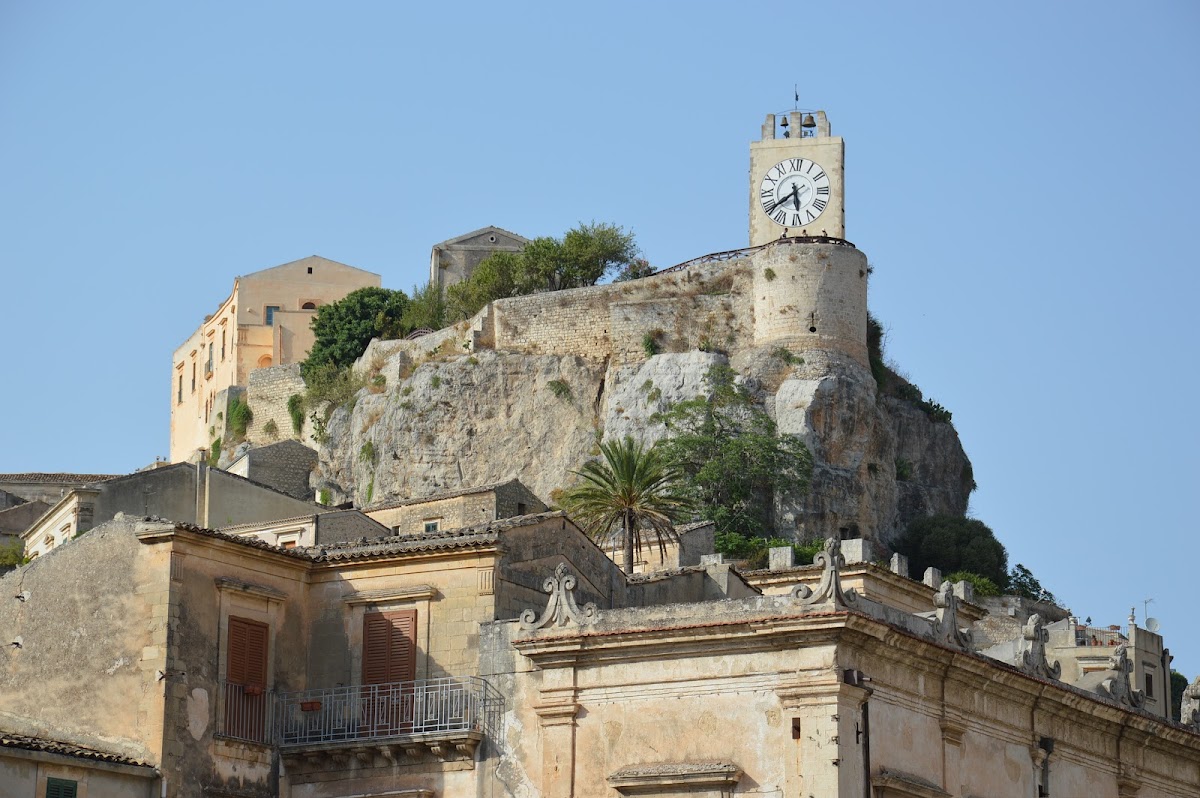
The Castle of Modica is a historic stronghold in Modica, Italy, whose successive modifications span the eighth through the nineteenth century. Built on a rocky promontory, it served for centuries as the political and administrative seat of the County of Modica, combining military, residential, judicial, and penal functions.
Medieval Stronghold and County Residence
The castle appears in a papal bull issued at Anagni on 21 August 1255 and in the 1272 register of Sicilian crown castles, one of two lists compiled under Charles I of Anjou, the Angevin ruler who controlled the Kingdom of Sicily during the thirteenth century. The counts of Modica used the site as their residence, while a county governor later lived there on the count’s behalf.
Its role as a high-status residence continued during the late medieval period. Count Matteo Chiaramonte hosted Frederick IV of Sicily at the castle in 1366, and Count Bernardo Cabrera received Martin I of Sicily there in 1401. Both kings belonged to the Aragonese royal dynasty, whose authority extended over Sicily during this period.
Regional Center of Justice and Administration
The castle also became a regional center of justice. The Grand Court was based there from 1361, and the Court of First and Second Appeals was added in 1392. The latter was an appellate court, while the Grand Court was a major judicial institution. From 2 June 1862, these functions were exercised by a court of first instance for civil and criminal cases and by a court of assizes.
Modica later became the capital of a district within the Intendancy of Syracuse. An intendancy was a major administrative jurisdiction, and the district was a subordinate territorial unit. The district offices remained in the castle until 1865, extending the complex’s administrative use into the modern period.
Abandonment and Archaeological Investigation
After Italian unification, religious orders were expelled from their convents and monasteries. The castle was then definitively abandoned, while its prison, tribunal, and district offices moved into the vacated religious buildings.
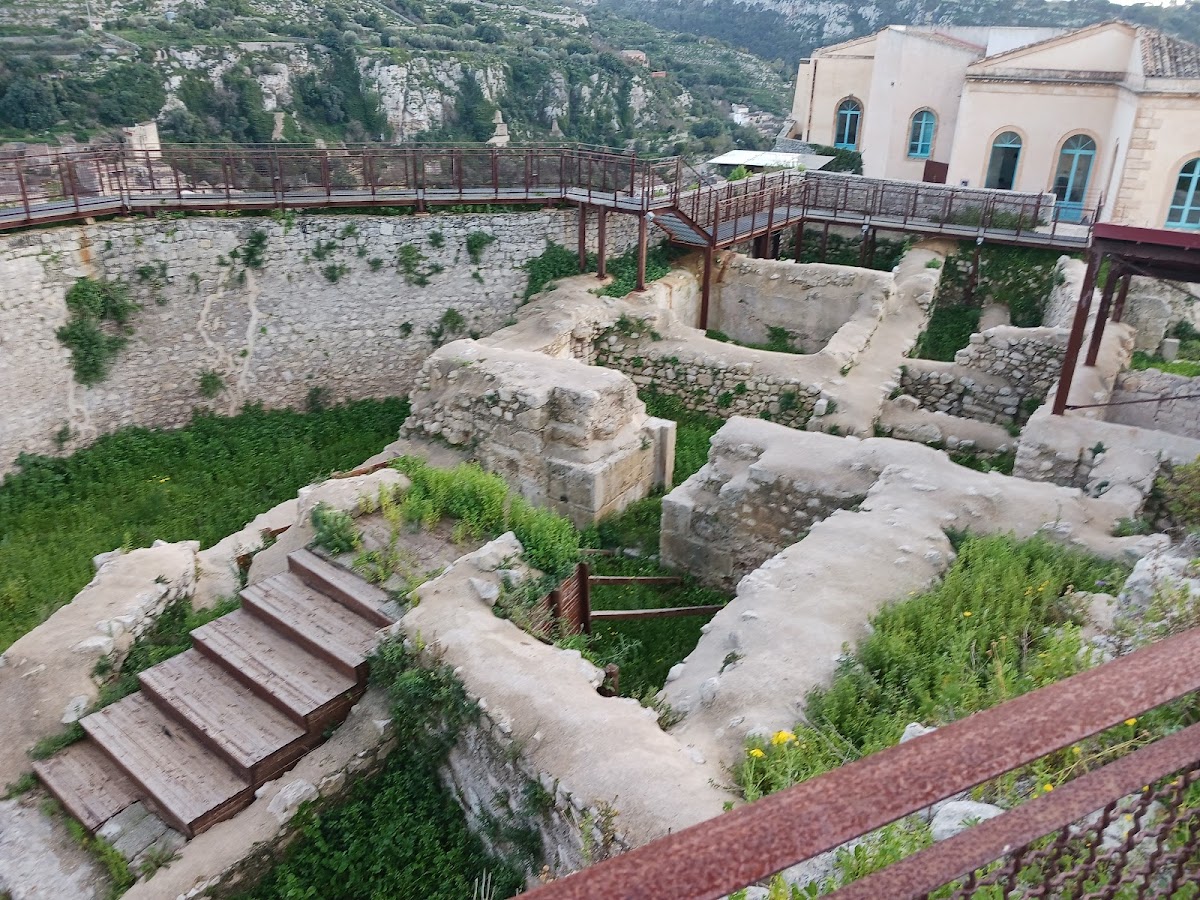
Excavations carried out alongside a project to reuse the newer section as a modern congress center have revealed evidence from the Early Bronze Age, the Hellenistic and Roman periods, the Arab period, and the castle’s later administrative, military, and penal phases through the nineteenth century. The Castle of Modica is designated Italian national heritage.
Remains
The castle occupies a rocky promontory with precipitous cliffs along two of its three sides, creating a naturally difficult approach. The surviving remains reflect repeated changes from the eighth through the nineteenth century. Most of the five towers, four gates, and enclosing walls have disappeared. Some collapsed during the earthquake of 1693, while others were demolished because they obstructed later urban development.
Fortifications and Underground Passage
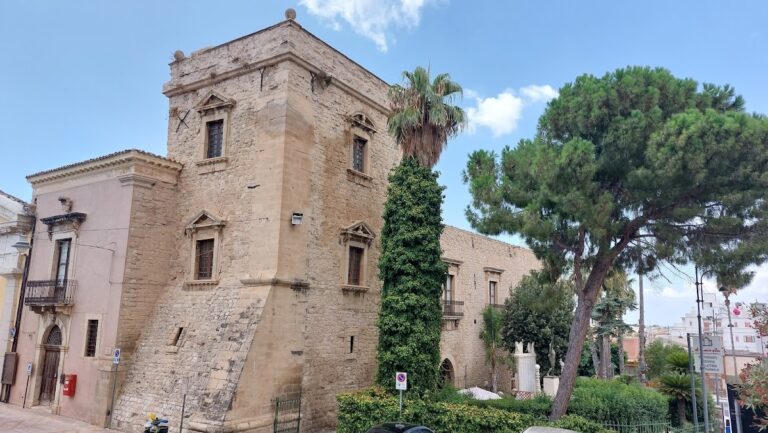
Polygonal Tower
A polygonal tower dating from the fourteenth century survives outside the main complex. It forms one of the clearest remaining elements of the castle’s medieval defensive system.
Patrol Passage
An underground passage recently exposed beneath the castle cuts through the rocky spur. It served as a military patrol passage and has been opened for viewing.
Prisons and Religious Buildings
Medieval Prisons
The inner courtyard contains medieval civil and criminal prisons. Their square rooms were cut into the rock and assigned to different prisoner categories, including women, common convicts, gentlemen, and people awaiting trial. Dangerous brigands were held in two large pits about seven metres deep. Heavy iron grating closed the pits above, allowing light and air to enter, and one pit remains visible.
Churches and Bell Niches
The Church of San Cataldo survives as courtyard remains. It served as the private chapel of the count and the governor. The Church of San Leonardo provided spiritual consolation for prisoners until 1865, and the Church of Madonna del Medagliere was built over its ruins in 1930.
Three bell niches remain on the exterior, although they are now walled up. Their bells announced the hours and events taking place inside the castle to the inhabitants of the city.
Archaeological Layers
Excavations beneath centuries of accumulated construction debris have exposed furnishings, funerary objects, ceramics, bronze coins, vessels, floor surfaces, and foundations of substantial load-bearing walls. Together, these remains reflect use of the rocky site from the Early Bronze Age through the Hellenistic, Roman, and Arab periods, followed by the castle’s administrative, military, and penal functions through the nineteenth century.