Villa of Pollio Felice: A Roman Villa near Sorrento, Italy


Site at a Glance
- Rating
- 4.6
- Popularity
- Medium
- Country
- Italy
- External website
- Open
- Eras represented
- Classical
- Civilizations
- Roman
- Site type
- Domestic
- Remains
- Villa
History
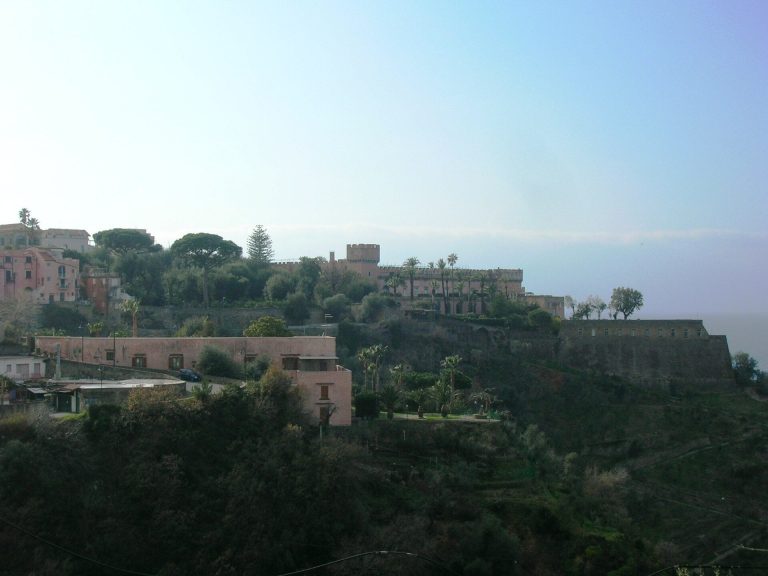
The Roman villa attributed to Pollio Felice is situated on the Calcarella promontory near Marina di Puolo, between Massa Lubrense and Sorrento in southern Italy. It was constructed during the 1st to 2nd centuries AD by members of the Roman civilization. The villa belonged to Pollio Felice, a distinguished figure from a noble family originating in Pozzuoli, a town known for its affluent Roman elite.
During its period of use, the villa served both residential and recreational purposes, as indicated by its architectural design and literary references. The poet Publio Papinio Stazio, a contemporary of Pollio Felice, celebrated the estate in two poems, highlighting the villa’s luxurious features and the temple dedicated to Hercules that Pollio Felice commissioned on the property. This temple reflects the religious devotion and cultural practices of the owner, linking the estate to Roman religious traditions.
The villa formed part of a trio of Roman villas along this coastal stretch, positioned between others located at Punta del Capo di Massa and Punta del Capo di Sorrento. This cluster suggests a pattern of elite settlement along the coastline, emphasizing the area’s appeal for aristocratic leisure and residence.
Remains
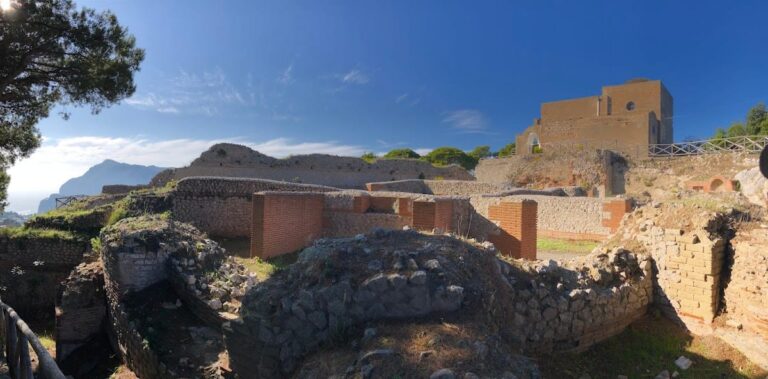
The villa exhibits a rectangular layout measuring approximately 20 by 10 meters, featuring a two-story structure with two parallel rows of rooms separated by a central corridor. One row faced inland, while the other overlooked the sea, reflecting the dual function of the villa as both a residence and a place for leisure.
Constructed in the 1st to 2nd century AD, the building’s remains include structural elements that align with descriptions found in Stazio’s poetry. The sea-facing side contained five rooms, three of which extended above the others, enhancing views of the surrounding landscape. The villa’s design incorporated large windows and walls set at angles to maximize visibility of the panoramic coastal scenery.
A notable feature was the owner’s main room, which was adorned with a polychrome marble mosaic on the walls, as described in the literary sources. This decorative element underscores the villa’s luxurious character. The villa also contained a temple dedicated to Hercules, newly erected by Pollio Felice within the estate boundaries, indicating the integration of religious architecture into the residential complex.
The surviving ruins are fragmentary but sufficient to confirm the villa’s layout and orientation. Details regarding construction materials beyond the mosaic and any subsequent modifications or reuse are not documented.