Giusso Castle: A Medieval Fortification and Aristocratic Residence

Site at a Glance
- Rating
- 4.5
- Popularity
- Low
- Country
- Italy
- Primary era
- Early Modern
- External website
- Open
- Eras represented
- Medieval, Early Modern
- Civilizations
- Kingdom of Naples, Spanish
- Site type
- Domestic
- Remains
- Castle
On this page8 sections
History
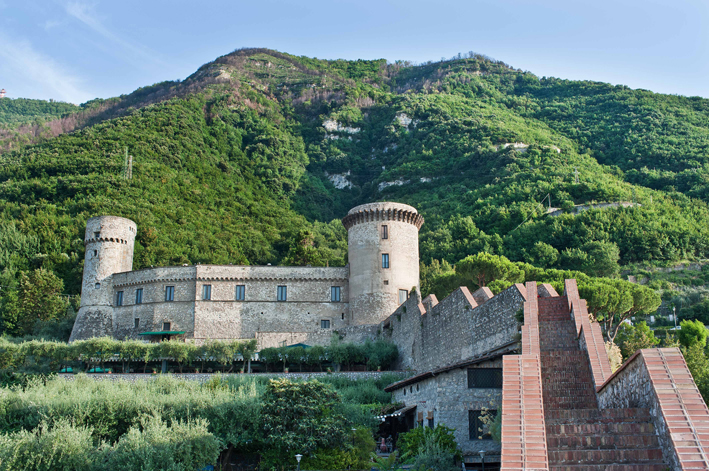
Giusso Castle is a thirteenth-century castle in Italy, located at Vico Equense in Campania. Built between 1284 and 1289 during the medieval Angevin period, it served both as a strategic military stronghold and as a residence. The castle is recognized as part of Italy’s national heritage.
Foundation and medieval use
Tradition attributes the foundation of Giusso Castle to Charles II of Anjou, the Angevin king associated with medieval Angevin rule in southern Italy. According to this tradition, he intended the castle to defend the small settlement of Vico Equense and to serve as a summer residence. A more widely accepted interpretation credits its construction to the feudal lord Sparano of Bari, who followed contemporary military models with financial support from the Angevin king.
The castle’s defensive role continued from the thirteenth into the seventeenth century. Its military facilities included quarters for soldiers, food stores, and ammunition magazines. It was later held by Gabriele Curiale, a page of the Crown of Aragon, and by Ferrante Carafa, who was feudal lord of Vico Equense in 1568. The building was partly destroyed during the Gothic invasion and was also severely affected by repeated pirate raids.
Transformation into an aristocratic residence
A partial reconstruction took place in 1604. During the seventeenth century, extensive restoration changed the castle from a military complex into an aristocratic residence. Matteo di Capua of the Ravaschieri family, feudal lords of Vico Equense from 1629 to 1806, arranged gardens with grottoes, water features, and centuries-old plants. The interiors were embellished, and rooms were created for his art collection, which was later lost.
In 1788, the Neapolitan jurist and legal philosopher Gaetano Filangieri died inside the castle on 21 July. He had believed that the local air would improve his poor health. In 1806, Joseph Bonaparte, who ruled Naples from 1806 to 1808, abolished feudal institutions in the kingdom. After this change, the castle became a summer residence of the royal family.
The Giusso family and later ownership
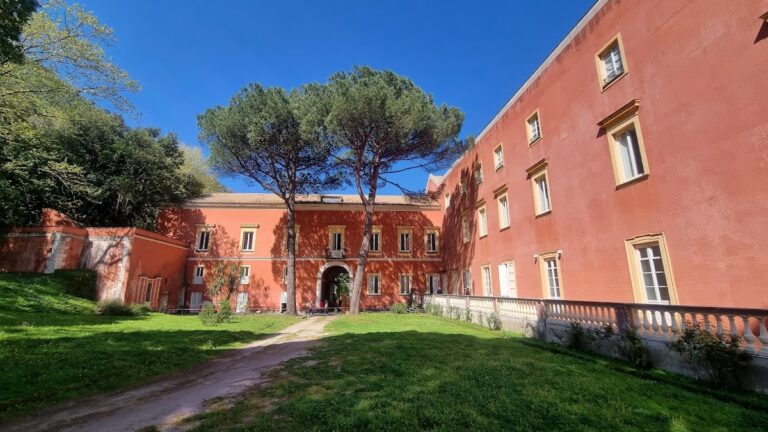
After a brief period in the possession of Nicola Amalfi, the castle was acquired by the Giusso family in 1822 for 400,000 ducats. It remained with the family until 1934. Major remodeling under Luigi Giusso and his son Girolamo Giusso altered much of the original form and produced the building’s characteristic salmon-pink appearance.
The castle later passed to the Society of Jesus, a Catholic religious order commonly known as the Jesuits. The order sold it to a private owner in 1970. Its continuing use for ceremonies, meetings, and art exhibitions reflects the building’s long transition from fortified stronghold to residential and cultural setting.
Remains
Fortified structure
Giusso Castle is a hillside fortification built of rubble stone. The surviving physical remains include part of the perimeter wall and a terrace facing the sea. The original configuration has been substantially altered, so these elements represent only part of the medieval complex.
During the fifteenth century, the fortification received three towers, a bridge, and a moat, a ditch constructed around a fortified building or enclosure. One tower was known as the Torre Mastra, or principal tower. Two of the towers were demolished in the following century to create space for the baronial palace, contributing to the later transformation of the site.
Gardens and decorated interiors
The seventeenth-century residence included gardens arranged with grottoes, water features, and centuries-old plants. Its decorated interiors included salons such as the Salone delle Armi and Salone dei Ventagli, both embellished with frescoes. Later remodeling gave the building its salmon-pink color and changed much of its earlier appearance.
Chapel
A small private chapel dedicated to Santa Maria della Stella occupies the site of an earlier church maintained by Benedictine monks, members of the Order of Saint Benedict. The earlier church was demolished to make way for the castle. The chapel was decorated with frescoes and forms part of the building’s later residential and religious interior.