Castle of Palenzuela: A Medieval Military Stronghold in Spain

Site at a Glance
- Rating
- 4.5
- Popularity
- Very Low
- Country
- Spain
- Primary era
- Medieval
- Eras represented
- Medieval
- Civilizations
- Kingdom of Asturias
- Site type
- Military
- Remains
- Castle
On this page5 sections
History
Early medieval stronghold
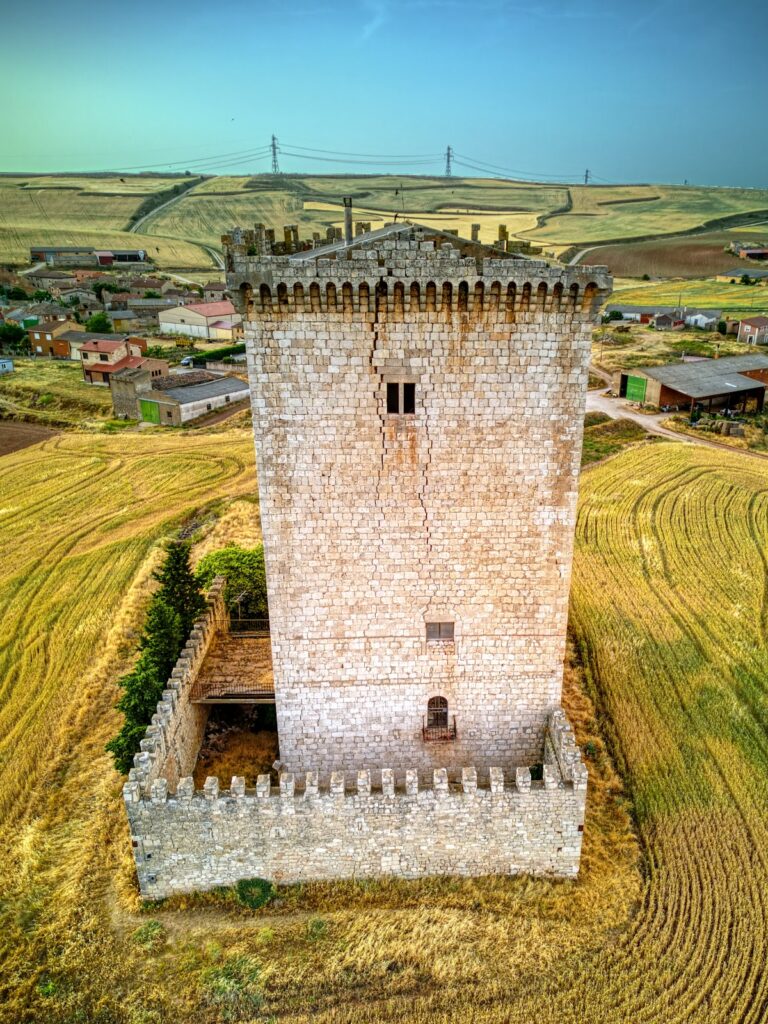
The Castle of Palenzuela is a ninth-century military construction in Palenzuela, Spain, positioned at the eastern end of the town on a strategic terrace above the right bank of the Arlanza Valley. The castle was recorded in 850, when Palenzuela served as the head of the Alfoz of Palenzuela, a territorial district organized around a principal settlement. The town later became the capital of the Merindad of Cerrato, a larger administrative jurisdiction governed by a merino.
Although the castle was already known by 850, Palenzuela faced two Arab raids in 919. Its first Christian lords were the counts of Castile. At the end of the tenth century, Count Sancho García granted the town fueros, charters that defined local rights, privileges, and laws. Several later kings confirmed and expanded these grants, reinforcing Palenzuela’s place within the political organization of Castile.
Lordship and royal intervention
During the reign of Ferdinand III, Palenzuela was held as the lordship of Álvaro Núñez de Lara, a member of the powerful Lara family. After Álvaro was defeated by the king and Berengaria, the Crown took control of the lordship. In 1295, Palenzuela belonged to Juan Núñez de Lara, who rebelled against María de Molina while she governed as regent during the minority of Ferdinand IV. The town endured a siege lasting almost half a year. After its capture, it returned to royal authority.
Peter I later ceded the lordship to his half-brother Henry of Trastámara, who would become King Henry II. When Palenzuela rebelled, Henry personally besieged it in 1356. The town surrendered to loyal troops in exchange for a pardon, and Henry granted the lordship to María de Padilla, Peter I’s influential consort.
Conflict and prosperity in the fifteenth century
By 1405, Palenzuela belonged to Queen Catherine, the wife of Henry III. In September 1425, John II convened the Cortes at Palenzuela. These representative assemblies of the medieval Iberian kingdoms met in the town’s extramural Franciscan convent, during a period described as Palenzuela’s greatest prosperity. In 1429, the lordship passed to the Admirals of Castile, holders of a high military and naval office.
Palenzuela again became a site of conflict in 1444, during the struggle between John II of Castile and John of Navarre. In 1451, its fortress, together with those of Hornillos and Cordovilla la Real, rebelled against John II and his principal favourite and political minister, Álvaro de Luna. Alonso Enríquez de Quiñones held the three strongholds, while his brother-in-law Juan de Tovar controlled Astudillo. Royal forces besieged Palenzuela with artillery, and the fortress surrendered in January 1452. John II gave the town to his son Enrique, but it returned to the Admirals of Castile in 1454.
Prison, later warfare, and protection
The fortress had a noted prison reserved for major or political offences. From the middle of the fifteenth century, however, local residents were forbidden to be imprisoned there. During the Peninsular War, the Iberian campaign of the wider Napoleonic Wars fought from 1808 to 1814, French forces occupied Palenzuela several times while maintaining their headquarters at Quintana del Puente.
A separate castle stood at the abandoned settlement of El Moral, near the confluence of the Arlanza and Arlanzón rivers. That castle had already disappeared by 1218. The Castle of Palenzuela is protected as a Bien de Interés Cultural, or Asset of Cultural Interest, and has been included on the Red List of Endangered Heritage since 2014.
Nearby sites