Castello di Frinco: A Medieval Castle in Italy



Site at a Glance
- Rating
- 3.9
- Popularity
- Very Low
- Country
- Italy
- Primary era
- Medieval
- External website
- Open
- Eras represented
- Medieval, Early Modern
- Civilizations
- Holy Roman Empire
- Site type
- Military
- Remains
- Castle
On this page12 sections
History
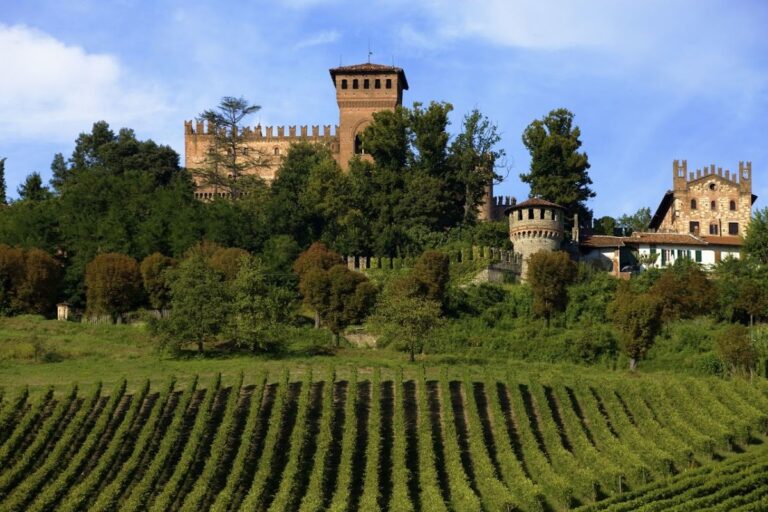
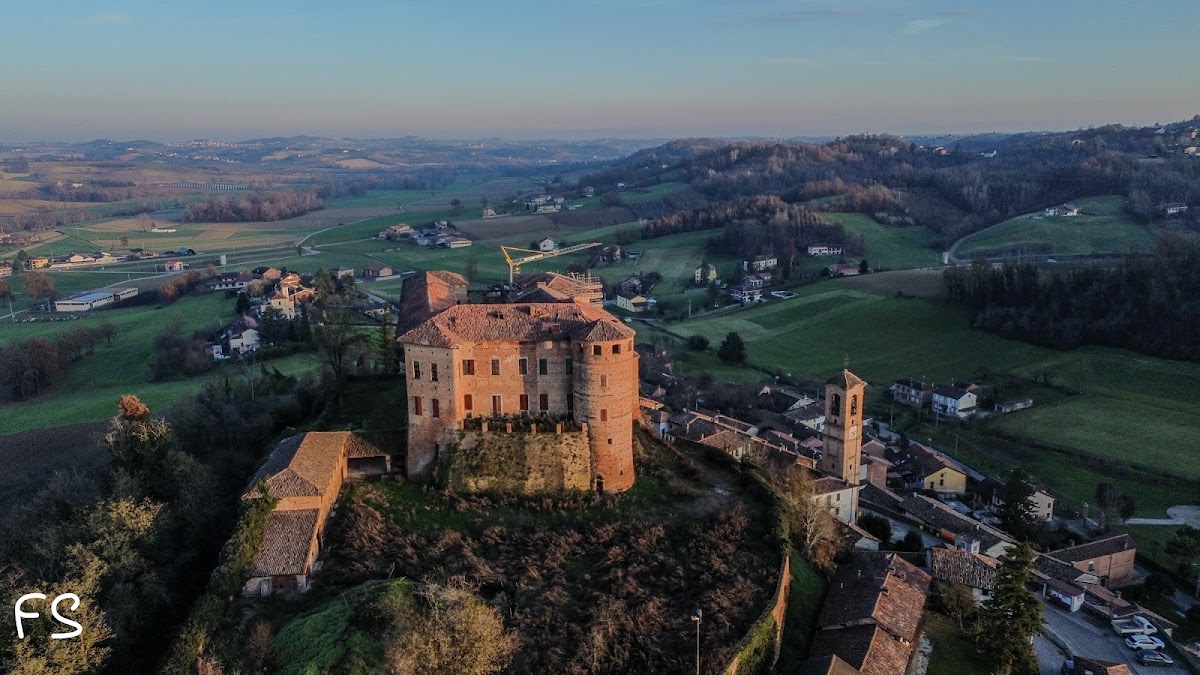
Castello di Frinco is a medieval castle in Italy, located in Frinco in the Astigiano Monferrato area of Piedmont. Its construction is generally placed in the thirteenth century, while the settlement appears in records from 1117 and the earliest documents referring to the castle date to 1288. Built as a feudal stronghold, it occupied a commanding position above the village and later passed through the hands of banking families, imperial authorities, noble counts, religious educators, and private industrial owners.
From the Pelletta to the Marquisate of Montferrat
From 1250, Frinco belonged to the Pelletta, a banking family from Asti. At the beginning of the fourteenth century, the Pelletta transferred the castle to the Turco banking family, which retained it until 1342. The castle had also been drawn into the conflict between the Guelphs and Ghibellines, two opposing political factions in medieval Italy broadly associated with papal and imperial interests.
In 1355, Charles IV, a fourteenth-century Holy Roman Emperor who also ruled as King of Bohemia, granted the castle to Giovanni II, Marquis of Montferrat. In 1438, Emperor Albert II, a fifteenth-century Holy Roman Emperor and Habsburg ruler, declared Frinco an imperial fief, meaning a territory held from the emperor in a feudal relationship.
The Mazzetti Counts and Later Ownership
From 1442, Castello di Frinco belonged to the Mazzetti counts. The family assumed the title of marquises in 1733 and held the right to mint coins for a long period. In 1630, the Mazzetti resisted French troops, who eventually captured the castle by using mines. Ownership passed to the Incisa di Camerana family in 1829.
War, Reuse, and Municipal Recovery
Between 1915 and 1918, during the First World War, the castle was requisitioned and converted into a large prisoner-of-war camp for military personnel of the Austro-Hungarian Empire captured during the conflict. A commemorative plaque for this period was inaugurated in 2016 by a delegation of the Austrian Black Cross, an Austrian organization that commemorates and maintains graves and memorials connected with war dead and prisoners of war.
The castle later passed to the Giuseppini Fathers, a Catholic religious congregation dedicated to educating and assisting young people. They used it as a secondary-school institution. In the early 1960s, the Morlini company acquired the building and established a poultry farm there. After the company failed, the castle was seized and put up for auction, before being acquired by the Pica Alfieri family in 1992.
Landslides in 2011 and 2014 destroyed part of the building and threatened the safety of the houses below and the nearby church. The Municipality of Frinco acquired the castle in 2019 and began recovery and safety works in 2020. Castello di Frinco is recognized as Italian national heritage.
Remains
Castello di Frinco occupies the top of a hill beside the village and consists of several connected building blocks. Its complex arrangement includes a tall circular brick tower at the western corner, an entrance portico with large arches, and two courtyards set at different levels. The surviving spaces also preserve evidence of storage, domestic work, decoration, and later religious use.
Outer Structure and Entrance
Circular Tower
The oldest part of the castle is a tall circular tower built of brick and attached to the western corner of the complex. Its position and form distinguish it from the other building blocks that make up the castle.
Entrance Portico
Access to the fortified complex is through a portico surmounted by large arches and protected by a metal grating. The entrance leads into the lower courtyard, linking the outer approach with the internal arrangement of the castle.
Courtyards and Interior Spaces
Lower Courtyard
The lower courtyard gives access to former underground storage rooms and to the kitchens. These spaces reflect the practical functions once required within the fortified complex.
Upper Courtyard
A second courtyard lies at a higher level. A balcony separates it from the lower courtyard, creating a vertical division between the two parts of the internal layout.
Decorated Rooms and Chapel
Some rooms retain stucco decoration that may date from the seventeenth century. Another room served as a chapel during the period when the Giuseppini Fathers administered the castle, adding a religious function to the building’s earlier domestic and defensive uses.
Nearby sites