Castello di Gabiano: A Medieval Castle and Wine Estate in Italy


Site at a Glance
- Rating
- 4.5
- Popularity
- Low
- Country
- Italy
- Primary era
- Modern
- External website
- Open
- Eras represented
- Medieval, Modern
- Civilizations
- Holy Roman Empire
- Site type
- Domestic
- Remains
- Castle
On this page8 sections
History
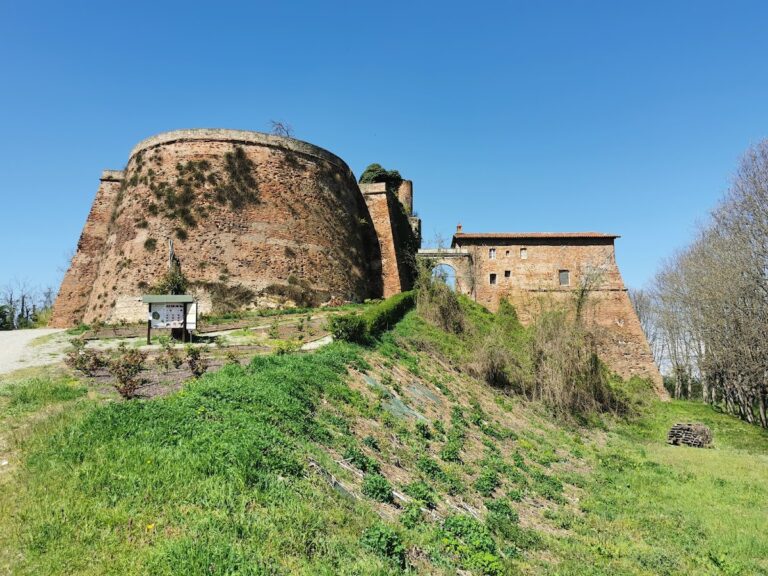
Castello di Gabiano is a medieval castle in Gabiano, Italy, occupying a commanding position above the Po valley. Eighth-century records refer to the settlement as Cortem Magnam Nomine Gabianam, while its later history was tied to the Marquisate of Monferrat, a major medieval and early-modern lordship in northwestern Italy.
Medieval and Renaissance Lords
In 1164, the Holy Roman Emperor Frederick Barbarossa donated Gabiano to William II, Marquis of Monferrat. During the Renaissance, control passed among the Montiglio, Aleramici, Paleologi, and Gonzaga dynasties, reflecting the changing political connections of Monferrat.
The Durazzo Inheritance
Agostino Durazzo, a Genoese nobleman, acquired the castle in 1622 together with the title of Marquis of Gabiano. Ferdinando Gonzaga, Duke of Mantua, made the transfer to settle debts owed by the Mantuan court to the Durazzo family. The Durazzos then became closely associated with the property, embellishing the castle and supporting local wine production.
Twentieth-Century Reinterpretation
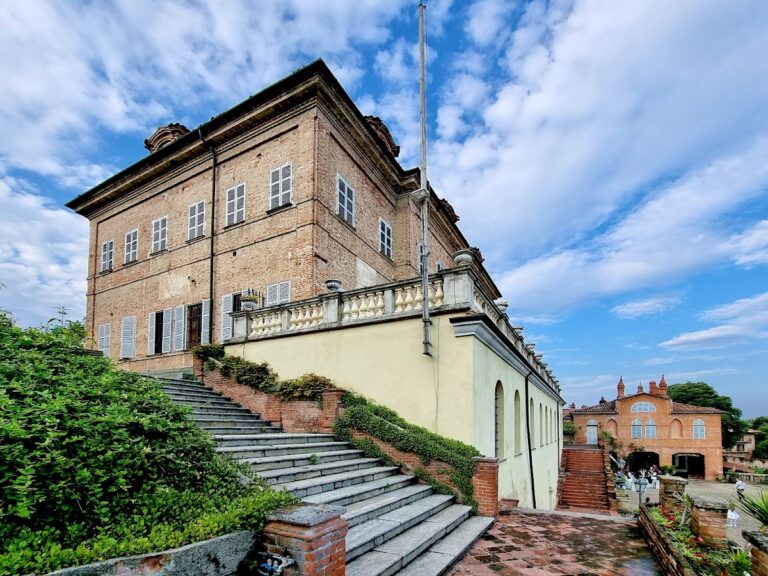
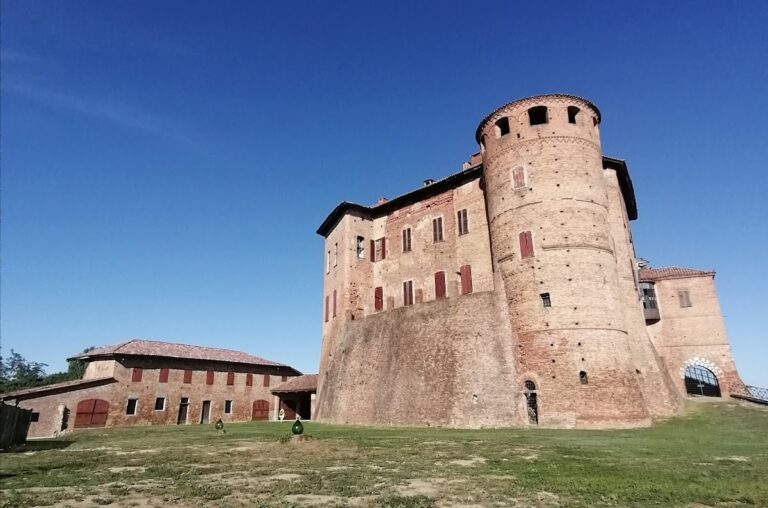
A nineteenth-century restoration substantially altered the earlier appearance of the towered fortress. A larger reconstruction began in 1908 after being commissioned in 1907 by Giacomo Durazzo Pallavicini and Matilde Giustiniani. Directed by Lamberto Cusani, a restorer known for medievalizing reconstructions, the work was completed in 1935 by Matilde Durazzo Pallavicini.
Cusani extended the project beyond the castle to the medieval village and its agricultural and winemaking buildings. His approach was influenced by Alfredo d’Andrade’s Borgo Medievale in Turin, created for the 1884 Italian General Exhibition. The resulting complex reinterpreted the castle and village in an eclectic medievalizing style, with period-style interiors and a landscaped park. Later renovation under Giacomo Cattaneo Adorno, Emanuela, and their children Filippo and Serena joined modern winemaking knowledge with respect for family tradition.
The estate’s wine received a gold medal at the 1937 Paris Universal Exhibition. Wine production continues under the Adorno family, including Gabiano DOC, an Italian designation regulating a wine’s geographical origin and production, together with other wines associated with the castle. The castle and its related historic fabric are recognized as Italian national heritage.
Remains
Fortress, Village, and Interiors
The original fortress was linked to a ricetto, a fortified settlement or refuge associated with a castle or rural community. It included a substantial barracks built on the estate of a wealthy landowner and enclosed by a defensive wall. The surviving historic complex brings together the castle, medieval village, agricultural buildings, winemaking structures, chapel, and landscaped park.
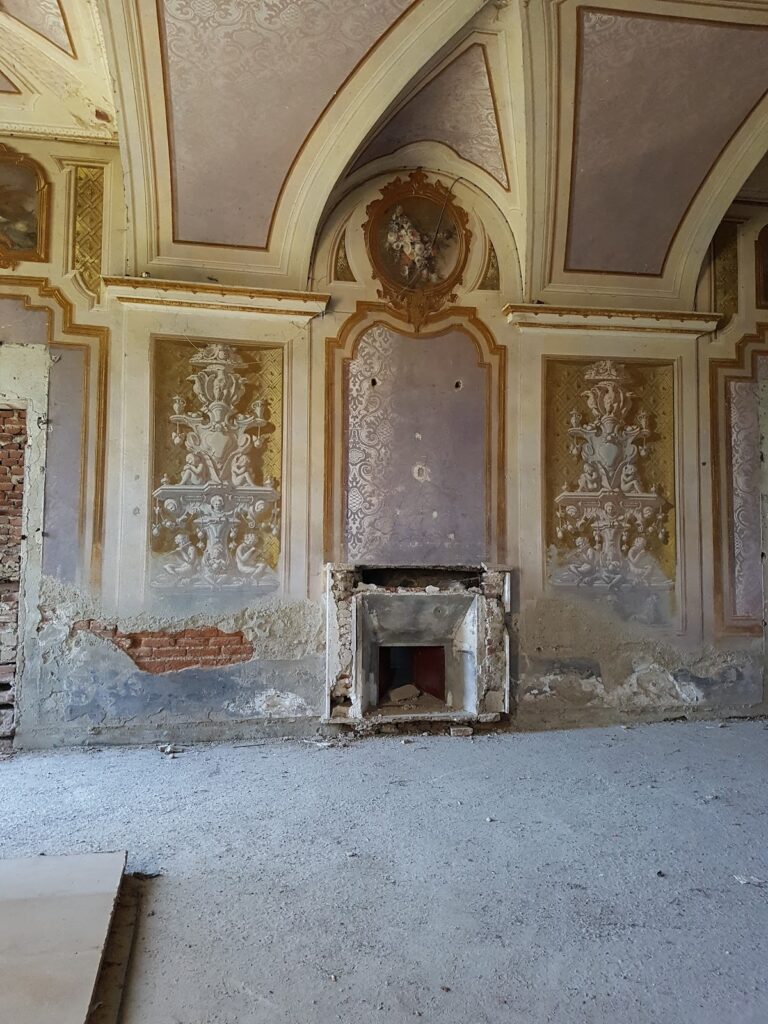
The restoration introduced or reconstructed interiors in a medievalizing style. These include a vestibule, a medieval dining room, and the marquis’s chamber. Turin woodcarvers known as the Arboletti brothers made the chamber’s furnishings, following the model of the bedroom in Bonoris Castle at Montichiari. Dossena and Rossi provided sculptural decoration, while Latino Barilli painted the chapel, games room, arms room, and cavalcade room between 1929 and 1930. The cavalcade-room paintings show Matilde and Giacomo Durazzo in medieval costume.
Cellars and Vineyards
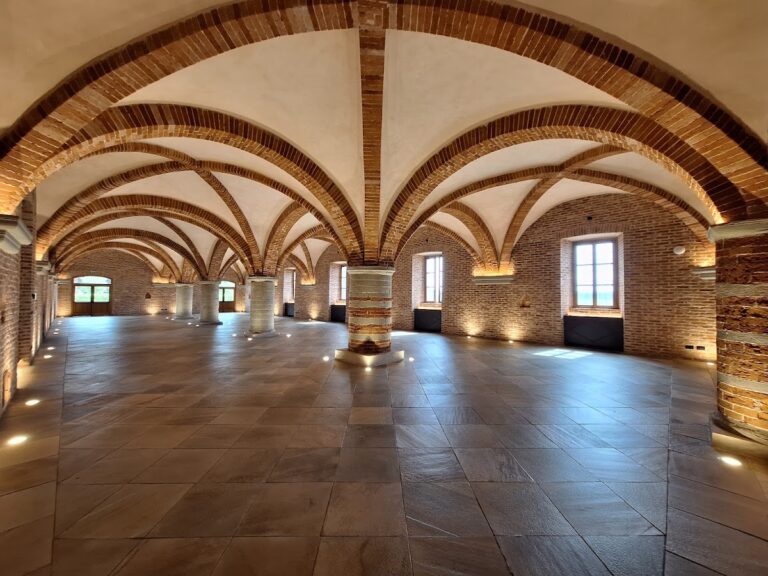
Ancient cellars extend beneath the castle. Vinification begins in these spaces, where the estate’s products are blended according to family tradition before maturing or ageing in small casks and large barriques, a type of wine-aging barrel.
The estate covers 260 hectares in the territory of Gabiano, including 20 hectares of vineyards. The vines occupy well-exposed hills in Gabiano and Moncestino at about 300 metres above sea level. Newer vineyards around the castle form an amphitheatre. Traditional plots use low-Guyot cultivation, a training system based on a permanent trunk and pruned fruiting canes, with rows following the contours of the hills. The newer vineyards use rittochino planting, and grape cultivation still requires substantial manual work.
Park and Labyrinth
At the heart of the park stands a labyrinth created in the 1930s as part of Cusani’s restoration project for Matilde Giustiniani. Its rigid geometric design contrasts with the surrounding natural landscape. The arrangement evokes a medieval idea of two labyrinths, one formed by natural woodland and the other by a garden brought under artificial control.