Castle of Borba: A Medieval Frontier Fortress in Portugal

Site at a Glance
- Rating
- 4.3
- Popularity
- Low
- Country
- Portugal
- Primary era
- Medieval
- Eras represented
- Medieval
- Civilizations
- Portuguese
- Site type
- Military
- Remains
- Castle
On this page10 sections
History
Castle of Borba is a medieval fortress in Borba, Portugal, whose origins belong to the Christian Reconquista and the fortified settlement of a contested frontier. The site had earlier occupation associated with Gallo-Celtic tribes and remained inhabited through successive phases until Muslim forces invaded the Iberian Peninsula.
Christian conquest and frontier defense
During the Christian reconquest of territories ruled by Muslim powers, King Alfonso II of Portugal took Borba from the Moors in 1217. He granted the domain to the Order of Aviz, a Portuguese religious-military order involved in settling and defending frontier territories, and ordered the construction of the castle.
Borba stood in territory disputed with Castile. Under King Dinis, who ruled Portugal from 1279 to 1325, the settlement passed definitively to Portugal through the Treaty of Alcanises in 1297, an agreement that settled part of the frontier between Portugal and Castile. In 1302, Dinis granted Borba a foral charter, a legal charter defining a settlement’s rights, obligations, and administrative status, and ordered its defenses to be strengthened.
Later history and protection
King Manuel I confirmed Borba’s charter in the sixteenth century. The town again gained strategic importance during the Portuguese Restoration War, the seventeenth-century conflict through which Portugal regained independence from the Spanish Habsburg monarchy. The Battle of Montes Claros, ending in a Portuguese victory, was fought near Borba in 1665.
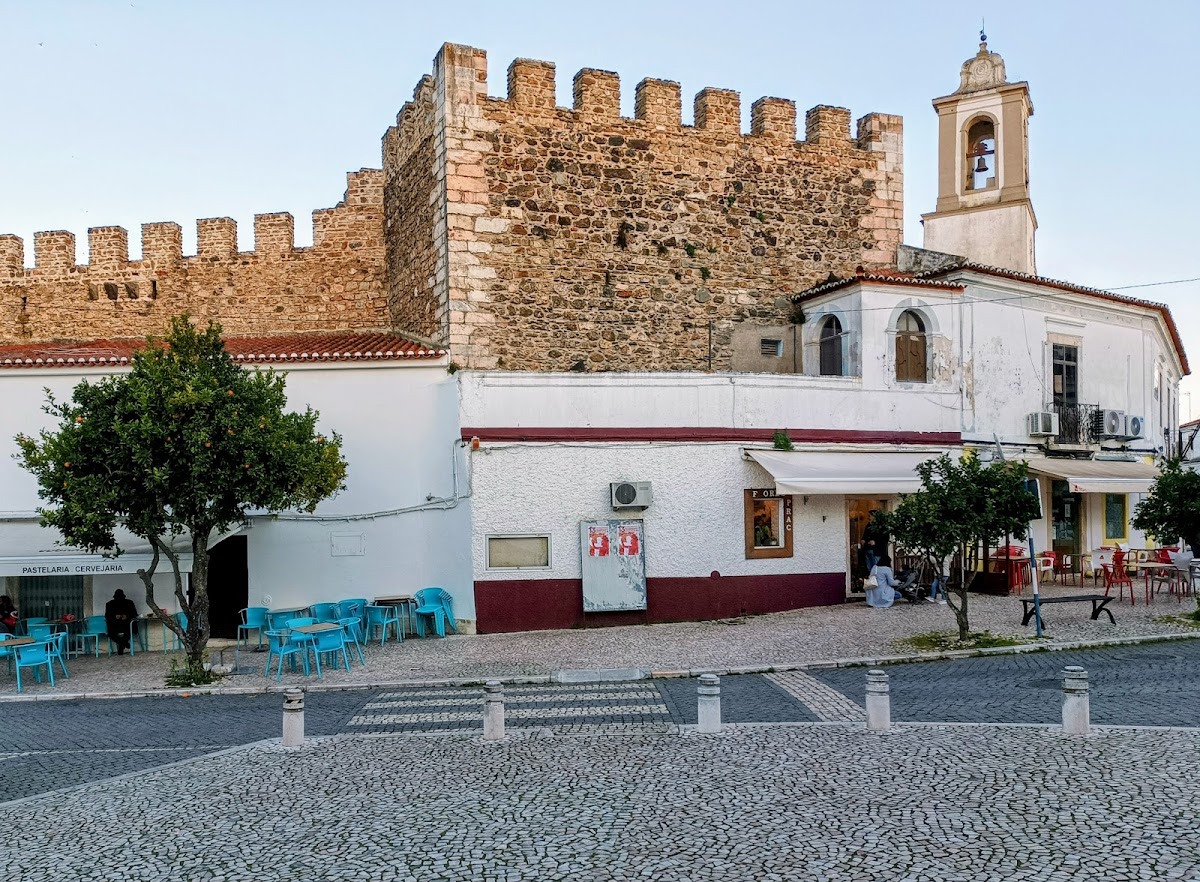
From the nineteenth century, urban expansion incorporated sections of the medieval walls into adjoining houses. The castle was classified as a Property of Public Interest by a decree published on 18 July 1957.
Remains
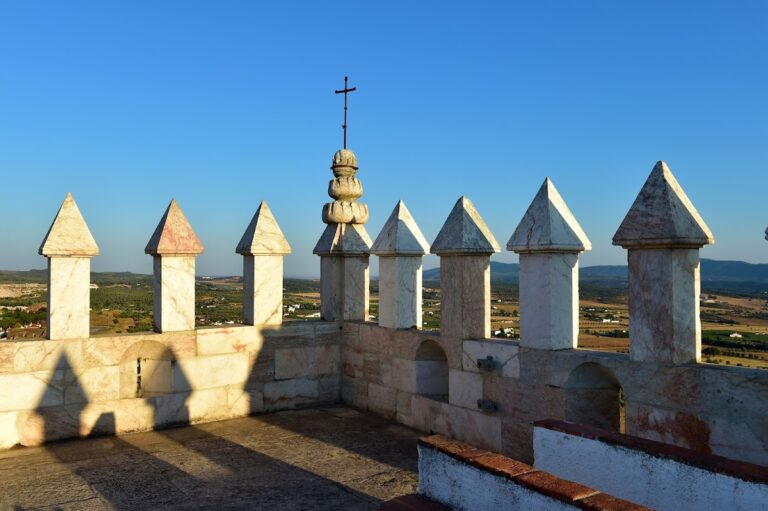
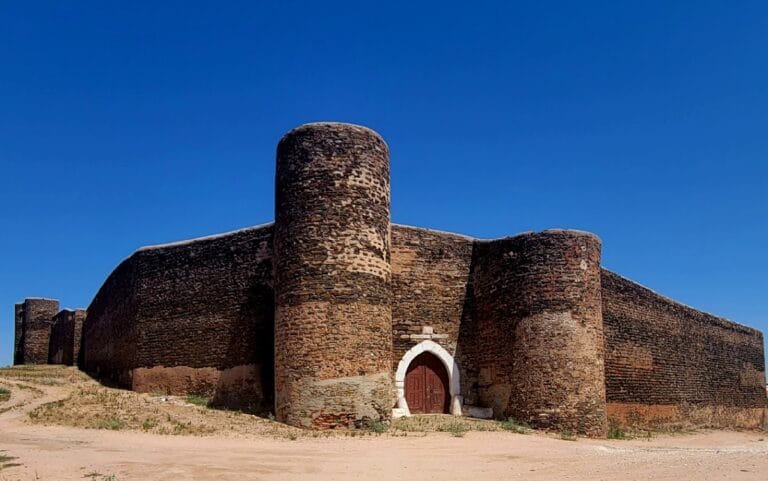
The castle follows a quadrangular plan. Its thick defensive walls are built of stone masonry and are crowned with Gothic-style merlons, the raised sections of a battlement. An adarve, or wall-walk used for movement and defense, runs along the entire top of the fortification. The surviving structure includes sections of the medieval enclosure, the keep, and two named gates.
Walls and defensive features
Medieval walls
The wall circuit preserves the castle’s principal defensive form, with masonry faces and a continuous wall-walk along the upper edge. A stone epigraphic plaque in the southern sector records King Dinis’s initiative and the direction of the construction work.
Entrance defenses
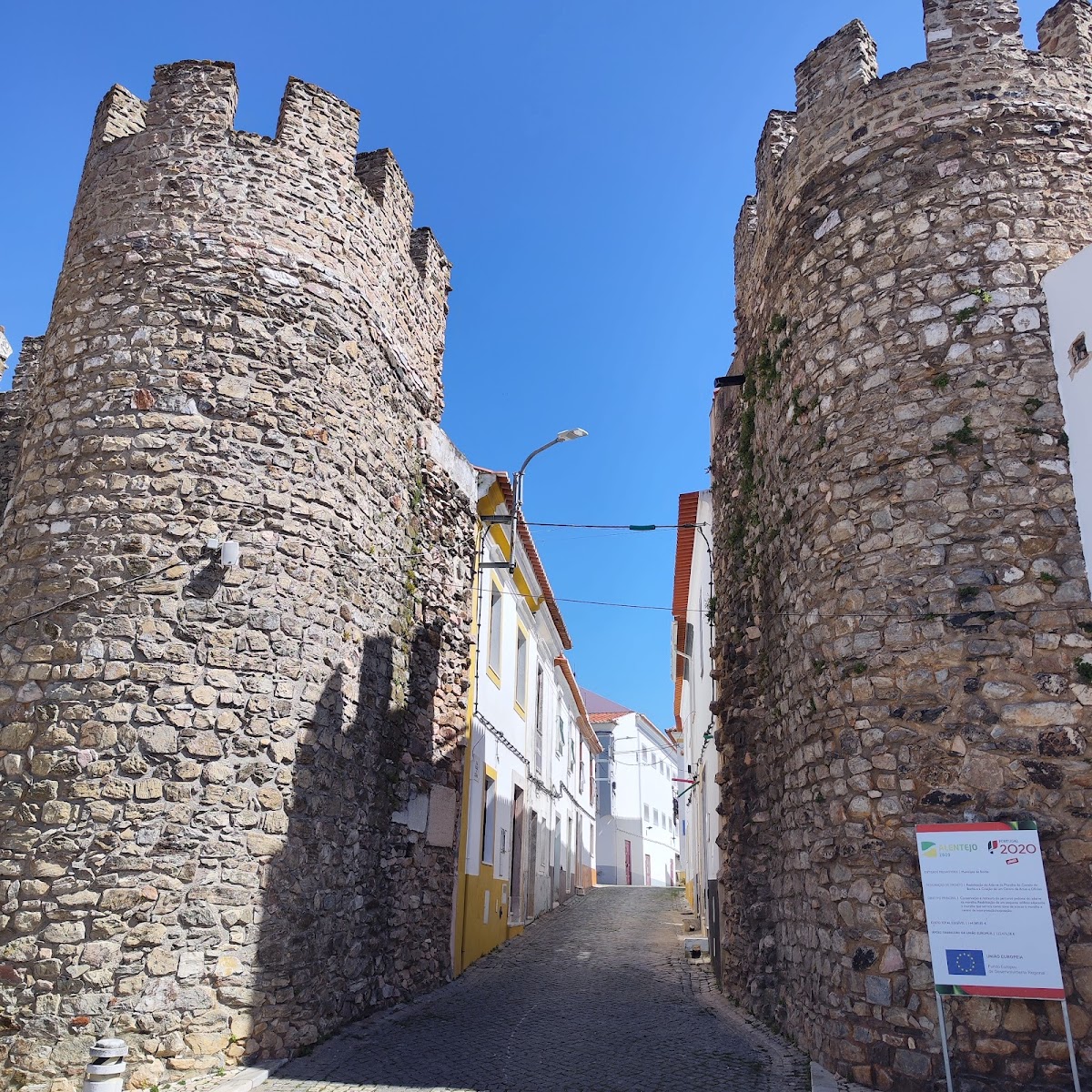
The entrance gate was protected by two semicircular cubels, small projecting defensive towers with curved plans. The castle also originally had a shallow external moat, adding an additional obstacle beyond the walls.
Gates and keep
Granary Gate and Estremoz Gate
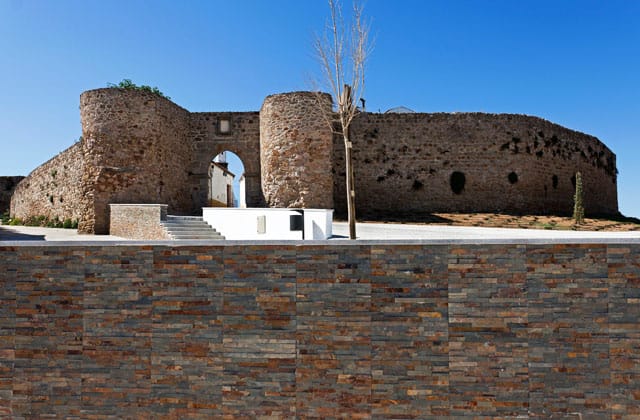
The Granary Gate and the Estremoz Gate are among the surviving elements of the medieval castle. Their continued presence helps define the enclosure’s entrances within the remaining wall structure.
Keep
The keep survives as part of the castle’s remains. Together with the wall sections and gates, it represents the principal fortified components of the quadrangular plan designed by Domingos Salvador and Rodrigo Fernandes.