Sarriod de la Tour Castle: A Medieval Fortress in Saint-Pierre, Italy

Visitor Information
Google Rating: 4.4
Popularity: Medium
Google Maps: View on Google Maps
Official Website: valledaostaheritage.com
Country: Italy
Civilization: Unclassified
Remains: Military

History
Sarriod de la Tour Castle is located in the municipality of Saint-Pierre, Italy. Constructed during the medieval period, it was built by the local nobility of the Sarriod de la Tour family. The earliest part of the castle dates back to the early 14th century or earlier, centered on a square tower known as a donjon, typical of the region’s primitive fortresses. This central keep, standing as a stronghold amid flat terrain near the Dora Baltea river, reflects the initial style of castles crafted by medieval builders in the Aosta Valley. Around the mid-13th century, a chapel was constructed along the southern walls overlooking the river, marking the site’s early religious significance alongside its defensive use.
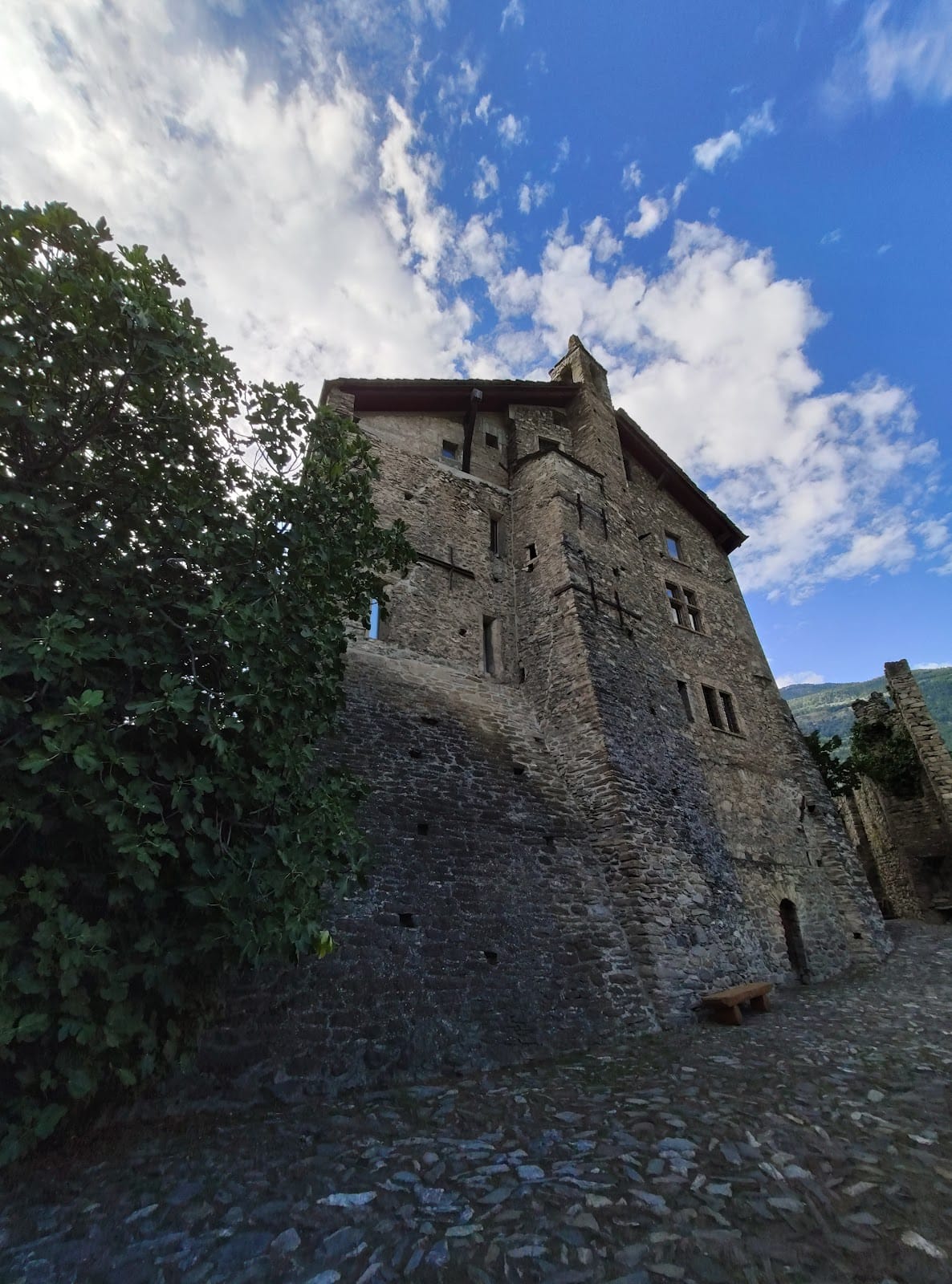
In the early 15th century, ownership passed exclusively to the Sarriod de la Tour branch of the Sarriod family following an internal division. Jean de Sarriod enlarged the castle by adding multiple buildings that transformed the original tower into a more representative residence. His contributions included a spiral staircase and the distinctive cross-shaped windows found in the donjon, typical of 15th-century design.
A second significant renovation took place around 1470 led by Antoine de Sarriod de la Tour, Jean’s son. He remodeled the chapel, enriching its walls with frescoes, expanded the northern building, and enhanced the castle’s defenses by adding round towers and redesigning the eastern entrance to improve security. These efforts marked one of the final medieval expansions before the castle evolved in later centuries.
Over time, further structures were added, including a dovecote tower from the 16th century. The castle remained with the Sarriod de la Tour family until the early 20th century. After the last descendant’s death in the early 1920s, ownership was transferred to Senator Bensa of Genoa. By 1970, the property was acquired by the regional government, marking a new phase in its preservation.
Remains
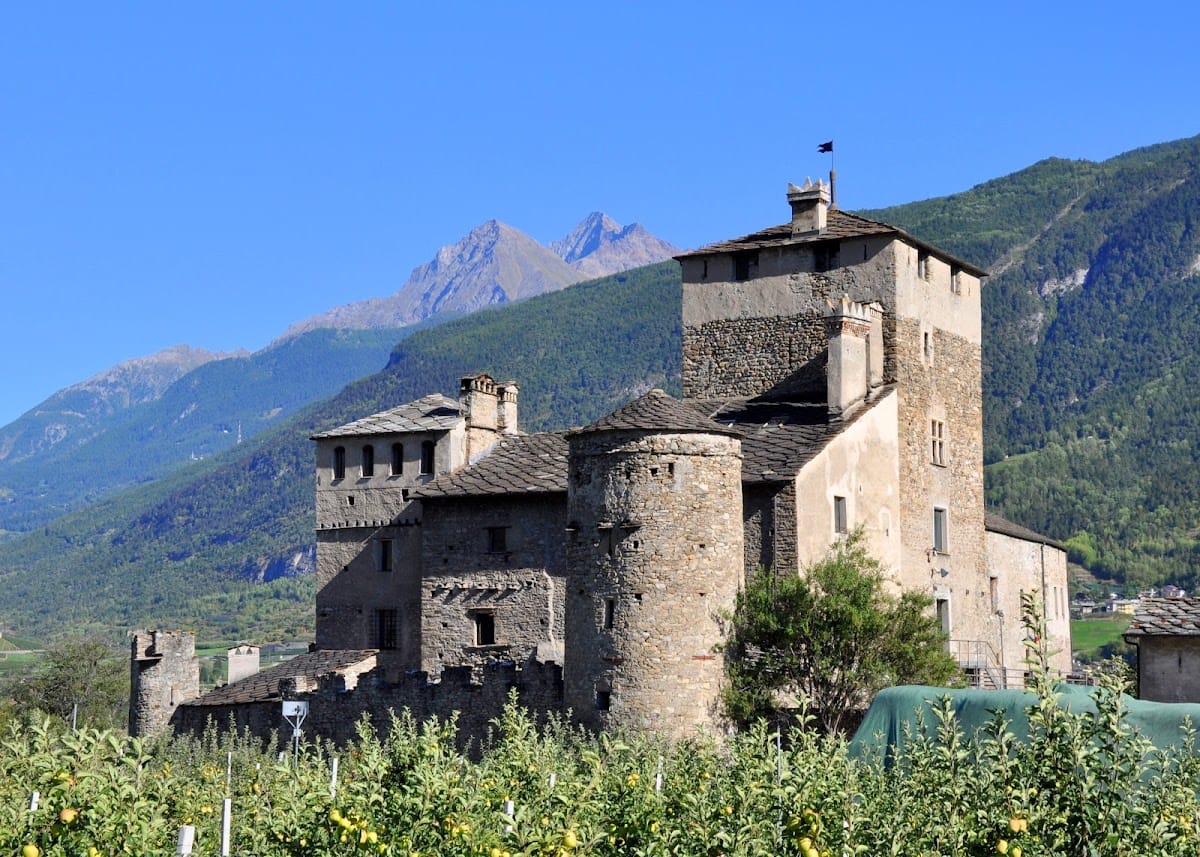
The Sarriod de la Tour Castle stands as a complex of buildings clustered within an enclosing defensive wall initially constructed in the 14th century. This original wall was later reinforced and fashioned with rounded corner towers during the late 15th century. A notable eastern gate replaced earlier entrances, designed to provide better strategic control. The main portal is distinguished by its pointed arch topped with the Sarriod de la Tour coat of arms and a battlemented extension supported by two rows of stone corbels, a defensive feature allowing for protection against attacks below.
At the heart of the castle is the square donjon, a massive stone tower dating from the early medieval period and expanded during the 15th century. It displays characteristic cross-shaped windows that allowed archers to shoot while remaining protected. Surrounding this are both older defense towers and later, more residential buildings, reflecting architectural evolution over centuries.
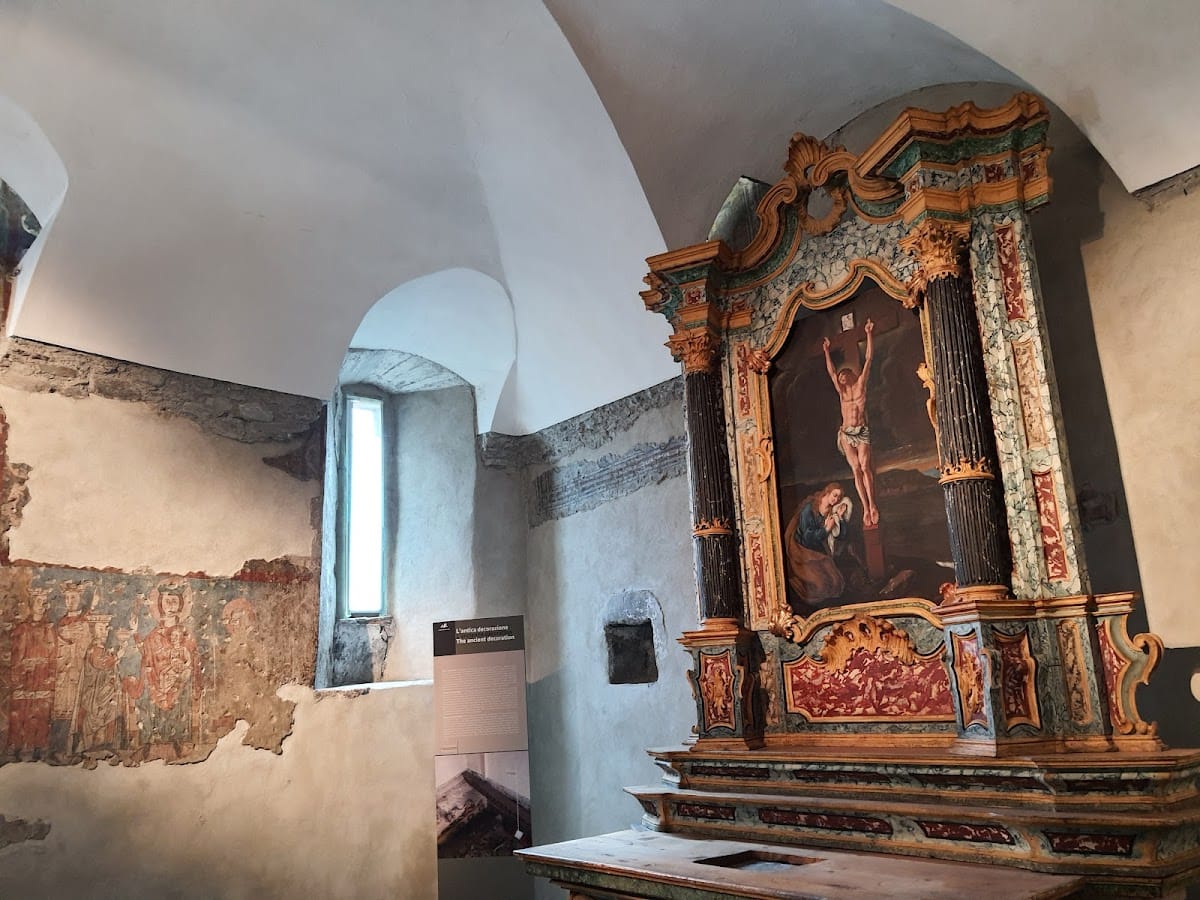
The southern chapel rests near a cliff above the Dora Baltea. Originally decorated with biblical frescoes such as the Adoration of the Magi and the Crucifixion, the chapel’s walls preserve fragments of paintings created between the mid-13th and late 15th centuries. The ceiling once featured wooden beams dated to about 1250 but was later covered by a Baroque vault installed around 1700, which splits some of the original frescoes. The entrance to the chapel also bears frescoes from the late 15th century, portraying the Virgin Mary, Saint John the Evangelist, and well-preserved images of the Crucifixion and Saint Christopher.
Inside the northern wing lies the “Hall of Heads” or Sala delle teste, which served as the main ceremonial room. This space is remarkable for its wooden ceiling, supported by 171 intricately carved corbels crafted in the 15th century. These carvings present a rich variety of figures, including noble portraits wearing period headwear, carnival characters, animals common to the local environment such as wolves and wild boars, and mythical creatures like dragons and mermaids. The style of these carvings shows clear connections to woodwork found in the nearby Aosta Cathedral, suggesting some works may have been created by Jean de Chetro, a sculptor active in the region at that time.
The castle’s site is mostly flat, but its southeast side benefits from natural defense provided by a rocky spur descending toward the river. The layout has an irregular arrangement due to the successive building campaigns, including the addition of a dovecote tower in the 16th century. Throughout restoration projects, fragments of frescoes discovered at the nearby Quart Castle have been brought to Sarriod de la Tour, now displayed inside as the “Fragmenta picta” exhibition, adding to the understanding of the site’s artistic heritage.
Nearby sites