Castle of Alarcón: A Historic Fortress in Cuenca, Spain
Visitor Information
Google Rating: 4.5
Popularity: Very Low
Official Website: www.turismocastillalamancha.es
Country: Spain
Civilization: Medieval European
Site type: Military
Remains: Castle

History
The Castle of Alarcón is located in the town of Alarcón, within the province of Cuenca, Spain. Its origins trace back to the period of Arab control under the Emirate of Córdoba. Following the fragmentation of the Caliphate of Córdoba, the castle became part of the Taifa of Toledo, serving as a key defensive fortress during times of internal conflict among Muslim rulers.
In 1184, the castle was besieged for nine months by Fernán Martínez de Ceballos, a captain serving Alfonso VIII of Castile. After its capture, Martínez de Ceballos earned the right to adopt the surname Martínez de Alarcón. Shortly after, in 1186, the castle was granted a fuero, or charter, and lordship over a large territory that included 63 villages such as Albacete, La Roda, and Villarrobledo. In 1194, Alfonso VIII donated the castle and its lands to the Military Order of Santiago, a religious and military order, a gift that was confirmed multiple times in subsequent years.
The town council of Alarcón played a military role by contributing troops to the Battle of Las Navas de Tolosa in 1212, a decisive conflict in the Reconquista. In the early 14th century, King Ferdinand IV granted the lordship of Alarcón and its castle to Juan Manuel, Prince of Villena, a notable literary figure who composed some of his works there. The lordship later passed to his descendants Blanca and Fernando Manuel de Villena before being reclaimed by King Peter I and returned to royal possession.
During the late 14th century, Henry II of Castile granted the castle to Alfonso I of Aragon, Marquis of Villena, in 1372. Henry III later reclaimed it in 1395. In the 15th century, the castle was given to Juan Pacheco, Marquis of Villena. Juan and his son Diego López Pacheco supported Joanna la Beltraneja in her claim against the Catholic Monarchs, maintaining control over Alarcón and other castles during this period of civil strife.
After the Middle Ages, the castle was gradually abandoned and fell into disrepair. By 1712, it belonged to the Marquis of Aguilar, who received urgent recommendations to repair the structure to prevent collapse. In 1720, governance passed to Alejandro de Alarcón and Duchess Julia de Alarcón, who provided refuge to many people during regional conflicts.
On June 5, 1863, José María Fernández de Velasco, the 15th Duke of Frías, sold the castle and several small towers to Rafael Lázaro Álvarez de Torrijos for 20,000 reales. In 1963, the Spanish government, under Minister Manuel Fraga Iribarne, expropriated the castle from the Álvarez Torrijos family. The castle was restored and converted into a parador hotel, opening to the public in 1966. It was officially declared a Bien de Interés Cultural, a Cultural Interest Site, on February 28, 1992.
Remains
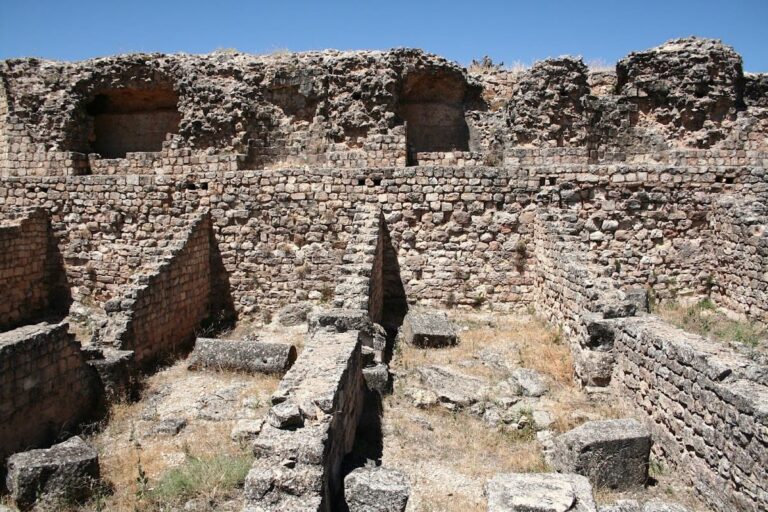
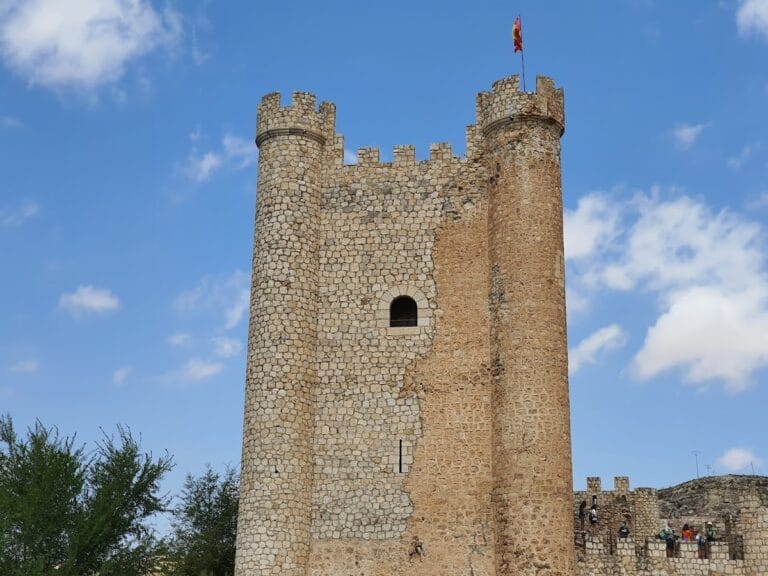
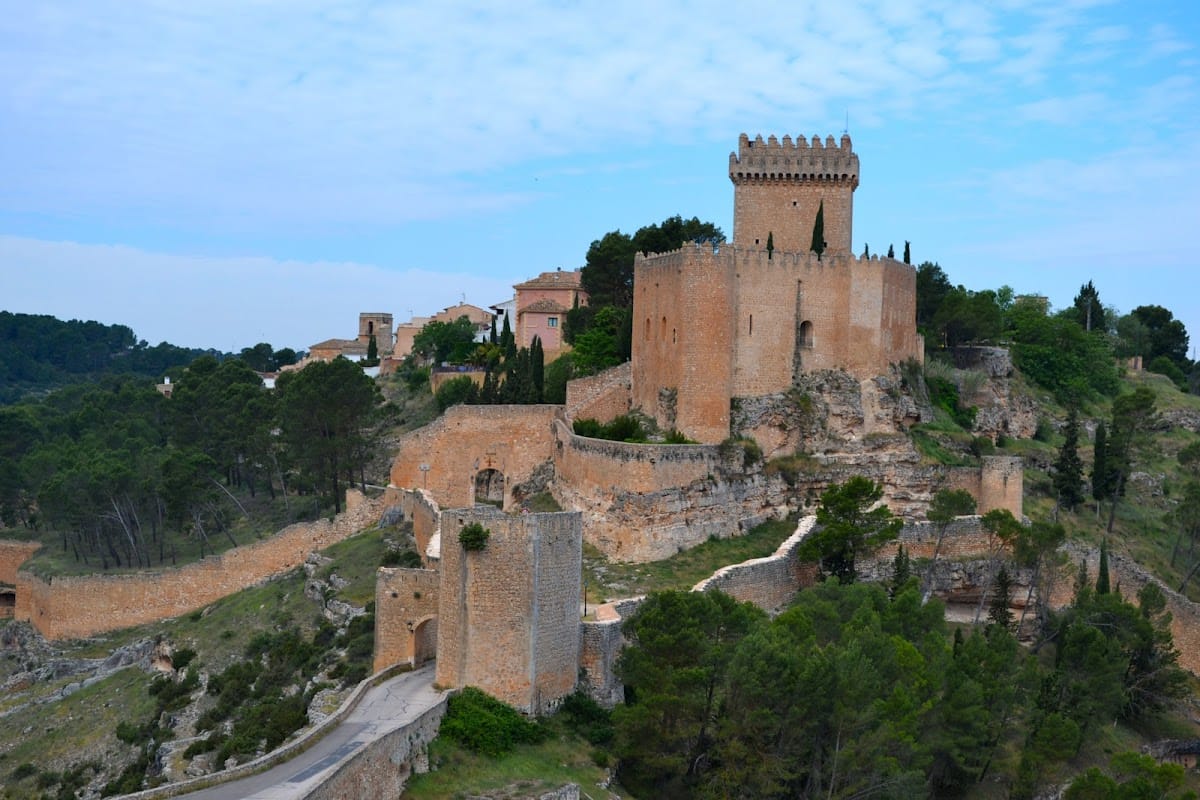
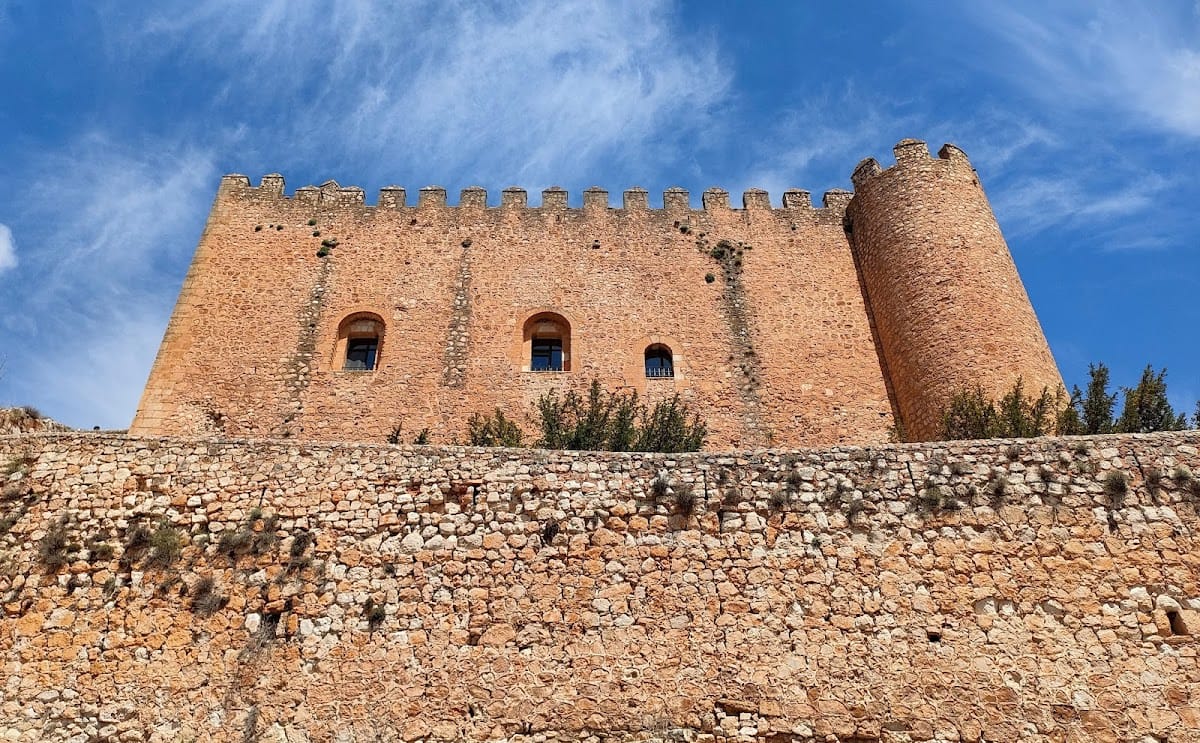
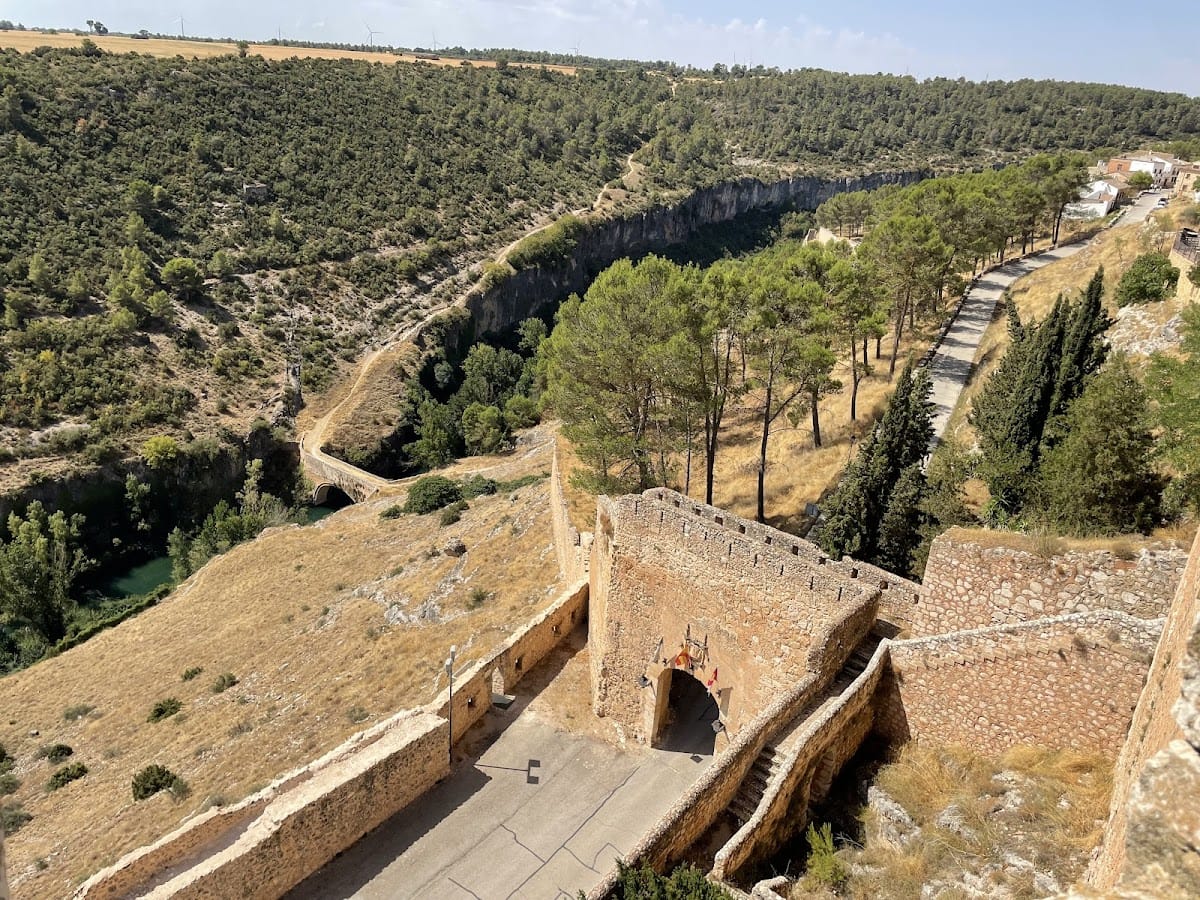
The Castle of Alarcón forms part of the fortified walls that enclose the town center of Alarcón. The defensive complex includes a walled enclosure with the castle situated within it. Surrounding the enclosure are five separate exterior towers, strategically placed to enhance defense.
The walls are constructed of stone and feature mortar that, according to local legend, bears black and reddish spots. These marks are said to be bloodstains from a historical assassination attempt, a symbolic association passed down through oral tradition.
Over the centuries, the castle underwent several expansions and reinforcements by Castilian monarchs to strengthen its defenses. By the early 18th century, master builders reported urgent repairs were necessary to prevent the castle from collapsing. In the 20th century, the castle was restored extensively to serve as a parador hotel, preserving its structural integrity.
Today, the castle stands restored within the walled town, maintaining its role as the central fortification. The five external towers remain prominent features, reflecting their original strategic placement. The stone walls and towers are preserved in situ, offering a tangible connection to the castle’s long history.
Nearby sites