Shrine of Hercules Curinus: An Italic and Roman Sanctuary in Italy
Site at a Glance
- Rating
- 4.5
- Popularity
- Very Low
- Country
- Italy
- Primary era
- Classical
- External website
- Open
- Eras represented
- Classical
- Civilizations
- Roman
- Site type
- Religious
- Remains
- Sanctuary
On this page10 sections
History
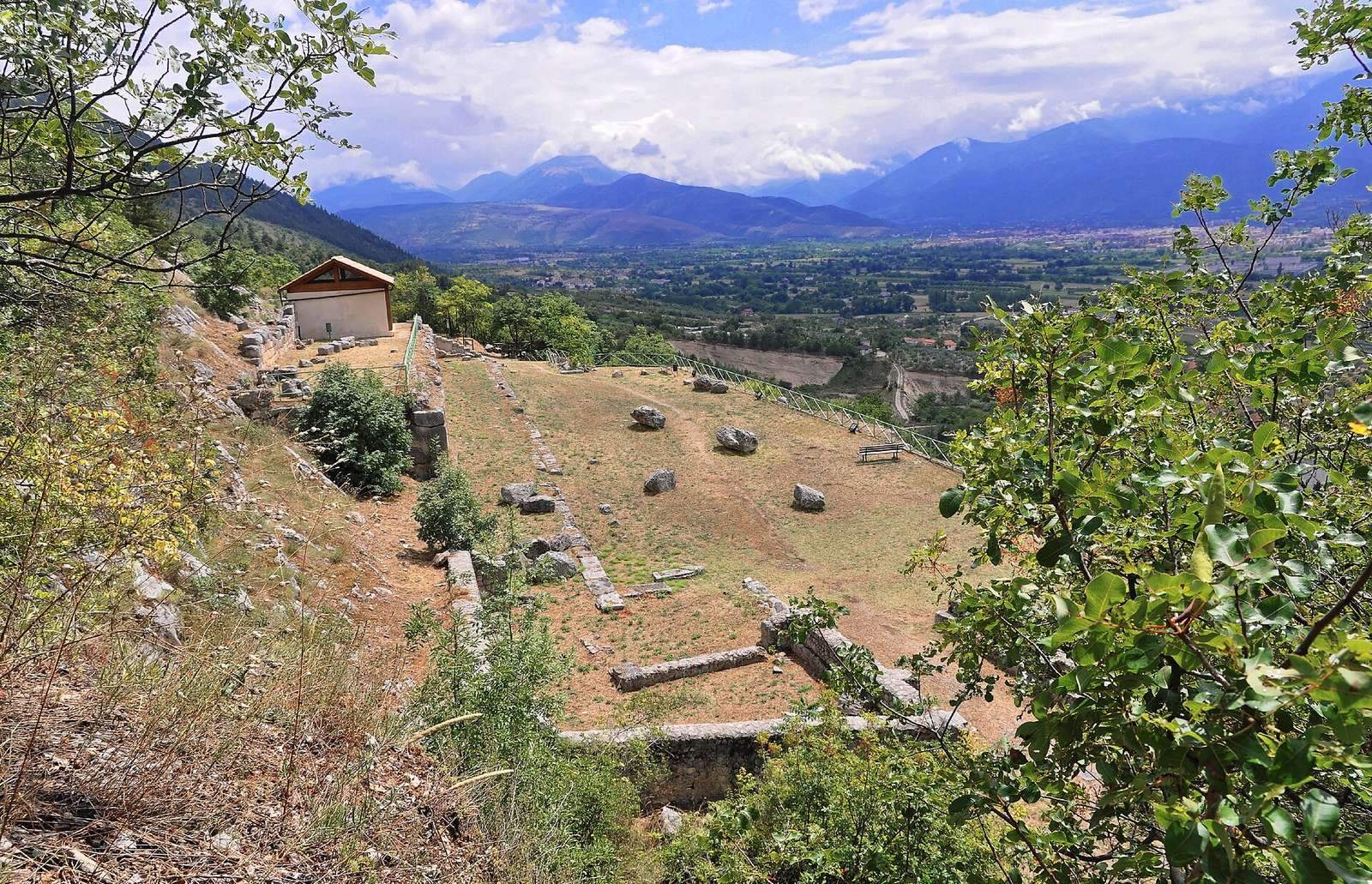
The Shrine of Hercules Curinus is an Italic and Roman sanctuary in Sulmona, Italy, dedicated to Hercules and located in the Badia area of the Morrone Mountains of Abruzzo. The site began as a local Italic sacred place before becoming a Roman temple, and its later development produced a large terraced complex.
From Italic sanctuary to Roman temple
Excavations began in 1957. At first, the remains were thought to belong to the villa of Ovid, the Roman poet born at ancient Sulmo, the predecessor of Sulmona. Votive objects and dedicatory inscriptions instead identified the site as a sanctuary. Its religious history continued after its incorporation into the Roman world, when it functioned as a temple dedicated to Hercules.
During the Republican period, the epithet Curinus, or Quirinus, was used for Hercules and other deities. Quirinus was a Roman divine figure associated with the deified Romulus and with the curia, a communal or political division. After the Social War of 91–89 BC, the conflict between Rome and several of its Italian allies that led to wider Roman citizenship and political integration in Italy, the sanctuary was expanded. This transformation turned a local structure into a substantial terraced complex comparable in form to the contemporary sanctuaries of Fortuna Primigenia at Palestrina and Hercules Victor at Tibur.
Burial and continued use
An ancient landslide buried the upper part of the sanctuary around the second century AD. The site continued to be used to some extent afterward. A Christian church was added beside the southern stairway, demonstrating that activity at the location extended beyond its principal pagan phase.
The large southern stairway may have served as a monumental entrance and perhaps as a meeting place for local assemblies under the protection of Curinus. The sanctuary now forms an archaeological area of approximately 5,000 square metres.
Remains
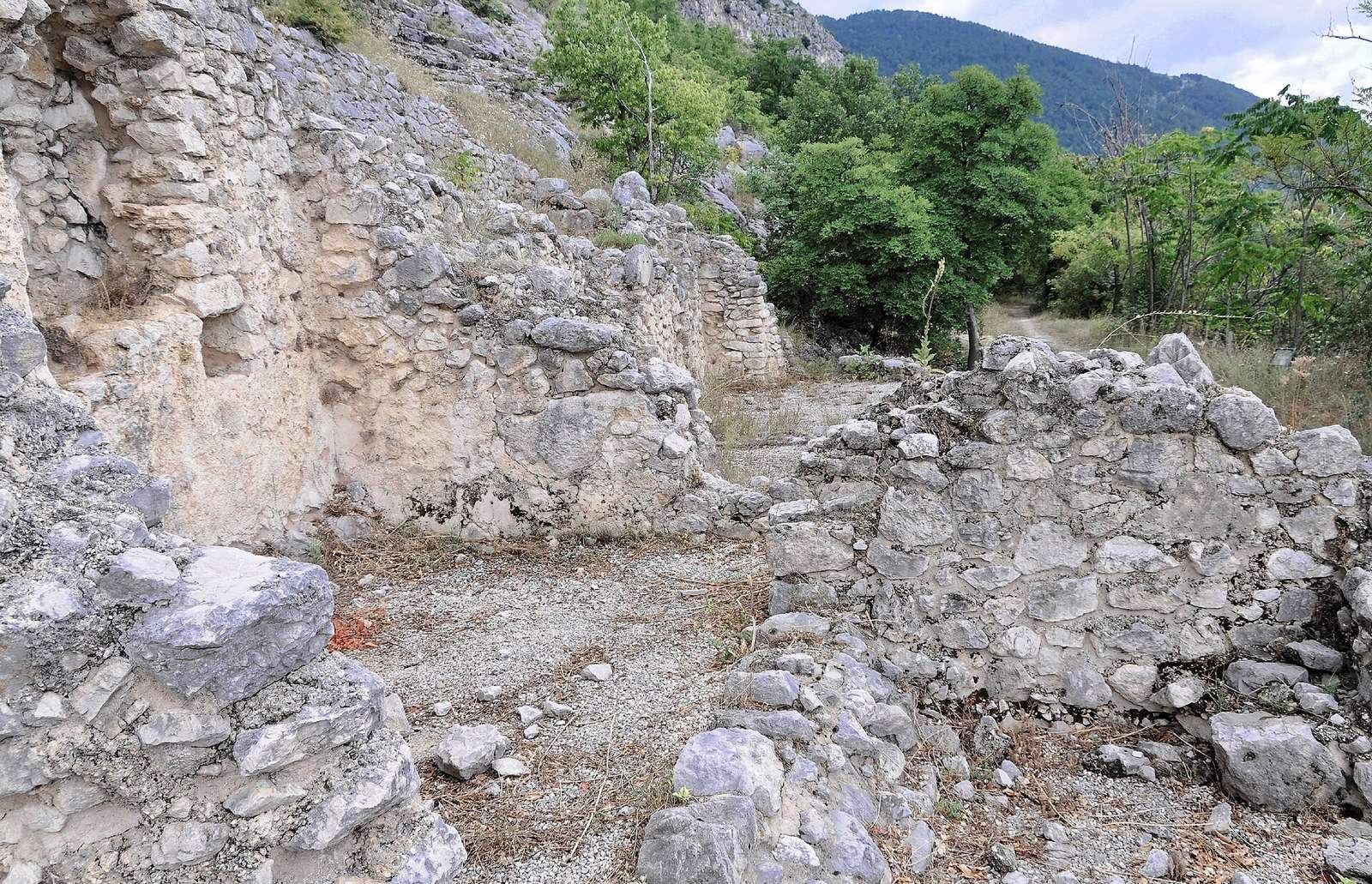
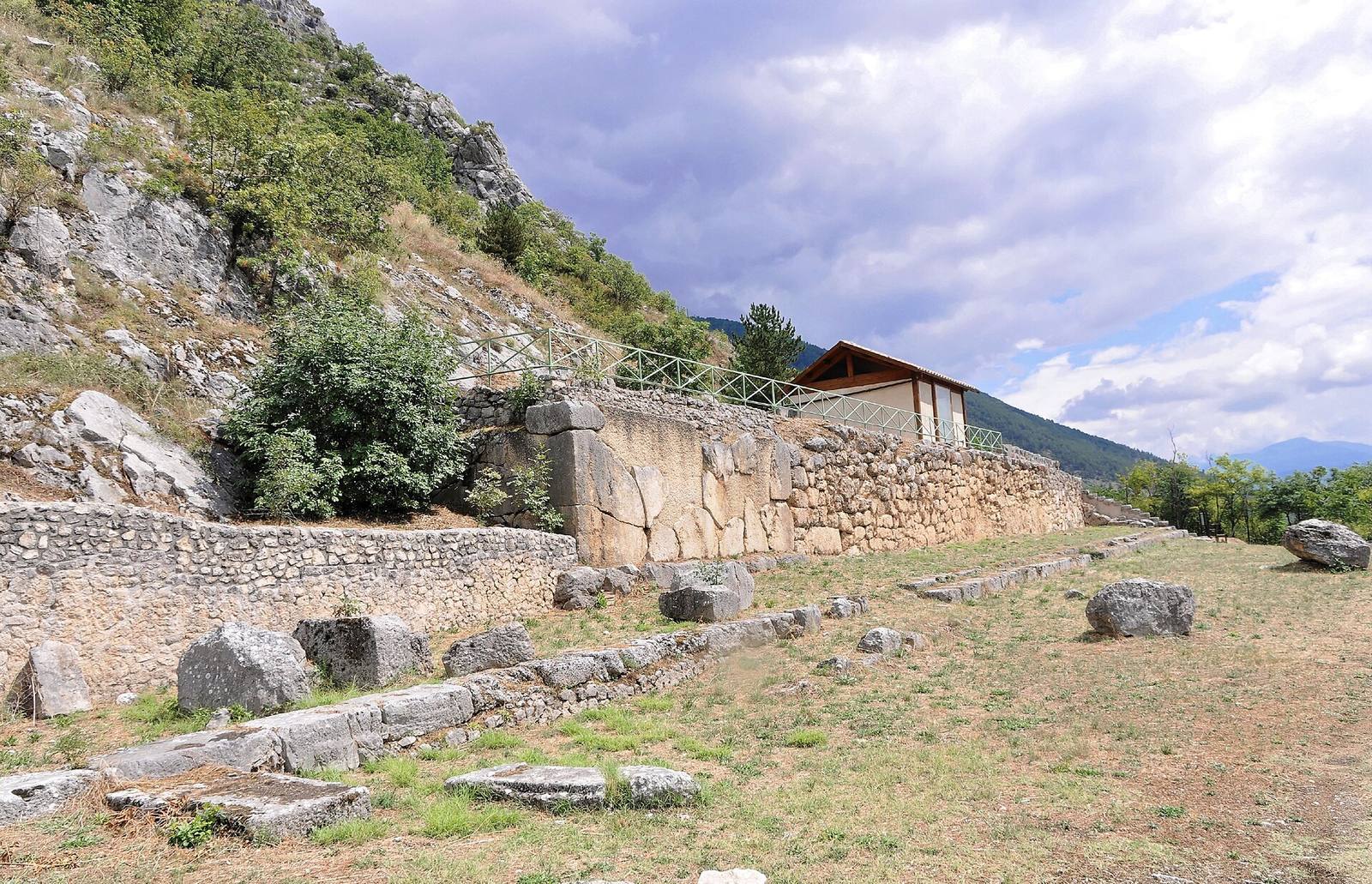
The sanctuary is arranged on two terraces built in different periods. The later lower terrace was constructed in Roman concrete, called opus caementicium, around a substantial podium 71 metres long. The upper terrace is pre-Sullan, meaning that it predates the political and military career of Lucius Cornelius Sulla. Together, the terraces preserve the stepped organization of a sanctuary that was enlarged after the late Republican conflict in Italy.
Terraced construction
Lower terrace
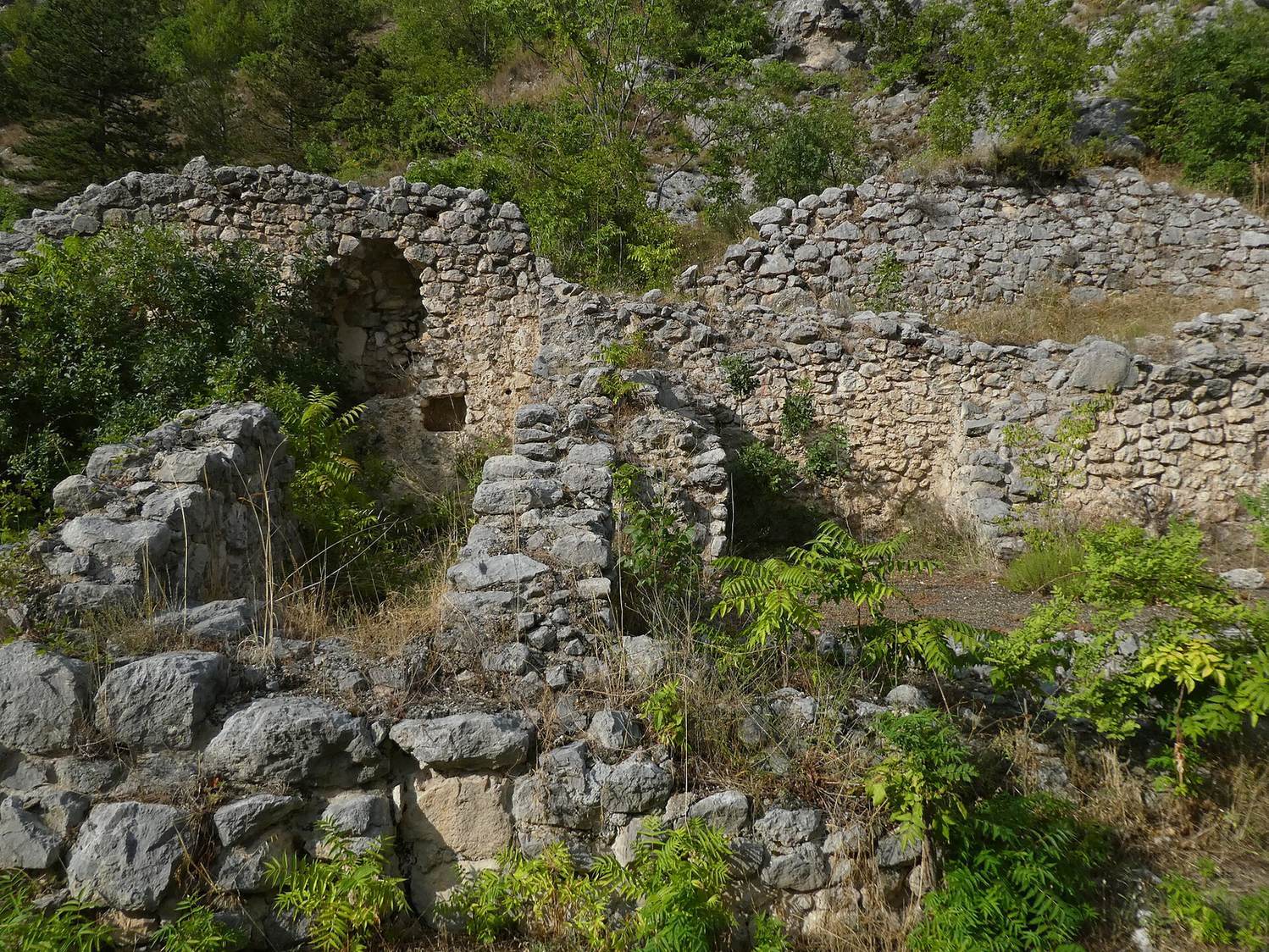
The lower terrace is centered on a 71-metre podium built in Roman concrete. Fourteen rooms occupy the podium, each covered by a barrel vault. These vaulted spaces formed part of the massive supporting structure required by the later terrace and survive as a major element of the sanctuary’s lower level.
Upper terrace
The earlier upper terrace was enclosed on three sides by a colonnaded portico, a covered walkway lined with columns. Some column bases remain. At the centre of this terrace stood the sanctuary’s principal sacred features, including an altar and a small shrine.
Central sacred features
Bronze-covered altar
The central altar was unusually covered with bronze plates. Its position at the heart of the upper terrace made it a focal point of the sanctuary’s religious arrangement.
Hercules shrine
A small sacred enclosure, or sacellum, dedicated to the deity stood beside the altar. Excavation of the sacellum produced two cult statues of Hercules, one made of bronze and now held by the Archaeological Museum of Chieti, and another carved in marble.
A small column from the sacellum bears twelve verses of graffiti attributed to Ovid. The inscription connects the literary figure associated with ancient Sulmo to the sanctuary’s physical remains and helped sustain the site’s association with the poet during the early interpretation of the excavations.