Roman Villa of Paturro: A Mining and Fish-Salting Establishment in Spain
Site at a Glance
- Rating
- 4.2
- Popularity
- Very Low
- Country
- Spain
- Primary era
- Classical
- Eras represented
- Classical
- Civilizations
- Roman
- Site type
- Domestic
- Remains
- Villa
On this page9 sections
History
The Roman Villa of Paturro is a Roman archaeological site in Spain, with an earlier Republican-period occupation and a later phase dating from the first and second centuries AD. It lies near Portmán in La Unión, within the Cartagena-La Unión mining district of the Region of Murcia. The site combined an elaborately decorated residential area with industrial activity linked first to mining and later to fish processing.
Republican-period mining
The earlier occupation belongs to the Roman Republican period, the era of Roman government before the establishment of the Roman Empire. This phase was probably connected with the exploitation of silver, lead, and other metals from the mines of Carthago Nova, the Roman city corresponding to present-day Cartagena. Mining formed an important part of the economic landscape around the villa during this early stage.
Garum production and abandonment
During the first and second centuries AD, the villa entered a later phase associated with garum production and fish-salting. Garum was a fermented fish sauce produced and traded widely across the Roman Mediterranean, while salting preserved fish for storage and distribution. The change shows the site’s use for industrial activity alongside its residential functions. Abandonment is attested from the third century AD.
Discovery and protection
The site was discovered in 1969 and has been examined through several archaeological campaigns. The archaeological zone has been protected as a Spanish Asset of Cultural Interest since 1980 under register reference RI-55-0000095. This designation is a formal Spanish heritage category for protected cultural property.
Remains
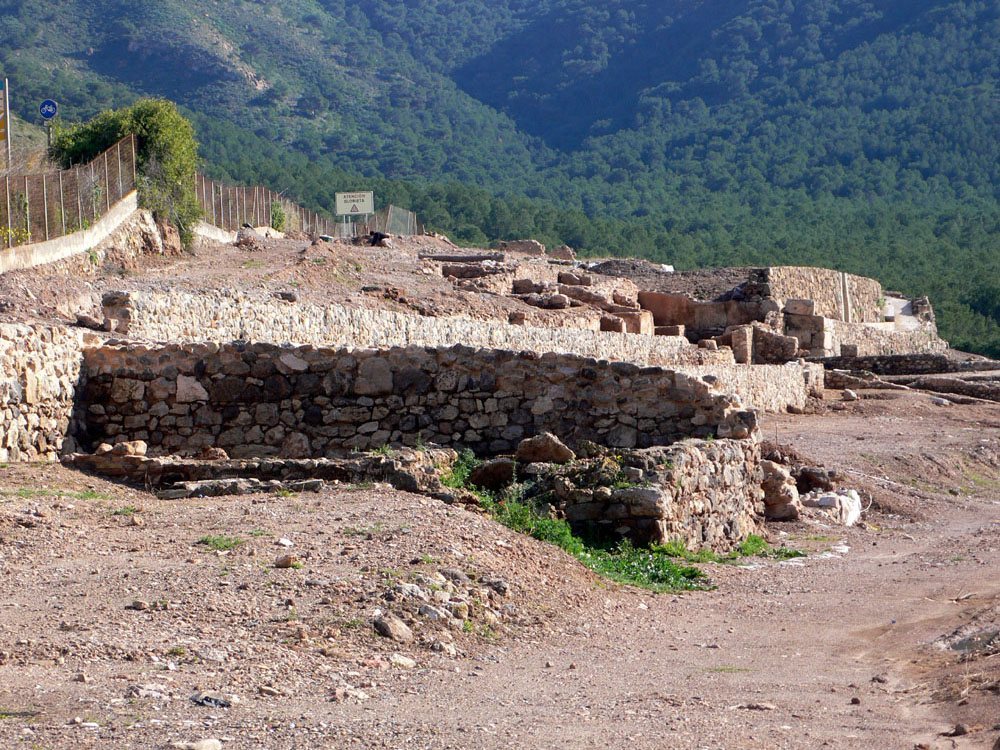
The excavated remains occupy terraced sectors and are divided into two clearly differentiated areas. One was residential and decorated with lavish materials, while the other was devoted to industrial exploitation. The villa stands at the boundary of the Calblanque, Monte de las Cenizas and Peña del Águila natural park.
Residential decoration
Polychrome mosaic
A large polychrome mosaic, a decoration made from small pieces in several colors, depicts a deity and a peacock. It is described as the largest mosaic in the Region of Murcia. The mosaic and some other excavation fragments are deposited in the Archaeological Museum of La Unión in Portmán.
Marble and painted elements
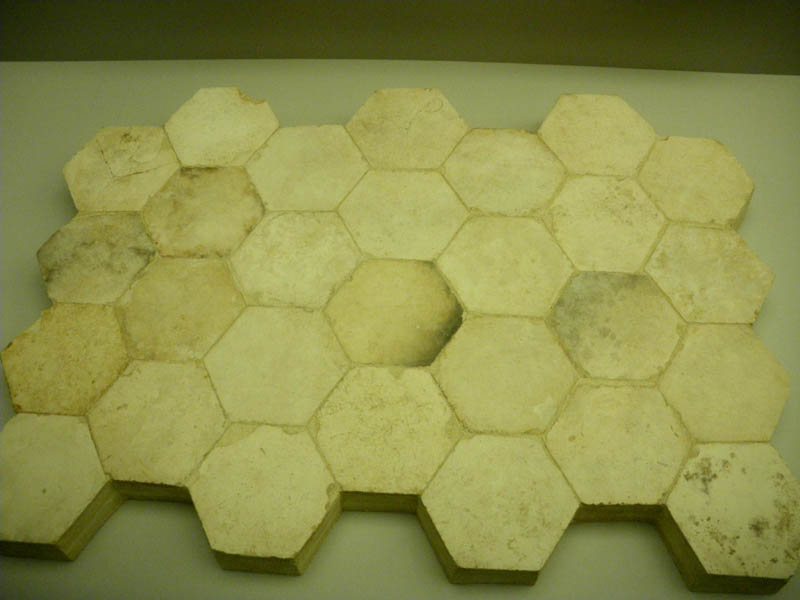
The residential area also produced numerous fragments of wall painting, surface revetments, and architectural elements made from different types of marble. A white-marble head of a satyr, a male nature spirit with human and animal features in Greek and Roman mythology, was found at the site. An Ionic capital, the carved upper part of a column with paired spiral forms, was also recovered, together with a fragment of flooring and a wall painting showing a palestra scene. A palestra was a space for athletic training, especially wrestling and related exercises. These materials are distributed between the archaeological museums of Cartagena and Murcia.
Industrial area
The separate industrial section formed part of the villa’s working area. Its association with the later production of garum and the salting of fish connects the physical remains with the site’s first- and second-century AD economic role. The excavated layout preserves this distinction between industrial exploitation and the richly decorated residential sector.