Castello di Roccacasale: A Medieval Enclosure Castle in Italy


Site at a Glance
- Rating
- 4.5
- Popularity
- Low
- Country
- Italy
- Primary era
- Medieval
- External website
- Open
- Eras represented
- Medieval, Modern
- Civilizations
- Italian
- Site type
- Military
- Remains
- Castle
On this page7 sections
History
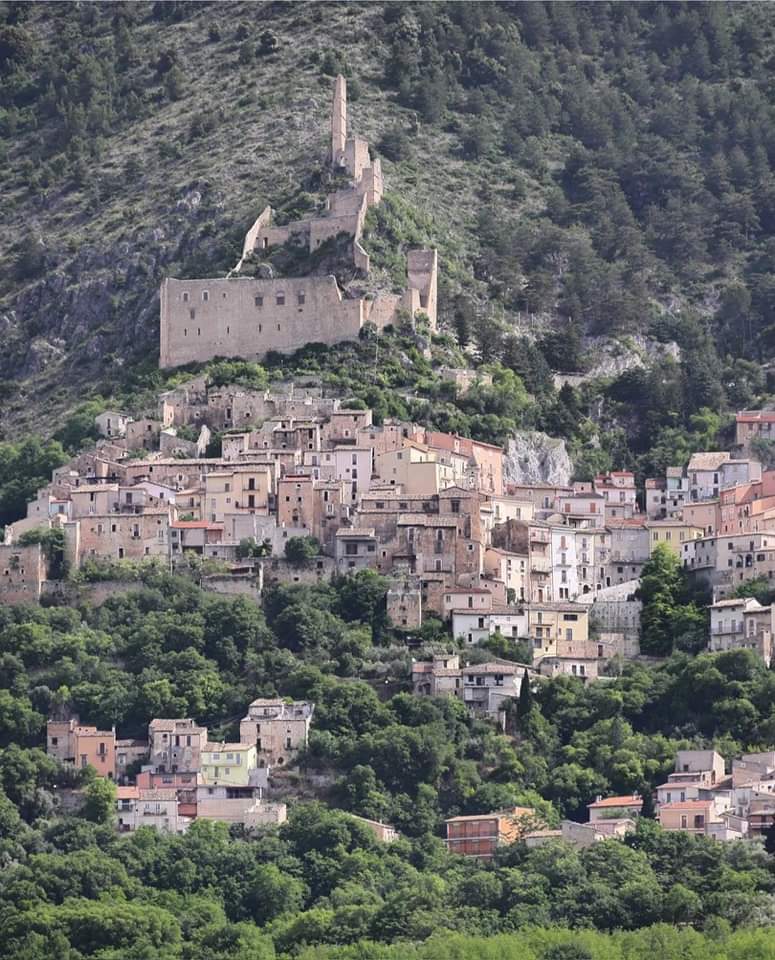
Castello di Roccacasale is a ruined medieval enclosure castle in Italy, above the town of Roccacasale on the slopes of Monte Morrone. Traditionally dated to 925, it was built by the Counts of Spoleto, medieval rulers associated with a major political territory in central Italy, to control access to the Val di Sangro and the Altopiano delle Cinquemiglia. Its position also allowed it to oversee the road between Popoli Terme and Sulmona.
Medieval and Renaissance control
From the Middle Ages through the Renaissance, the castle was held by the Cantelmo family, an aristocratic lineage with feudal territories and fortified sites in southern Italy. At the end of the sixteenth century, ownership passed to the De Sanctis barons, who retained the castle until 1803. The surviving baronial palace shows that the stronghold served more than a defensive purpose. It was also a place of continuing residence and administration, while its enclosure provided refuge in times of danger.
Destruction and restoration
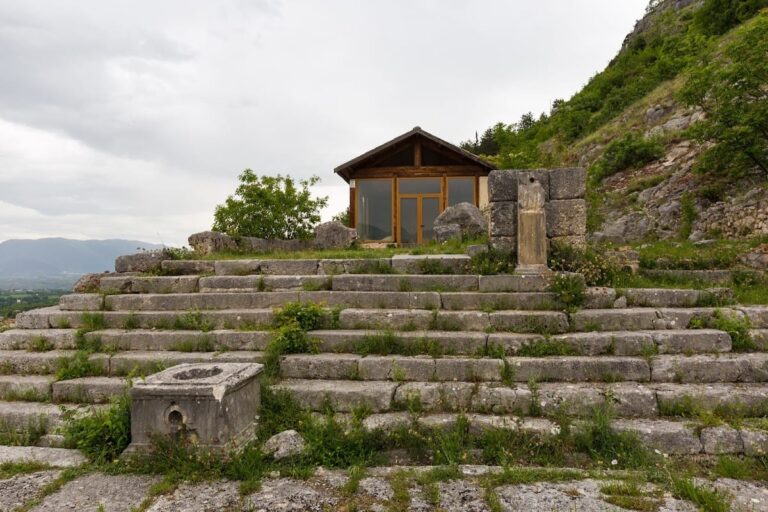
French forces destroyed the castle in 1803, bringing its strategic function to an end. Between 1994 and 1996, the Municipality of Roccacasale restored the surviving remains and the pedestrian access path. It also constructed a building that has housed the Museum of Documentation and Popular Traditions since 2004.
Remains
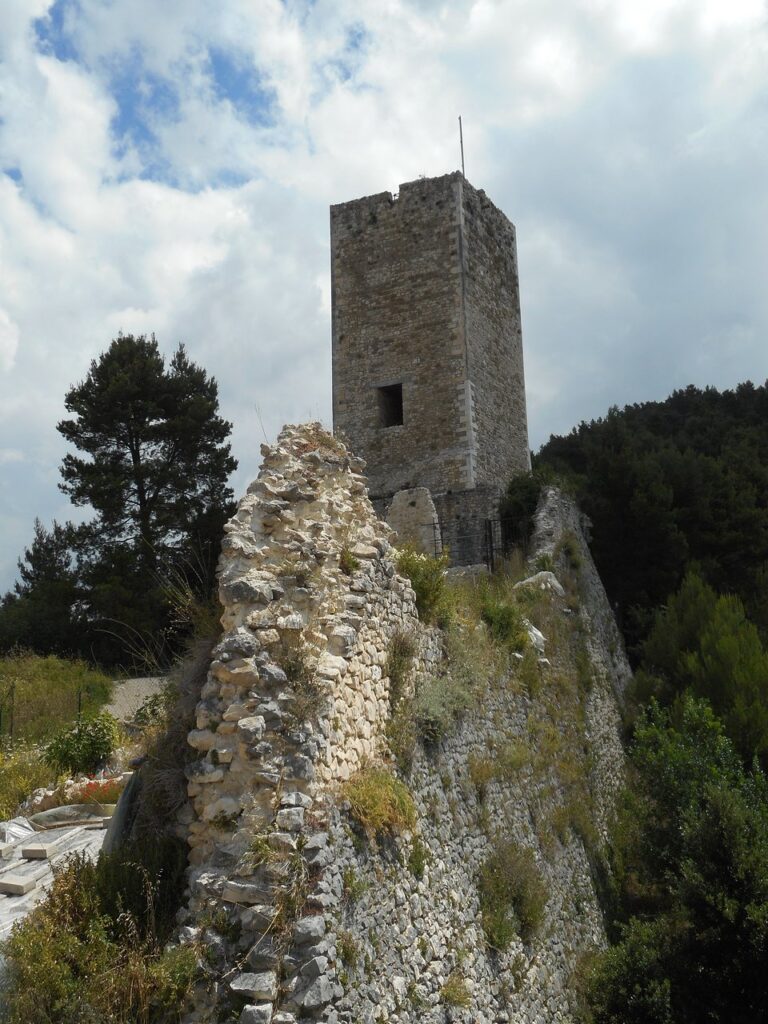
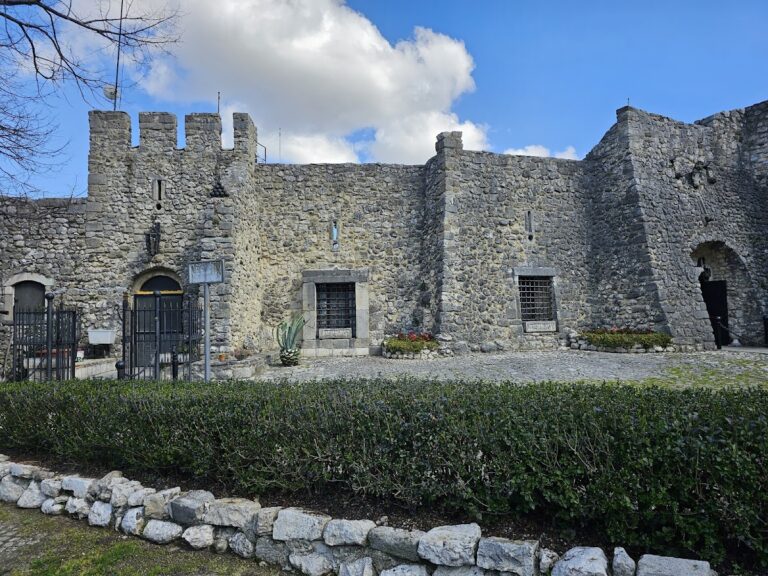
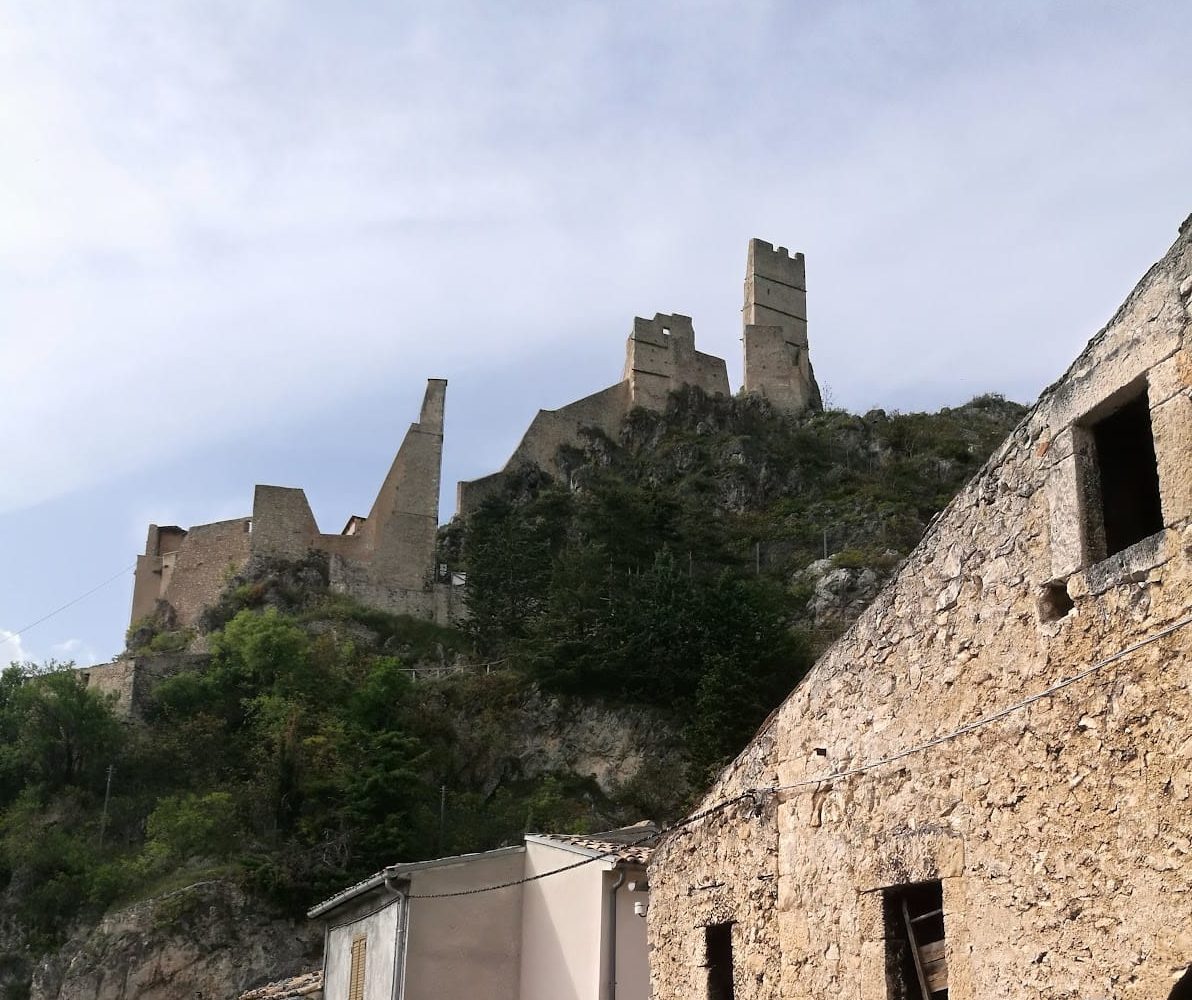
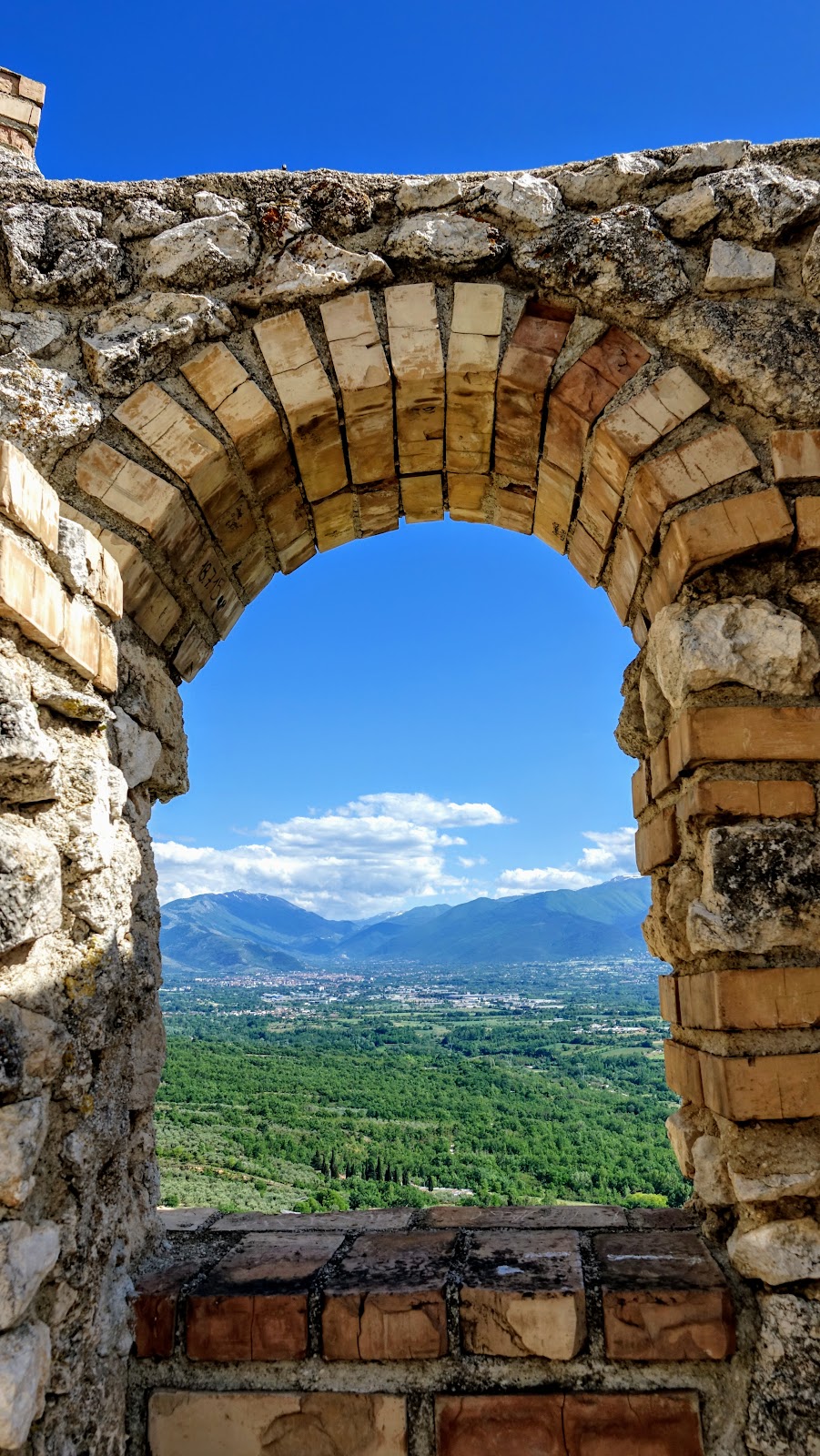
Castello di Roccacasale survives as a hilltop enclosure castle built in rubble stone. Its defensive walls follow a triangular plan above the settlement, with the highest point occupied by a partially collapsed spur, a projecting defensive section, with a trapezoidal plan. The entrance is on the downhill side facing the village, where a square tower controlled access. The tower survives without its inner side.
Internal buildings and water supply
Baronial palace
Within the enclosure are the remains of a baronial palace. Such a palace was the residence and representative seat of a baron, and its presence indicates that the castle supported sustained occupation as well as emergency refuge. The surviving structure forms part of the castle’s evidence for residential and administrative use.
Cistern and residential foundations
A cistern survives inside the enclosure, together with foundations belonging to additional residential buildings. These features provide further evidence of continuing life within the fortified area and complement the remains of the palace. Together, the walls, tower, internal buildings, and water installation preserve the basic organization of the former settlement.