Castello di Salle: Medieval Fortress and Noble Palace in Italy


Site at a Glance
- Rating
- 4.2
- Popularity
- Low
- Country
- Italy
- Primary era
- Medieval
- External website
- Open
- Eras represented
- Medieval, Early Modern
- Civilizations
- Kingdom of Naples, Spanish
- Site type
- Domestic
- Remains
- Castle
On this page9 sections
History
Castello di Salle is a medieval castle in Salle Vecchia, Italy, built before the eleventh century as a fief of the Abbey of San Clemente a Casauria. The medieval Benedictine monastery owned a network of defensive properties in Abruzzo, and an inscription on one of the twenty panels of its bronze portal names Sallis Castrum among the abbey’s possessions and forts. The castle is now a national monument.
From fortress to feudal residence
The castle was first established for defense. After it became a feudal possession, it also served as a residence. From the sixteenth century, following its transfer to the Kingdom of Naples, the southern Italian monarchy that governed the area, it became the home of successive owning families, including the Colonna, Gonzaga, and d’Aquino families.
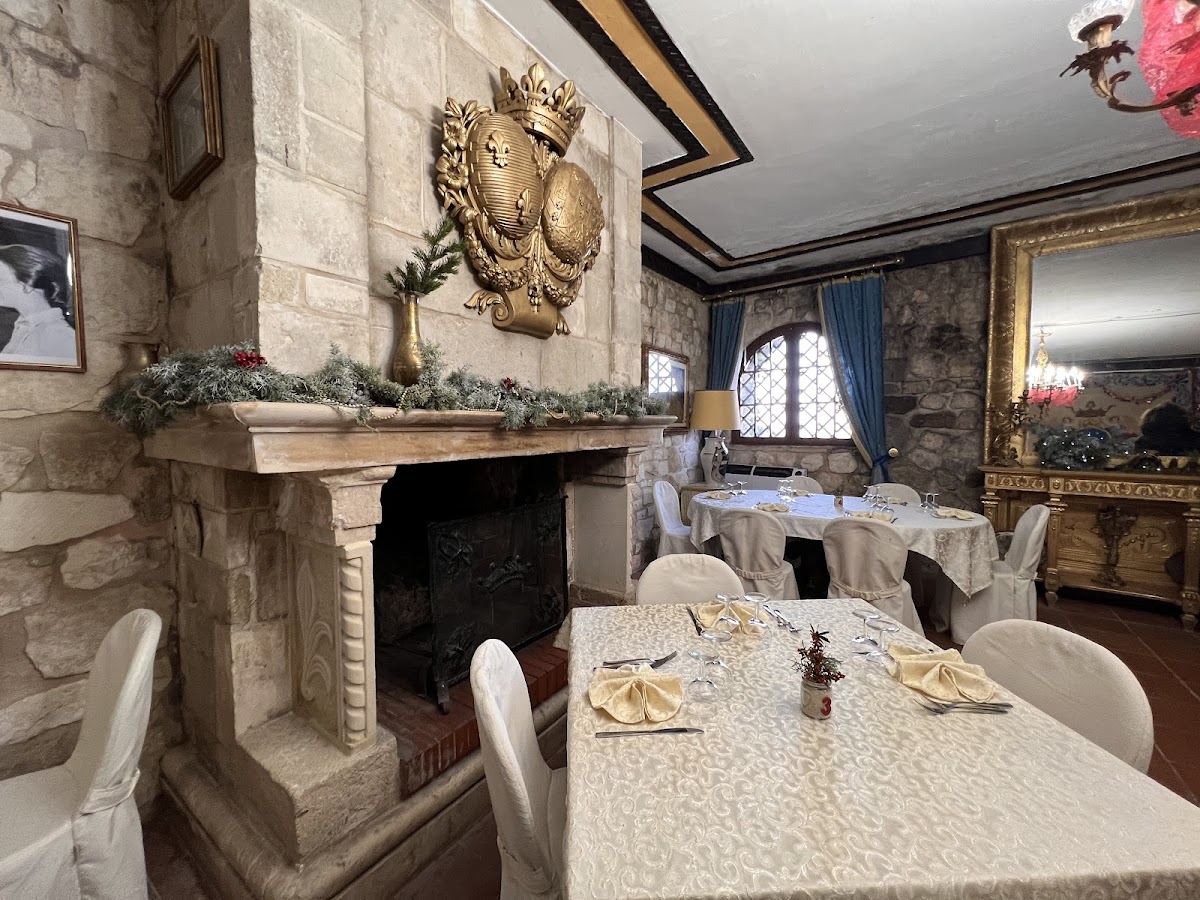
In 1646, Baron Giacinto de Genua, also known as Di Genova, from Vasto acquired Castello di Salle and undertook an extensive remodeling. The fortress was transformed into a noble palace, and its military role gradually declined. Coats of arms belonging to successive owners preserve the memory of these changes. From the 1990s, part of the complex has housed a restaurant, while the castle itself has become a cultural monument.
Old Salle and the Baron’s treasure
The castle stands on the site of the old village of Salle, also called Old Salle, about 1.5 kilometers from the modern village. The settlement was destroyed by the 1915 earthquake and a subsequent landslide, leaving ruins around the castle.
A local tradition connects the castle with the story of the “Baron’s treasure.” According to the legend, the Western Roman emperor Valentinian III, who ruled from AD 425 to 455, hid the royal treasure in AD 451 at the foot of a mountain between the Maiella and Morrone ranges. He feared another barbarian attack on Rome, especially one by the Huns. The emperor then killed everyone who knew the hiding place. After his assassination in AD 455, the location was said to have been lost with him.
Remains
Stone palace and defensive structure
Built from Maiella stone, Castello di Salle has an irregular L-shaped plan. A terrace with a crenellated parapet forms the roof and served as a wall-walk, while three towers rise above it. The main northern facade has three entrances, with loopholes, narrow openings for observation or firing weapons, above them. Cannons remain in these openings.
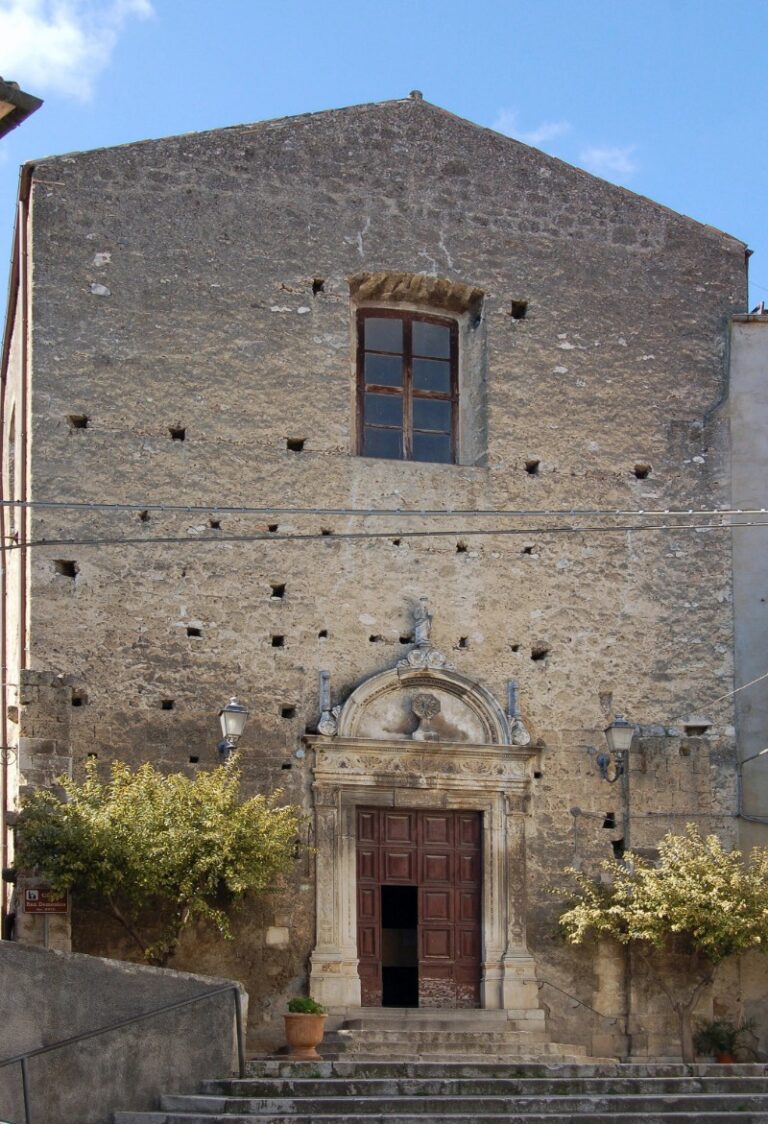
The northeastern part is identified as the oldest section of the complex. It includes the church and two additional entrances. Half of the northeastern main wing is occupied by the Church of Blessed Roberto da Salle, a Catholic church commemorating a religious figure honored as holy but not canonized. Its two entrances form part of this older section. The Di Genova coat of arms is positioned above one entrance, while other arms, including those of the d’Aquino family, are placed above the ravelin, a detached fortification protecting an entrance.
Courtyard and collections
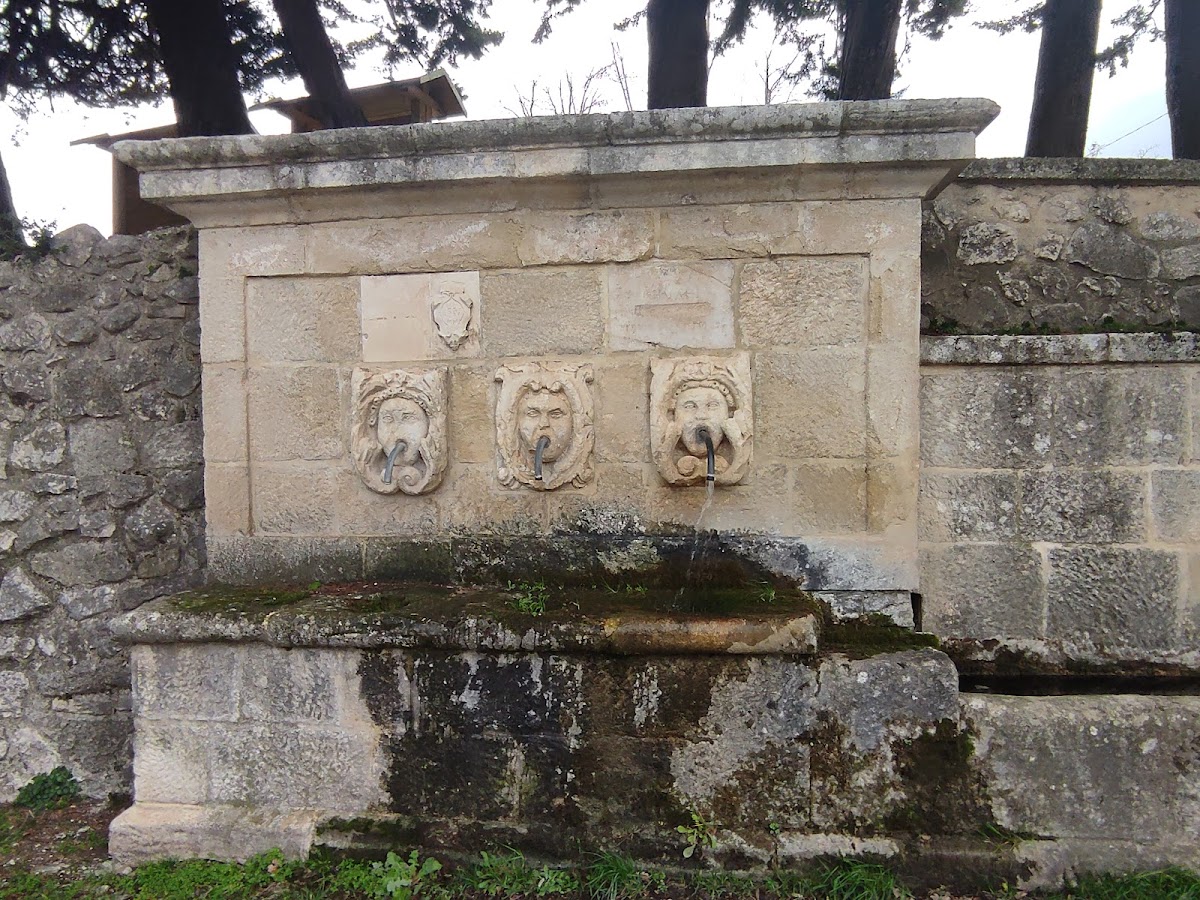
The internal courtyard contains an Italian garden, and a sixteenth-century fountain stands before the main entrance. These features belong to the castle’s later residential character, which developed after its earlier defensive function had declined.
Church of Blessed Roberto da Salle
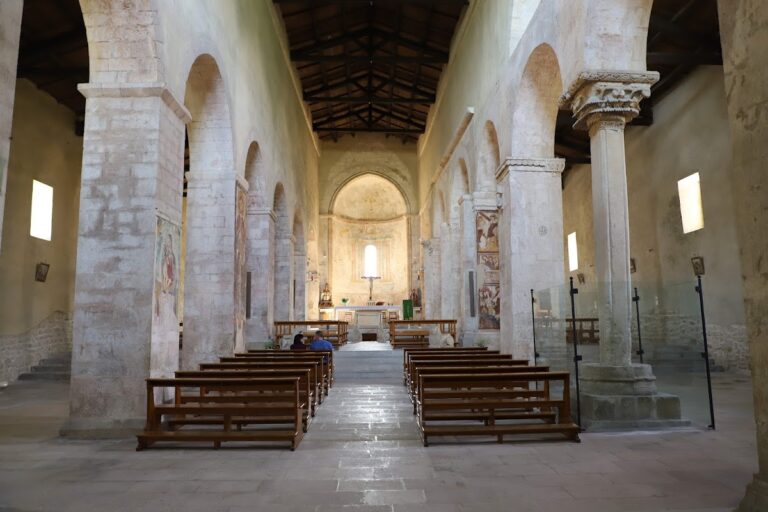
The Church of Blessed Roberto da Salle occupies half of the northeastern main wing. Its two entrances are incorporated into the oldest identified part of the castle complex.
Bourbon Medieval Museum
The northern side contains the entrance to the Bourbon Medieval Museum. Its collections include fabrics, weapons, torture instruments, paintings, geographical maps, sacred vestments, and ancient and modern images of Salle.
Ruins of Old Salle
Ruins of the former village surround the palace and remain visible around the castle. They preserve the physical setting of the old settlement that was destroyed by the 1915 earthquake and later landslide. The castle stands within the Valle dell’Orta regional nature reserve, at the foot of the Maiella, on a high point beside a steep slope at approximately 500 meters above sea level.