Vlašim Castle: A Historic Noble Residence in the Czech Republic

Visitor Information
Google Rating: 4.6
Popularity: Low
Google Maps: View on Google Maps
Official Website: www.vlasimskypark.cz
Country: Czechia
Civilization: Medieval European
Remains: Military

History
Vlašim Castle is located in the town of Vlašim within the modern borders of the Czech Republic. It was originally established by the medieval Bohemian civilization as a Gothic fortress in the early 14th century. The castle’s construction began in 1303, probably under the direction of Hynek of Vlašim, and it appears in historical documents by 1318, marking its early role as a fortified noble residence.
Throughout the 14th century, Vlašim Castle became a prominent seat for significant religious figures. Jan Očko of Vlašim, the second Archbishop of Prague, used the castle as a representative noble home. His successor, Jan of Jenštejn, made modifications to enhance its status and symbolic function as a residence reflecting their ecclesiastical authority. These improvements contributed to the castle’s importance beyond just military or defensive purposes.
During the 15th century, the castle underwent further development under the ownership of the Trčka of Lípa family. This period focused on strengthening the fortress’s defenses amid regional conflicts. The family added an outer ring of earthworks, augmenting the castle’s military security. Although this defensive earthwork was later dismantled, its addition reflects the castle’s continued strategic significance in this era.
Around the beginning of the 17th century, ownership transferred to the Vostrovci of Kralovice, who transformed the medieval fortress into a Renaissance-style chateau. This rebuilding marked a shift from purely defensive architecture towards a more comfortable and elegant noble residence, in keeping with broader cultural trends of the time.
From the 18th century until the end of World War II in 1945, the castle belonged to the Auersperg princely family. They carried out substantial remodeling in the neoclassical style, which largely shaped the castle’s current appearance. During their tenure, an extensive English landscape park was established adjacent to the castle, one of the region’s earliest examples. This park served as a fashionable complement to the noble estate and remains an important aspect of the site.
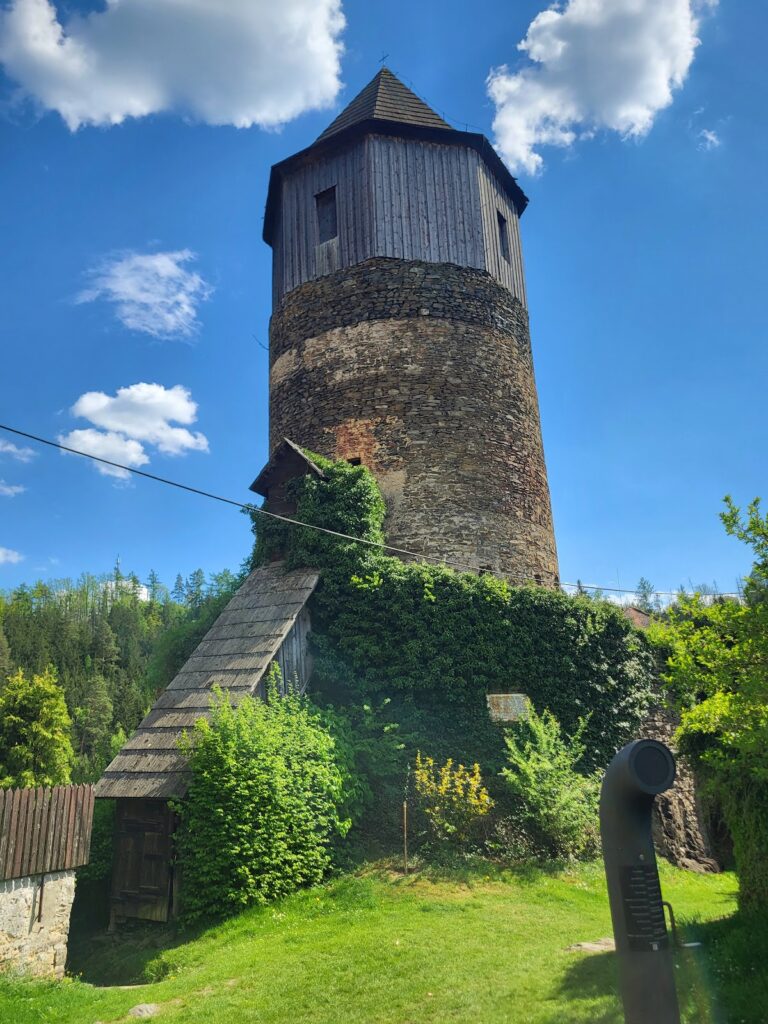
Over time, Vlašim Castle ceased to have any military role, transitioning fully into a residential and administrative function. It now houses a museum that preserves local history, collections of historic firearms and armor, and a display of natural history trophies. A significant event in the castle’s recent history was a major fire in August 1992, which destroyed the southern wing. This part of the building was carefully reconstructed by 2005. Today, the castle’s tower is used as a vantage point for observation, and its chapel, founded in 1771 by Maria Josepha of Auersperg, continues to be preserved as part of the historic complex. Additionally, the southern wing currently accommodates a vocational school.
Remains
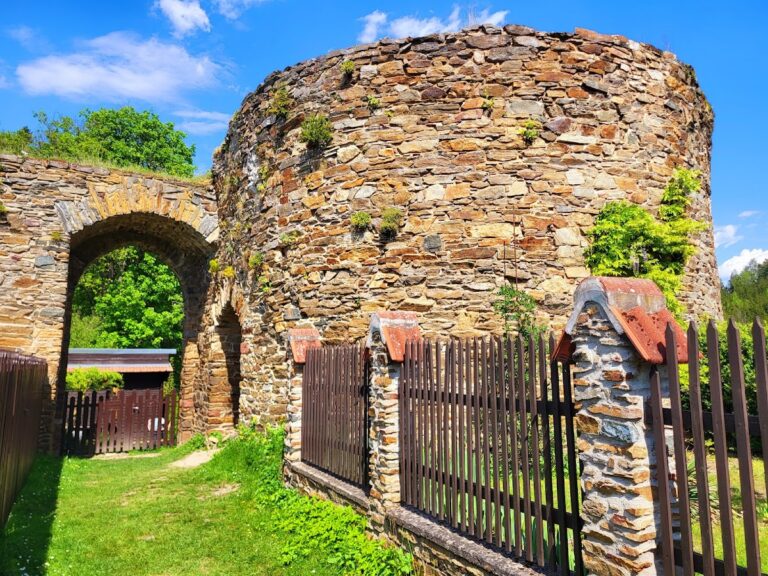
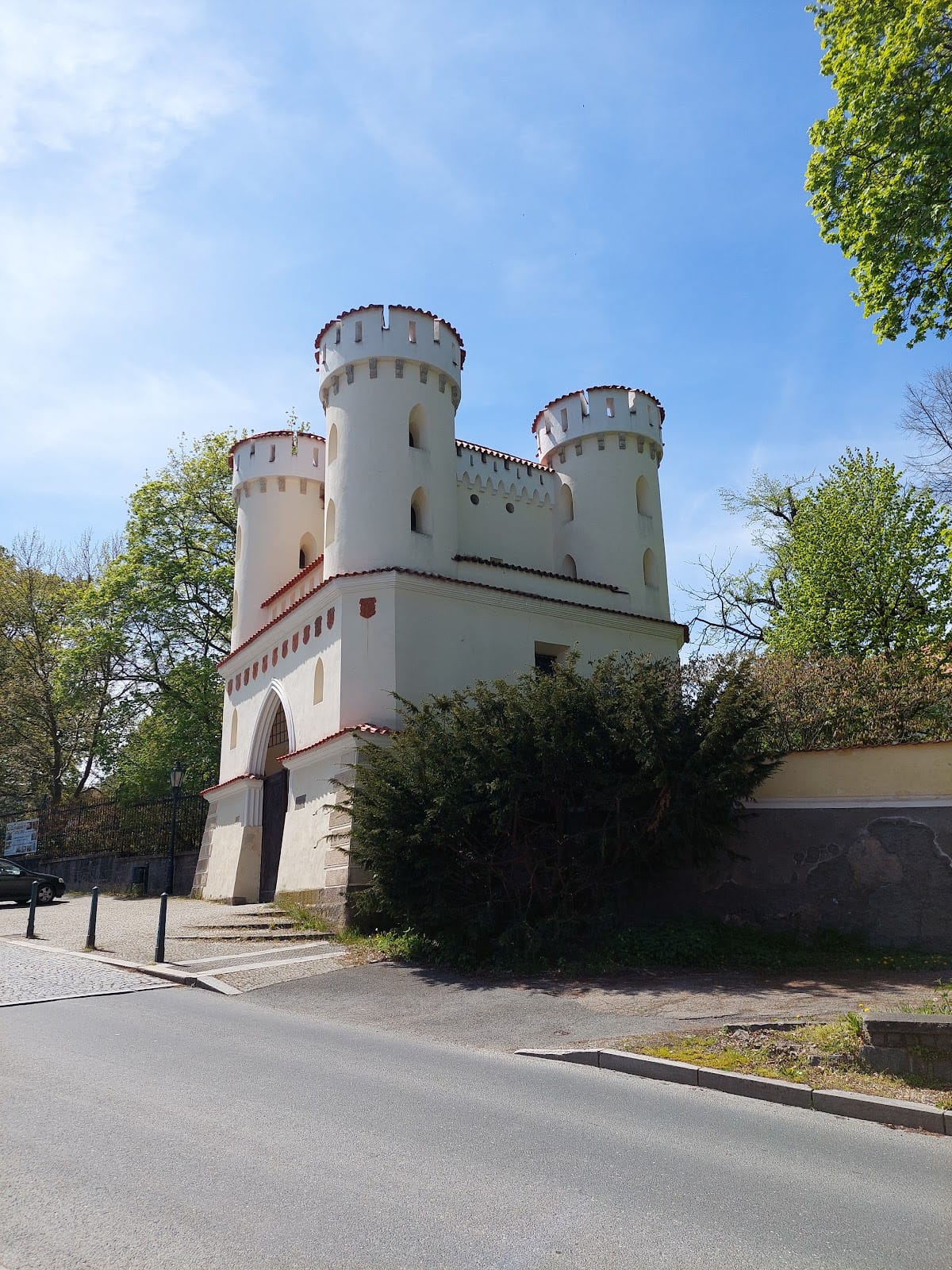
The Vlašim Castle complex consists of a main building surrounded by associated structures and is enclosed largely by defensive walls. These walls include three prominent gates—known as the Vlašimská, Domašínská, and Znosimská gates—that historically provided controlled access to the grounds. The Vlašimská Gate is particularly notable as a symbol of the city and currently hosts a regional art gallery, linking historic architecture with cultural display.
Initially constructed as a Gothic fortress, the original castle was rebuilt around 1600 into a Renaissance chateau. Subsequent neoclassical remodeling by the Auersperg family in the 19th century further altered its appearance, resulting in a blend of architectural styles evident today. Within the castle, there is a representative hall that functions as a venue for weddings and chamber music, as well as a chapel established in 1771 which remains part of the structure. The castle’s tower has a practical function as an observation point, reflecting its historical role in surveillance.
Surrounding the castle is a park covering approximately 70 hectares, designed initially in 1775 in a geometric style before being transformed into one of the earliest English landscape parks in the region. This park includes several surviving architectural features, such as a restored Chinese pavilion dating from the 18th century, a statue representing Samson, and three neo-Gothic gates. Ruins of the old medieval castle remain scattered within the grounds, offering material evidence of the site’s layered history. Other original garden features like a mosque, obelisk, grotto, and a small temple dedicated to Amor in a pond no longer survive.
The park contains a roughly three-kilometer educational trail that highlights local historical monuments, integrating natural and cultural heritage. It also serves as a space for exhibitions and includes facilities such as a restaurant, reflecting its use as a public cultural environment.
Inside the castle museum, collections are displayed including historic weapons and armor, traditional noble costumes, and coats of arms representing noble families, many of which are visible on the Vlašimská Gate and within the castle’s Hall of Coats of Arms. Additionally, the museum features taxidermy trophies and a series of engravings depicting the historical design of the park, providing tangible connections to the site’s noble past and landscape evolution.
Nearby sites