Burg Neunußberg: A Medieval Noble Castle in Bavaria


Site at a Glance
- Rating
- 4.5
- Popularity
- Low
- Country
- Germany
- Primary era
- Medieval
- External website
- Open
- Eras represented
- Medieval, Early Modern
- Civilizations
- Duchy of Bavaria, Holy Roman Empire
- Site type
- Military
- Remains
- Castle
On this page7 sections
History
Foundation and the Nußberg Family
Burg Neunußberg is a former late-medieval noble castle in Germany, near Viechtach, built between 1340 and 1350 by Konrad von Nußberg of the Nußberg family. After its construction, the family left its earlier ancestral seat at Burg Altnußberg. The castle belongs to the late medieval and early modern history of the Bavarian Forest, where the Nußbergs became one of the region’s most prominent knightly families.
The family is documented from the first half of the twelfth century. The Nußbergs began as ministerials, dependent members of the medieval nobility who served higher lords in administrative and military roles, under the Counts of Bogen. When the counts died out in 1242, the family came under Wittelsbach overlordship. In 1360, Duke Albrecht I of Lower Bavaria-Straubing granted the Nußbergs the hereditary office of marshal in Lower Bavaria.
The Böckler War
The family later became involved in a conflict between regional nobles and Duke Albrecht IV. In 1466, Warmund and Konrad von Nußberg joined 41 other nobles of the Bavarian Forest in forming the Böckler league, an association created to defend its members’ rights. Duke Albrecht IV’s campaign of 1468 and 1469 defeated the league in the Böckler War.
The defeat brought Burg Neunußberg under the duke’s control. Warmund von Nußberg surrendered the castle in 1469 in return for an annual pension, while Konrad von Nußberg gave it up in 1470 in exchange for the small castle of Linden.
Destruction and Preservation
Lightning destroyed the castle in 1564. The Nußberg family died out in 1569, after which the ruin and their remaining possessions passed to the Wittelsbachs, the ruling dynasty of Bavaria and several neighbouring territories. By the second half of the sixteenth century, the complex was no longer inhabited because it had lost its military usefulness, and it subsequently deteriorated.
On 21 May 1889, Johann and Franziska Fritz sold the castle to the Viechtach Forest Association, later the Viechtach section of the Bavarian Forest Association. The first renovation took place in 1939, and later work helped preserve the surviving fabric. Castle festivals with music and dancing were held at the site, and since summer 1968 the grounds have hosted the Burgfestspiele, whose historical setting is the 1468 knightly uprising. The performances are based on a text by the writer Karl Gareis.
Burg Neunußberg is protected in Bavaria as both an archaeological monument and a listed architectural monument. The archaeological protection includes medieval and early-modern remains within the castle ruin and within the Catholic Church of St Michael, the former castle chapel, including traces of predecessor buildings and earlier construction phases.
Remains
Castle Ruins
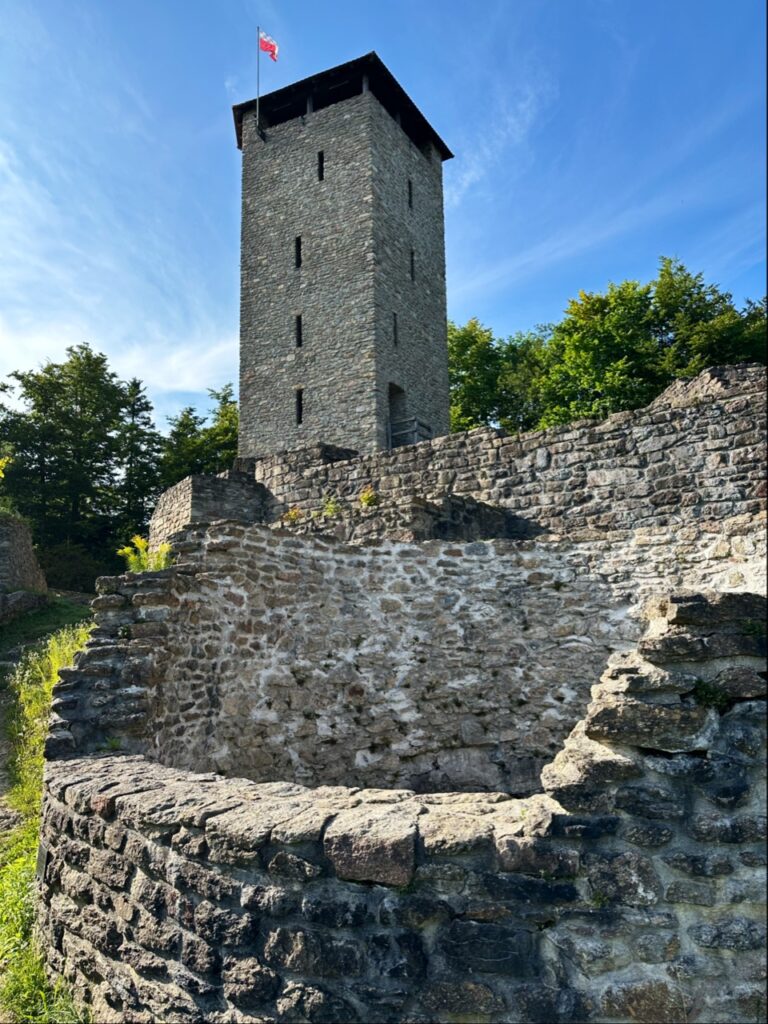
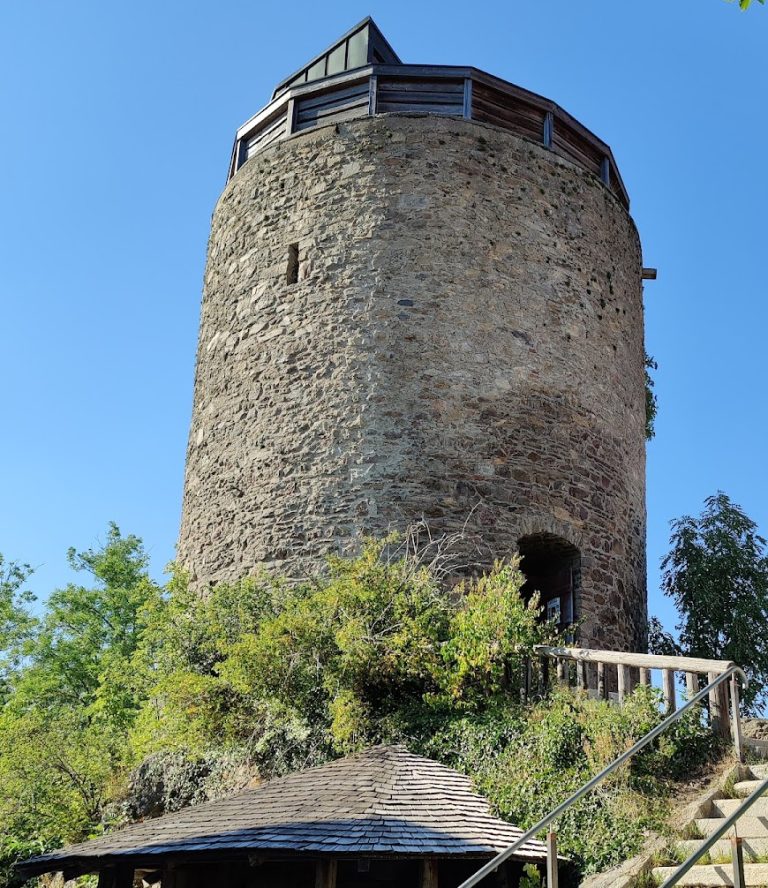
The ruin occupies the level summit of the 698.2-metre Neunußberg Castle Hill in the northern Bavarian Forest, about 290 metres above the valley of the Schwarzer Regen and within the settlement of Neunußberg. Across the valley stands Burg Altnußberg, the former ancestral castle of the Nußberg family, while the ruins of Kollnburg lie several kilometres to the southwest. The surviving complex includes a large square residential tower, parts of the enclosing defensive wall, and a three-quarter-round shell tower, a tower with a solid outer wall and an open or partly open rear side integrated into the fortification.
The residential tower has a square plan measuring approximately 20 metres on each side and rises about 25 metres high. It survives as a ruin and also serves as an observation tower. Subsurface remains preserve medieval and early-modern evidence associated with the castle, together with traces of predecessor buildings and earlier construction phases.
Castle Chapel
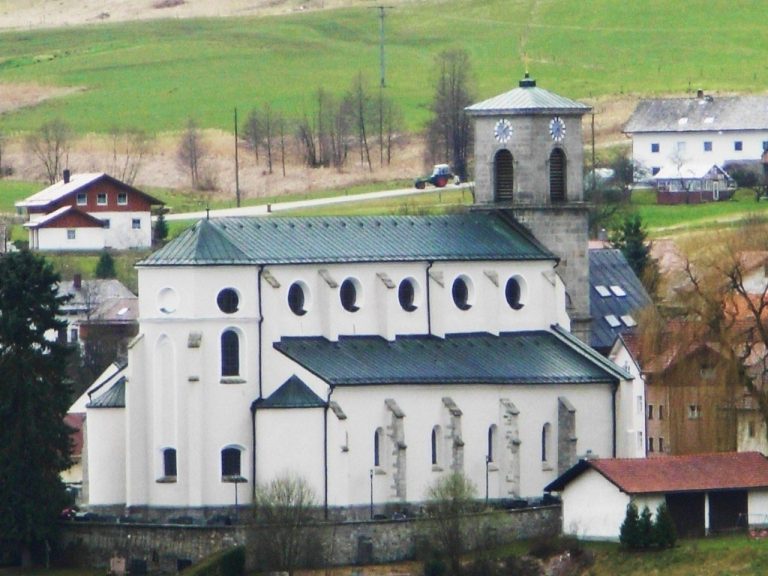
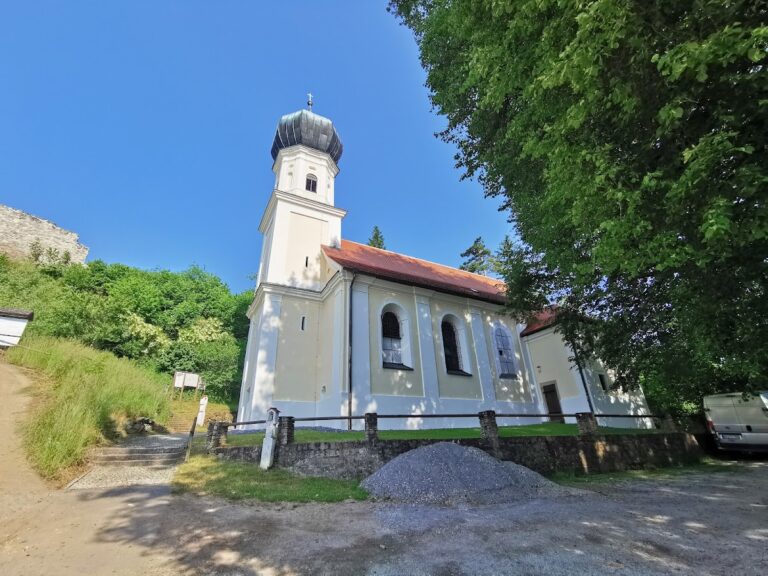
The castle chapel, now the Catholic Church of St Michael, dates from 1356 and has a Baroque interior. Its high altar was made around 1720, and its altarpiece shows Saint Michael, an archangel in Christian tradition. The interior also contains a painting of Saint Raphael with Tobias from around 1650, an image of Our Lady of Sorrows from around 1700, and a simple seventeenth-century statue of Saint Michael. Archaeological remains beneath and around the former chapel include medieval and early-modern evidence, traces of predecessor buildings, and older construction phases.