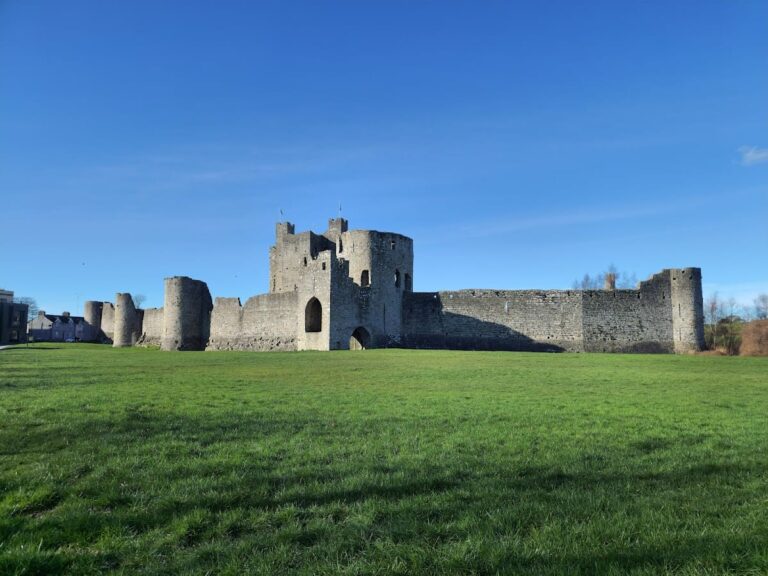
Tyrrellspass Castle: A Historic Anglo-Norman Tower House in Ireland



Visitor Information
Google Rating: 4.4
Popularity: Medium
Google Maps: View on Google Maps
Country: Ireland
Civilization: Unclassified
Remains: Military

History
Tyrrellspass Castle is located in Tyrrellspass, Ireland, and was constructed by the Anglo-Norman Tyrrell family, who settled in the region during the period of the Anglo-Norman invasion. The Tyrrells established the castle around 1411 in an area historically known as Fartullagh, which corresponds to the modern town bearing the same name. This site served as the familial stronghold and was the only surviving castle associated with the Tyrrell lineage.
In the late 16th century, Tyrrellspass Castle was central to a notable military event during the Nine Years’ War. In 1597, Captain Richard Tyrrell, allied with Hugh O’Neill, Earl of Tyrone, achieved a decisive victory against English forces at the Battle of Tyrrellspass. This encounter was part of a broader conflict between Gaelic lords and English attempts to assert control in Ireland.
The mid-17th century brought hardship during the Cromwellian conquest of Ireland. Around 1650, occupants of the castle faced severe consequences, including executions. Following these events, ownership of the castle and its surrounding lands transferred to the Rochfort family, who later acquired the title Earl of Belvedere. The castle remained under their possession for over a century.
By 1796, the second Earl of Belvedere leased Tyrrellspass Castle to the British army, repurposing the building as a military barracks. Later, ownership changed hands again in 1850 when Charles Brinsley Marlay inherited the estate through his maternal lineage tied to the first Earl of Belvedere. Subsequently, Lieutenant-Colonel Charles Howard-Bury, known for his exploration activities, became a later owner. During his tenure, the estate houses were sold, marking a period of decline for the property.
The castle saw a revival in the 20th century when Phillip Ginnell undertook significant restoration work during the 1970s. In the early 1990s, the building was adapted for contemporary use, becoming a restaurant that also features medieval-style banquets, thus preserving its historical presence by blending heritage with modern activity.
Remains
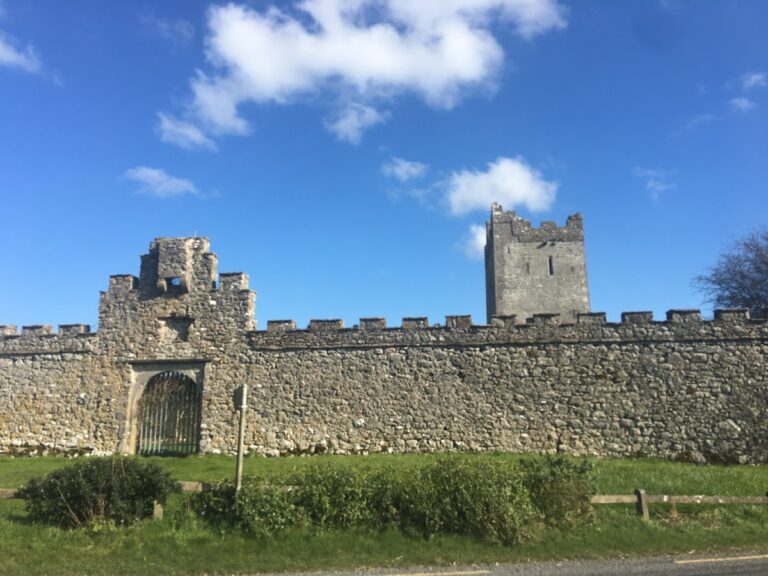
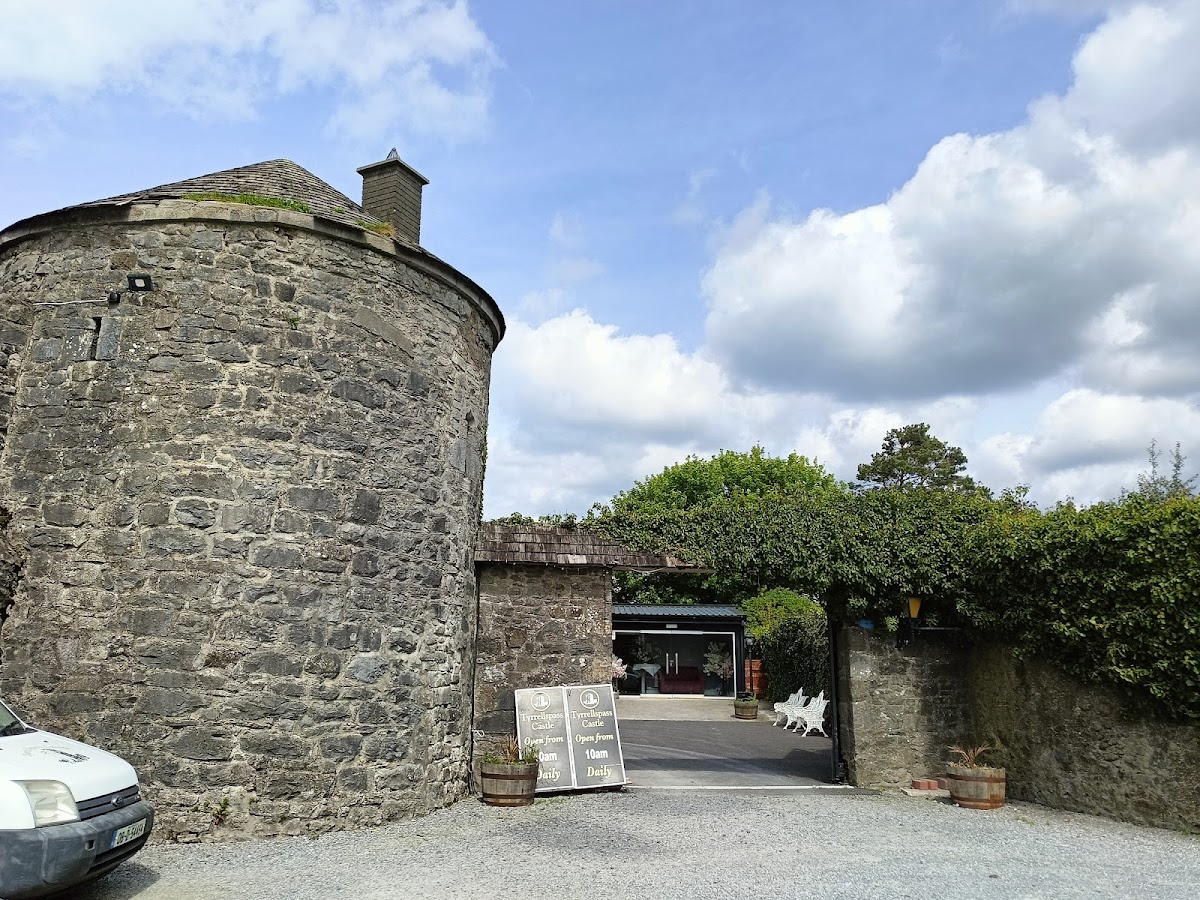
Tyrrellspass Castle is a tower house rising approximately twenty meters in height and built predominantly from stone. Tower houses are vertical structures designed to provide defensive living quarters, and this castle follows that traditional format with a series of chambers stacked one above the other. The stone construction emphasizes durability and defense, characteristics essential during the turbulent times of its origin.
Among its preserved features is an original spiral staircase, which allowed occupants to move between floors efficiently within the limited space of the tower while offering defensive advantages against attackers. Another significant element is a large roof beam dated to 1280, which predates the castle itself but remains in place as an exposed fixture in what is now the restaurant’s lounge area, linking the structure to older architectural elements or reused timber.
A notable defensive feature, the murder-hole, is positioned at the main entrance. This opening enabled defenders to attack individuals attempting to breach the doorway from above by dropping objects or pouring harmful substances. The castle also retains its battlements along the roofline—raised sections of the wall used historically for defensive combat. These adaptations highlight the castle’s primary military purpose throughout its history.
Over the centuries, the castle’s structure has seen various modifications, particularly during periods of military occupation and later restoration, but key original components remain intact. Today, the building combines these preserved medieval features with modern adaptations, offering insight into both its architectural and historical significance.
Nearby sites