Trazegnies Castle: A Historic Fortress in Hainaut, Belgium



Visitor Information
Google Rating: 4.3
Popularity: Low
Google Maps: View on Google Maps
Official Website: www.chateaudetrazegnies.be
Country: Belgium
Civilization: Medieval European
Remains: Military

History
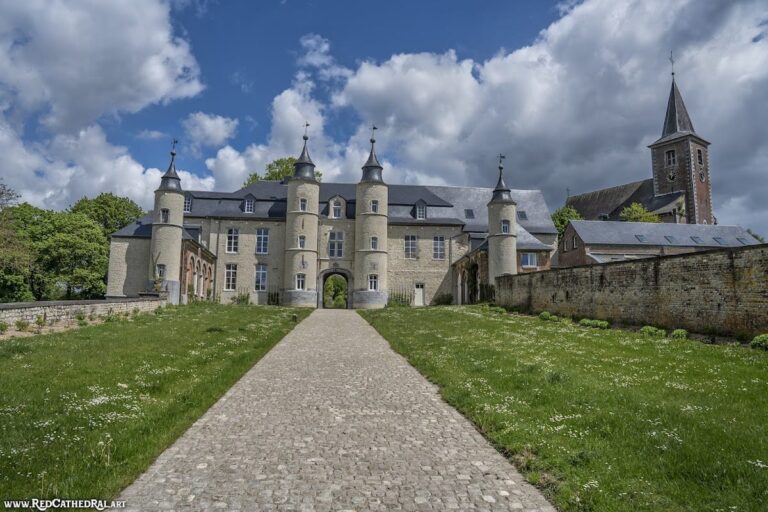
Trazegnies Castle is located in the village of Trazegnies, within the municipality of Courcelles in the province of Hainaut, Belgium. It was originally built in the 11th century by Gilles I, a member of the House of Trazegnies. This noble family controlled an independent seigneurie situated at the crossroads of three important medieval territories: the Duchy of Brabant, the County of Hainaut, and the Prince-Bishopric of Liège.
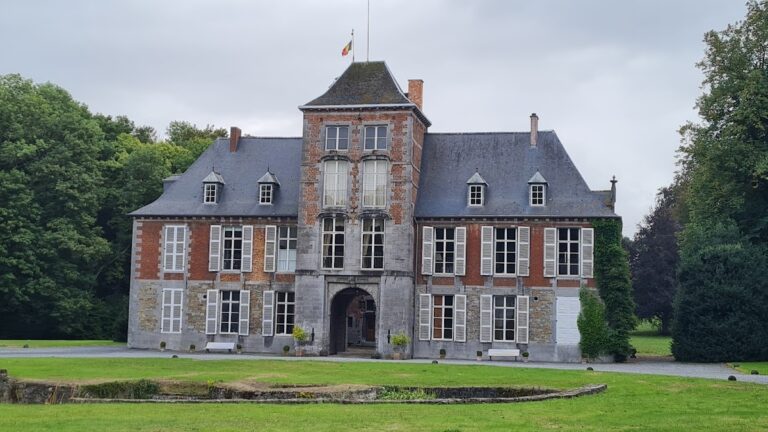
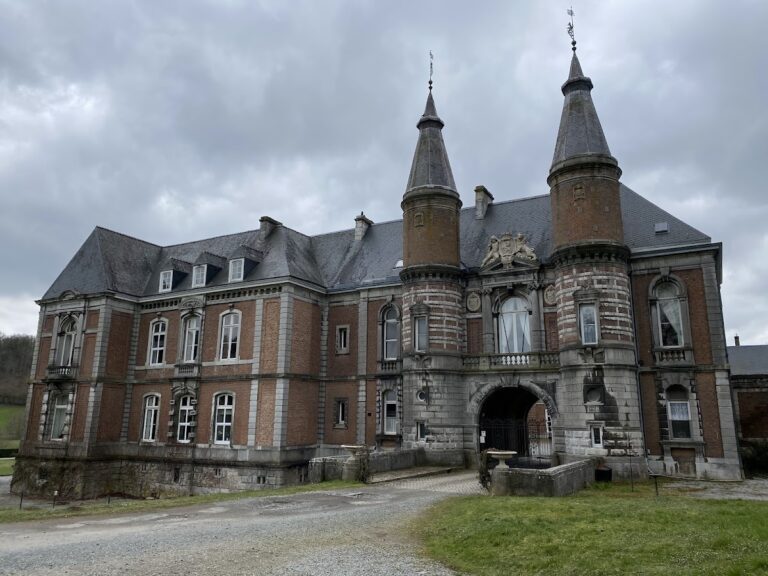
In 1554, during the Italian War of 1551–1559, the castle was nearly destroyed by the forces of Henry II of France. Following this devastation, the castle was rebuilt in the late 16th and 17th centuries. The reconstruction transformed it from a defensive fortress into a pleasure residence, marked by the addition of a façade in the Louis XIII style, reflecting the architectural tastes of that era.
The castle remained in the hands of the Trazegnies family until 1862, when Alexander, the last marquis of the senior line, died. Ownership then passed to his niece and later to the Bascoup coal mining company. This company divided the estate and sold the castle to private owners. In 1913, the Belgian state acquired the property.
By 1926, the castle had fallen into ruin and was at risk of demolition. Restoration efforts began under architect Marcel Simon and the association “Les Amis du Château de Trazegnies,” which aimed to preserve and enhance the site. Despite damage caused by subsidence from underground mining, gradual restoration has continued with support from the Walloon Region.
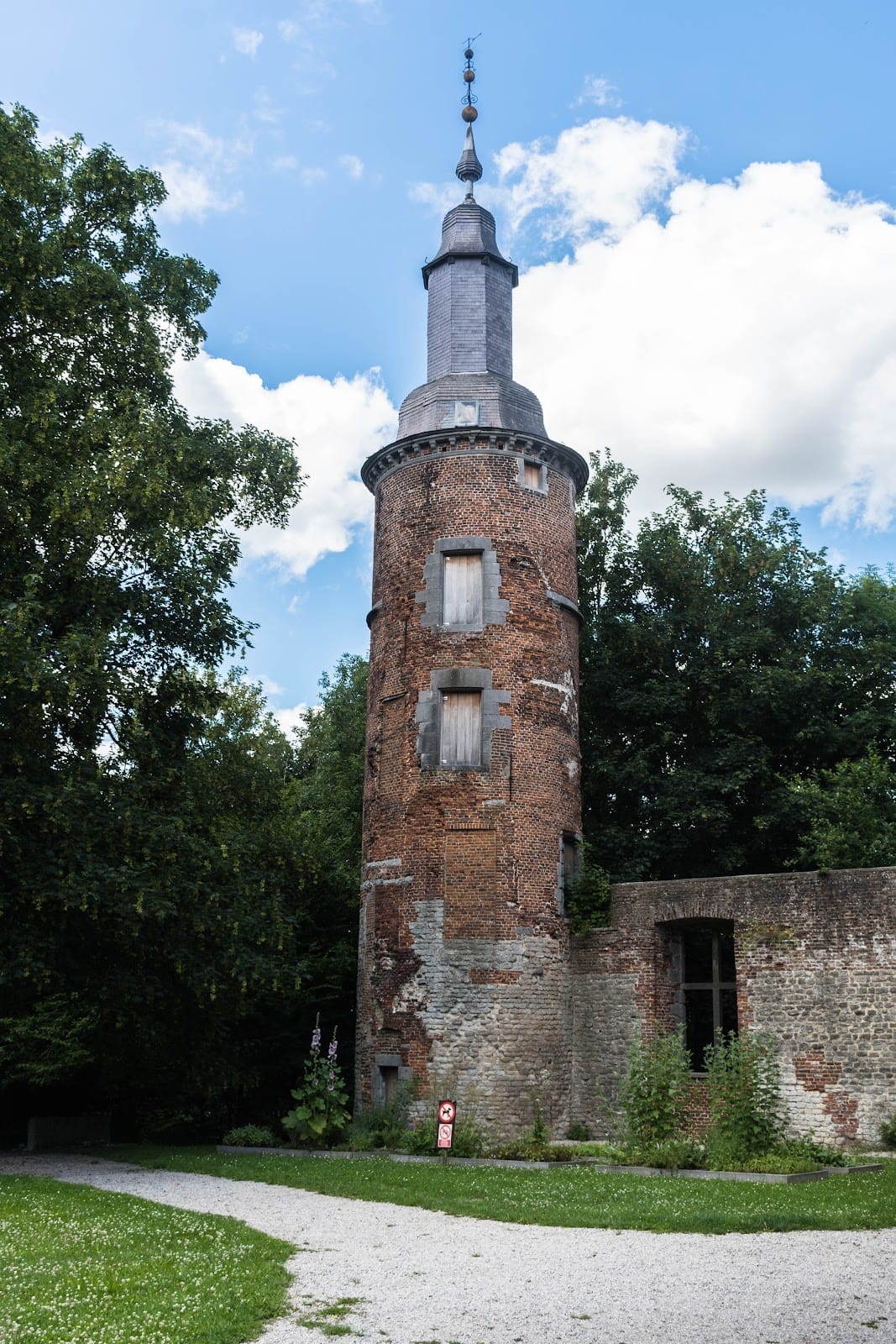
A notable event in the castle’s more recent history was the collapse of the Beyaert wing in 1920. This wing had connected the Louis XII wing to a circular tower, which now stands isolated.
Remains
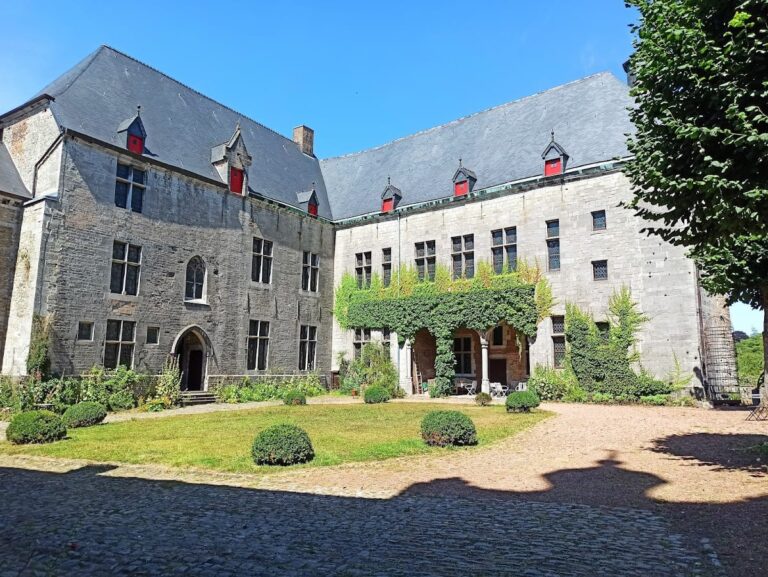
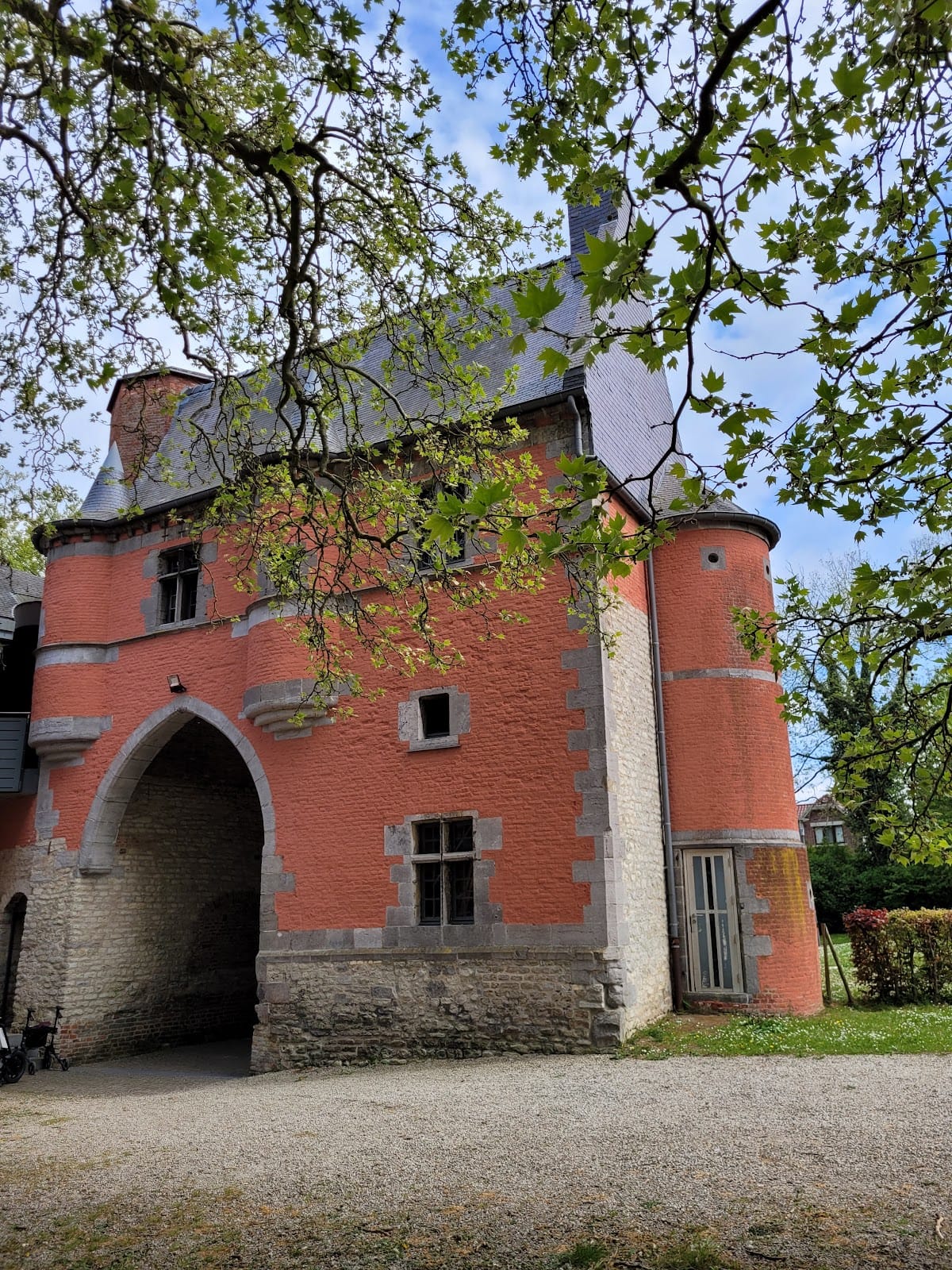
Trazegnies Castle features a complex layout that reflects its long history, combining medieval and early modern elements. The lower part of the gatehouse, or châtelet, dates back to the 13th century and remains preserved. This gatehouse served as the main entrance and defensive structure during the castle’s early period.
Beneath the castle lie Romanesque and Gothic cellars originating from the original 11th-century construction. These underground spaces provide a direct link to the castle’s medieval origins and have survived through centuries of change.
The 17th-century corps de logis, or main living quarters, was added during the castle’s transformation into a pleasure residence. It features a Louis XIII style façade, which contrasts with the older medieval masonry found elsewhere on the site.
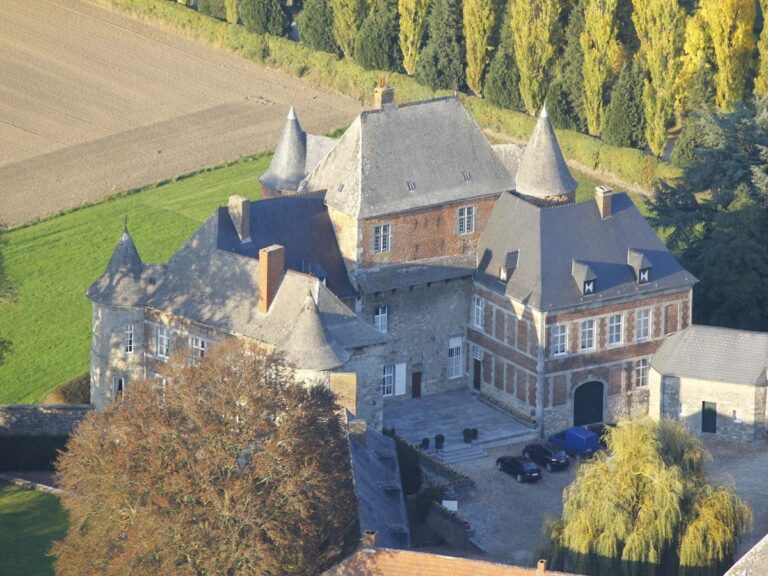
Historically, the castle included the Beyaert wing, which connected the Louis XII wing to a circular tower. This wing collapsed in 1920, leaving the tower separated from the main building. The collapse was part of the structural damage caused by subsidence related to nearby coal mining activities.
Despite these challenges, significant portions of the castle’s medieval and early modern fabric remain intact. Restoration efforts have stabilized the structure, preserving its historical features for future study and appreciation.