Torres de Oeste: A Historic Fortress in Catoira, Spain


Visitor Information
Google Rating: 4.5
Popularity: Medium
Google Maps: View on Google Maps
Country: Spain
Civilization: Unclassified
Remains: Military

History
The Torres de Oeste is a historic fortress located in the municipality of Catoira in modern Spain. Originally built by the Romans, it stands at the strategic meeting point of the Ulla River and the Ría de Arousa. Archaeological finds show that the site was inhabited since the Castro period, a pre-Roman Iron Age culture in the northwest of the Iberian Peninsula, and later formed the foundations for the Roman military construction known as Castellum Honesti.
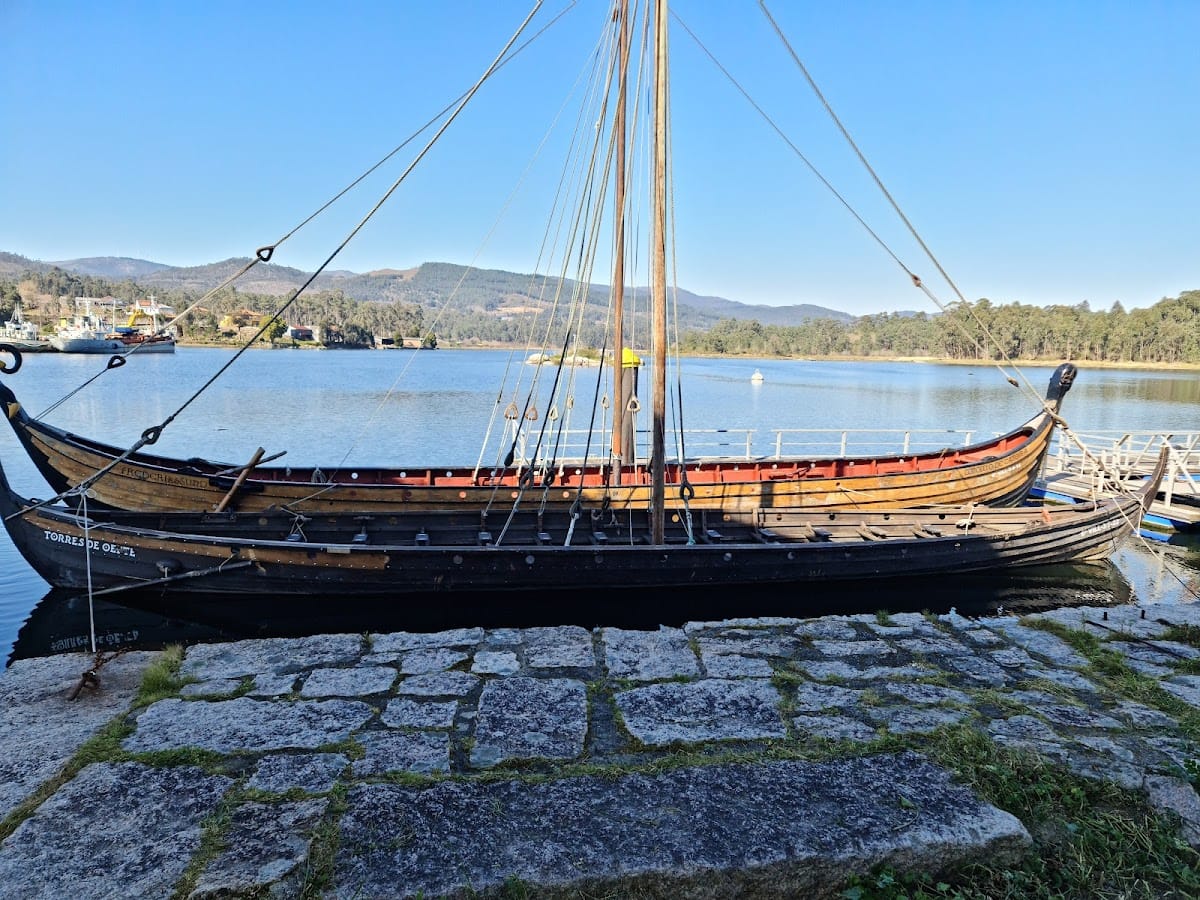
During the 9th and 10th centuries, this fortress took on great military significance as it faced repeated Viking incursions along the ria. These Norsemen ventured upriver, posing a serious threat to the surrounding territories. The defense of the Christian communities here was notably marked by the death of Bishop Sisnando, who died attempting to protect his diocese from these attacks. In response, the bishops of Iria and Santiago de Compostela undertook numerous efforts to repair and fortify the structure to safeguard the region.
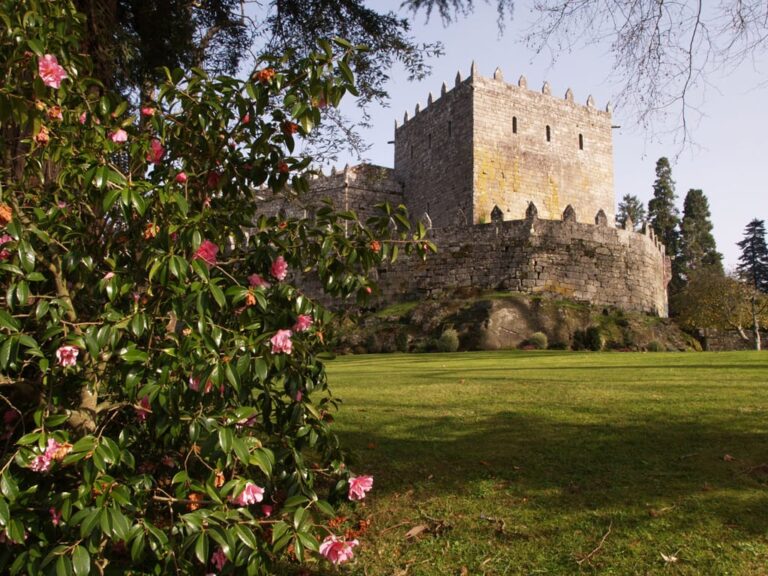
A notable moment in the castle’s history occurred on October 29, 1024, when King Alfonso V of León transferred ownership of the towers to Bishop Vistruario of Iria. Around 1040, Bishop Cresconio began major renovation works on the fortress, a process continued by his successors Diego Páez and Diego Xelmírez. By the 12th century, these efforts culminated in the creation of a strong defensive complex with seven towers protecting an enclosed area surrounded by marshes, which naturally enhanced its defenses. In 1122, Diego Xelmírez commissioned the construction of a chapel dedicated to the Apostle Santiago, further linking the site to the religious leadership of the time.
The fortress’s prominence diminished from the 15th century onward. Much of it was destroyed by 1525, and for several centuries it fell into decline. In the 20th century, the Torres de Oeste was officially recognized as a National Monument. Archaeological studies, particularly one led by Alberto Balil Illana in 1971, brought to light important aspects of its layered history. Intriguingly, a French coin dating to the 11th or 12th century and minted in Angers was found near the chapel in 2022, hinting at possible connections through trade or pilgrimage during the time of Diego Xelmírez.
Remains
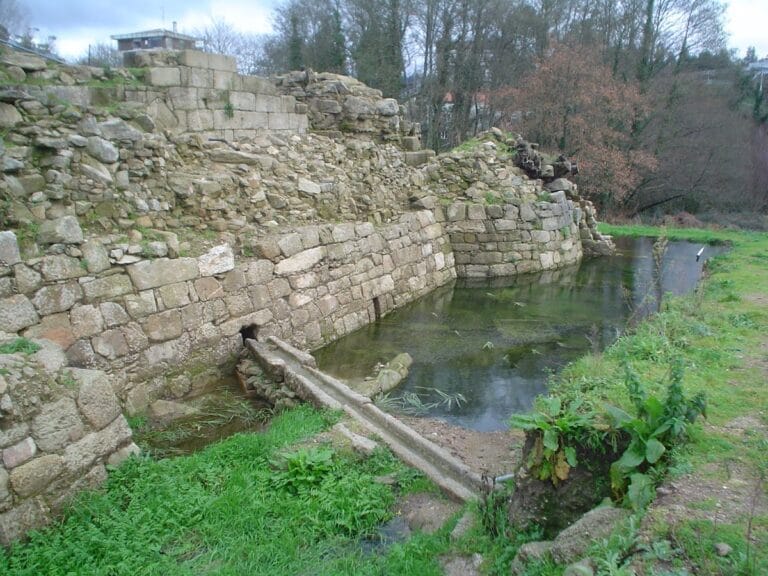
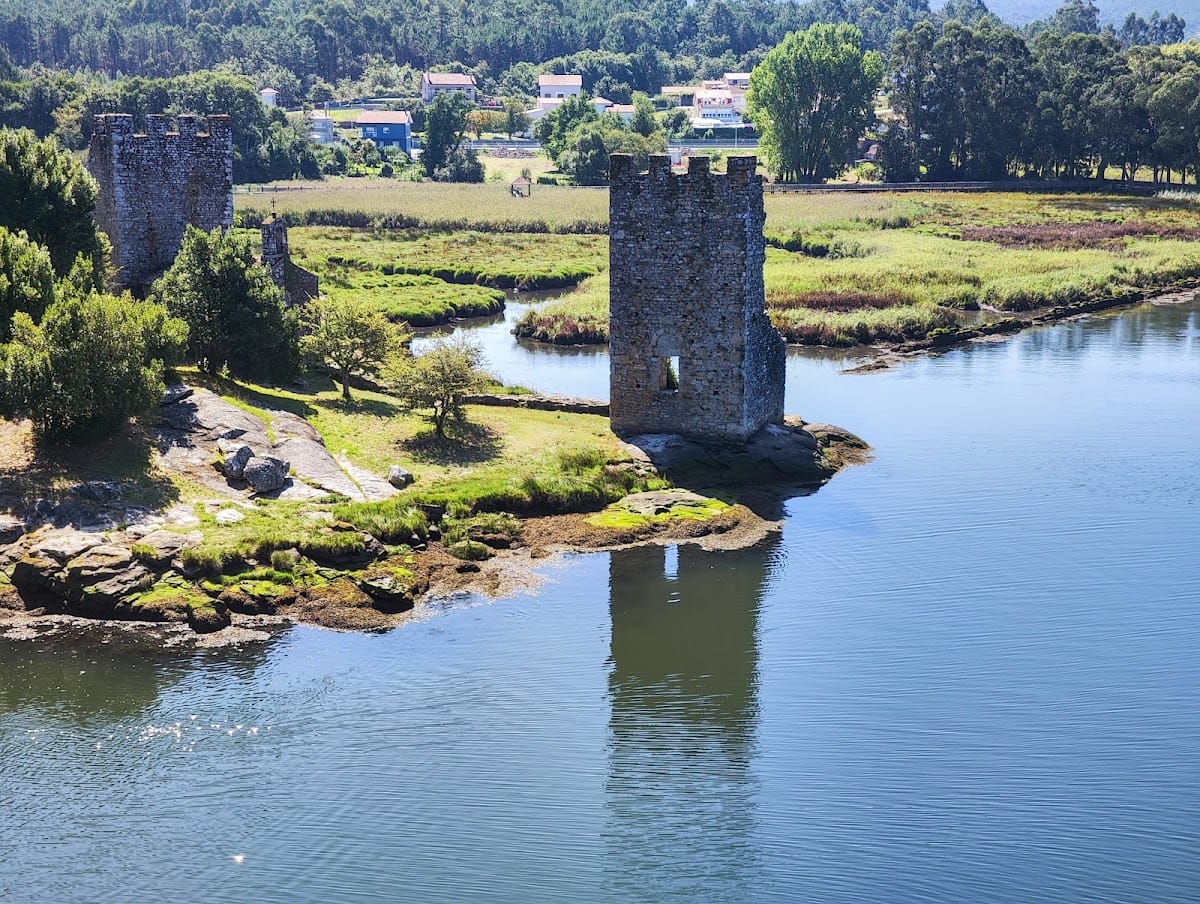
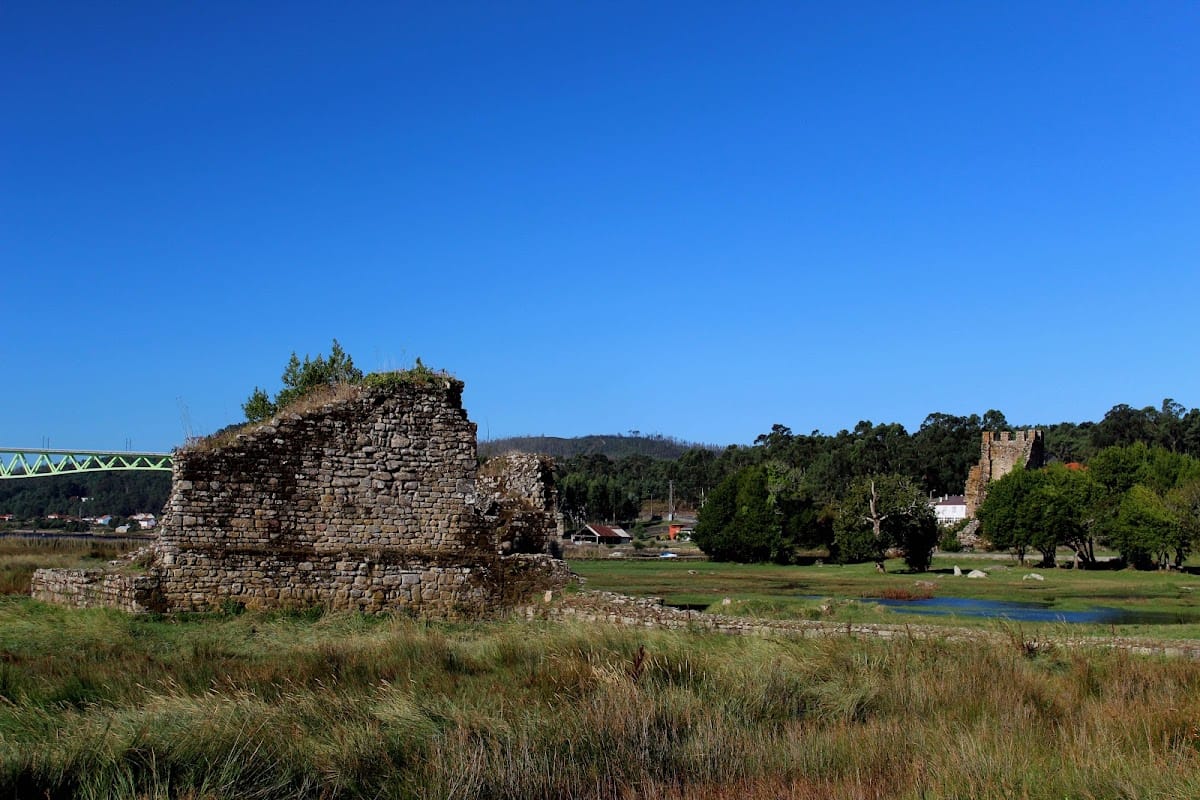
Today, the Torres de Oeste preserves several key elements of its medieval structure. The fortress was originally composed of seven towers arranged around a fortified enclosure, which was surrounded by marshlands that acted as a natural defense barrier. Of these towers, two remain largely intact while a third stands in a heavily ruined condition. These towers have square bases and are built from medium-sized cut stones known locally as “Asturian” stone. Larger stones were carefully placed at the corners and openings to strengthen the construction.
Attached to one of these towers is the chapel built in 1122 by Diego Xelmírez. The chapel is a single nave with a semicircular apse, its interior covered by a barrel vault possessing a characteristic horseshoe arch shape—a form common in medieval Spanish architecture. Inside, a semicircular triumphal arch rests upon sturdy cuboid supports or jambs. The main entrance features a simple door surmounted by a pentagonal lintel and a semicircular arch, while above the façade rises a bell gable with a single opening. Although the tympanum above the door once held an inscription, only faint traces remain today.
The southern wall of the fortress lacks decorative elements such as cornices or arrow slits, containing simply a lintelled door with a relieving arch similar to the castle’s main entrance. In contrast, the northern wall is pierced by five arrow slits topped by horseshoe arches, reinforcing the defensive capability in that direction. Among the findings from the site are two inscribed stone artifacts now housed in the Pontevedra Museum. One is a slab dated with a medieval chronogram “ERA MCC,” and the other is a rectangular relief carved with a Greek cross flanked by alpha and omega symbols, bearing the inscription in Latin “IN HOC SIGNO TUETUR PIUS HOC SIGNO VINCITUR INIMICUS,” which translates to “In this sign, the pious one is protected; by this sign, the enemy is conquered.”
The surrounding marshes, which still mark the landscape, played an important role in the fortress’s defense strategy, making direct assault difficult. Although much has been altered through the centuries, these remaining structures and recovered artifacts offer a tangible link to the site’s complex history that spans from Roman times through its medieval flourishing and eventual decline.
Nearby sites