Castillo del Príncipe: An Eighteenth-Century Coastal Fortress in Spain
Site at a Glance
- Rating
- 5
- Popularity
- Very Low
- Country
- Spain
- Primary era
- Early Modern
- Eras represented
- Early Modern
- Civilizations
- Spanish
- Site type
- Military
- Remains
- Fort
On this page9 sections
History
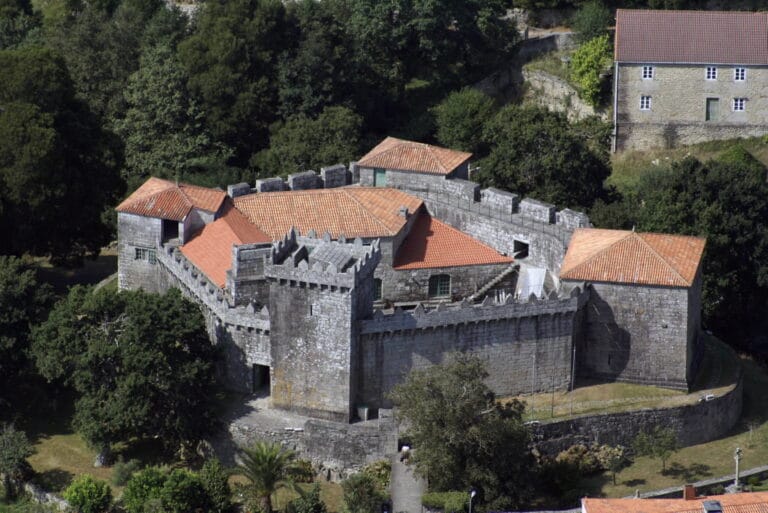
Castillo del Príncipe is an eighteenth-century coastal fortress in Cee, Spain, built to defend the Corcubión estuary on the coast of Galicia. Construction began in 1740 alongside Castillo del Cardenal, which stands on the opposite bank. The fortress was completed in 1755 and gave its name to the nearby village of Castelo do Príncipe.
Construction and royal dedication
The engineer Francisco Llobet was initially responsible for the project. Carlos Lemaur replaced him in 1744, when the definitive construction works began. The fortress formed part of a coastal defense system designed to control the waters of the estuary and protect the surrounding coast.
The name Príncipe honored the son of Charles III of Spain. Charles III was a Bourbon king who reigned from 1759 to 1788, while his son succeeded him as Charles IV and ruled from 1788 to 1808.
Decline, private ownership, and protection
During the nineteenth century, the strategic importance of the Costa da Morte declined. The fortress consequently passed out of state ownership and was sold at public auction late in that century. Its first private owner was Plácido Castro Rivas, a businessman, banker, and politician from the Finisterre area who lived in Corcubión. In 1892, he also bought Castillo de San Carlos in Finisterre.
After leaving Corcubión, Castro donated several properties, including Castillo del Príncipe, to the Association of Journalists of Madrid in 1928. The association mortgaged the property, and it later passed into the ownership of a bank.
After many years of abandonment, the fortress was acquired in 1985 by the Galician businessman Xosé Ramón Oreiro. He carried out the largest renovation in the building’s history and converted it into a private luxury residence. A businessman from La Rioja bought the property in 2006. Castillo del Príncipe remains privately owned and closed to the public.
Spain declared Castillo del Príncipe an Asset of Cultural Interest in 1994, in the monument category. This designation provides legal protection under Galicia’s Cultural Heritage Law 5/2016. Article 48 requires owners of protected properties to allow public visits for at least four days each month, with a minimum of four hours on each designated day. The fortress’s continued closure prompted residents of the municipality of Cee to demand that it be opened to the public.
Remains
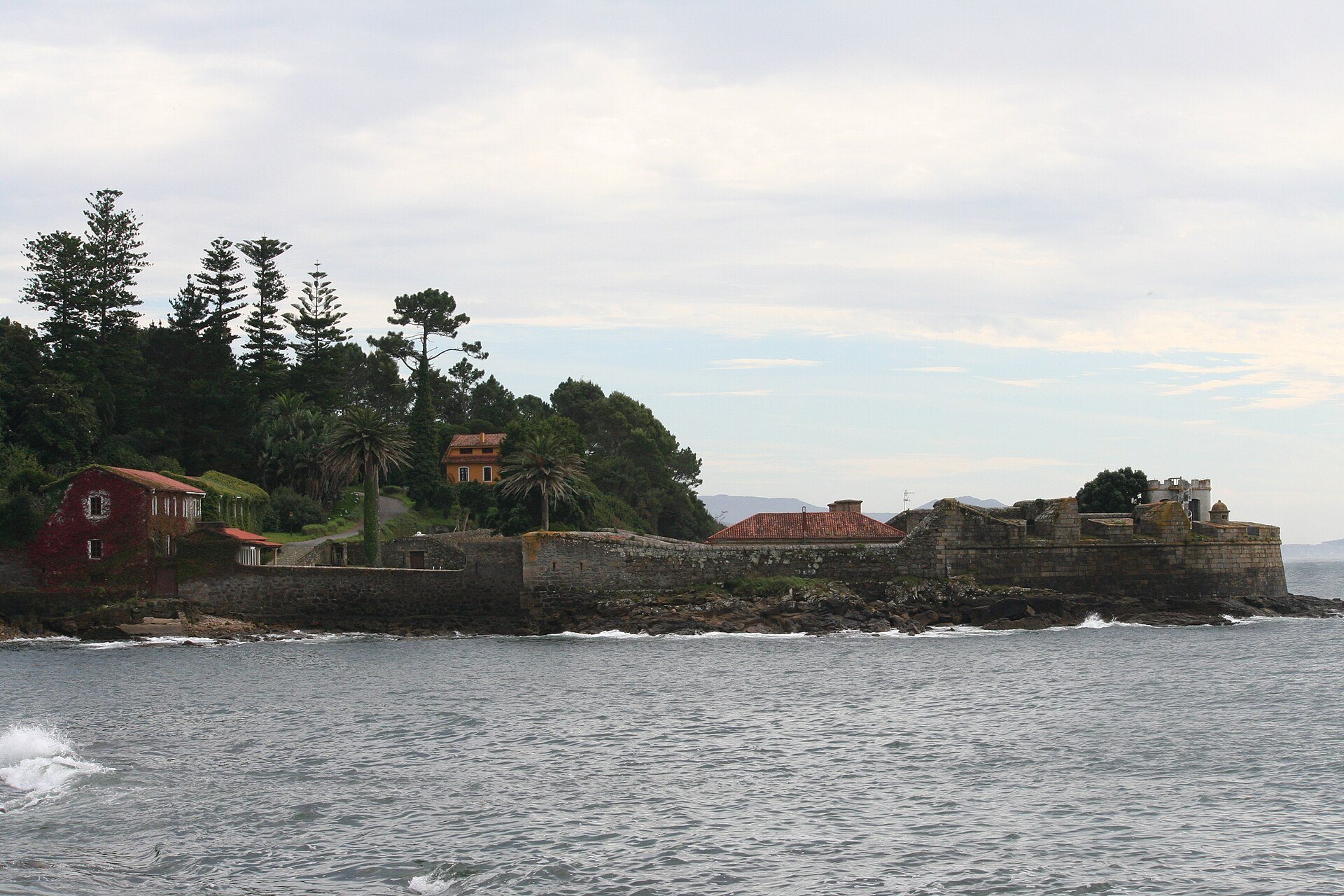
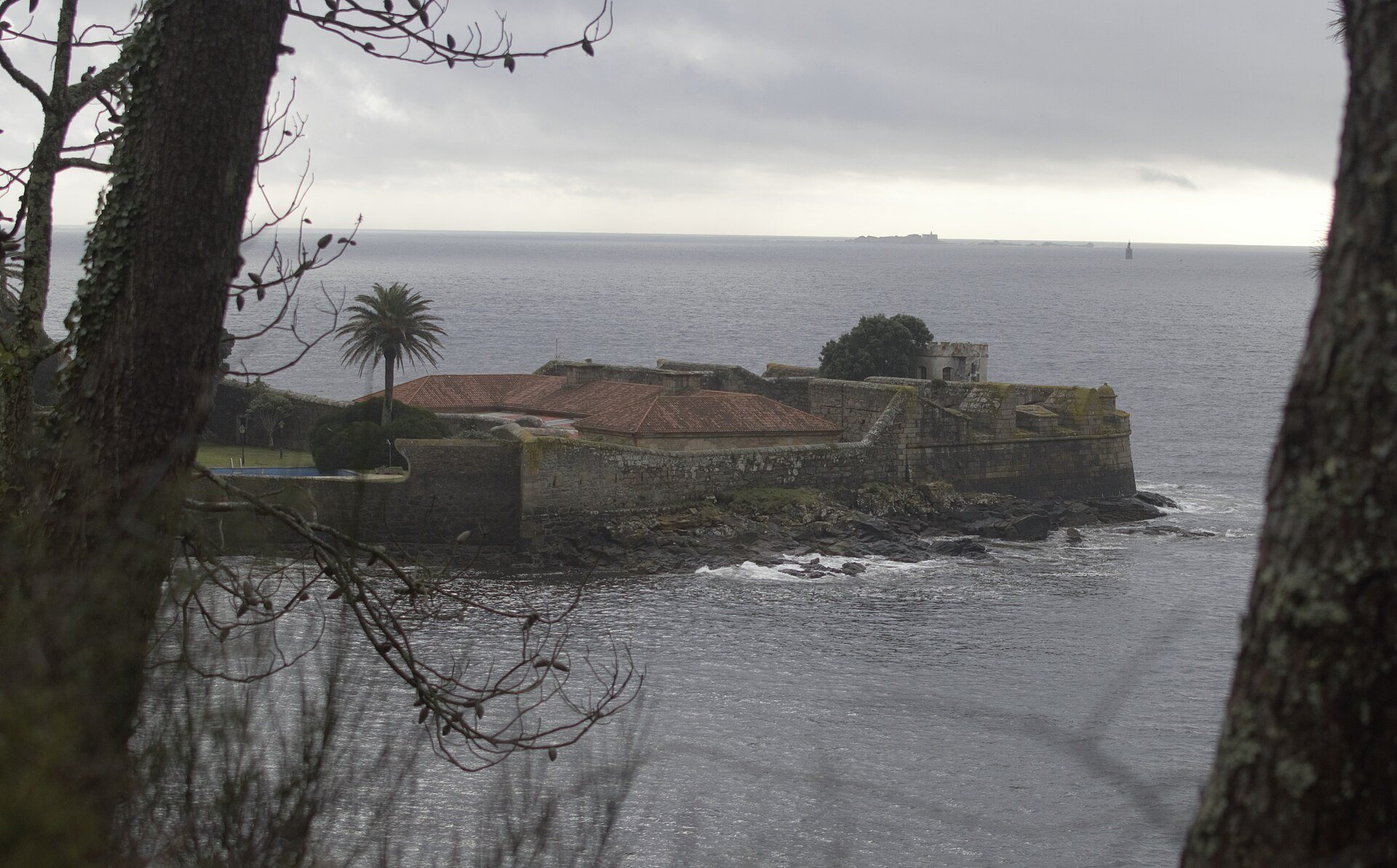
The fortress occupies a coastal position across the Corcubión estuary from Castillo del Cardenal. Its layout combined seaward artillery defenses with a landward entrance and service buildings. The outer perimeter and much of the interior masonry were constructed from finely dressed stone.
Defensive works
Seaward artillery defenses
Castillo del Príncipe was designed for artillery defense toward the sea. Twelve artillery pieces were mounted in twelve gun embrasures directed across the water. A broad rampart walk, the passage along the top of a defensive wall, could be reached by a ramp or by two stone stairways.
The fortification also included a hornwork, an outer defense made chiefly from two projecting semi-bastions joined by a connecting wall. Its espaldones, protective embankments or defensive screens, were formed with segmental arches. These elements strengthened the position facing the estuary and supported its artillery role.
Landward entrance
On the landward side, a moat protected the fortress. A bridge crossed the moat and led into the center of the curtain wall, the section joining two projecting defensive works. This entrance connected the outer defenses with the interior of the fortification.
Garrison and logistical building
Service building
A large building projected its wings toward the semi-bastions of the hornwork. It housed the logistical facilities needed by the garrison, including accommodation for 88 soldiers, warehouses, and a powder magazine, a secured structure for storing gunpowder. Together with the artillery positions and defensive walls, these spaces made the fortress both a firing position and a functioning military station.