Roman Villa Echternach: A Historic Roman Estate in Luxembourg

Visitor Information
Google Rating: 4.3
Popularity: Low
Google Maps: View on Google Maps
Official Website: www.mnaha.lu
Country: Luxembourg
Civilization: Roman
Remains: Domestic

History
The Roman Villa Echternach was established around 70 AD near the Schwaarucht river, southwest of the modern town of Echternach in Luxembourg. It was constructed by inhabitants of the Roman Empire, serving as a rural estate within the province governed from Trier, then a major administrative center. The villa formed part of one of the largest and wealthiest agricultural domains in the region, reflecting the Roman presence in this frontier area.
During the early 2nd century, the villa underwent significant enhancements, including the installation of an underfloor heating system known as a hypocaust. This period marked the expansion of the residence, which initially functioned as a unified palatial home. The estate likely supported agricultural production and horse breeding, with horses possibly sold to Roman military forces. It may also have operated as a logistical supply point for Roman troops stationed nearby.
The 3rd century brought challenges to the villa, including damage from fires and incursions by Germanic groups. Around 275 AD, after partial destruction, the complex was rebuilt with a new layout featuring separate buildings connected by colonnades. The bathing facilities were enlarged and transformed into a public-style bathhouse, including a large cold-water room (frigidarium) and a thermal pool, indicating a shift in function and social use.
In the 5th century, the villa suffered complete destruction during invasions that marked the decline of Roman authority in the region. Subsequently, the ruins were quarried for building materials by monks from the nearby Echternach monastery, which owned the land. No inscriptions or direct evidence have been found to identify the villa’s owner. The site remained largely forgotten until archaeological interest arose in the late 20th century.
Remains
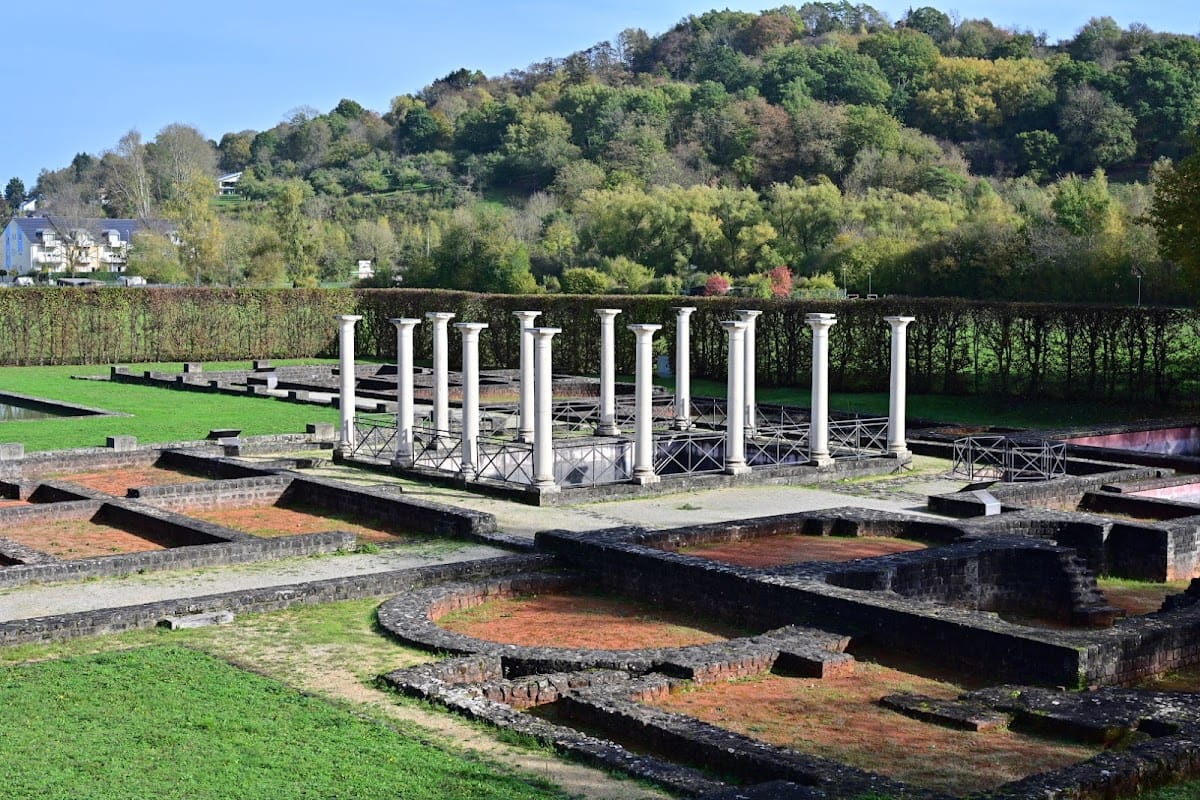
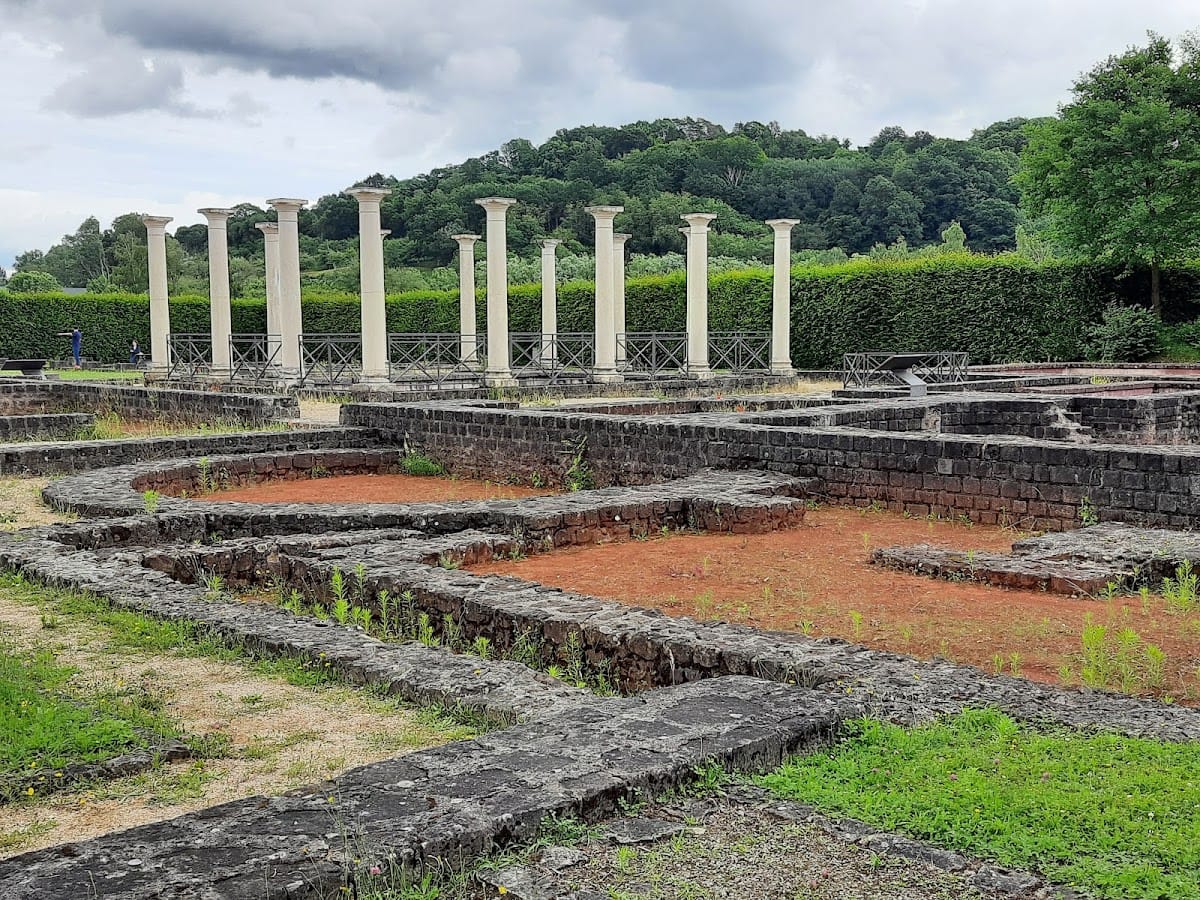
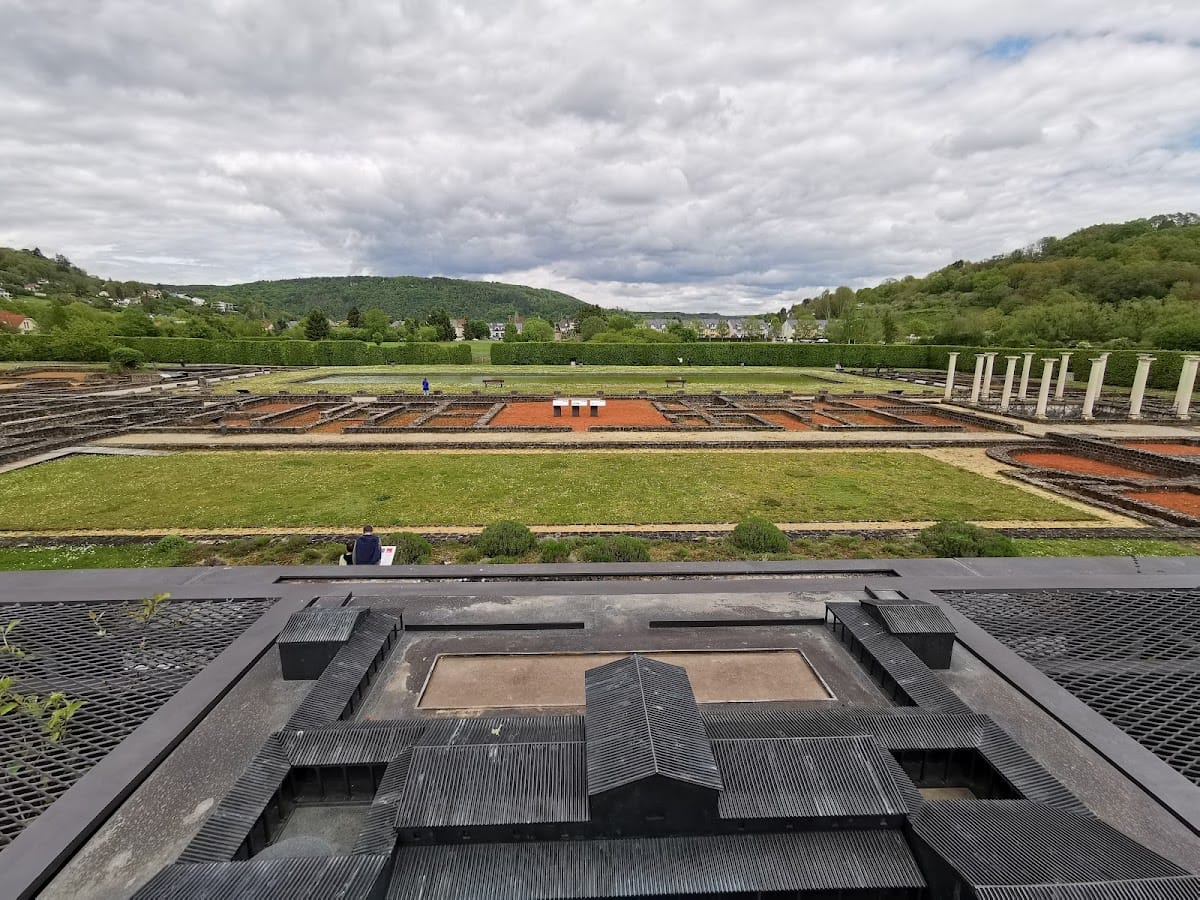
The villa’s remains reveal a large two-story residence with a ground floor containing up to seventy rooms arranged around a central courtyard. The complex measures approximately 118 by 62 meters and exhibits symmetrical wings aligned along a central axis. The courtyard is enclosed by a portico and includes a basin, reflecting architectural principles described by the Roman author Vitruvius.
Constructed with walls clad in marble, some imported from Italy, the villa’s interiors featured mosaic floors in several rooms, indicating a high level of luxury. The hypocaust heating system was initially installed in the main building and later extended to the side wings during the early 2nd century. Two large peristyle courtyards lead to a grand dining hall (triclinium) and extensive bathing facilities.
The baths complex was expanded after the 3rd-century fire, incorporating a monumental frigidarium with a covered square pool measuring nine meters wide, alongside a thermal pool. Additional smaller courtyards were added on both sides of the main building. The economic sector of the villa, known as the pars rustica, lies to the south and includes at least ten buildings such as barns, stables, and slave quarters. This area has been identified through aerial photography but remains only partially excavated.
A Roman garden adjacent to the site contains medicinal plants, vegetables, herbs, spices, fruit trees, and a pergola covered with vines, illustrating the horticultural practices of the villa’s inhabitants. The ruins are sufficiently preserved to allow detailed archaeological study and digital reconstructions that visualize the villa’s original appearance. The site is managed by the National Museum at Fëschmaart following its designation as a national monument in the late 1980s.
Nearby sites