Roman Theatre of Medellín: An Ancient Roman Theatre in Spain

Visitor Information
Google Rating: 4.6
Popularity: Medium
Google Maps: View on Google Maps
Official Website: www.turismomedellin.es
Country: Spain
Civilization: Roman
Remains: Entertainment

History
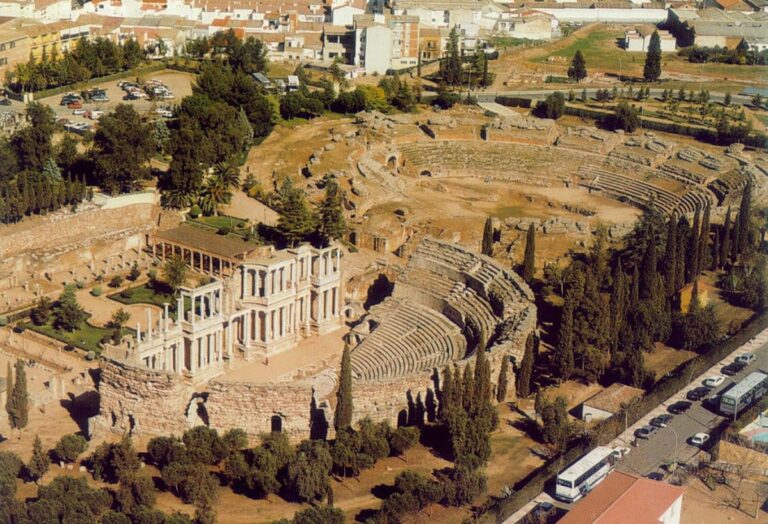
The Roman Theatre of Medellín is located in the municipality of Medellín, Spain. It was constructed by the Romans during the 1st century BCE and is closely connected to the ancient settlement known as Colonia Metellinensis.
The theatre’s origins are tied to the establishment of Colonia Metellinensis, a Roman colony whose precise location had been uncertain until the theatre’s discovery provided a key reference point. For centuries, the structure was misunderstood and initially mistaken for a circus, a type of Roman arena used for chariot races. It was only in the early 20th century that scholars correctly identified the remains as those of a Roman theatre.
Archaeological interest in the site began in earnest between 1969 and 1970, when the first excavations uncovered parts of the theatre’s floor plan. After this initial work, the site experienced a long period without significant archaeological activity. Excavations resumed in 2007, revealing a deeper historical sequence that extended beyond the Roman period into recent prehistoric times.
Efforts to preserve and restore the theatre have involved local authorities and community groups, including the Asociación Histórica Metellinense. These initiatives have aimed to protect the site and promote its recognition as an important cultural and historical landmark.
Remains
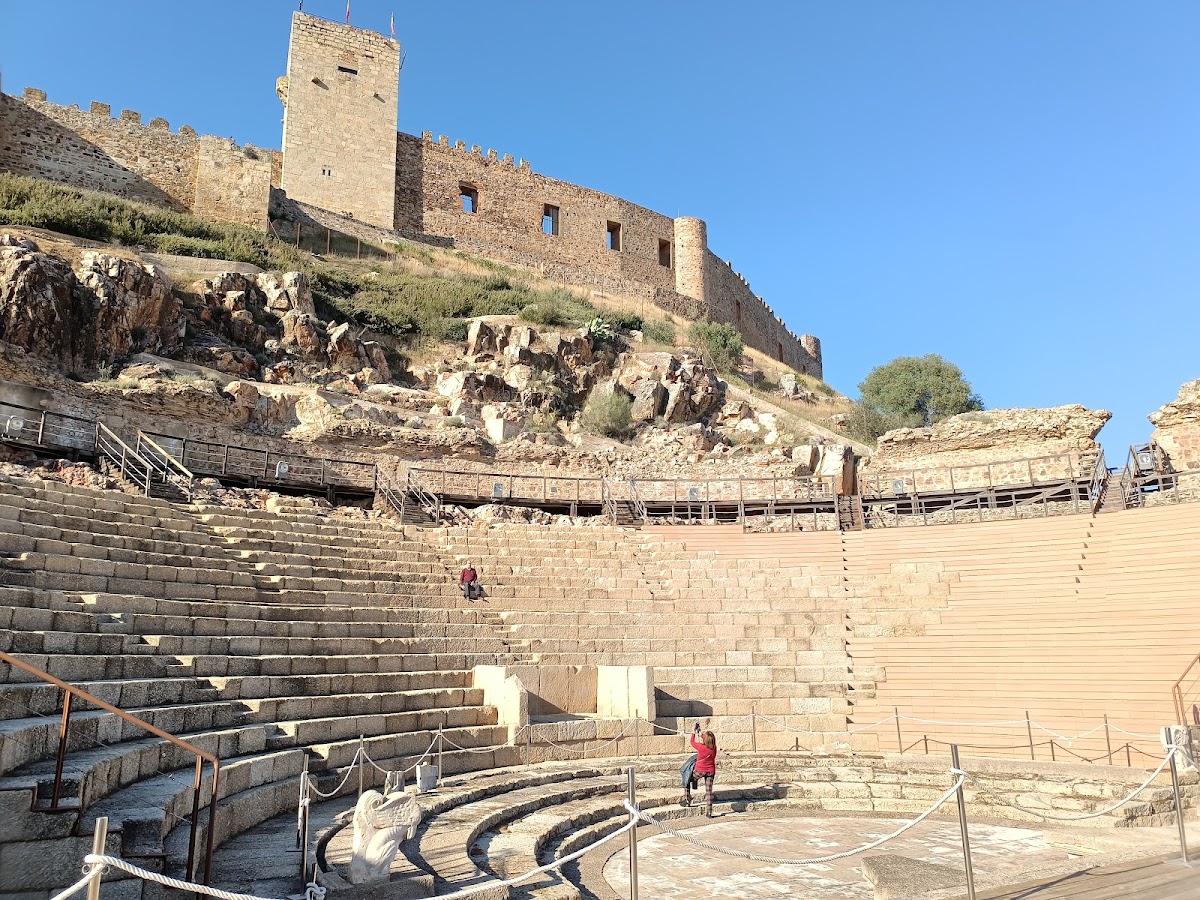
The Roman Theatre of Medellín is built into the natural slope of the southern hillside of Cerro del Castillo, following a design influenced by Greek theatre architecture. This adaptation to the terrain allowed the structure to integrate with the landscape, using the hillside as a natural foundation for the seating area.
The theatre’s construction showcases several Roman building techniques. Among these are opus caementicium, a form of Roman concrete; opus latericium, which involves brickwork; opus incertum, a method using irregularly shaped stones; and opus quadratum, characterized by squared stone blocks.
Approximately 800 original stone blocks, known as sillares, remain in the seating area, or gradas, preserving the theatre’s tiered arrangement where spectators would have sat. In the orchestra section, which was the circular or semicircular space in front of the stage used for performances and sometimes for seating dignitaries, marble elements have been conserved, highlighting the use of more refined materials in prominent areas.
Nearby sites