Roman Aqueduct near Metz: Ancient Water Supply Infrastructure in Grand Est, France
Visitor Information
Google Rating: 4.4
Popularity: Low
Google Maps: View on Google Maps
Official Website: metzprestige.fr
Country: France
Civilization: Roman
Remains: Infrastructure

History
The Roman aqueduct near Metz is located in the Grand Est region of northeastern France. It was built by the Romans in the early 2nd century AD to supply water to Divodurum, the capital city of the Mediomatrici tribe. Divodurum, now known as Metz, was a prominent urban center positioned at the crossroads of major Roman roads linking Lyon to Trier and Reims to Strasbourg.
In the 2nd century AD, Divodurum had a population of about 20,000 inhabitants. The aqueduct was constructed to provide a steady water supply for public fountains, three Roman bathhouses, public latrines, and local artisans. The exact locations of water distribution within the city remain uncertain.
The aqueduct fell out of use in later centuries, but its remains were recognized for their historical value early on. It was first listed as a historic monument in 1840, with further protections added in 1980 and 1990.
Remains
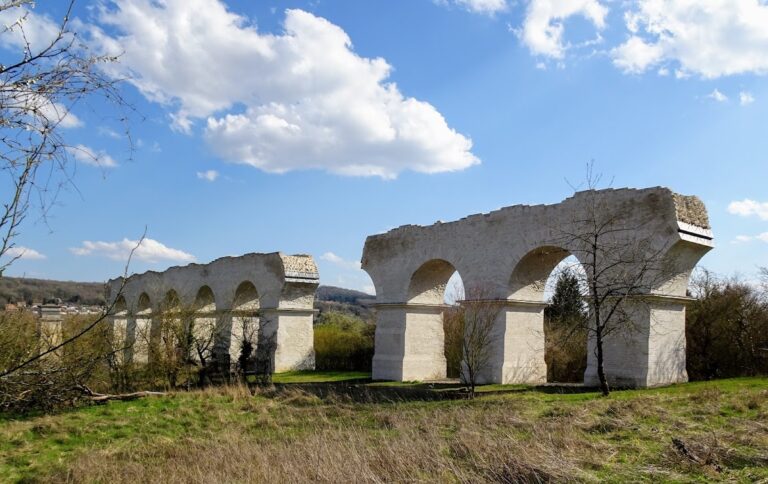
The aqueduct extends about 22 kilometers from the Bouillons spring near Gorze to the ancient city of Divodurum. It consists of three main parts: underground conduits totaling nearly 21 kilometers, and a 1.125-kilometer-long arcade bridge crossing the Moselle valley between Ars-sur-Moselle and Jouy-aux-Arches. The underground channels are roughly 1.20 meters wide and 1.80 meters high, covered by semicircular vaults. Water flowed along a paved channel between brick walls coated with waterproof mortar. Maintenance shafts were regularly spaced along the route.
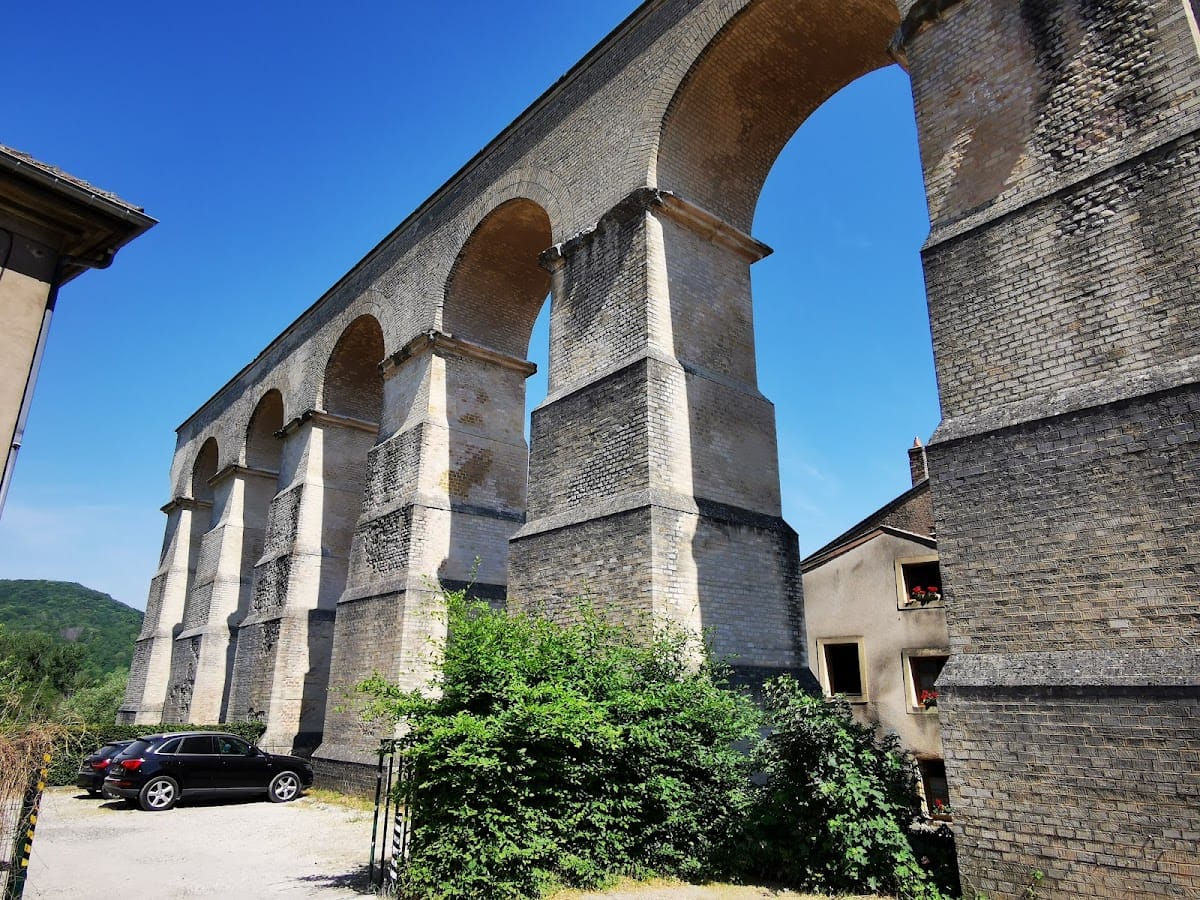
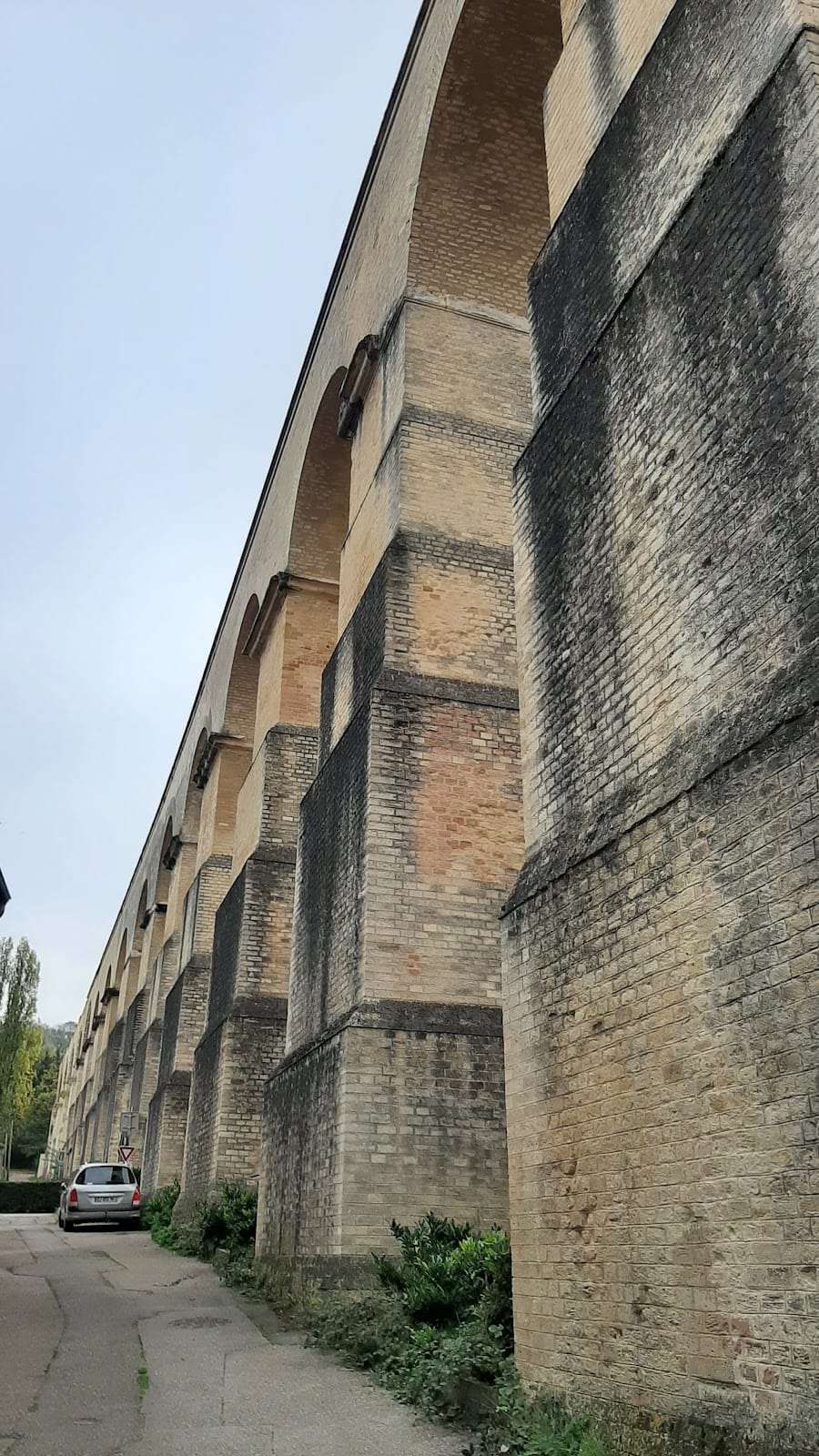
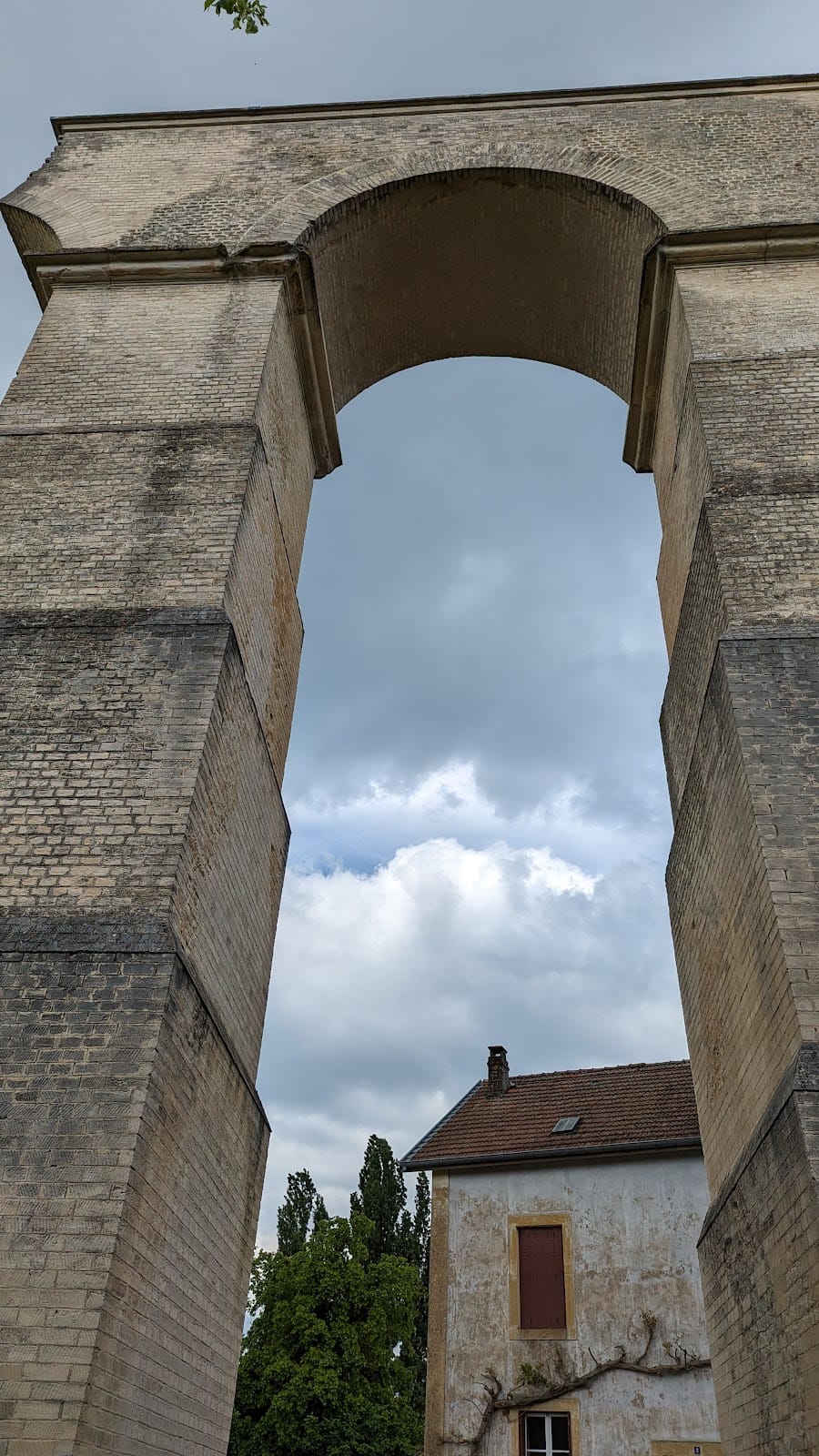
The arcade bridge features between 110 and 120 arches, reaching heights up to 30 meters. The square piers supporting the arches measure about 5 meters at the base and taper upwards. The water channel on the bridge has a double conduit, each 0.85 meters wide, designed to maintain water flow during repairs and reduce pressure on the structure. The channel’s steep gradient helped prevent freezing and sediment buildup.
Construction materials included locally quarried ashlar stones for the piers and imposts, Roman concrete made from lime mortar mixed with crushed brick and stones for the core, and bricks produced on-site for the channel walls. Waterproofing was achieved using a coating of fat lime mixed with crushed brick. Oak piles were driven deep into the ground to support the foundations, and wooden scaffolding was used during construction.
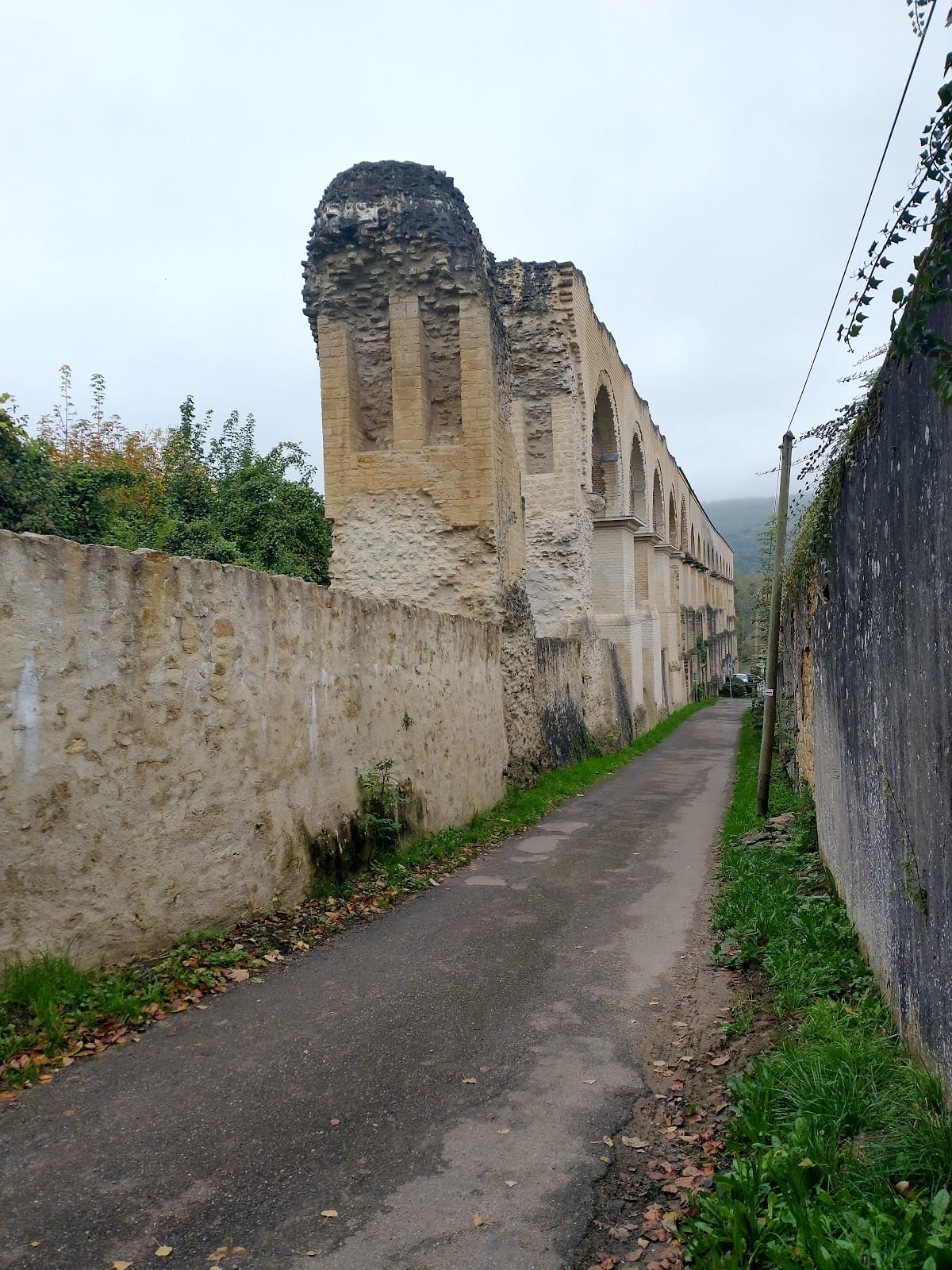
At Ars-sur-Moselle, a rectangular settling basin with a convex retaining wall and a central square basin allowed sediment to settle before water entered the bridge’s double conduits. This basin also regulated water flow and received excess water from a local stream. At Jouy-aux-Arches, the aqueduct ended in a circular receiving basin about 6 meters in diameter, with a thick wall and an inner basin designed to slow water velocity before it continued underground toward Metz.
Today, only fragments of the aerial section remain. On the left bank at Ars-sur-Moselle, one basin and seven arches survive, including two isolated arches. On the right bank at Jouy-aux-Arches, sixteen arches and one collector basin remain. The underground conduit continues from Jouy-aux-Arches toward Metz, briefly following the Moselle River, crossing the area of the modern Frescaty airfield, and joining the ancient road from Metz to Toul near Augny. The final route into Metz is not precisely known.
Nearby sites