Prény Castle: A Former Ducal Fortress in France


Site at a Glance
- Rating
- 4
- Popularity
- Very Low
- Country
- France
- Primary era
- Medieval
- Eras represented
- Medieval, Early Modern
- Civilizations
- Duchy of Lorraine, Holy Roman Empire
- Site type
- Military
- Remains
- Castle
On this page15 sections
History
Prény Castle is a former fortified castle in France, in the commune of Prény, whose medieval complex developed from the twelfth through the seventeenth centuries in the tradition of military architecture. Its origins are obscure, but it became the last fortress of the dukes of Lorraine facing the bishops of Metz. It stood near Dieulouard, which belonged to the bishops of Verdun, and Mousson, held successively by the counts and dukes of Bar.
Origins and ducal residence
The first castle was built on land belonging to Saint-Pierre-aux-Nonnains Abbey after the duke of Lorraine became its advocate, a lay protector responsible for defending an ecclesiastical institution and its lands. The fortress was initially entrusted to the de Conflans family, who later adopted the name de Prény.
During the twelfth century, Prény became the principal residence of the dukes of Lorraine. Duke Mathieu I of Lorraine was at the castle when Étienne de Bar, bishop of Metz, besieged it. The dukes remained associated with Prény until they established themselves at Nancy in 1298, after which the fortress continued to serve as a major military stronghold.
Wars with Bar, Metz, and Luxembourg
Count Thiébaut I of Bar captured Prény in 1207 and partly destroyed it. After reconstruction, the fortress became a major example of medieval military architecture. Its defenses resisted direct assault until the development of artillery changed the balance between castles and attacking armies.
In 1262, troops commanded by Count Thiébaut II of Bar besieged Prény for five months without taking it. A major battle took place beneath the walls from 14 to 17 September 1266. Lorrainers and Luxembourgers fought on one side, while the people of Metz and Bar formed the opposing force.
In 1286, Milon de Vandières, captain and provost of Prény, defended the citadel. Popular tradition later transformed him into the Black Rider, or Knight of the High Hunt. In 1290, Bouchard d’Avesne, bishop of Metz, renounced his episcopal see and concluded a peace agreement on Saint Bartholomew’s Day.
“Priny!” served as the war cry of the armies of the dukes of Lorraine. Jacques Bretel recorded two knights using this cry of arms in the Tournament of Chauvency in 1285.
From Burgundian pressure to French occupation
When the duchies of Bar and Lorraine were united in the fifteenth century under René I of Anjou, Prény lost much of its strategic value. Maintaining the fortress placed a heavy burden on the ducal finances, and its upkeep became uncertain.
A Burgundian garrison occupied the castle in 1437 as security for the ransom owed by the duke of Lorraine to the duke of Burgundy. The Lorraine garrison soon recovered it. In 1474, Burgundian forces occupied Prény again to guarantee Charles the Bold safe passage for his army. Duke René II of Lorraine later changed his policy and sent Gérard d’Avillers, who seized the fortress and strongly fortified himself there. In 1477, Charles the Bold avoided attacking Prény as his army passed, while the castle fired a volley of cannonballs.
A declaration of 1573 established the duke of Lorraine as the sole high-justice sovereign of Regniéville and appointed the officer of Prény Castle as its provost. This arrangement connected the fortress with the administration of justice in the surrounding territory.
French troops occupied Prény and its arsenal in 1632. The weapons were already outdated, but Cardinal Richelieu feared that Lorraine’s castles could serve as bases for the forces of Duke Charles IV of Lorraine. He therefore ordered the castle dismantled in 1636. Prény then ceased to have a military function.
Revolutionary and modern history
During the French Revolution, the castle was confiscated as a national asset and sold at auction to a bourgeois of Nancy on 7 November 1797.
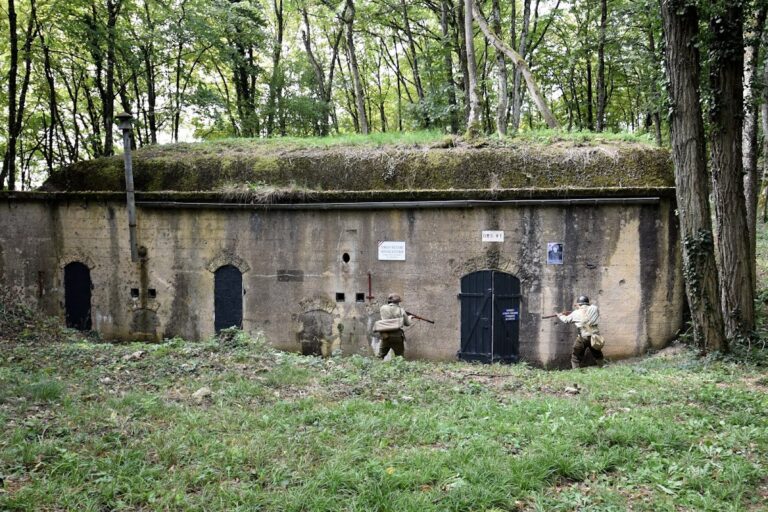
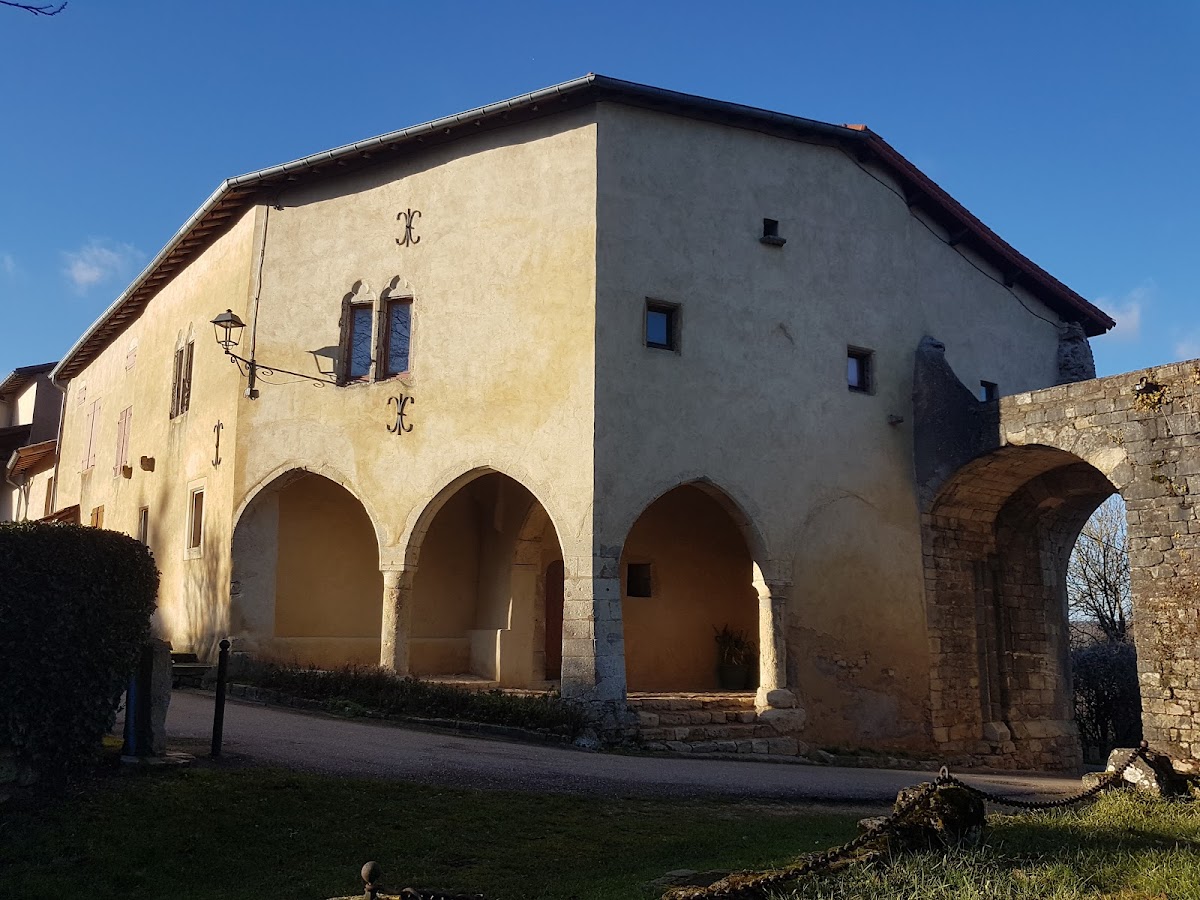
The former fortress was classified as a French historic monument in 1862. The guardhouse received registered protection in 2001. During the German occupation from 1914 to 1918, the site was incorporated into a defensive system and surrounded by blockhouses and other military works. Fighting between German and American forces from 25 September until November 1918 destroyed many parts of the complex.
Restoration work in 1937 and 1938, undertaken at the request of the Ministry of National Education and Fine Arts, consolidated the Tour du Magasin aux armes. The surviving ruin therefore combines medieval and early modern fabric with later defensive alterations and conservation work.
Remains
Prény Castle occupied almost three hectares. Excluding its ditches, the enclosure measured approximately 170 metres from north to south and 185 metres from west to east. Its defenses were arranged in successive lines, beginning with thorn hedges and a line of rocks, followed by a ditch, the outer enclosing wall, a second ditch at the foot of the main tower, the enclosure around the donjon, or principal fortified tower, and the Tour Mandeguerre. This central tower rose approximately 70 metres and formed a fortified inner stronghold within the larger castle.
Outer defenses and approach
Western entrance
Access from the west crossed a bridge guarded by the first Tour du Petit-Huix. A second Tour du Petit-Huix stood to the north, while the Tour de l’Abbé stood to the south. Beyond the bridge, the Grand Boulevard of the Baille extended through the outer fortified area. On its northern side was an enclosing wall containing the Tour d’Enfer; the Grosse Muraille protected the southern side. The boulevard ended to the east at the Demy-rond.
Castle entrance and western buildings
The castle proper was entered through the Grande Porte aux champs. Its two sides were defended by walls pierced with openings for crossbows. Along the western side, the Grand Corps de garde, the artillery buildings, and the chapel adjoined the Grosse Muraille. The seigneurial house stood to the west, opposite the Tour du Colombier.
Western and southern towers
From north to south, the western facade and the Grand fossé, or defensive ditch, were reinforced by the Tour de l’Abbé, the Tour du Colombier, the small tower called la Sentinelle, and the Tour Malgalle. The last took its name from a family of masons to whom Duke René had leased the lime kiln. In the southwest, the Tour du Haut-toit watched over the Petite porte on the Grand fossé. The southern rampart was defended by the low Tour de la Pouilleuse, while the Tour de la Héville protected the southeast. Its guard was probably assigned to Jehan de La Héville.
Inner fortress and donjon
Donjon entrances
The donjon had two entrances, the Porte basse to the south and the Porterie du donjon to the north. The northern entrance was reached by a small bridge repaired in 1504 by masons and a carpenter living at Prény. The western facade of the donjon was protected by the donjon ditch.
Tour Mandeguerre
The central Tour Mandeguerre was a massive master tower of the twelfth century. It had a seven-sided plan and a triangular spur facing the settlement. A large bell at its summit was used to call the war when watchmen saw an enemy force, warning inhabitants of the surrounding villages.
Prison and defensive towers
Two turrets flanked the Tour Mandeguerre and protected the inner enclosing wall. The northern side of the donjon was guarded by the Tour du Magasin aux armes, the northeast by the Tour de la Charbonnière, and the southern side by the Tour des Moynes. In the sixteenth century, two floors of the Tour des Moynes contained the upper and lower prisons.
Storage, weapons, and siege provisions
Wells, cellars, and granaries supported the inhabitants during a siege intended to starve the garrison. Underground passages led to the ditches and provided an escape route if the fortress fell.
The castle possessed firearms by the early modern period. Inventories from 1617 and 1634 list nine artillery pieces: two very old long iron guns on wheels, two medium cast-iron guns with unusable carriages, two large wheeled fauconneaux, and three fauconneaux mounted on trestles. A fauconneau was a small early firearm or cannon.
The arsenal also held three cast-iron hooked arquebuses, thirty-three wrought-iron hooked arquebuses, 300 iron cannonballs, 400 smaller balls, 300 pounds of arquebus powder, 700 pounds of gunpowder, 150 pounds of sheet lead, and twelve baskets of match for arquebuses. A hooked arquebus was a heavy firearm fitted with a hook that rested on a support to absorb recoil. These supplies were probably kept in the Tour du Magasin aux armes, whose surviving fabric was consolidated during the restoration of 1937 and 1938.
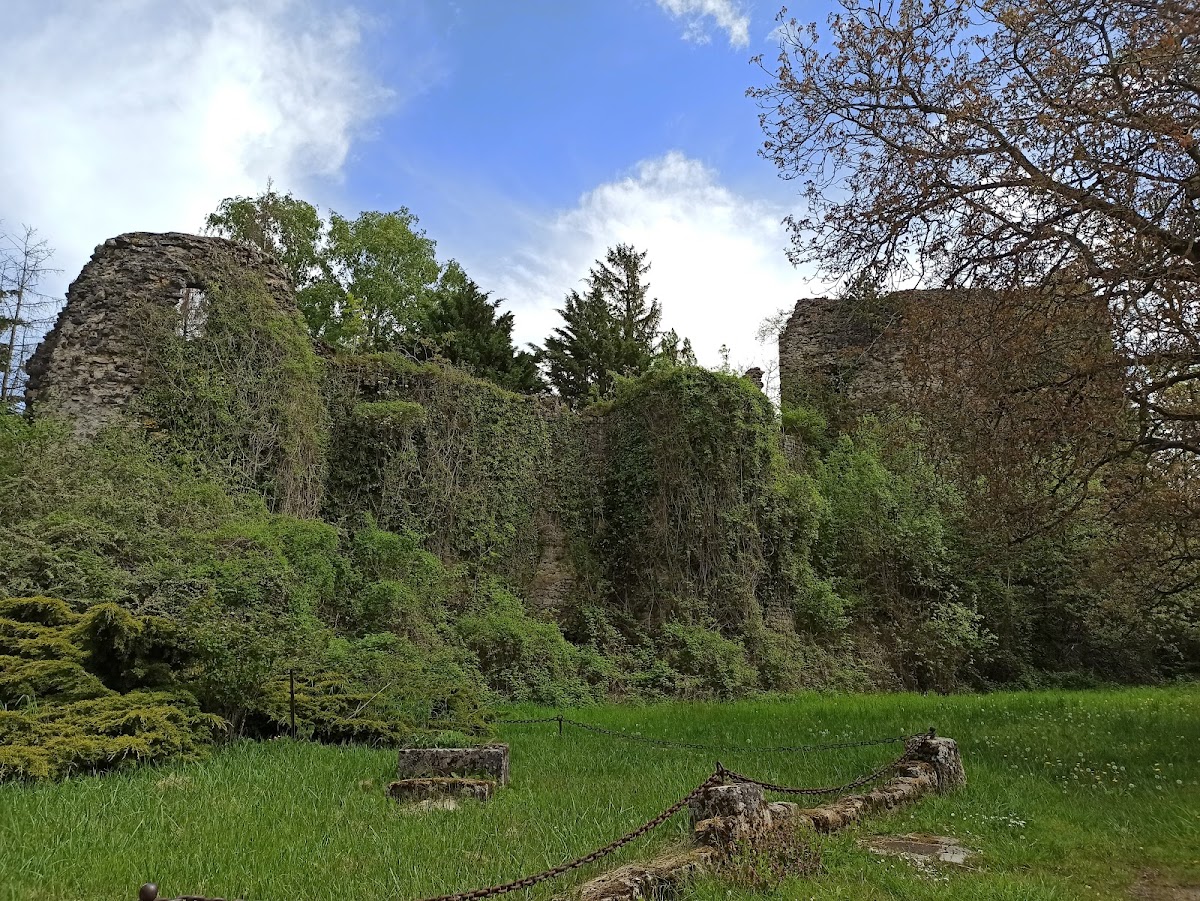
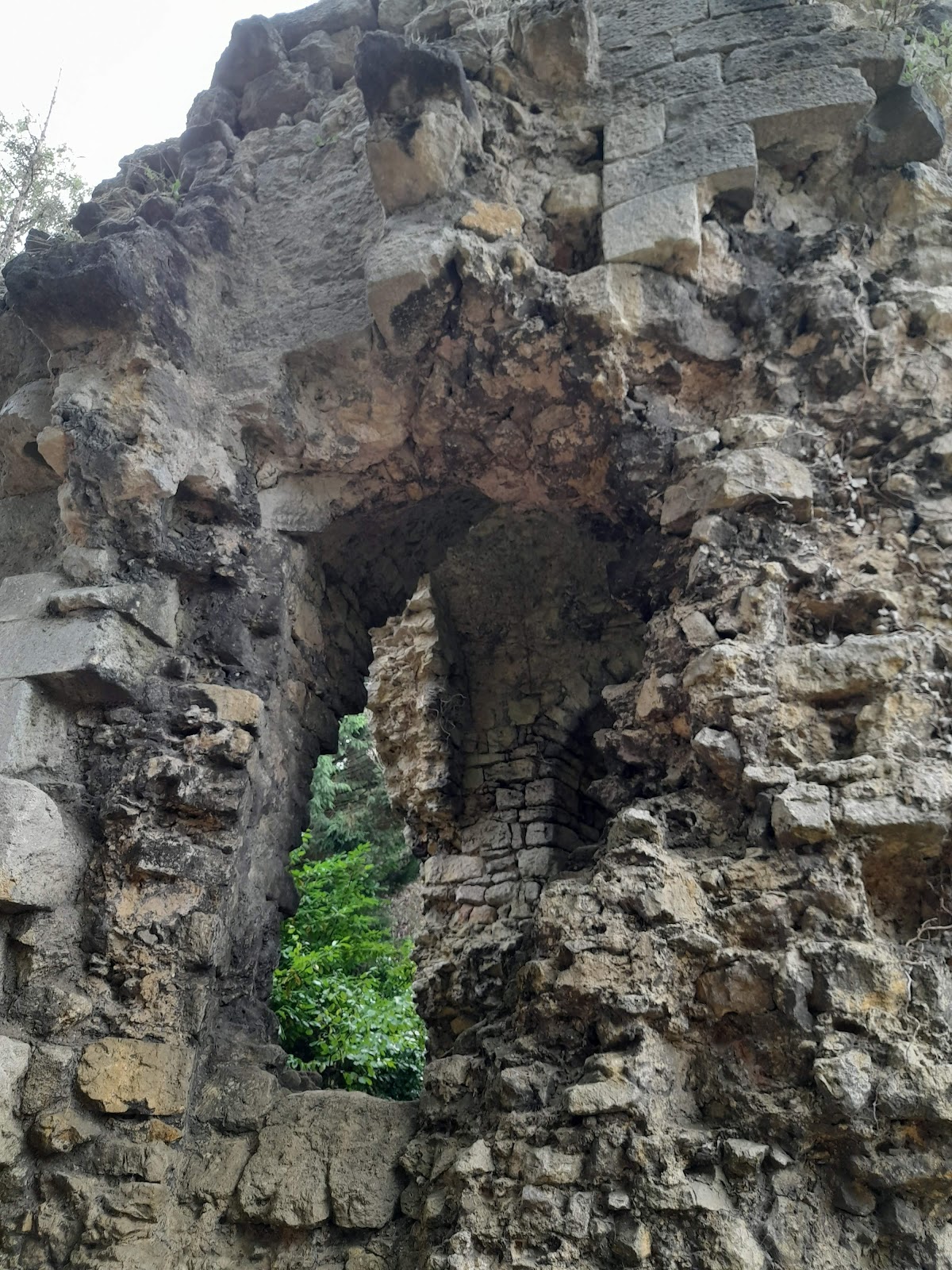
The castle now survives as a ruin, with fabric dating from successive construction and alteration phases between the twelfth and seventeenth centuries. Parts of the remains are classified as French historic monuments, while the guardhouse is protected through registered designation.
Nearby sites