Roccaguglielma: A Medieval Fortress in Esperia, Italy

Visitor Information
Google Rating: 4.4
Popularity: Very Low
Google Maps: View on Google Maps
Country: Italy
Civilization: Unclassified
Remains: Military

History
Roccaguglielma is a medieval fortress located in the municipality of Esperia, Italy. Its origins trace back to the early 12th century and are closely connected to Norman builders who shaped much of southern Italy during that period.
The castle’s foundation dates to around 1103, established by the Norman lord Guglielmo (William) of Blosseville. He not only constructed the fortress atop Monte Cecubo but also founded the settlement that developed at its base. Both castle and town were fortified with walls, creating a defensive complex designed to control a key mountain pass linking the towns of Pontecorvo and Aquino to Gaeta. This strategic position allowed access while avoiding territories controlled by the powerful monastery of Montecassino, which lay nearby but was outside Norman influence.
During the medieval period, Roccaguglielma joined forces with four neighboring castles—Campello, Pico, Rivomatrice, and San Giovanni Incarico—to form an autonomous alliance known as the “Five Castles of Foris.” This small domain existed for about ten years, surrounded by lands held by Montecassino. Afterward, the castle changed hands multiple times, becoming part of the estates owned by prominent families including the Spinelli, della Rovere, and Farnese. The Spinelli family, active in the 14th century, undertook major construction projects that reinforced the castle’s defenses.
In the late 15th and early 16th centuries, Roccaguglielma’s lands suffered extensive destruction during military campaigns led by Gonzalo Fernández de Córdoba, known as the “Great Captain,” a Spanish general involved in the Italian Wars. Despite this damage, the region experienced a period of prosperity from the 16th through the 17th centuries. However, in 1636, the fiefdom returned directly under royal authority. Less than two decades later, a severe earthquake in 1654 caused further devastation to the castle and surrounding areas.
The turbulence continued into the modern era with widespread brigandage during times of political upheaval. Local bandits often opposed Napoleonic rule and later Italian unification, including figures like Fra Diavolo during the Napoleonic period and Luigi Alonzi, nicknamed Chiavone, after unification. Administrative reforms under Joachim Murat, King of Naples during the Napoleonic era, separated Roccaguglielma from neighboring villages Baja Esperia and Monticelli; these latter settlements formed the municipality of San Pietro in Curolis. Following Italian unification in 1867, Roccaguglielma and San Pietro combined to form the current town of Esperia.
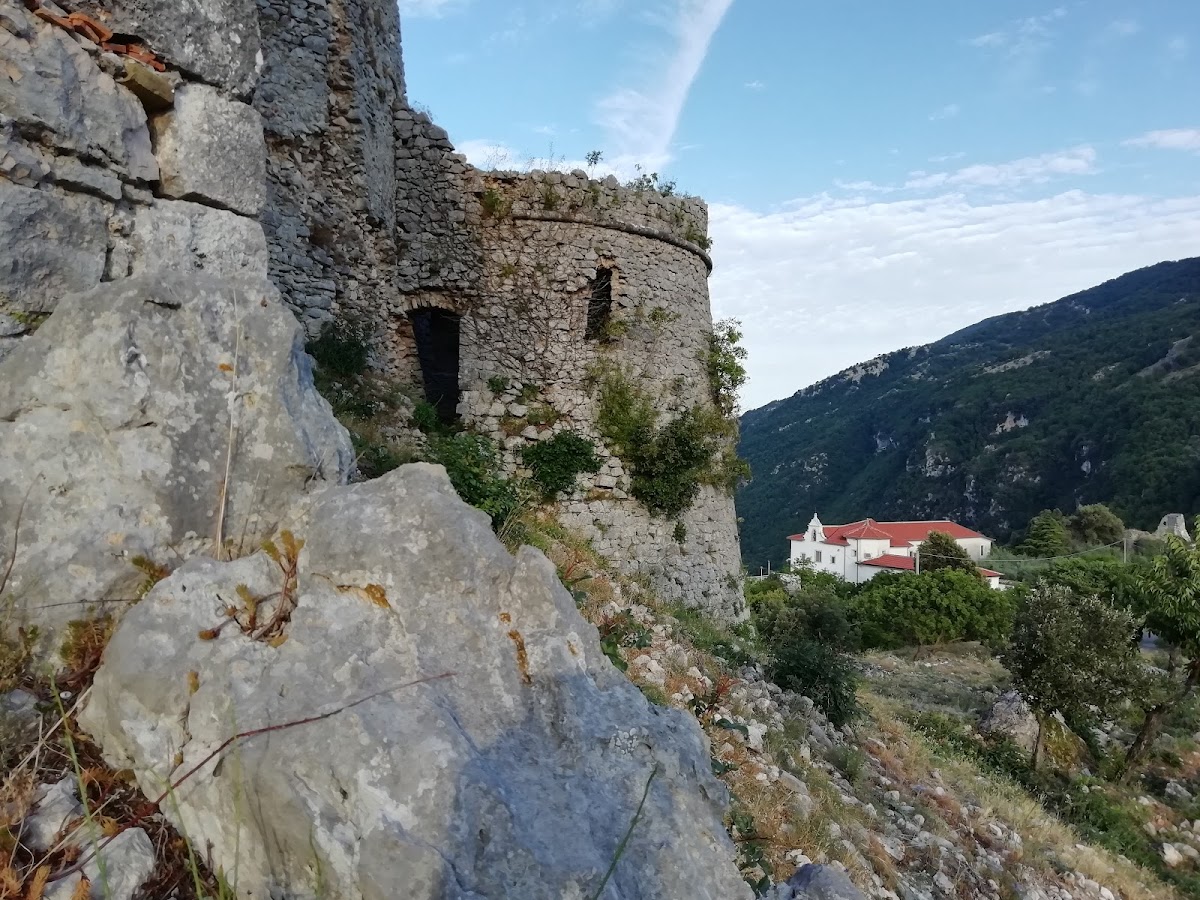
A small church of the Trinitarian Fathers now stands near the castle ruins. This church, dedicated to the Holy Virgin, occupies the site of the fortress’s original chapel, linking the community’s religious heritage to its medieval past.
Remains
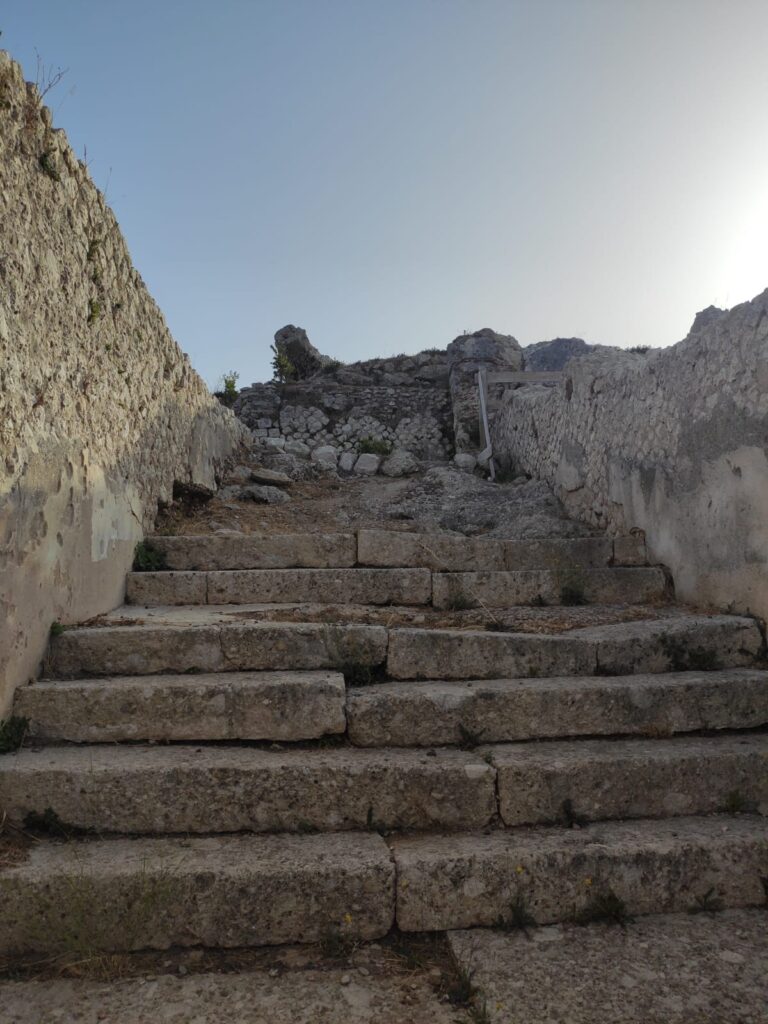
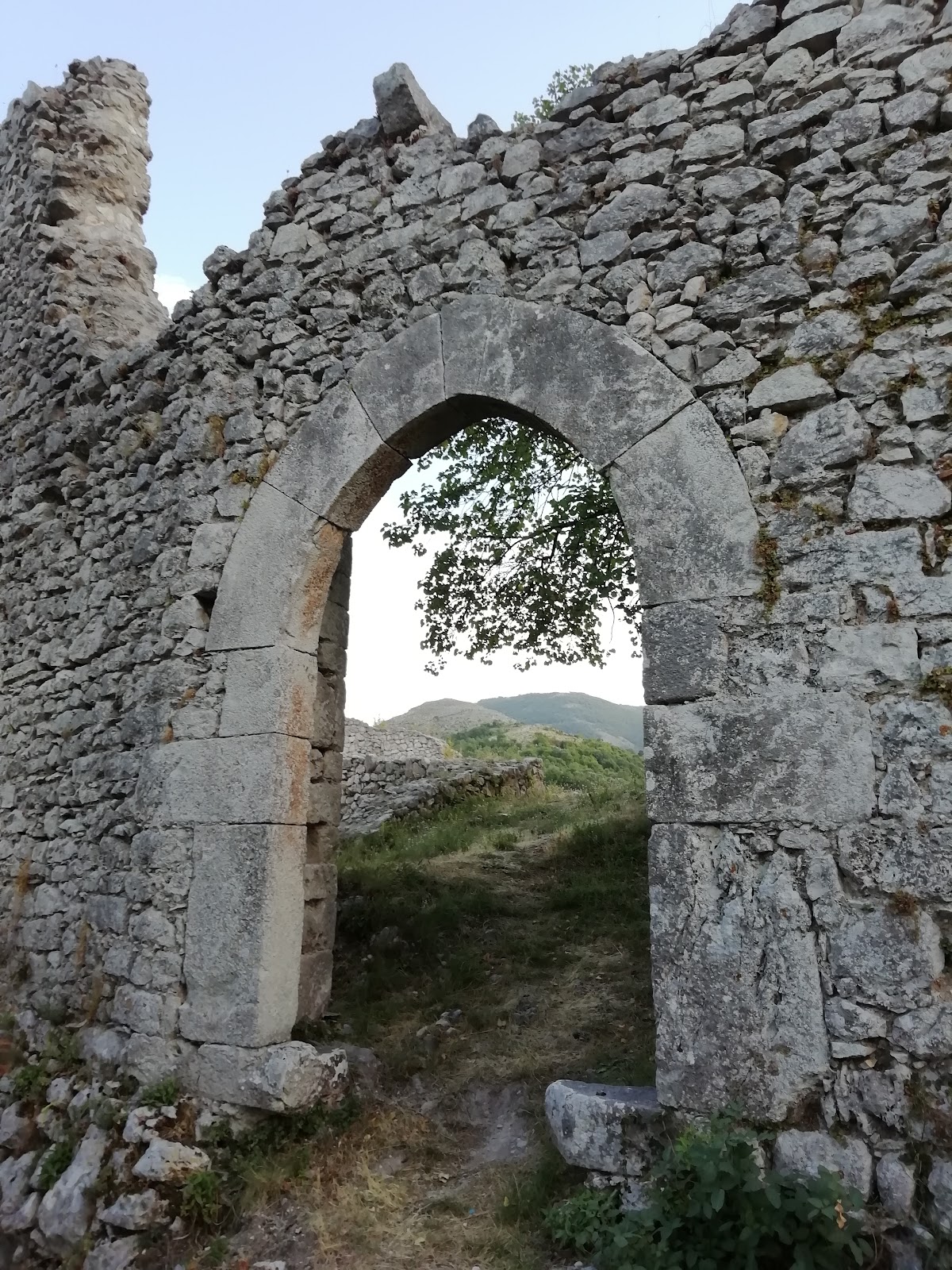
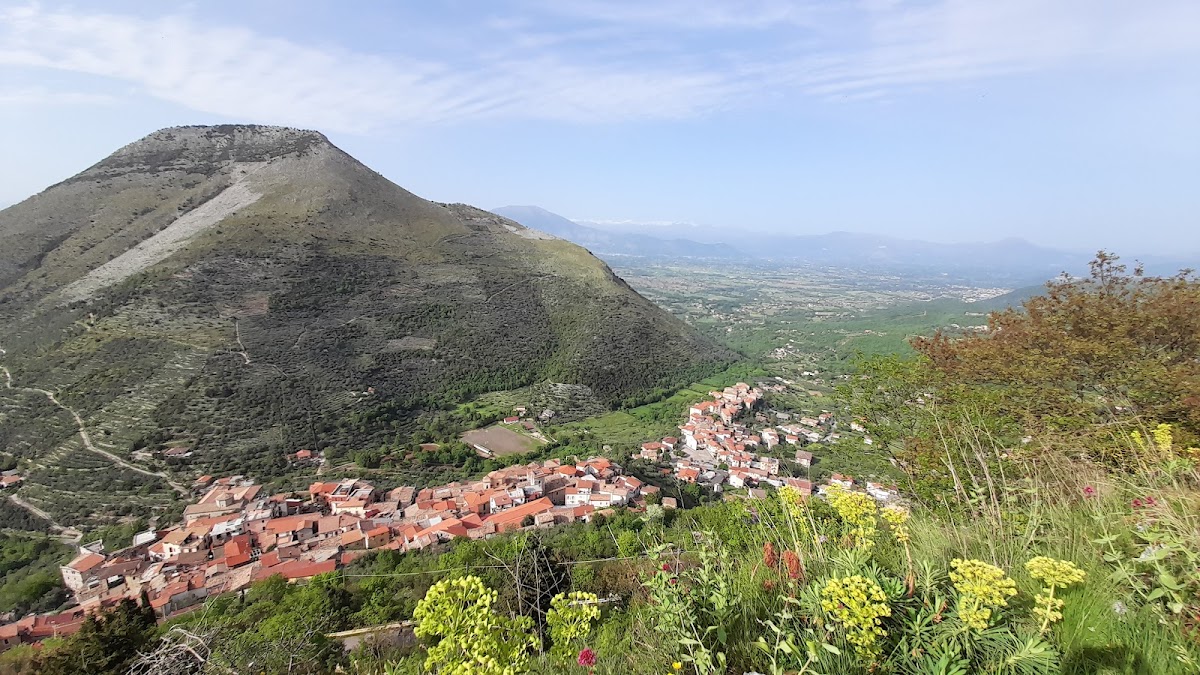
Roccaguglielma fortress occupies a commanding position atop Monte Cecubo, approximately 500 meters above sea level, overlooking the modern town of Esperia. Built on a rocky ridge, the castle complex was functionally divided into defensive and inhabited areas, each protected by its own system of walls and gates. The outer fortifications consisted of a curtain wall reinforced by twelve towers and included three main gates named Caporave, Santo Spirito (Holy Spirit), and San Bonifacio. Within this outer perimeter, a second wall enclosed the residential district, featuring three additional gates: Portella, Santa Croce (Holy Cross), and Morrone.
The construction relied on local stone and typical medieval masonry techniques aimed at both defense and control of the surrounding territory. Over the centuries, the castle’s fortifications were modified, particularly in the 14th century during renovations led by the Spinelli family, reflecting evolving military architecture of the time.
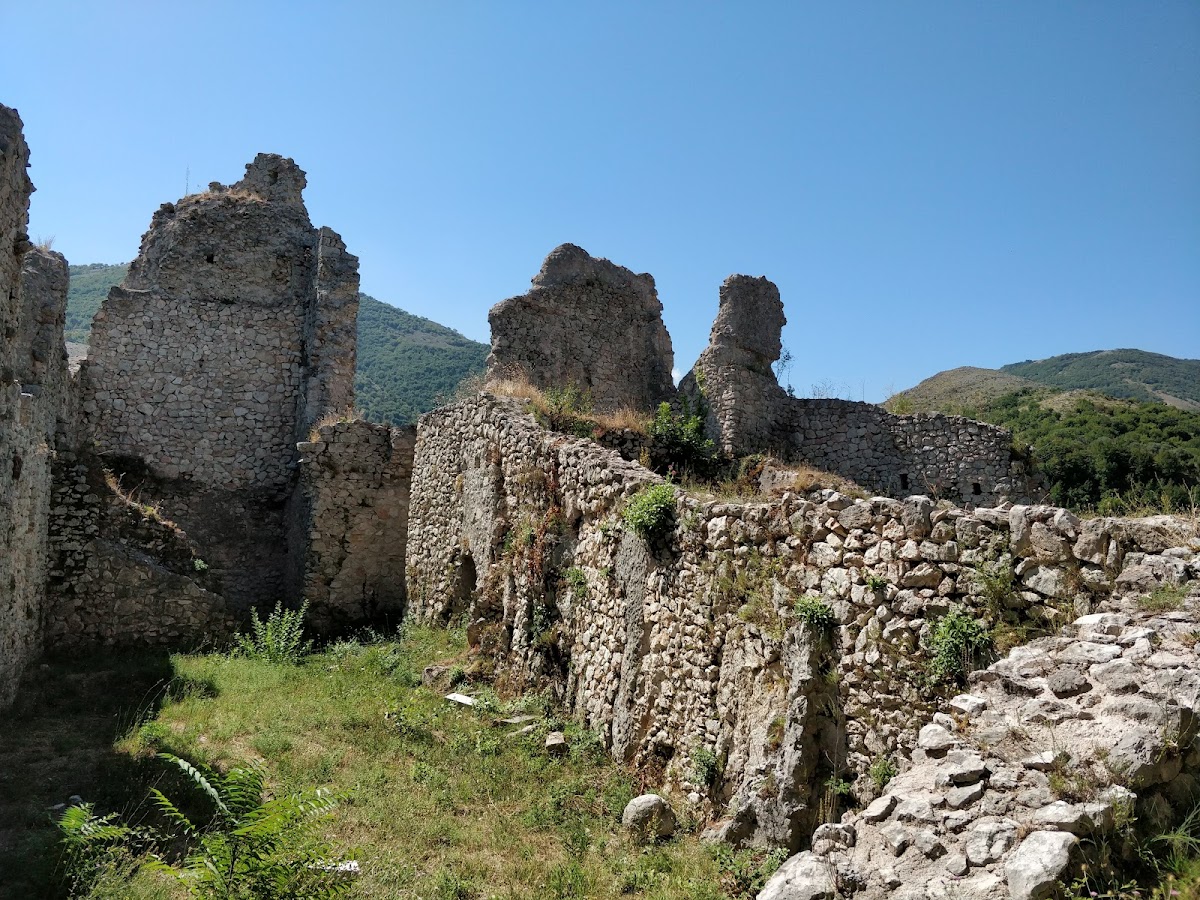
Today, much of the defensive wall and towers lie in ruins, their forms partially preserved amidst the landscape. The remnants still outline the castle’s original layout, providing insight into its strategic design. Close to the castle ruins stands the small Trinitarian church dedicated to the Holy Virgin. This sacred building occupies the location of what was once the fortress’s chapel, maintaining continuity of religious use on the hill.
The entire site is under state ownership and is accessible for study and conservation. Its ruins tell a story of medieval networked fortifications, centuries of noble stewardship, military conflicts, natural disasters, and enduring local faith.
Nearby sites