Rocca d’Ajello: A Historic Fortress in Camerino, Italy

Visitor Information
Google Rating: 4.7
Popularity: Low
Google Maps: View on Google Maps
Official Website: www.roccadajello.com
Country: Italy
Civilization: Unclassified
Remains: Military

History
Rocca d’Ajello is a historic fortress situated in Camerino, Italy, originally established by the Da Varano family, who governed the area during the Late Middle Ages and Renaissance. Its origin dates back to the mid-13th century when this noble lineage sought to fortify their domain amid regional conflicts.
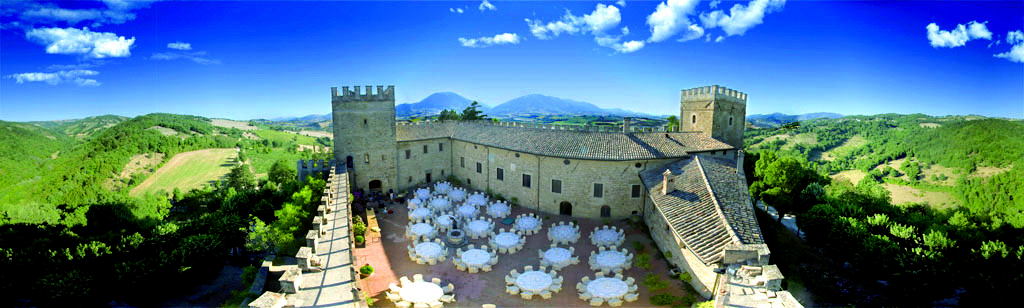
The initial phase of construction began around 1260 under Duke Gentile I da Varano, who commissioned two towers designed with battlements characteristic of the Guelph style, a type of crenellation associated with supporters of the papal faction in medieval Italy. The fortress occupied a strategic position atop a wooded hill rising approximately 400 meters, providing expansive views over the valley connecting Camerino and Castelraimondo. The name “Rocca d’Ajello” is believed to have evolved from the Latin word “agellum,” meaning “small field,” highlighting the site’s elevated and commanding location.
During the 15th century, Giulio Cesare da Varano expanded the fortress by adding a central residential building, transforming the military stronghold into a more hospitable villa. This adaptation mirrored changing needs from strictly defensive purposes to also serving as a noble residence.
Following the erosion of Varano control in the mid-16th century, the fortress entered the possession of the Papal States. Subsequently, ownership transferred through various private hands, including the Massei family, before eventually becoming the property of the Camerino orphanage. In the early 19th century, the castle experienced a significant transformation under the lawyer Bruschetti, who undertook a thorough renovation that altered much of its medieval character to suit contemporary tastes and functions. Today, Rocca d’Ajello remains under private ownership and reflects its layered history through preserved features and ongoing use.
Remains
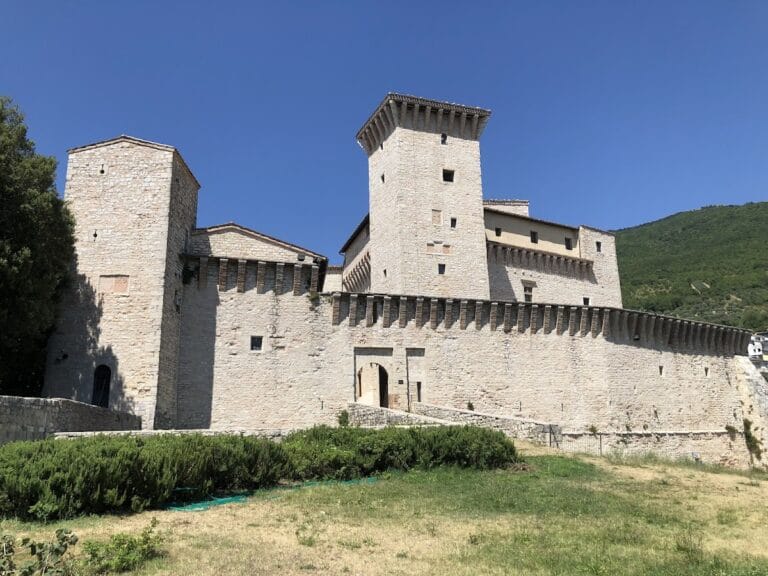
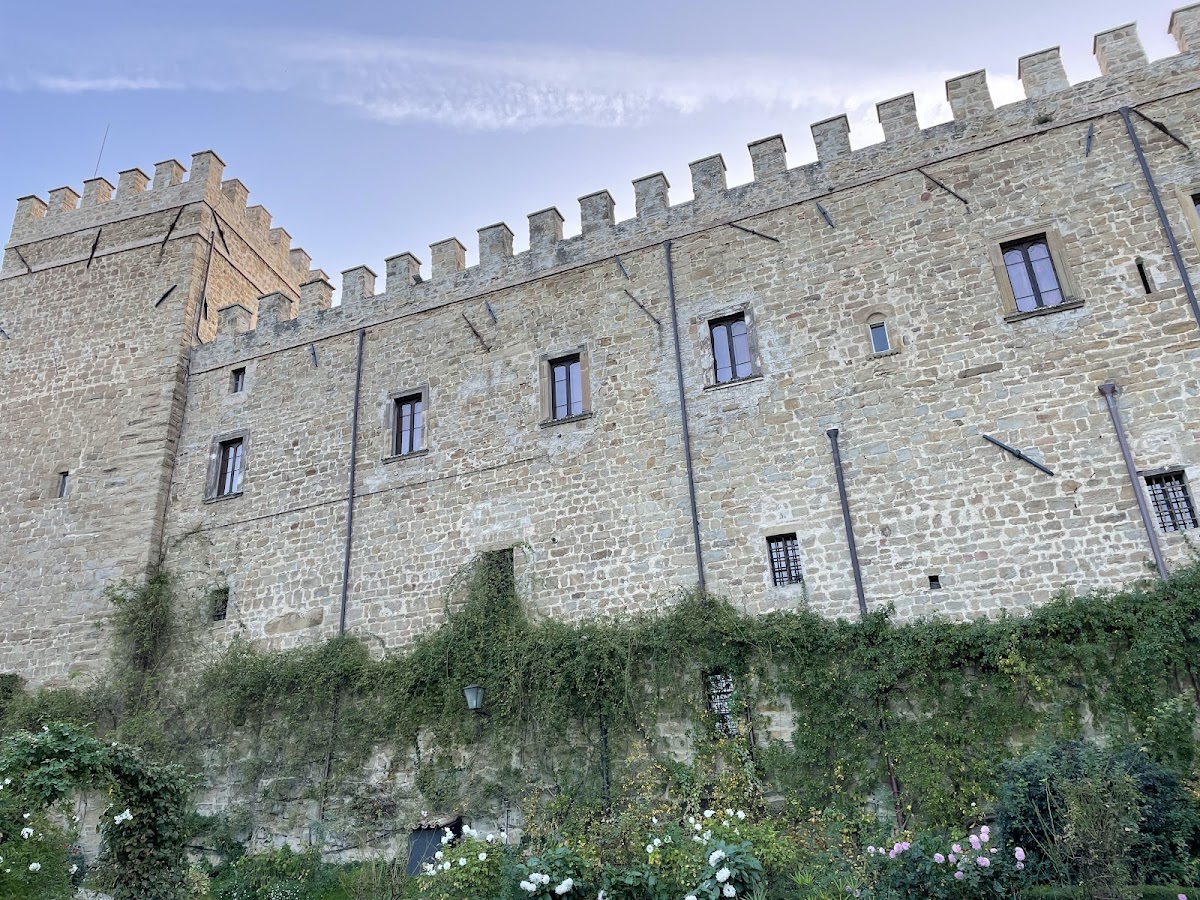
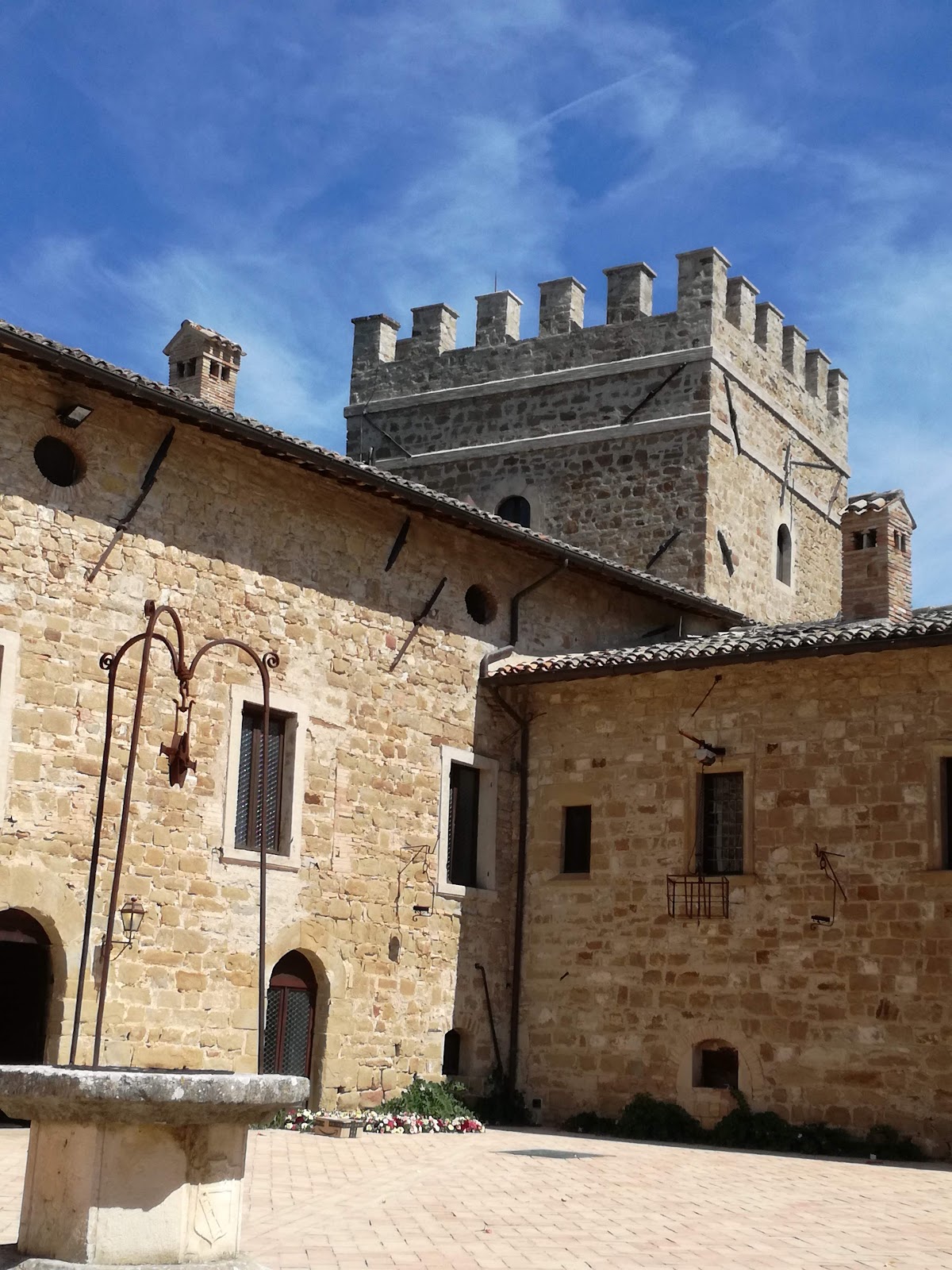
The fortress at Rocca d’Ajello retains key structural elements dating back to its medieval origins and subsequent alterations. The surviving layout prominently features two towers, both adorned with Guelph crenellations—these battlements consist of upright merlons with squared tops, a defensive design prevalent among factions loyal to the pope during the Middle Ages. These towers were constructed circa 1260 using traditional masonry techniques that allowed for both fortification and visibility over the surrounding valley.
In the 15th century, an additional central building was incorporated between the towers, representing a shift from pure military function toward residential use. This structure served to convert the fortress into a villa, providing living spaces appropriate to noble occupancy. The materials and architectural style of this addition reflect Renaissance influences, contrasting with the earlier medieval military constructions.
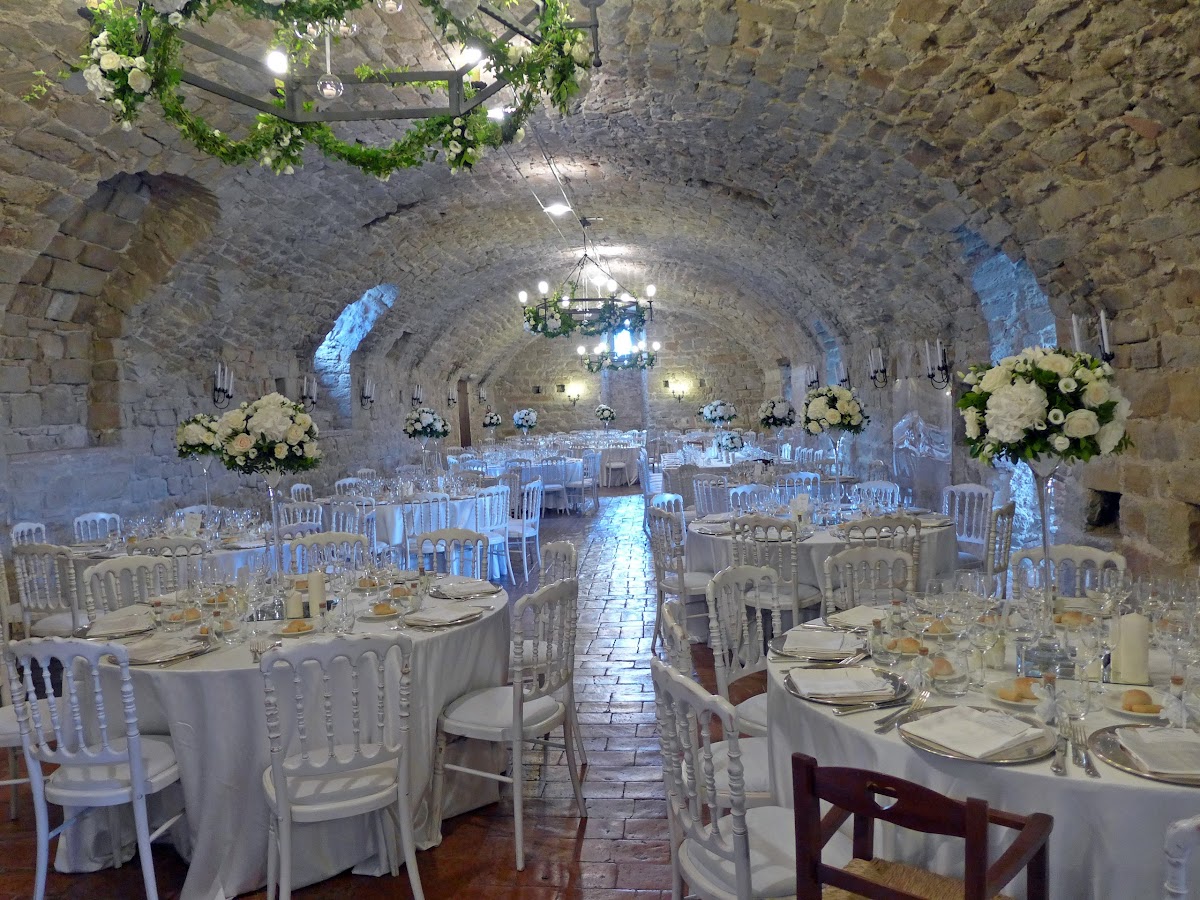
The fortress experienced major renovations in the first half of the 19th century when the lawyer Bruschetti extensively remodeled the original castle. These modifications reshaped the interior and external appearances, adapting the ancient stronghold to new purposes while maintaining the prominent towers and the central building. Today, the site preserves these key components in good condition, allowing the medieval origins and later adaptations to be clearly observed within the current edifice and its landscaped gardens.
Nearby sites