Plympton Castle: A Norman Motte-and-Bailey Fortress in Devon


Site at a Glance
- Rating
- 4.2
- Popularity
- Low
- Country
- United Kingdom
- Primary era
- Medieval
- External website
- Open
- Eras represented
- Medieval
- Civilizations
- English
- Site type
- Military
- Remains
- Castle
On this page7 sections
History
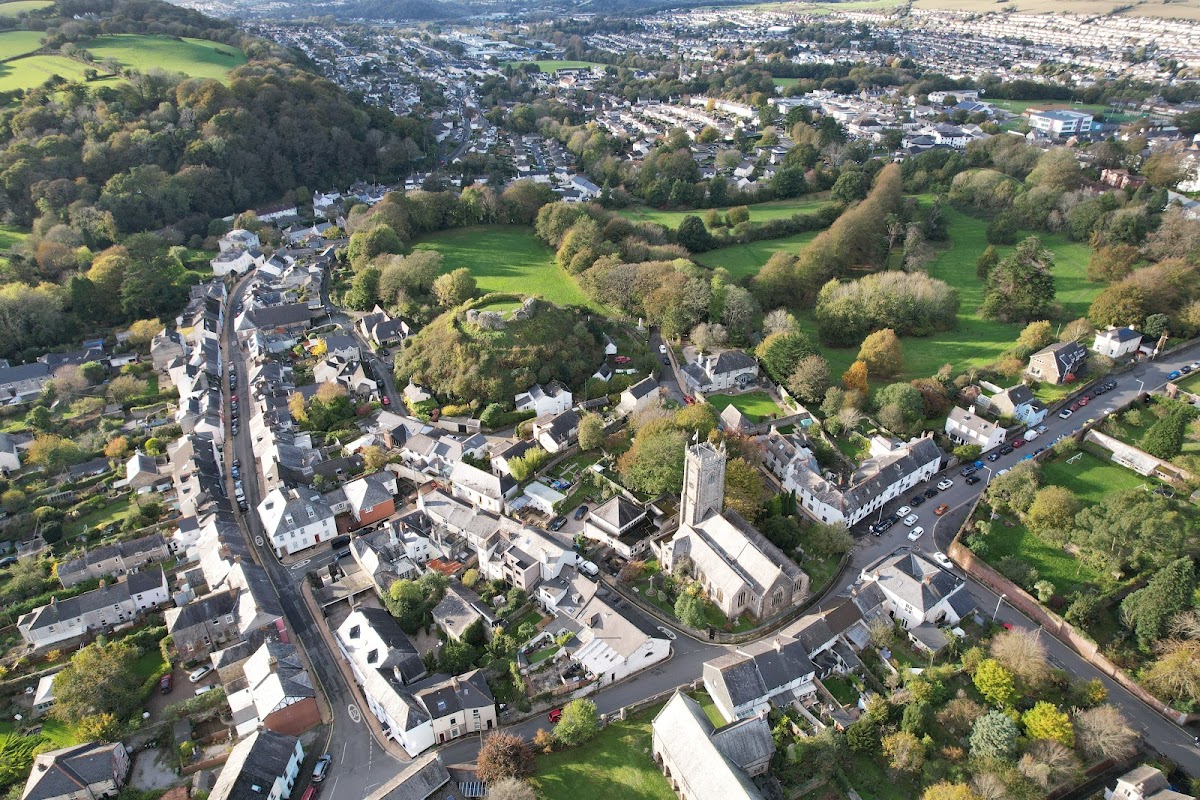
Plympton Castle is a ruined Norman castle in Plympton, now part of Plymouth in the United Kingdom, built at the beginning of the twelfth century by either Richard de Redvers or his son Baldwin de Redvers. Standing in the town centre about 2 kilometres east of the River Plym, it became a fortified centre associated with the political and military history of Devon.
Foundation and the Anarchy
The castle began as a wooden fortress established by the Norman aristocratic family of Richard and Baldwin de Redvers. In 1136, during the Anarchy, the civil war fought in England over the succession to the throne during King Stephen’s reign, Stephen captured and destroyed it.
Baldwin de Redvers later became Earl of Devon and rebuilt the castle in stone from 1141. This rebuilding transformed the earlier wooden stronghold into a more durable Norman fortress.
The siege of 1224
Plympton Castle faced another siege in 1224 after Falkes de Bréauté rebelled against Henry III. Falkes, a powerful military commander and royal official, had married the widow of Baldwin de Redvers, a grandson of the first Earl of Devon. Robert de Courtenay, Sheriff of Devon, captured the castle after a fifteen-day siege.
Later military use and decline
Edward, the Black Prince, the eldest son of Edward III and a leading English military figure, visited the castle in 1370. By the sixteenth century, its buildings had fallen into ruin, although the defensive walls still remained.
During the English Civil War, Royalist forces supporting Charles I used the fortification as a base and headquarters during the siege of Plymouth in 1643. Parliamentary troops captured it in 1644, and the castle was finally destroyed in 1647.
The ruin continued to decay after the war. The former bailey was used by the municipality as a festival ground during the eighteenth and nineteenth centuries, and the ruin passed into municipal ownership on 29 September 1922. Plympton Castle is protected as a Grade II* listed building, a designation for a building of particular importance, and as a Scheduled Monument, a legally protected archaeological or historic site. Plympton Pathfields, a municipal park of approximately 11 hectares, borders the former castle site to the north.
Remains
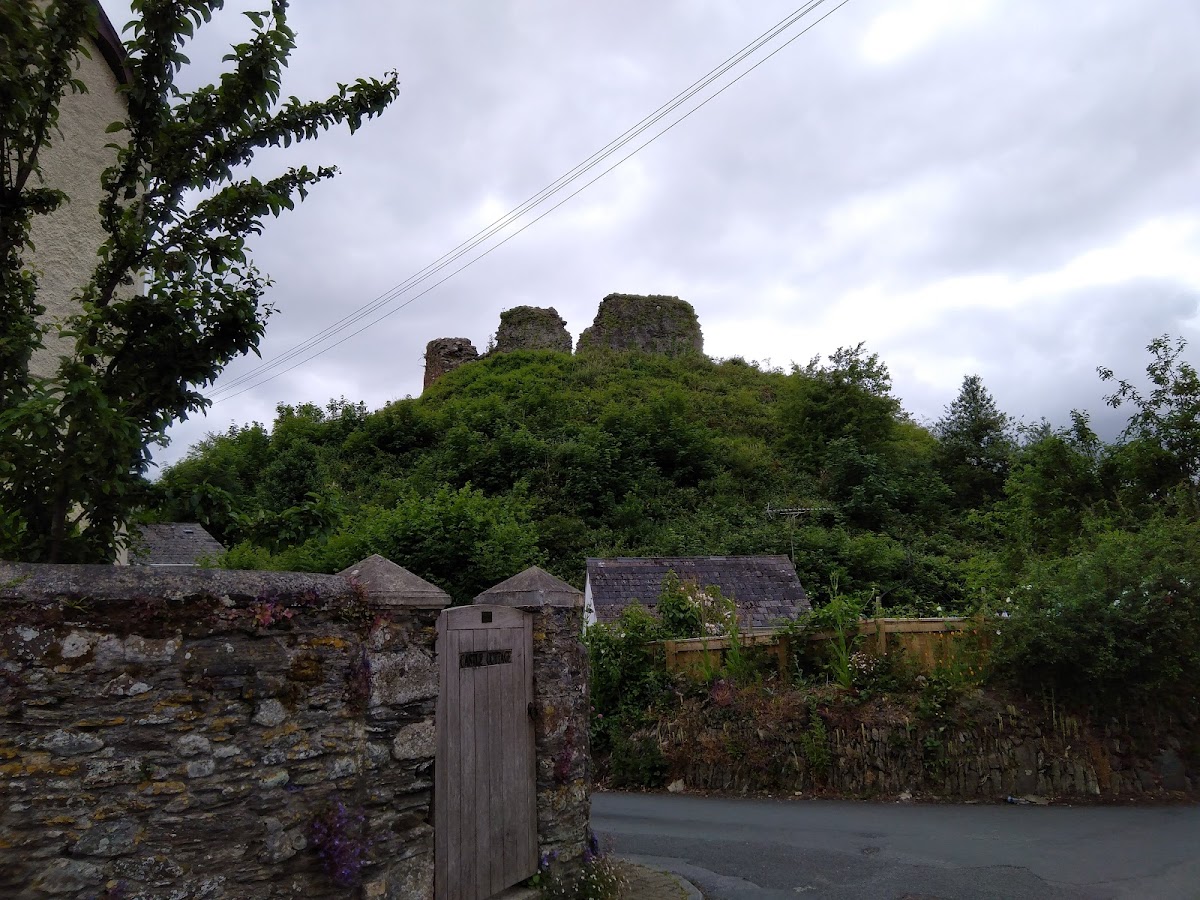
The motte and keep
Plympton Castle follows the typical Norman motte-and-bailey plan. A raised earthwork mound, or motte, carried the principal fortified tower, while an enclosed bailey lay to its west. The castle gate stood on the western side.
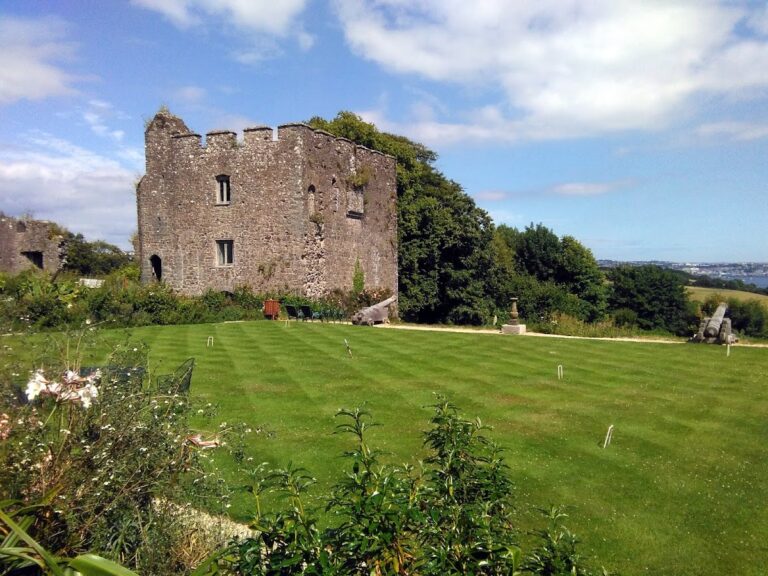
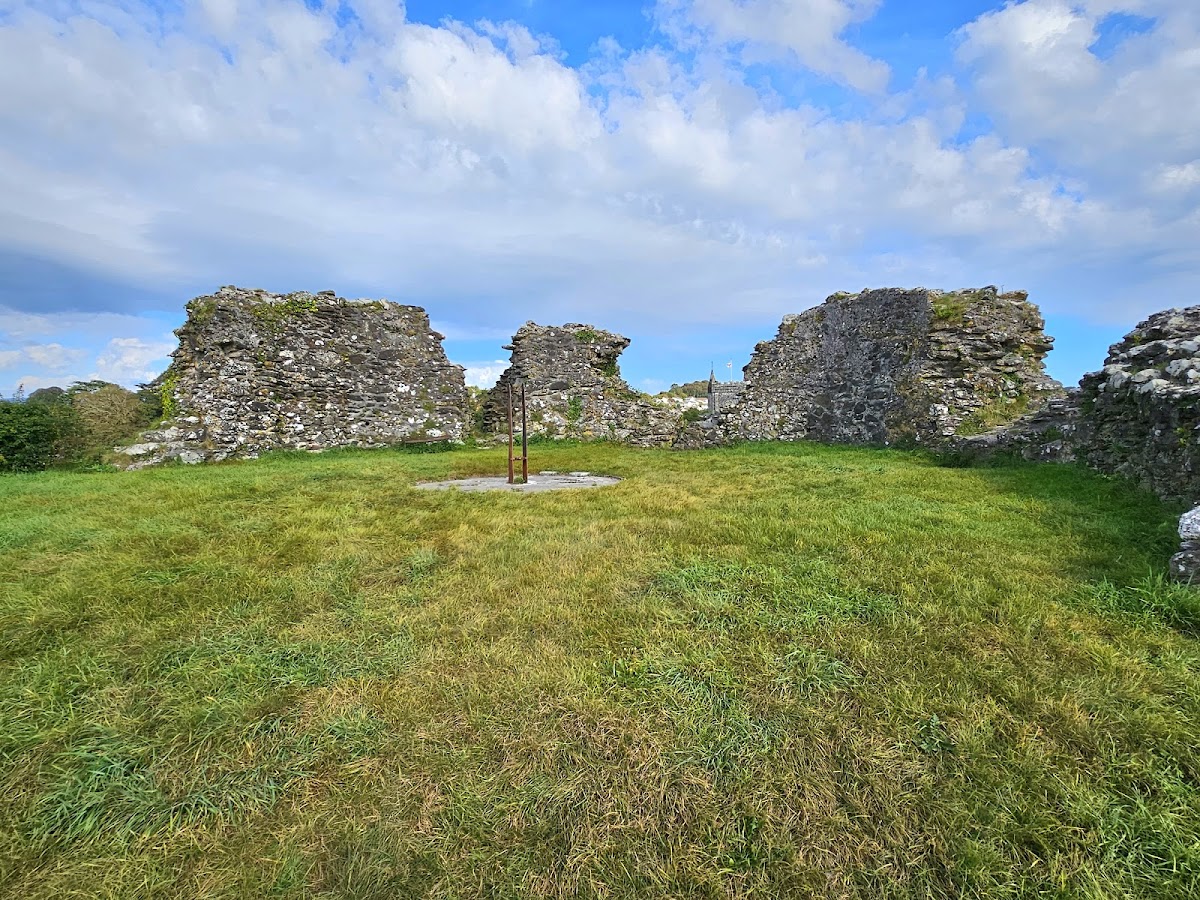
The motte supported a circular rubble-stone keep about 15 metres in diameter and approximately 10 metres high. A wall-walk, or passage along the top of a defensive wall, encircled the tower and allowed movement and observation around the fortification. Up to 4 metres of the keep’s walls survive, forming the most substantial visible remains of the castle.
The bailey and surrounding defenses
The bailey contained the castle’s residential and service buildings, but these structures have disappeared. The surrounding ditch remains visible, preserving part of the defensive layout. The surviving motte and keep walls can be seen from the former bailey, where the castle now survives as a ruin.