Presles Castle: A Historic Estate in Aiseau-Presles, Belgium


Visitor Information
Google Rating: 4.5
Popularity: Very Low
Google Maps: View on Google Maps
Official Website: www.chateau-de-presles.be
Country: Belgium
Civilization: Unclassified
Remains: Military

History
Presles Castle is situated in the village of Presles, part of the municipality of Aiseau-Presles in Belgium. The castle’s origins are tied to the medieval nobility that shaped the region’s landscape and governance.
During the 14th and 15th centuries, Presles Castle was an established estate documented through records discussing its succession and territorial rights. It held the authority of high justice, meaning its lords exercised legal jurisdiction over the local population. The estate encompassed not only the castle itself but also included surrounding lands such as fields, meadows, woods, and industrial assets like forges, highlighting its role in both agriculture and early manufacturing activities.
Ownership of the castle passed through several noble families over the centuries. Initially controlled by the Rumigny family, the estate later came into the hands of the Haneffe and then the Enghien-Havré families by inheritance. In 1625, Herman de Lierneux acquired Presles Castle through purchase. Some generations later, the d’Oultremont family inherited the property and have maintained possession ever since, linking the site continuously to this lineage up to the present day.
A significant phase in the castle’s evolution took place in the mid-19th century. In 1851, the building underwent a comprehensive reconstruction directed by architect Alphonse Balat, who brought contemporary design influences to its appearance. Shortly thereafter, between 1859 and 1860, painter François Stroobant enhanced the interior by adding decorative frescoes, bringing an artistic dimension to the castle’s renewed character. These 19th-century interventions represent a clear layer of adaptation and embellishment, reflecting changes in taste and function well beyond the medieval origins of the site.
Remains
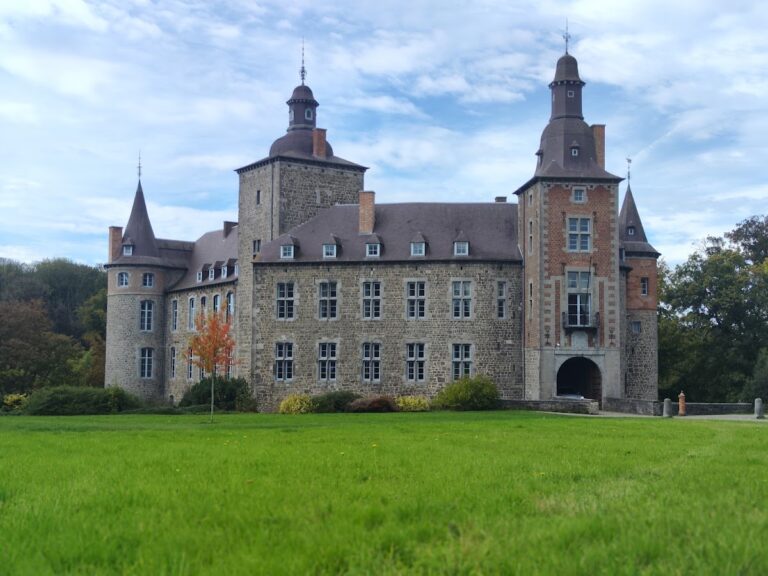
The current state of Presles Castle reflects its long history, combining medieval foundations with 19th-century renovations. The structure visibly incorporates the work carried out during the 1851 reconstruction led by Alphonse Balat, which reshaped the castle in the architectural style of that period.
Inside, the castle features fresco decorations painted by François Stroobant between 1859 and 1860. These artworks contribute to the interior’s historical ambiance and are key elements of the castle’s decorative fabric from the 19th century. The frescoes add visual richness and demonstrate the patronage of the arts by the castle’s owners during that era.
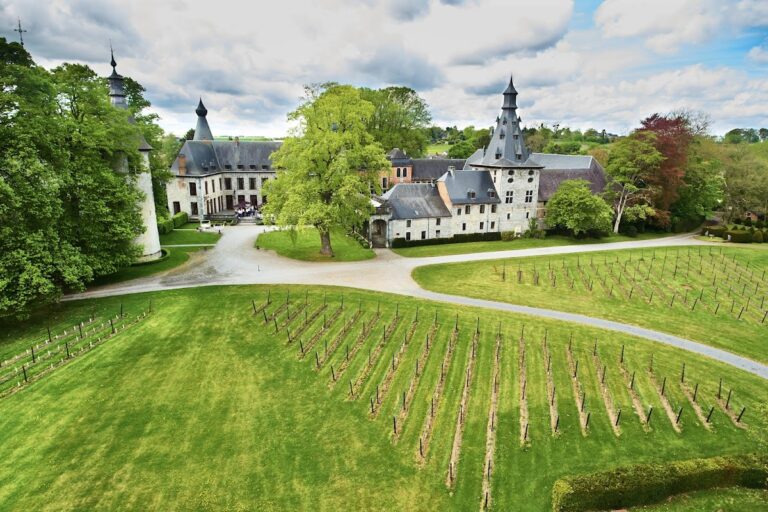
Beyond the castle building itself, historical documents confirm that the Presles estate included a diverse range of lands and productive sites. Fields and meadows supported agriculture, while surrounding woods provided natural resources. Notably, the presence of forges indicates that metalworking activities took place on the estate, linking it to local economic practices through several historical periods.
While archaeological reports do not specify further structural details or inscriptions within the castle, the ensemble of land types and industrial features historically associated with Presles underscores the estate’s multifaceted role as both a residence and an economic center.
Today, the castle remains in the hands of the d’Oultremont family, preserving this link to its centuries-long heritage. The well-documented phases of rebuilding and decoration reflect an ongoing story of adaptation and care, ensuring that Presles Castle stands as a testament to the layered history of the region.