Philippi: An Archaeological Site in Eastern Macedonia, Greece
Table of Contents


Visitor Information
Google Rating: 4.8
Popularity: Medium
Google Maps: View on Google Maps
Official Website: odysseus.culture.gr
Country: Greece
Civilization: Byzantine, Greek, Roman
Remains: City

Context
The Archaeological Site of Philippi is situated in the region of eastern Macedonia, Greece, near the modern village of Filippi, positioned between the cities of Kavala and Drama. The site occupies a modest elevation overlooking a broad plain, adjacent to former river channels that historically drained into the northern Aegean Sea. Its hinterland includes the Pangaion mountain range, renowned in antiquity for rich deposits of gold and other minerals, which significantly influenced the city’s economic development.
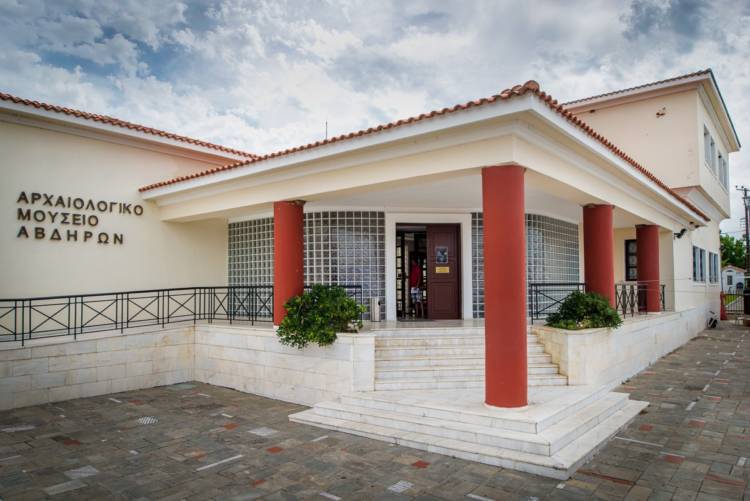
Archaeological evidence reveals continuous occupation from prehistoric times through the medieval period. The earliest substantial settlement, known as Krenides, was established by Thasian colonists in the mid-4th century BCE. This settlement was later conquered and refounded by Philip II of Macedon as Philippi in 356 BCE, who enhanced its fortifications and urban infrastructure. The site’s strategic location on the route connecting Amphipolis and Neapolis, as well as its proximity to mineral resources, underpinned its military and economic importance. Subsequent Roman colonization, early Christian establishment, and Byzantine occupation have left a rich stratigraphic record, extensively investigated since the early 20th century. Today, the site is protected as a cultural heritage park, with many artifacts housed in the Archaeological Museum of Kavala, and is recognized by UNESCO for its well-preserved urban and funerary remains.
History
Philippi’s historical trajectory reflects its strategic and economic significance in eastern Macedonia, shaped by successive cultural and political transformations. Originating as a Greek colonial settlement, it became a fortified Macedonian city under Philip II, later evolving into a Roman veterans’ colony following a pivotal civil war battle. The city also holds a prominent place in early Christian history and experienced fluctuating fortunes during Byzantine rule before its decline in the late medieval era.
Greek Colonization and Macedonian Foundation (4th century BCE)
The site’s earliest known urban phase corresponds to the settlement of Krenides, founded circa 360/359 BCE by colonists from Thasos. Located at the foot of Mount Orbelos (modern Mount Lekani), Krenides controlled a key passage between Amphipolis and Neapolis and was adjacent to the gold mines of Asyla, which contributed to its economic vitality. In 356 BCE, Philip II of Macedon seized the city, renaming it Philippi and initiating substantial fortification works. These included walls constructed of large ashlar blocks that partially enclosed the city and blocked the narrow corridor between the swamp and the mountain. Philip II also undertook drainage of the surrounding marshlands, as recorded by Theophrastus, to improve agricultural potential and urban hygiene.
Despite Macedonian sovereignty, Philippi retained a degree of political autonomy, maintaining its own assembly (demos) and minting coins linked to the local mining economy. Archaeological remains from this period include sections of the city walls, a Greek theatre used for civic performances, foundations of domestic structures beneath later Roman public buildings, and a funerary heroon dedicated to Exekestos, a foundation hero venerated within the city’s agora. These features attest to a well-organized urban community with established civic and religious institutions during the Hellenistic period.
Roman Conquest and Colonial Reorganization (42 BCE–2nd century CE)
The Battle of Philippi in 42 BCE, fought on the plain west of the city, was a decisive engagement during the Liberators’ civil war between the forces of Mark Antony and Octavian and those of Brutus and Cassius. The Roman victory led to the establishment of Philippi as a Roman colony, initially named Colonia Victrix Philippensium. Subsequent imperial titles included Colonia Iulia Philippensis and Colonia Augusta Iulia Philippensis, reflecting its integration into the Roman imperial system after Augustus’ accession in 27 BCE. Veteran soldiers, likely from Legio XXVIII and possibly the Praetorian Guard, were settled in the colony, marking a significant demographic and administrative transformation.
The city’s territory was systematically divided through centuriation and allocated to colonists, while the original Macedonian fortifications were preserved and maintained. Urban development included the construction of a Roman forum east of the earlier Greek agora, arranged on two terraces with adjacent temples, creating a compact urban plan that emulated Roman municipal models. Governance was conducted by duumviri appointed from Rome, underscoring Philippi’s status as a municipium with Roman legal and political structures. The city prospered economically due to its control over nearby gold mines and its strategic position on the Via Egnatia, the principal Roman road linking the Adriatic coast to Byzantium. Monumental architecture from this period includes the two-terraced forum built between the reigns of Claudius and Antoninus Pius, an enlarged theatre adapted for Roman spectacles such as gladiatorial games, and numerous Latin inscriptions documenting civic life and public benefactions.
Early Christian Era (mid-1st century–6th century CE)
Philippi holds a distinguished place in early Christian history, as the Apostle Paul visited the city around 49–50 CE during his second missionary journey. According to the Acts of the Apostles and the Epistle to the Philippians, Paul preached to the local population, establishing one of the earliest Christian communities in Europe. Notably, he baptized Lydia of Thyatira, a merchant from the city, marking the introduction of Christianity to the region. Early Christian presence is further attested by a letter from Polycarp of Smyrna to the Philippian community circa 160 CE and by funerary inscriptions bearing Christian symbols.
The earliest known Christian church, the Basilica of Paul, dates to approximately 343 CE and was identified through a mosaic inscription. By the 4th century, Philippi had become a metropolitan see with an established bishopric. Between the mid-4th and late 6th centuries, seven churches were constructed, including Basilica B, notable for its architectural decoration influenced by Constantinople’s Hagia Sophia and Saint Irene. A large cathedral complex featuring an octagonal church was built at the end of the 5th century, rivaling major urban centers in scale and ornamentation. During this period, the city’s fortifications were rebuilt to address regional instability. In 473 CE, Ostrogothic forces under Theodoric Strabo besieged Philippi but failed to capture it, although they devastated surrounding villages. These developments reflect Philippi’s continued religious and strategic significance in Late Antiquity.
Byzantine Period and Decline (7th–14th centuries CE)
The Byzantine era was marked by significant challenges for Philippi. The late 6th century saw Slavic incursions that severely disrupted the agrarian economy, compounded by the Plague of Justinian around 547 CE. An earthquake circa 619 CE caused extensive destruction, from which the city never fully recovered. Although some activity persisted into the 7th century, Philippi was reduced to a small village, possibly maintaining a Byzantine military garrison to secure the Via Egnatia corridor.
In 838 CE, Bulgarian forces under kavhan Isbul captured Philippi, commemorating their victory with an inscription on the stylobate of Basilica B. The Byzantines attempted to retake the city around 850 CE, and 9th-century seals confirm a continued military presence. Emperor Nicephorus II Phocas undertook fortification rebuilding around 969 CE, focusing on the acropolis and city defenses, while Bishop Basil Kartzimopoulos restored fortifications in 1077 CE. By the 12th century, Philippi experienced a modest revival, noted by the Arab geographer Al Idrisi as a center of commerce and wine production. Following the Fourth Crusade in 1204 CE, the city briefly fell under Frankish control before Serbian conquest. Philippi remained a strategic fortress on the Via Egnatia until its abandonment after the 14th century. By the mid-16th century, only ruins remained, quarried by Ottoman authorities, though the toponym survived in nearby settlements.
Daily Life and Importance by Period
Greek Colonization and Macedonian Foundation (4th century BCE)
The initial inhabitants of Krenides, later Philippi, were primarily Greek colonists from Thasos, with probable interactions and cultural exchanges with local Thracian populations. The social structure included free citizens participating in the city’s assembly, alongside miners and artisans connected to the nearby gold mines at Asyla. Local elites controlled mining operations and civic administration, while laborers engaged in agriculture and resource extraction. Economic activities centered on gold mining and farming, facilitated by Philip II’s marsh drainage projects that expanded cultivable land.
Craft production likely occurred at a domestic or small workshop scale, producing pottery and metal goods for local use. Archaeological evidence of city walls and a Greek theatre indicates organized civic life with spaces for public assembly and entertainment. Domestic architecture probably featured mosaic floors and painted plaster walls, consistent with Macedonian urban dwellings, although specific finds at Philippi are limited. The diet likely included cereals, olives, and freshwater fish, supplemented by agricultural produce. Trade and transport relied on overland routes connecting Amphipolis and Neapolis, with goods moved by pack animals and carts. Religious life combined hero cults, such as the heroon of Exekestos, with traditional Greek deities, and public festivals and theatrical performances were integral to social cohesion.
Roman Conquest and Colonial Reorganization (42 BCE–2nd century CE)
Following the Roman victory in 42 BCE, Philippi was transformed into a Roman colonia, populated by veteran soldiers from Legio XXVIII and possibly the Praetorian Guard. The population became a mixed community of Roman settlers and indigenous Macedonians, with a social hierarchy placing Roman colonists in political offices such as duumviri, while local elites and freedmen engaged in commerce and crafts. The economy expanded through systematic land division (centuriation), redistributing territory to colonists and intensifying agricultural production.
Control of the gold mines remained a key source of wealth, supplemented by trade along the Via Egnatia, which facilitated movement of goods and people across the empire. Workshops producing pottery, textiles, and metal goods likely operated at household or small industrial scale to meet urban demand. Residential architecture evolved to include Roman-style houses with mosaic floors and frescoed walls. Public buildings such as the two-terraced forum, baths, and an enlarged theatre adapted for Roman spectacles reflect the city’s urban development. Dietary remains suggest consumption of Mediterranean staples including bread, olives, wine, and fish. Markets served as commercial centers offering imported goods, while religious life incorporated Roman imperial cults alongside traditional Greco-Roman deities. Philippi’s status as a colonia integrated it firmly into imperial administrative and military networks.
Early Christian Era (mid-1st century–6th century CE)
The introduction of Christianity by Apostle Paul around 49–50 CE brought new religious and social dynamics to Philippi. The Christian community included Roman citizens, local Macedonians, and clergy, with bishops emerging as prominent leaders by the 4th century. Social roles expanded to encompass ecclesiastical authority alongside traditional civic magistrates. Economic activities continued in agriculture and trade, with Christian patronage influencing urban development and the construction of seven churches, including the Basilica of Paul and the architecturally significant Basilica B.
Domestic interiors from this period likely incorporated Christian symbolism in mosaics and iconography. Markets remained active, with Christian festivals supplementing traditional public events. The Via Egnatia continued to facilitate pilgrimages and ecclesiastical communication. Religious practices shifted toward Christian liturgy, baptism, and funerary rites, as evidenced by inscriptions and church remains. Philippi evolved into a metropolitan see, with a bishopric overseeing regional ecclesiastical affairs. The city’s fortifications were rebuilt to counter Balkan instability, reflecting its ongoing strategic importance. Despite Ostrogothic sieges, Philippi maintained its religious and civic functions, blending Roman municipal governance with emerging Christian institutions.
Byzantine Period and Decline (7th–14th centuries CE)
The Byzantine period witnessed demographic and economic contraction following Slavic invasions, plague, and earthquake damage, reducing Philippi from an urban center to a modest village with a probable Byzantine garrison. The population became more militarized and ecclesiastically focused, with fewer civilian inhabitants and an emphasis on defense and survival. Agricultural production contracted to subsistence levels, and craft and trade activities diminished, though some commercial activity persisted into the 12th century, including noted wine production.
Domestic life was modest, with limited archaeological evidence of elaborate housing or decoration. Religious life remained central, with continued use and restoration of churches and fortifications by Byzantine emperors and bishops. The Bulgarian conquest in 838 CE and subsequent Byzantine reconquest underscore Philippi’s strategic military role. Ecclesiastical leadership persisted, maintaining the bishopric amid political turmoil. The city’s civic status shifted from a Roman colonia to a fortified Byzantine outpost guarding the Via Egnatia. After Frankish and Serbian control in the post-1204 period, Philippi’s importance waned until abandonment after the 14th century. By the Ottoman era, only ruins remained, marking the end of its long urban history.
Remains
Architectural Features
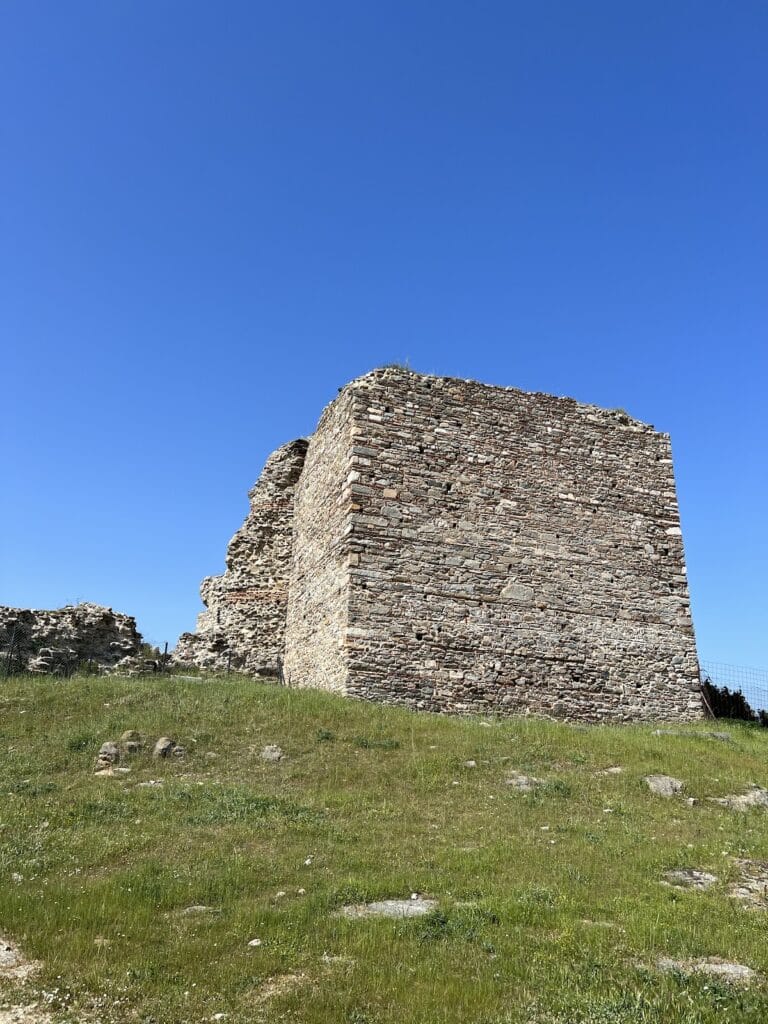
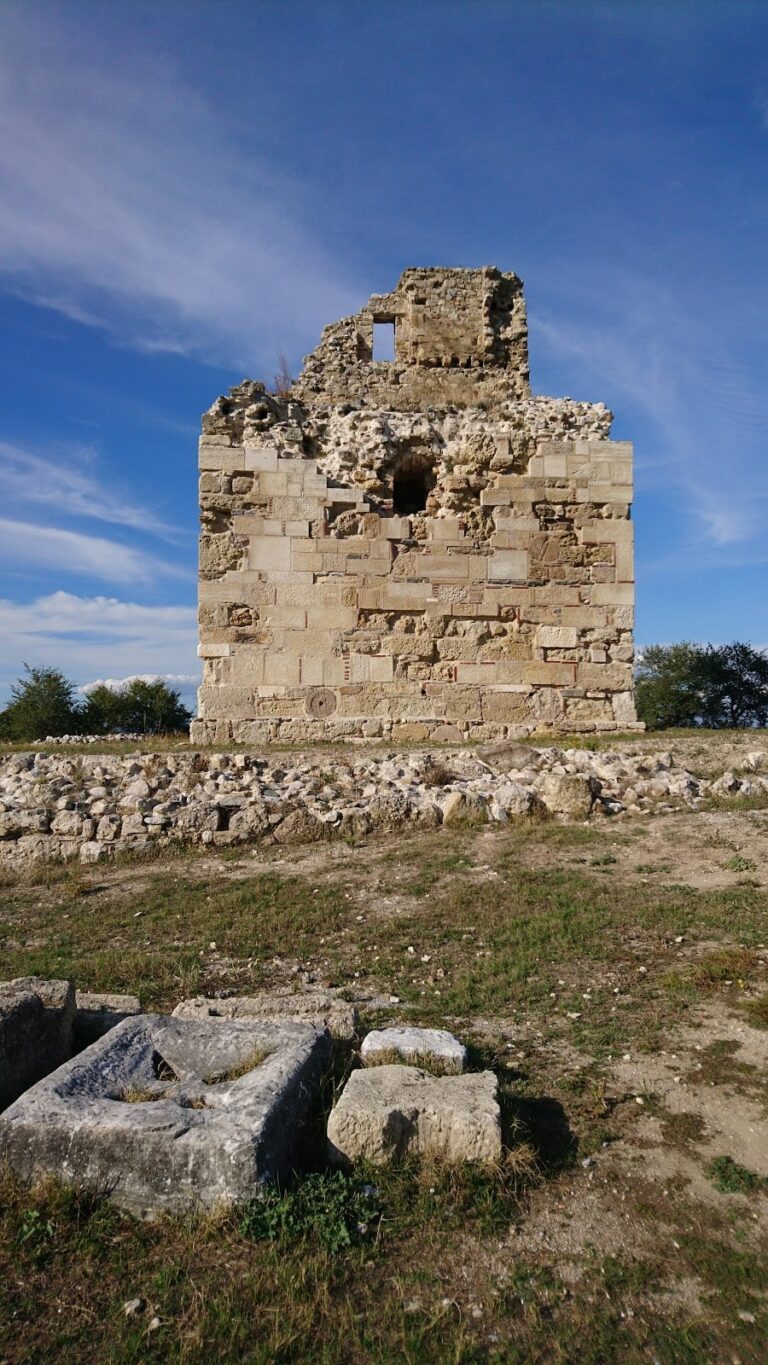
The archaeological remains at Philippi encompass a broad chronological range from the Hellenistic through Byzantine periods, illustrating the city’s transformation from a Macedonian fortified settlement to a Roman colonial town and later a Christian episcopal center. The original city walls, erected in the 4th century BCE under Philip II, are constructed of large ashlar blocks and partially enclose the elevated site, strategically blocking the narrow passage between a swamp and Mount Orbelos. These fortifications were preserved and maintained during the Roman period and underwent significant rebuilding in the Byzantine era, particularly in the 10th and 11th centuries CE. Surviving elements include gates and towers, some extant in fragmentary condition.
The urban layout features civic, religious, and residential buildings aligned along the ancient Via Egnatia, which traverses the site. Roman-period expansion introduced a forum and monumental temples on a terrace north of the forum. Excavations have revealed residential quarters with large houses beneath and around public buildings. From the 4th century CE onward, Christian ecclesiastical complexes developed, including basilicas and a bishop’s quarter. The site also contains a necropolis to the east with funerary monuments and churches. Remains of Roman baths and other infrastructure illustrate the city’s complex urban character.
Key Buildings and Structures
City Walls and Gates
Constructed in 356 BCE under Philip II, the city’s defensive walls are built of large stone blocks and partially sealed the narrow corridor between the swamp and Mount Orbelos. The fortifications enclosed the settlement on its elevated position and included multiple gates. These Macedonian walls were preserved and repaired during the Roman period. Byzantine reconstruction efforts, notably under Emperor Nicephorus II Phocas around 969 CE, focused on the acropolis and city defenses, with further fortifications restored by Bishop Basil Kartzimopoulos in 1077 CE. Earthquake damage circa 619–620 CE left visible surface traces and collapsed masonry. Portions of the walls and gates remain visible within the archaeological park.
Theatre
The Greek theatre dates to the Hellenistic period, constructed in the 4th century BCE. It was subsequently enlarged and modified during the 1st and 2nd centuries CE to accommodate Roman spectacles, including gladiatorial contests. The surviving stone seating (cavea) and stage building (skene) remain partially intact. Early 20th-century excavations by the École française d’Athènes revealed architectural details such as the orchestra and stage structures. The theatre stands as a prominent example of Hellenistic public architecture at Philippi.
Funerary Heroon (Temple)
A funerary heroon dating to the Hellenistic period covers the tomb of Exekestos, a foundation hero (ktístēs) of the city. Located near the agora, the monument comprises architectural remains of a small temple or shrine. This structure is part of the city’s early funerary architecture and is visible among the excavated ruins.
Roman Forum
The Roman forum was constructed in multiple phases between the mid-1st century CE (reign of Claudius) and the mid-2nd century CE (reign of Antoninus Pius). Situated on a monumental terrace in the northern city sector, east of the earlier Greek agora, the forum is arranged on two terraces flanking the main road. Temples occupy a terrace to the north. Built with stone and Roman concrete, the forum includes porticoes and open spaces characteristic of public architecture in the eastern provinces. Early 20th-century excavations uncovered its layout and architectural elements. The forum functioned as the civic center during the Roman colonial period.
Monumental Terrace with Temples
North of the Roman forum lies a monumental terrace supporting several temples erected during the Roman period. These religious buildings contributed to the Roman architectural transformation of Philippi’s urban landscape. Constructed of ashlar masonry, the temples’ foundations and partial walls survive, though specific dedications remain undocumented.
Basilica of Paul (Basilica A)
The Basilica of Paul, dating to circa 343 CE, is the earliest known Christian church at Philippi. Identified by a mosaic inscription on its pavement, it was originally a modest prayer house associated with the Apostle Paul and the early Christian community. The basilica’s remains include a rectangular nave flanked by side aisles, constructed with stone and mortar. Excavations in the early 20th century revealed its architectural plan and mosaic decoration, representing the initial phase of Christian architecture in the city.
Basilica B (Transept Basilica)
Basilica B is a large early Christian basilica built between the mid-4th and late 6th centuries CE. Its architectural plan features a transept and decorative elements influenced by Constantinople’s Hagia Sophia and Saint Irene. The basilica was partially rebuilt and fortified during the Byzantine period. It was the site of a monumental Bulgarian inscription dated to 838 CE. Today, the basilica survives in partial ruin, with extant wall sections and decorative fragments.
Octagonal Church
Constructed at the end of the 5th century CE, the Octagonal Church forms part of a cathedral complex that replaced the earlier Basilica of Paul. Its octagonal plan and architectural decoration place it among notable examples of early Christian architecture. Excavations conducted between 1958 and 1978 uncovered the church within the bishop’s quarter, revealing masonry, floor mosaics, and structural layout. The building’s scale and ornamentation rival contemporary churches in Constantinople.
Bishop’s Quarter
Excavations from 1958 to 1978 revealed the bishop’s quarter, a complex of ecclesiastical buildings including the Octagonal Church and associated structures. The area contains residential and administrative buildings related to Philippi’s metropolitan see. Remains include stone foundations, mosaic floors, and architectural fragments, illustrating the city’s role as a Christian episcopal center during Late Antiquity and the Byzantine period.
Houses and Private Residences
Foundations of domestic buildings have been uncovered beneath the Roman forum and in adjacent areas. Excavations revealed large private residences dating primarily to the Roman and Byzantine periods. These houses feature stone foundations, interior rooms, and mosaic floors. Some include courtyards and ancillary spaces, constructed with local stone and mortar, providing insight into urban domestic life within the city’s core.
Necropolis and Funerary Monuments
The necropolis, located east of the city, contains funerary monuments and churches dating from the Hellenistic through Byzantine periods. Mid-20th-century excavations uncovered two basilicas within the necropolis, along with tombs and funerary architecture. The funerary heroon dedicated to Exekestos is part of this assemblage. The necropolis includes stone sarcophagi, burial chapels, and mosaic decoration associated with Christian burials.
Roads and Via Egnatia
Philippi was situated on the ancient Via Egnatia, a major Roman road connecting the Adriatic coast to Byzantium. The road’s course passes through the city, controlling the strategic passage between Amphipolis and Neapolis. Archaeological remains of the road’s pavement and associated infrastructure survive within the site. The modern asphalted road following the ancient route was closed in 2014 and is planned for dismantling near the site museum to protect the archaeological context.
Other Remains
Excavations have uncovered remains of Roman public baths, including rooms with mosaic floors and hypocaust (underfloor heating) systems. Numerous mosaic and opus sectile floors have been found in both public and private buildings. Inscriptions and architectural fragments from various periods are scattered throughout the site. Surface traces and collapsed masonry from the earthquake destruction circa 620 CE remain visible. Some stones and building elements were reused in later constructions, reflecting the city’s long occupation and phases of rebuilding.
Preservation and Current Status
The preservation of Philippi’s ruins varies by structure. The city walls and gates survive in visible but fragmentary condition, with some sections stabilized or restored. The theatre retains substantial stone seating and stage remains. The Roman forum and monumental terrace with temples are partially preserved, with foundations and architectural fragments exposed. Early Christian basilicas, including the Basilica of Paul and Basilica B, survive in partial ruin, with mosaic floors and wall sections visible. The Octagonal Church and bishop’s quarter remain as archaeological foundations and mosaic pavements. Residential buildings are preserved mainly as foundations. Earthquake damage from the early 7th century left collapsed blocks and surface traces. Conservation efforts by Greek authorities continue under national antiquities law, with the site managed by the Ephorate of Antiquities. A management plan drafted in 2014 guides ongoing preservation and research.
Unexcavated Areas
Although extensive excavations have been conducted, some areas of Philippi remain unexcavated or only partially studied. Surface surveys and geophysical investigations indicate buried remains in peripheral zones beyond the main urban core. No detailed reports specify particular districts awaiting excavation. Current conservation policies and modern land use restrict large-scale new excavations. Future archaeological work is planned to focus on preservation and targeted research within the existing site boundaries.