Pardubice Castle: A Historic Renaissance Fortress in the Czech Republic

Visitor Information
Google Rating: 4.6
Popularity: Medium
Official Website: www.vcm.cz
Country: Czechia
Civilization: Unclassified
Site type: Military
Remains: Castle

History
Pardubice Castle is situated in the town of Pardubice in the modern Czech Republic. Its origins trace back to the late 13th century when it was established as a water fortress constructed by the noble class of the time.
The earliest known owners were the Lords of Dubá, followed by the Lords of Pardubice, with clear documentation from the beginning of the 14th century, notably the tenure of Puta of Frýdlant between 1318 and 1319. During the early 15th century, the castle came under Viktorin Boček of Kunštát and Poděbrady, an ally of the Hussite military leader Jan Žižka, placing the site within a period marked by religious conflict associated with the Hussite Wars.
In 1491, ownership shifted to Vilém II of Pernštejn, a Moravian nobleman who elevated the castle’s stature by transforming it into his family’s principal residence in Bohemia. Under his direction, the fortress evolved into a late Gothic four-winged palace characterized by substantial fortifications designed to accommodate artillery and defended by a broad water-filled moat. Vilém II’s sons, Vojtěch I and Jan IV, sustained this development in the early to mid-1500s by adding Renaissance stylistic features, including an extra floor and decorative interior elements.
Financial difficulties led Jaroslav of Pernštejn to sell the estate to Archduke Maximilian in 1560, after which the castle served as a royal property. It functioned as an administrative center for the monarchy and occasionally accommodated Czech kings and their retinues. Between 1574 and 1579, Renaissance enhancements directed by court architect Ulrico Aostalli de Sala introduced sgraffito facades, a redesigned entrance segment known as a risalit, a new staircase, and a substantial hall on the third floor of the northern wing, contributing to the castle’s refined appearance.
Throughout the 17th century, the castle’s role shifted away from purely military and residential uses toward industrial and economic activities. A brewery was established in 1650, and within the moat area, factories for paper, tanning, and leather production operated until the early 18th century. Baroque-era renovations by František Maxmilián Kaňka from 1723 to 1726 modified interior spaces but largely left the core architecture unchanged.
The castle’s military significance waned in the late 18th century, culminating in the loss of its defensive function in 1836. Subsequently, some bastions were converted into gardens and vineyards, reflecting the changing needs and status of the site. Ownership transferred to private hands in the late 19th century, and in 1920 the Pardubice Museum Society acquired the castle, beginning a series of restorative efforts. Nationalization occurred in 1953, but the castle suffered neglect and structural damage during the 1970s, including partial ceiling collapses. A gradual program of restoration began in 1994 and concluded with its reopening in 1997.
Since 2001, the castle has been owned by the Pardubice Region and now accommodates cultural institutions such as the East Bohemian Museum and Gallery, alongside the regional office of the National Heritage Institute. Recognizing its historical and architectural importance, the site and its fortifications were officially listed as a national cultural monument in 2010. A notable element, the castle’s chapel of the Three Kings, initially constructed by Vilém II in the early 16th century and closed in 1979, was ceremonially reopened in 2013, restoring a significant religious feature linked to the castle’s noble past.
Remains
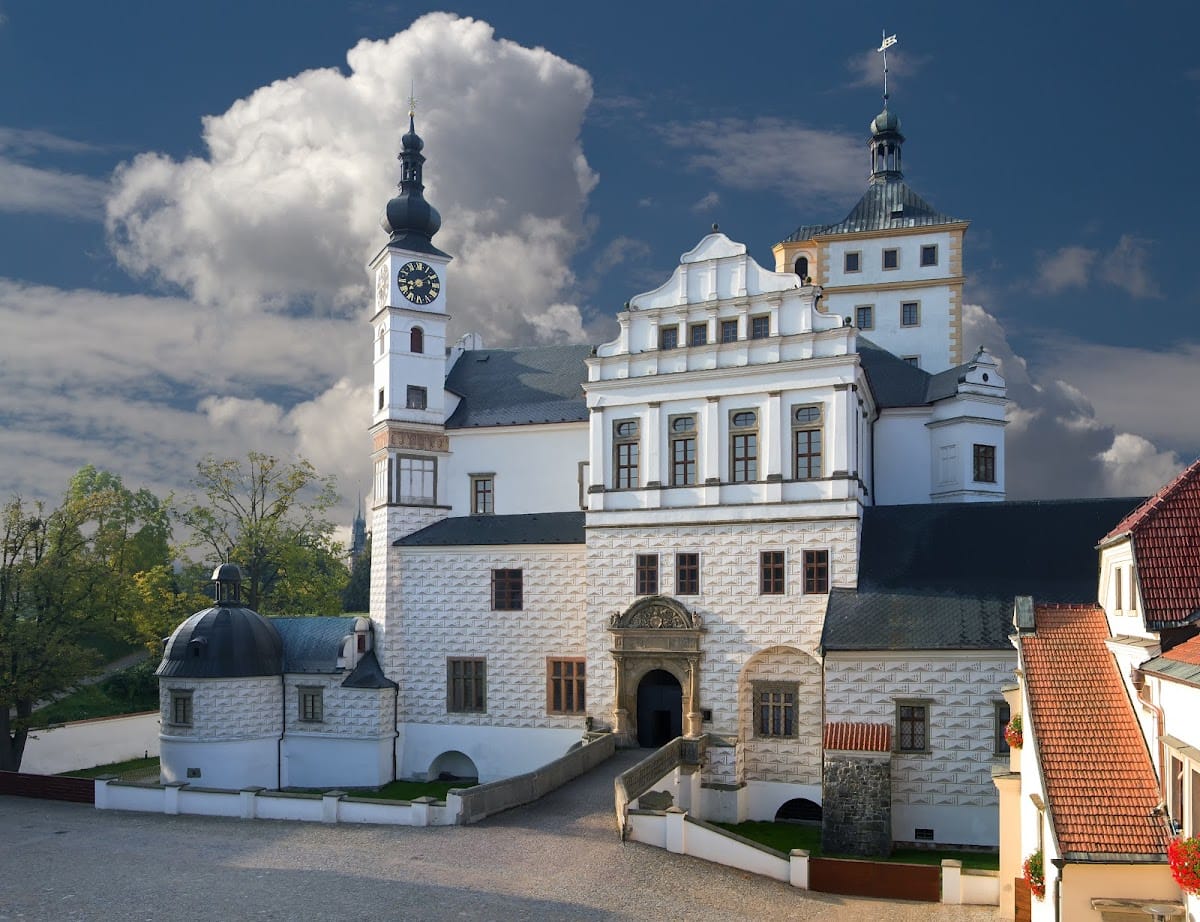
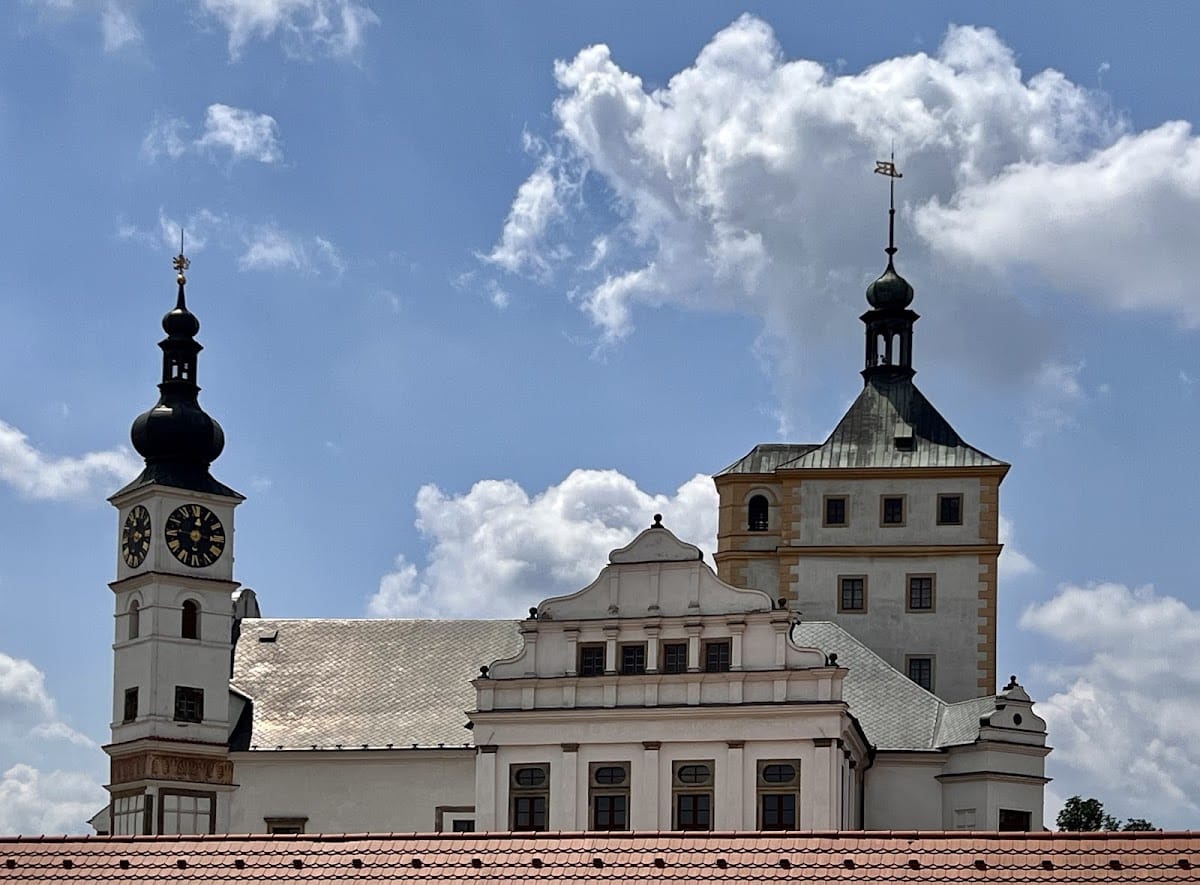
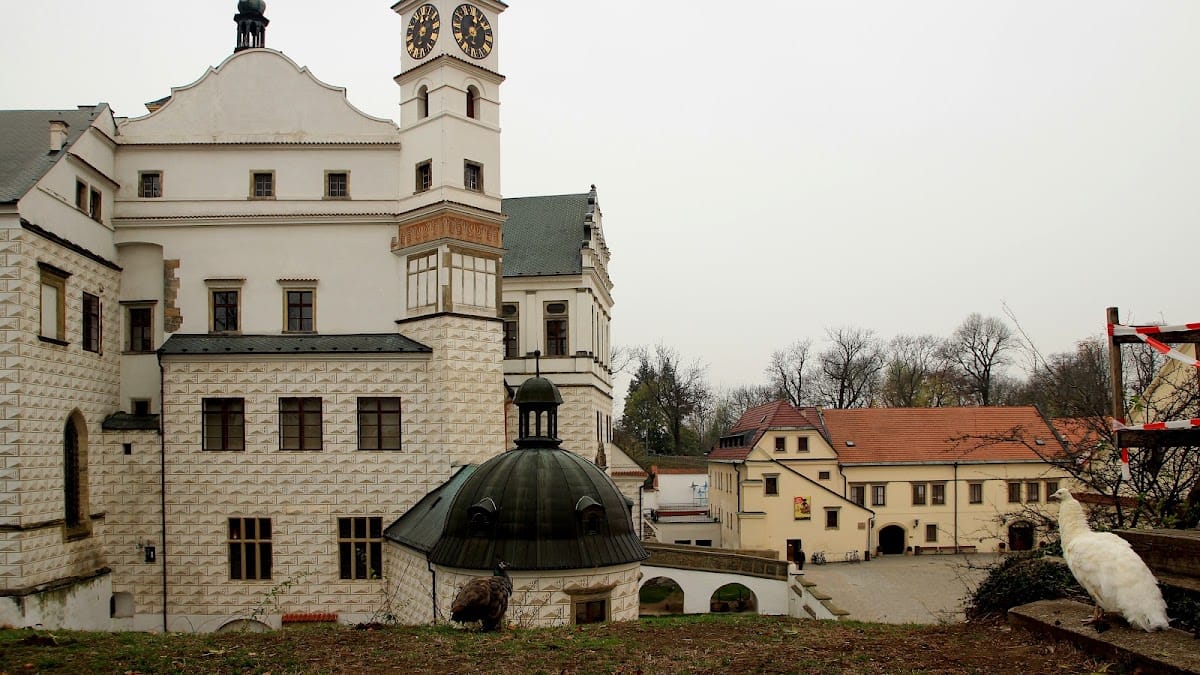
Pardubice Castle presents as a Renaissance palace complex positioned close to the historic center of Pardubice. Its architectural character uniquely blends the defensive qualities of a fortress with the grandeur typical of aristocratic residences, forming an extensive structure unmatched in preservation and scale within Central Europe.
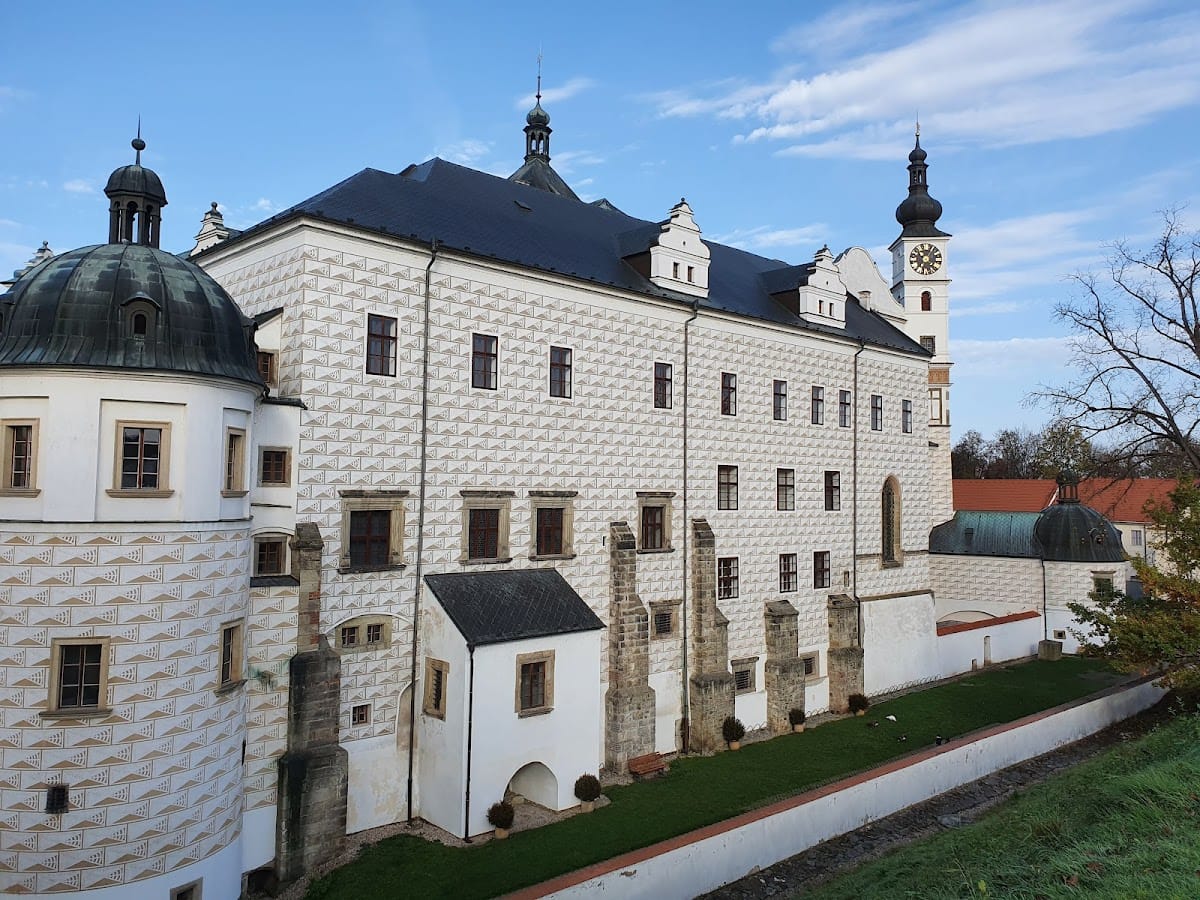
Archaeological investigations have revealed that the cellar spaces beneath the northern wing and the foundational elements of the castle’s main tower correspond to the original ground floor level predating the remodeling carried out by the Pernštejn family. The castle’s fortifications reflect continuous evolution: initially featuring four rounded corner turrets constructed after the Hussite Wars, two of which remain partially intact while the other two are known solely through archaeological findings.
In the early 16th century, these original fortifications were replaced with imposing earthen ramparts that included angular bastions engineered to withstand artillery attacks—an advanced military design of the period. These ramparts reached heights equivalent to the castle’s second floor and were further protected by external walls equipped with narrow openings called gun slits for defensive weaponry. A wide moat surrounding the outer walls was maintained by a sophisticated water supply system linked to the city infrastructure, ensuring it remained filled and functional as a barrier.
The castle’s central building is a late Gothic, four-winged palace rising two stories and encircling a closed courtyard. This courtyard is flanked by service buildings and substantial defensive works, notably featuring a triangular barbican known as “Příhrádek.” Originally, this barbican connected to the castle via a wooden bridge, which after 1804 was substituted with an earthen embankment supporting a stone bridge. The main gate is distinguished by a sculpted stone portal carved between 1529 and 1538 and installed in 1541. Access from the outer courtyard is gained by crossing a decorated stone bridge built over a small internal moat, completed in 1543.
Inside, the castle boasts several halls richly adorned with Renaissance frescoes, among the oldest of their kind in the Czech Republic. The prominent Mázhaus hall contains fragments of early Renaissance murals depicting themes such as “Law and Grace,” painted in the 1540s. These images reflect the religious views of the Utraquist Pernštejn family, influenced stylistically by the German Renaissance painter Lucas Cranach the Elder. Another important space, the Vojtěch Hall, holds the earliest known Renaissance wall painting in the country, portraying the biblical story of “Samson and Delilah” from 1532. This hall features additional illusionistic architectural frescoes and heraldic decorations associated with Vojtěch I of Pernštejn, complemented by a late Gothic bay window with intricate vaulting crafted by royal stonemason Hans Spiess.
The Column Hall presents a well-preserved late Gothic coffered ceiling embellished with early Renaissance plant motifs, dating roughly from 1520 to 1530. A second coffered ceiling of similar style and age survives on the third floor of the eastern wing. The castle chapel of the Three Kings, constructed in the early 16th century, contains a vaulted ceiling supported by a central pillar and includes a lord’s tribune accessible from the first floor, integrating both religious function and social hierarchy in its design.
Fortifications beyond the main structures include a polygonal barbican equipped with a square tower that guarded the second gate, embodying advanced late Gothic artillery defense techniques. The castle exterior is marked by facades decorated with Renaissance sgraffito — a technique of scratching through plaster layers to reveal contrasting colors beneath. The northern wing was expanded to include a grand staircase and a large hall on its third floor during later Renaissance renovations.
Adding to the castle’s symbolic artistry are statues of Saints John of Nepomuk and Francis of Paola positioned above the water channel flowing beneath the dam leading to the moat. In 2020, archaeological digs uncovered exceptionally thick walls made of opuka stone, measuring approximately 2.4 meters, identified as the remains of the 14th-century donjon (main tower) beneath the central courtyard.
Within the castle ramparts, a two-story civil defense shelter constructed in 1953 survives with original communication and ventilation systems intact, reflecting the site’s use in modern protective measures. The surrounding castle park is a protected area, and the entire complex, including former stables, is listed under Czech heritage protection as a national cultural monument, preserving this remarkable example of layered historical and architectural development.
Nearby sites