Çandarlı Castle: A Historic Fortress on the Aegean Coast of Türkiye

Site at a Glance
- Rating
- 4.5
- Popularity
- Medium
- Country
- Turkey
- Primary era
- Medieval
- External website
- Open
- Eras represented
- Iron Age, Medieval
- Civilizations
- Ancient Greek, Byzantine, Genoese, Ottoman
- Site type
- Military
- Remains
- Castle
On this page6 sections
History
Çandarlı Castle is a historic fortress in Türkiye, near Çandarlı in the Dikili district of İzmir. It is associated with the ancient Greek settlement of Pitane and is described as having been built in the sixth century BC to protect the settlement, although its exact construction date remains uncertain. Çandarlı later developed as a leading port during the Kingdom of Pergamon, a Hellenistic kingdom centered on Pergamon in western Anatolia, which ruled from 282 to 129 BC.
From the Pergamon Kingdom to the Ottoman Era
The port continued to matter after the Pergamon kingdom entered the Roman sphere. Çandarlı remained important during the Roman and Byzantine periods, and it retained a port role under the Seljuks, the Turkic dynasties that ruled parts of Anatolia, and the Ottomans.
In the fourteenth century, the Republic of Genoa captured Phocaea, now Foça, and Genoese restoration gave the castle much of its present appearance. After the region was conquered during the reign of Ottoman Sultan Murad II, the ruined fortress was rebuilt in the fifteenth century on the orders of Çandarlı Halil Pasha, the Ottoman grand vizier, or chief minister.
Restoration and Heritage Status
The most recent restoration began in 2009 and ended in 2014. Çandarlı Castle is registered as immovable cultural property requiring protection within a protected historical area. In 2013, it was placed on the UNESCO World Heritage Tentative List as part of “Castles and Walled Settlements on the Genoese Trade Route from the Mediterranean Sea to the Black Sea.” This list contains sites identified by a country as candidates for possible future nomination to the World Heritage List.
Remains
Fortifications
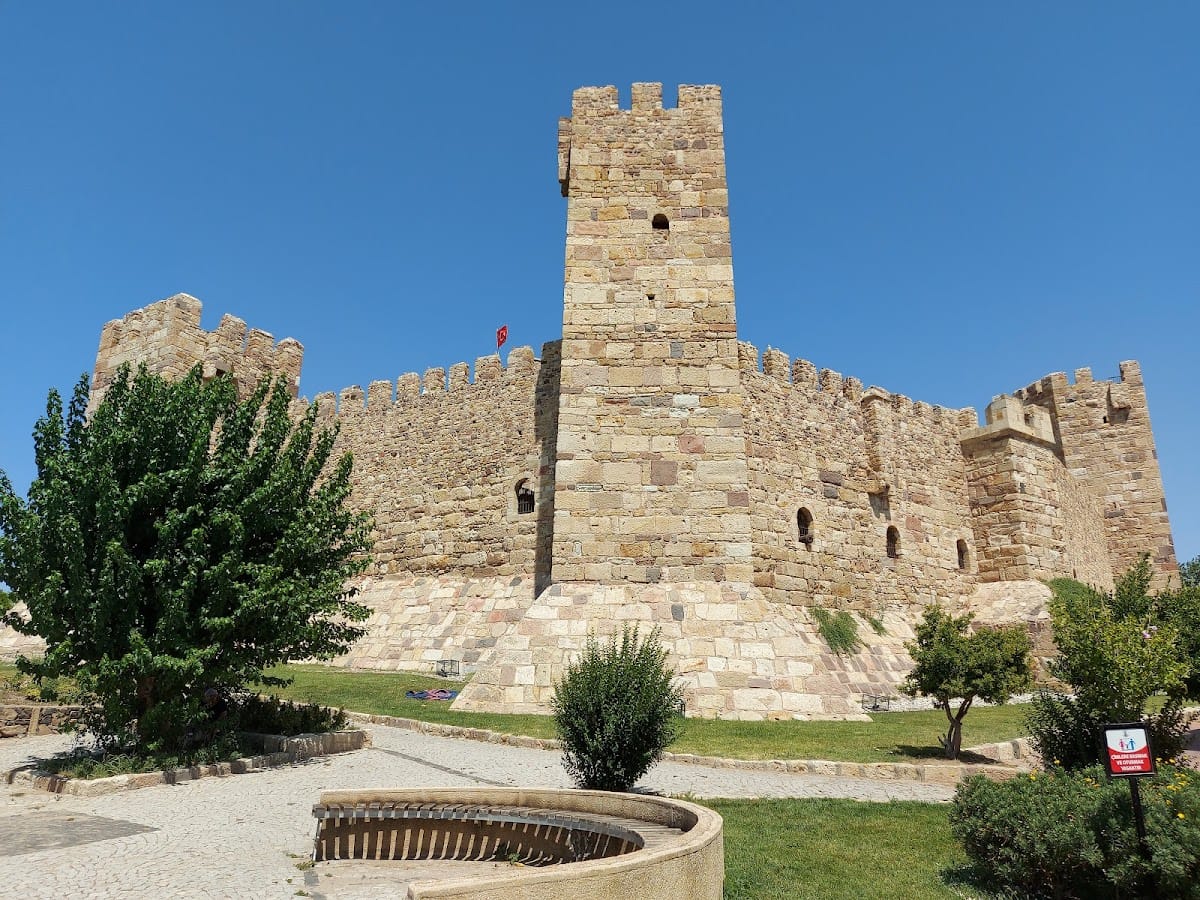
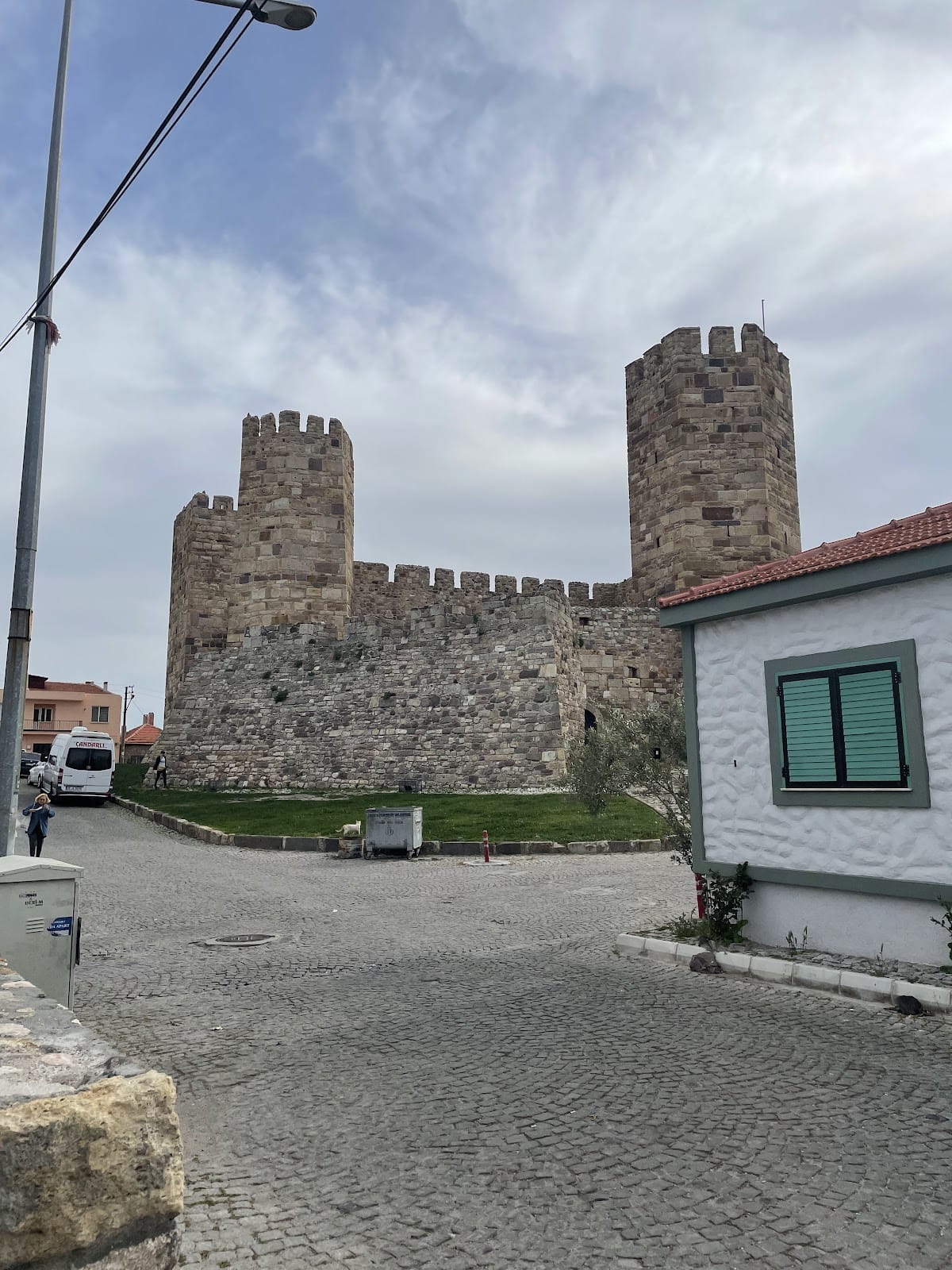
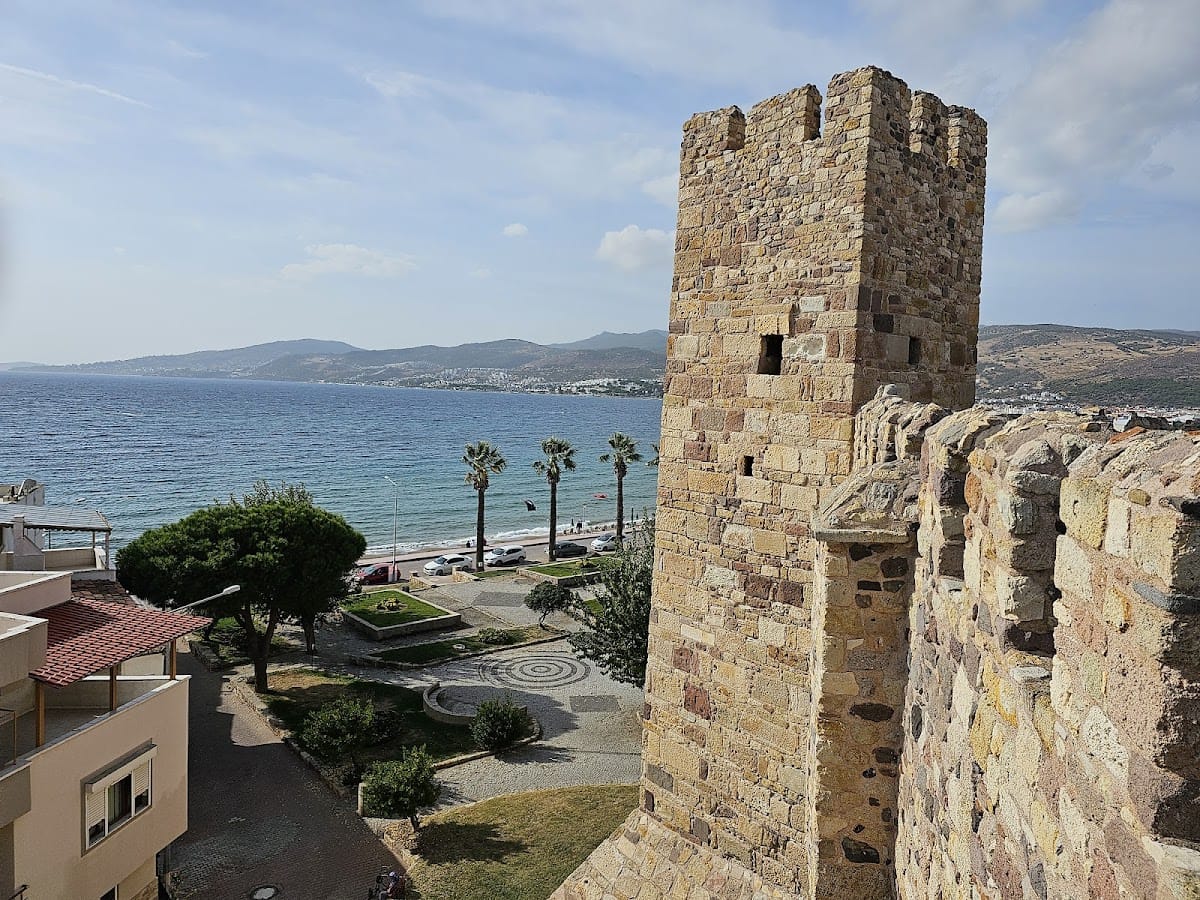
The castle occupies rocky ground near the land connection of a peninsula and overlooks the nearby peninsula. Its ground slopes along an east-west axis. The fortification covers approximately 2,230 square metres and consists of five towers, defensive walls topped with battlements, and a gate. Battlements are the raised protective sections along the top of a defensive wall. The gate carries a faint inscription formed from Quranic verses from the Al-Fath, or “Conquest,” chapter.
Courtyard Archaeology
Excavations in the courtyard uncovered wall remains, floors at different levels, and a cistern associated with the Byzantine period. A cistern is a structure built to collect and store water. Together, these remains preserve evidence of activity within the fortress and of its use across different phases of the site’s history.