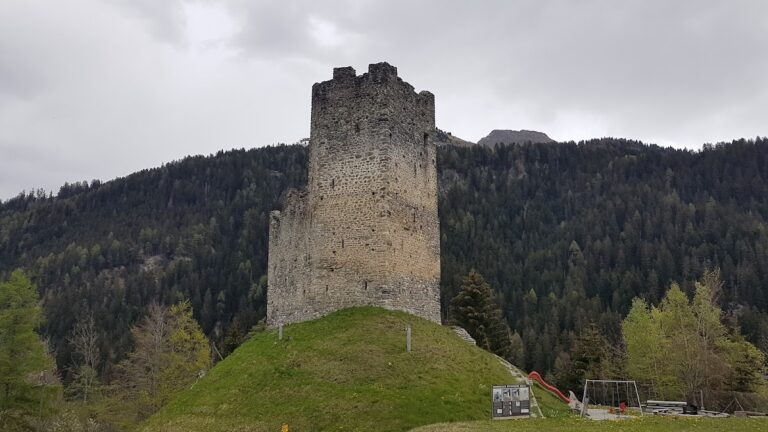
Ortenstein Castle: A Medieval Stronghold in Tumegl/Tomils, Switzerland


Visitor Information
Google Rating: 5
Popularity: Very Low
Country: Switzerland
Civilization: Medieval European
Site type: Military
Remains: Castle

History
Ortenstein Castle stands in Tumegl/Tomils, Switzerland, and was erected in the medieval period by authorities of the Bishopric of Chur or by their local agents, the Lords of Vaz.
The site began in the mid 13th century, around 1250, on land belonging to the bishop. In 1275 the estate was tied into the feudal system as a fief, a landholding granted in return for service, associated with the Vaz family. The castle appears in written records as Ortenstain in 1309. When the male line of the Vaz ended, the estate passed by inheritance to Ursula von Werdenberg in 1338. During the 14th century a ministerialis family occupied the place on behalf of the Werdenberg-Sargans line; a ministerialis was a medieval official or unfree knight who performed administrative and military duties for a lord.
By the 15th century the house sheltered a number of noble occupants. Tensions in the region led to violence in 1451, when residents of the Schams valley fought with forces of the Counts of Werdenberg-Sargans and the castle was put to ruin. Reconstruction followed in 1452, permitted only after an explicit stipulation that the stronghold not be used against the League of God’s House, a regional alliance. The rebuilding retained the original tall residential tower but altered access and defenses by moving the main entrance to the southern side and adding a substantial gatehouse tower.
Ownership passed through several hands in the later 1400s and early 1500s. Collateral transfers and sales involved figures such as Peter von Griffensee, the Counts of Montfort, and the town of Glarus before Count Georg von Werdenberg-Sargans held the site until 1505. After further turnover, Ludwig Tschudi sold both the castle and its governing rights to the village of Tumegl/Tomils in 1527. A year later Victor von Buhlen became proprietor; through marriage the property entered the Travers family, a wealthy patrician line influential in the political life of the Three Leagues, who kept possession for generations and carried out substantial rebuilding in the 18th century.
Financial strain forced a change in the 19th century. In 1846 debts led to transfer to creditors, and in 1856 the estate was sold to Father Theodosius Florentini, who planned a home for neglected children but could not secure the funds to realize it. The castle changed hands again in 1860, when Wolfgang von Juvalta acquired it. In 1893 the Tscharner family inherited Ortenstein, and they remain the owners documented in the records.
Remains
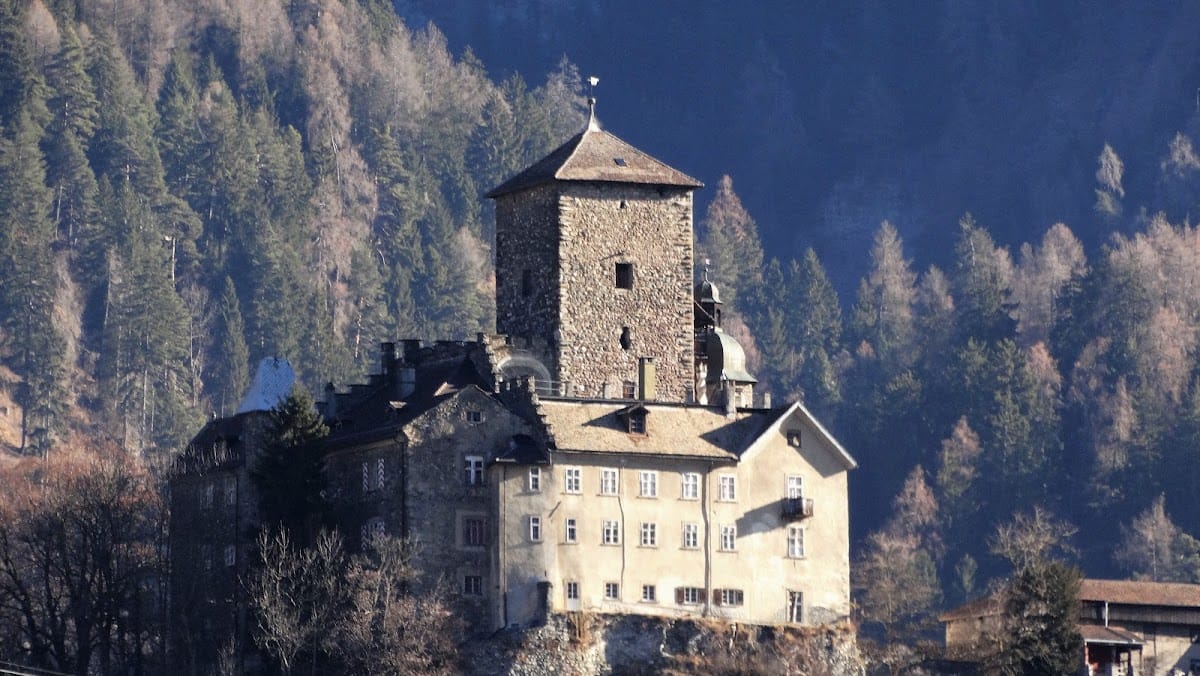
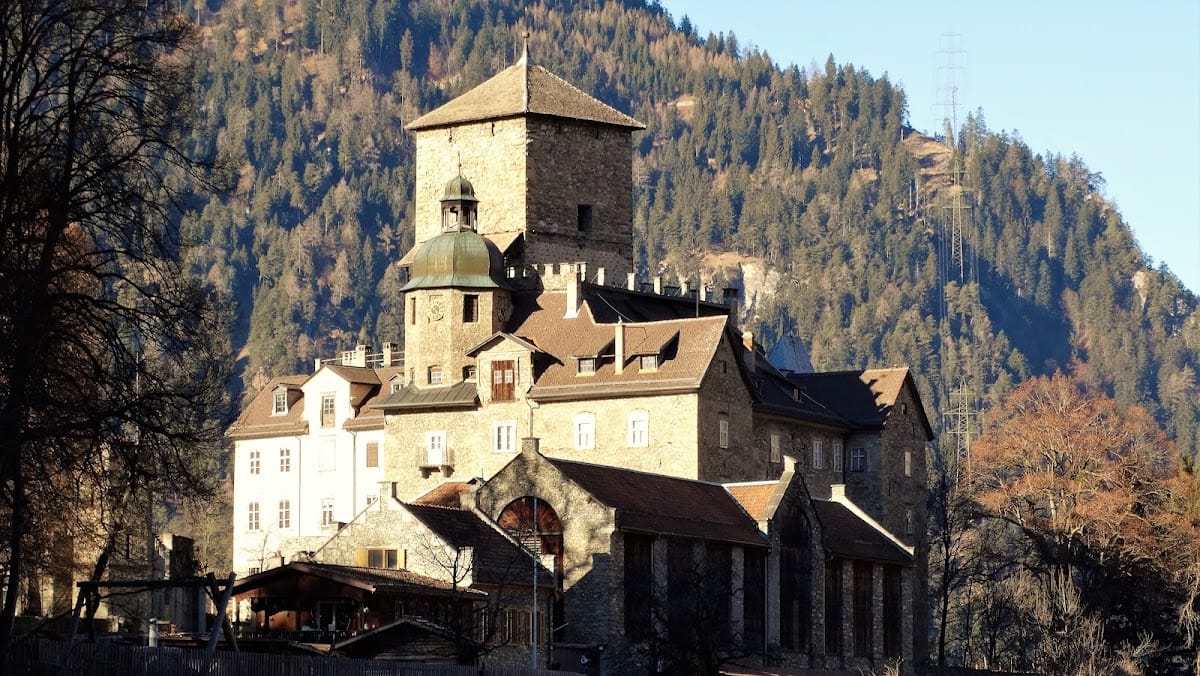
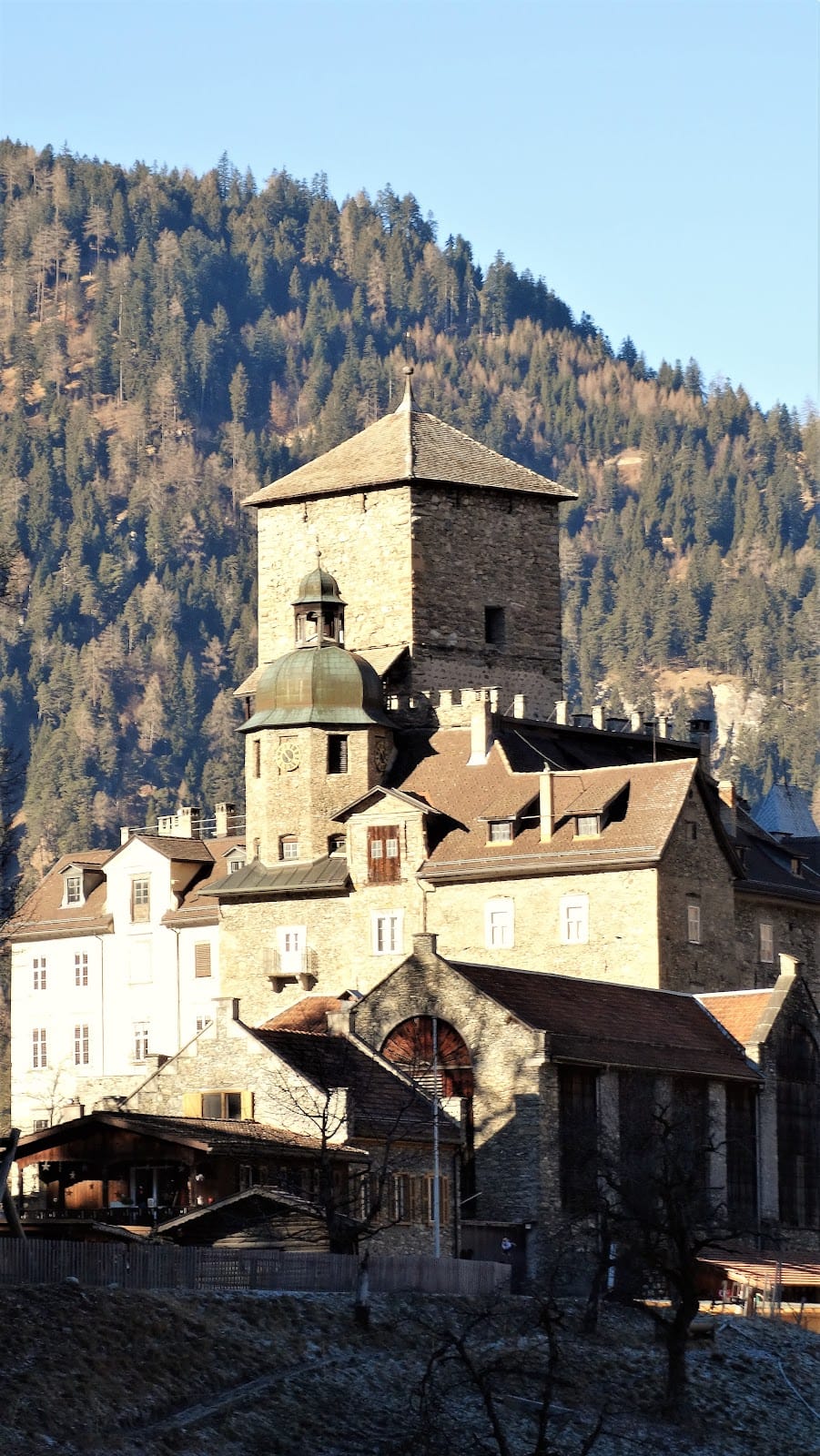
Ortenstein presents a compact medieval complex dominated by a tall, square residential tower around which later wings and defensive structures were arranged. The ensemble shows phases from the original 13th-century nucleus through a mid 15th-century rebuilding and notable 18th-century remodelling, with elements that retain their Gothic character.
The principal tower dates to the earliest building phase, roughly the middle of the 13th century. It rises seven stories and measures approximately 11 by 11 meters at its base, with walls reported as thick as 1.6 meters, dimensions that reflect its residential and defensive role. Archaeological and architectural study indicates this tower was preserved during the 15th-century reconstruction and remains in situ today.
Directly connected to the tower, a wing on the north side and a chapel located on the tower’s third floor both survive from the medieval phases and retain Gothic features. The chapel is documented as occupying that third-floor space, and both the chapel and the northern wing display the stylistic characteristics attributed to their period, surviving through later alterations.
The entrance and gate complex record the 15th-century military and administrative changes. At the time of the mid 1400s rebuilding the principal approach was shifted from the northeast to the southern side, and a large gatehouse tower was erected to control access. During the 18th century further work raised the gatehouse and modified adjoining structures, reflecting changing needs and tastes; the gatehouse and its alterations remain part of the visible fabric.
Between about 1720 and 1740 significant alterations reshaped the castle’s footprint. Records note an extension of the west wing and the addition of a new east wing, actions that changed the arrangement and outward look of the complex. These 18th-century works are evident in the castle’s later elevations and are considered part of the building sequence that sits atop the medieval core.
Nearby sites