Konrádov Castle: A Medieval Rock Fortress in the Czech Republic
Visitor Information
Google Rating: 4.6
Popularity: Very Low
Google Maps: View on Google Maps
Country: Czechia
Civilization: Unclassified
Remains: Military

History
Konrádov Castle is located near the village of Konrádov within the municipality of Mšeno in the modern-day Czech Republic. This fortified site was constructed during the High Middle Ages by the medieval society inhabiting the region.
While there are no written documents directly referencing Konrádov Castle, archaeological findings allow historians to piece together its narrative. Fragments of medieval pottery found at the site confirm its occupation during the High Middle Ages. Based on its geographical proximity to Houska Castle, scholars believe the castle may have functioned as a residence tied to royal estates connected with Bezděz Castle, which possibly was responsible for its establishment. This suggests the castle played a role within the network of manors supporting larger fortifications in the area.
Evidence indicates that the castle met its demise through destruction by fire, as shown by charred remnants of building material discovered in the ruins. Following this catastrophic event, the site was abandoned and left in ruin. Without historical records, details about specific rulers or military actions remain unknown, and the castle’s story must be understood primarily through these archaeological insights.
Remains
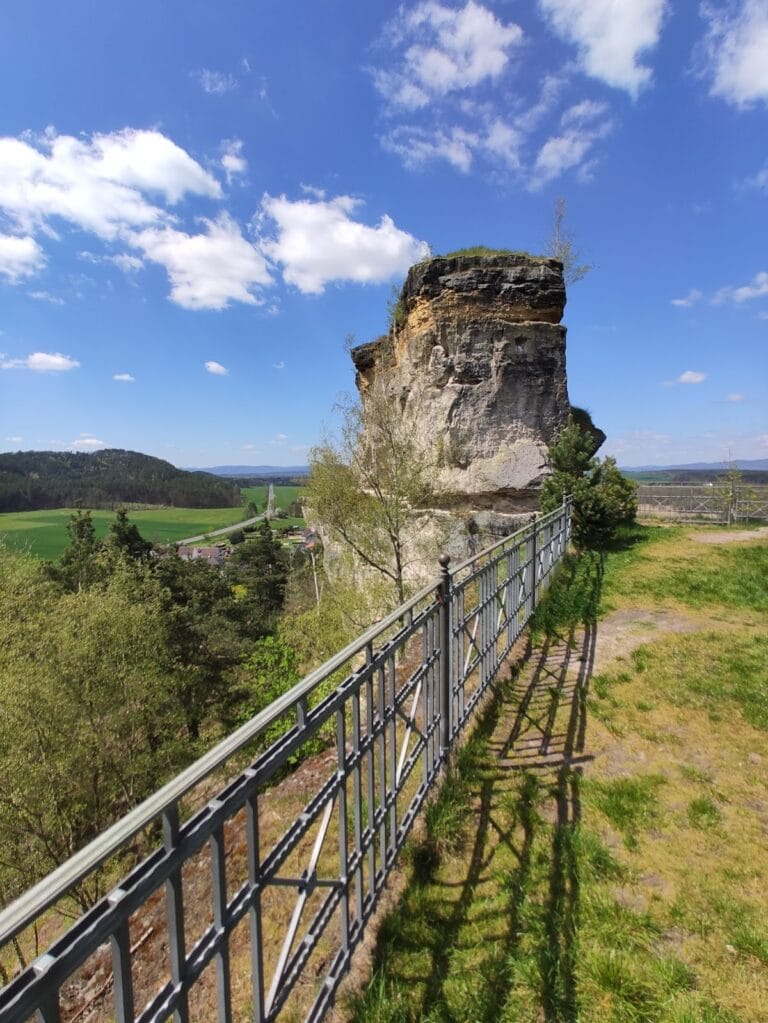
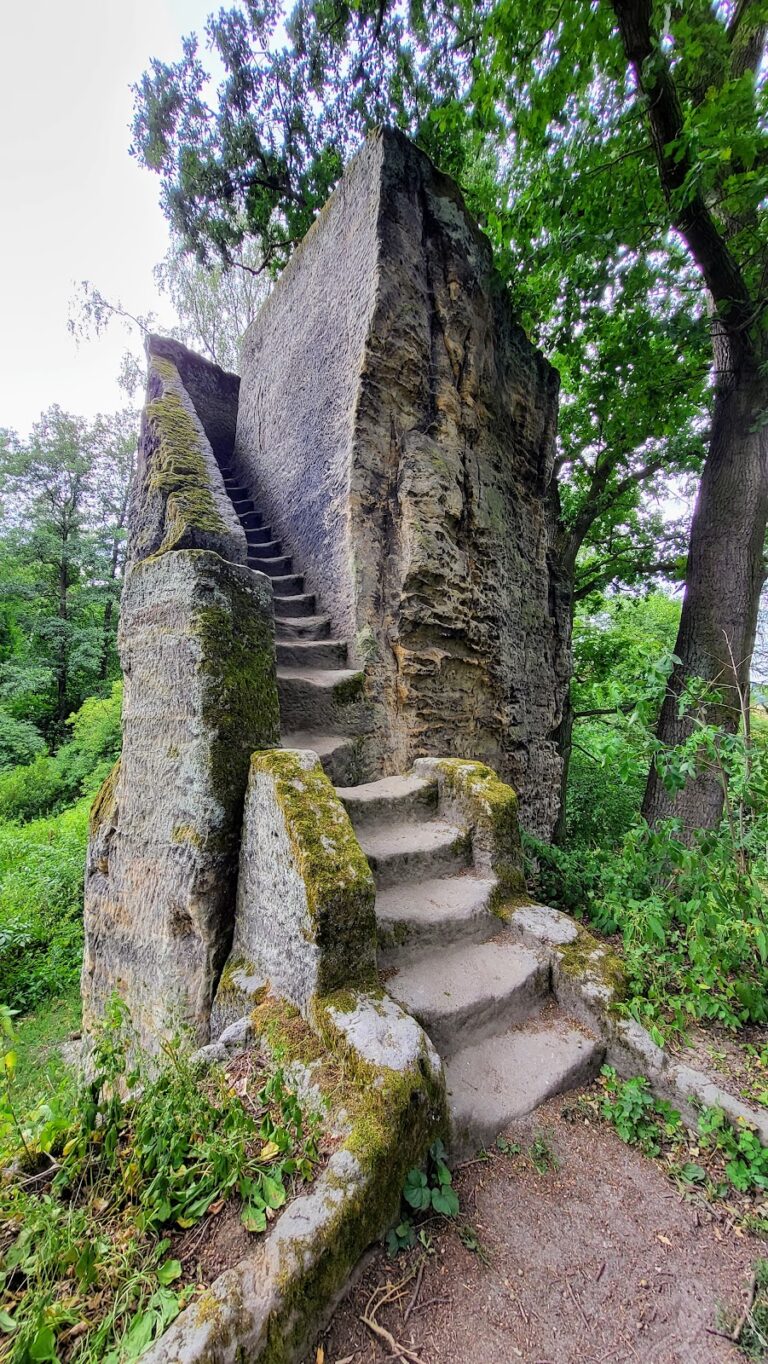
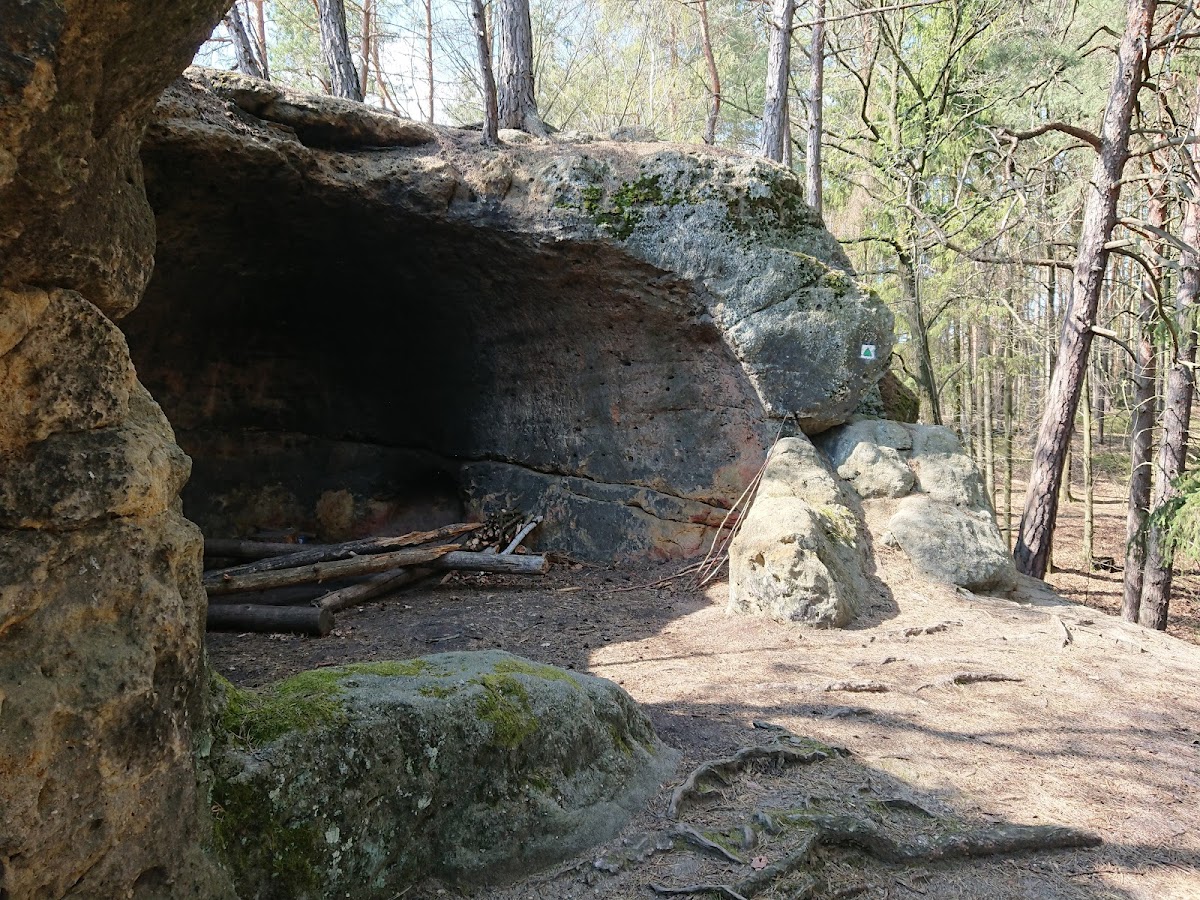
The remains of Konrádov Castle reveal a small rock fortress built on two large sandstone blocks that form a natural promontory. These two rock outcrops were connected originally by a wooden bridge, as indicated by traces of wooden beams uncovered during excavation. The site’s defenders enhanced its natural defenses by cutting a neck ditch—a trench carved into the rock on the approach side—to impede attackers.
On one of the sandstone blocks, archaeologists have uncovered a carved chamber topped by a rock vault, though part of this vaulted ceiling has collapsed over time. Facing forward, this block also features a square vertical shaft chiseled into the stone that likely served as the castle’s original entrance or access point.
The second sandstone block bears evidence of construction designed to support a defensive walkway or gallery. The presence of anchoring points carved into the rock suggests that defenders could patrol this elevated path, enhancing the site’s security. Together, these features illustrate a fortress that cleverly incorporated natural formations with man-made structures to create a fortified residence.
While the castle is now a ruin, its rock-cut elements remain in situ, providing visible testimony to the medieval builders’ adaptation of the landscape. Local tradition has nicknamed it the “Petrified Castle,” reflecting its striking appearance as a fortress hewn directly from stone, though this name does not appear in historical records.
Nearby sites