Hülsede Water Castle: A Renaissance Water Castle in Lower Saxony, Germany

Visitor Information
Google Rating: 4.7
Popularity: Low
Official Website: www.wasserschloss-huelsede.de
Country: Germany
Civilization: Unclassified
Site type: Military
Remains: Castle

History
Hülsede Water Castle is situated in the municipality of Hülsede, Germany. Its origins trace back to the early 14th century within the cultural context of the German principalities. The earliest known reference to the estate dates to 1310 when the Count of Schaumburg granted a court, referred to as the “Bekehof,” as a feudal holding to the von Rottorp family. This grant laid the foundation for what would become the manor and later the castle complex.
Between 1529 and 1548, Claus (also known as Clawes) von Rottorp undertook the construction of the castle as a four-winged structure. This period marked a significant phase of development and expansion that continued until the end of the 16th century. The castle’s design incorporated Renaissance architectural elements uncommon in the region at that time. Evidence in the form of vaulted cellars points to an even older building on the site preceding the 16th-century construction, though detailed historical records about this earlier structure are lacking.
In 1550, Hülsede Water Castle experienced military conflict when it was taken by Franz von Halle. Two years later, the castle was reclaimed, indicating its tactical or symbolic importance in regional disputes. The von Rottorp family’s male lineage ended in 1584, which led to a contested succession. Ernst von Reden claimed rights to the estate but ultimately was unsuccessful. Instead, the Count of Schaumburg, together with the Bishop of Minden, enfeoffed Hermann von Mengersen with the property, initiating a new chapter in the castle’s ownership history.
The Mengersen family maintained possession over the centuries and solidified their control by acquiring full ownership or freehold rights in 1908. Later, in 1970, Monika Bronsart von Schellendorff, born into the von Mengersen line, assumed stewardship of the estate. Recognition of the castle’s historic value led to restoration work beginning in 1979, aiming to preserve its architectural heritage.
Remains
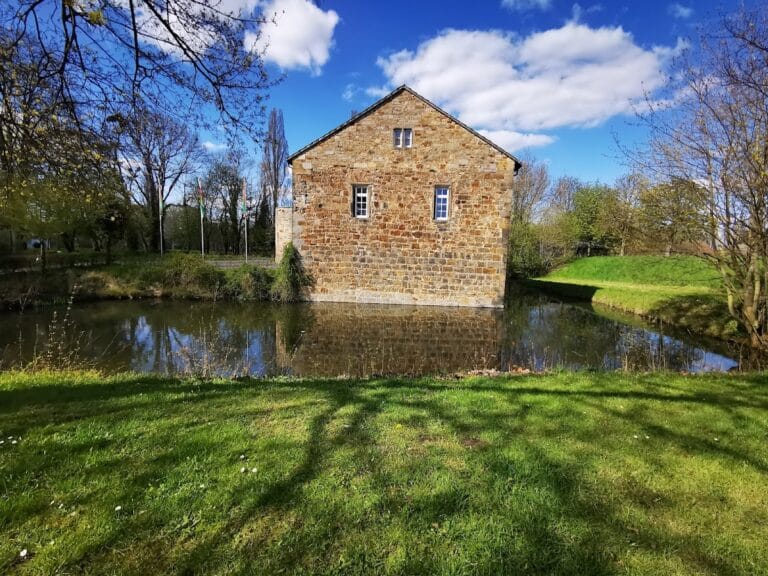
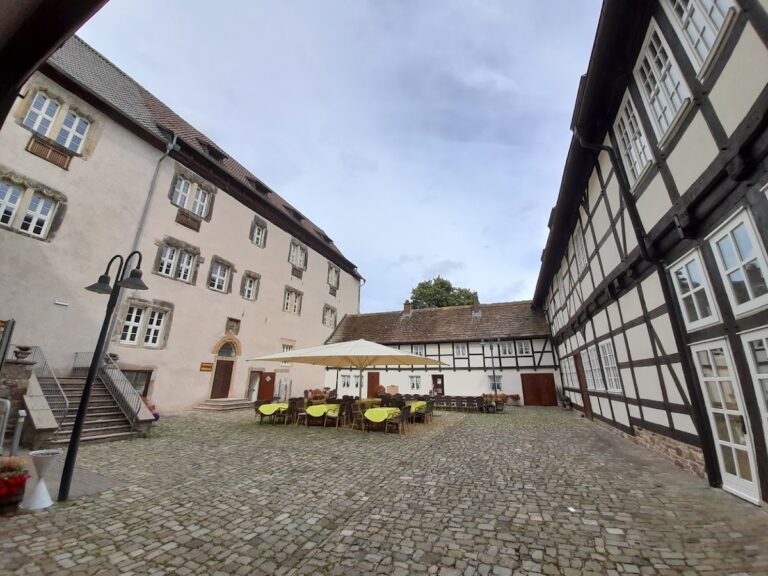
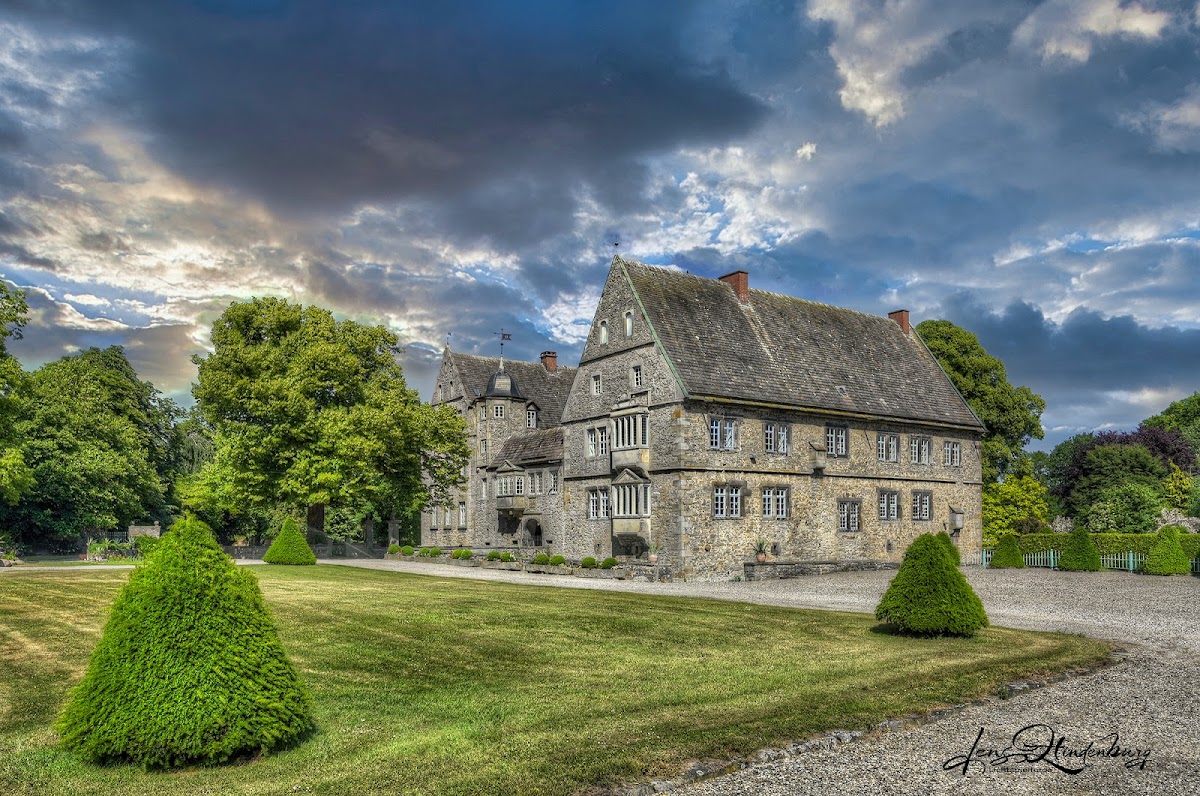
Hülsede Water Castle stands as a Weser Renaissance style water castle nestled between the Süntel and Deister ridges of Lower Saxony. The complex forms an approximately 35 by 32 meter U-shaped structure arranged around a rectangular inner courtyard. This three-winged building is surrounded by a moat, known locally as a Gräfte, which ranges from 10 to 15 meters wide, providing both defense and a visual moat characteristic. A narrow gatehouse on the northwest completes the enclosure, controlling access across the water. Outside the main castle, a protective wall encloses both the central buildings and the western economic premises of the outer bailey.
Originally, the castle featured stronger fortifications, including a high embankment fortified with corner round towers, known as rondels, and a secondary outer moat. These defensive elements were evident until at least the early 19th century but had vanished by 1816, coinciding with the replacement of the original drawbridge by a permanent stone bridge.
One of the oldest surviving parts of the castle, called the “Old Residential House,” occupies the northeast wing. Constructed between 1517 and 1529, its dating is confirmed by an inscription marking the year 1529. Intriguingly, its cellar vaults likely belong to a prior building phase, hinting at the castle’s deeper historical layers. Opposite this wing stands the “New Residential House,” completed by 1548, as shown by a chimney inscription. This contrast reflects the phased growth and increased residential needs of the castle’s occupants during the 16th century.
The southeast wing, known as the Summer Hall building, includes a distinctive stair tower at its corner and houses a rare double oven, an unusual feature for castles of this type and era. Such an oven suggests a degree of culinary sophistication or specialized function during the castle’s heyday. Between 1563 and 1565, a linking structure was added, which around 1600 was heightened and enhanced with an open gallery, indicating evolving architectural styles and habitation requirements.
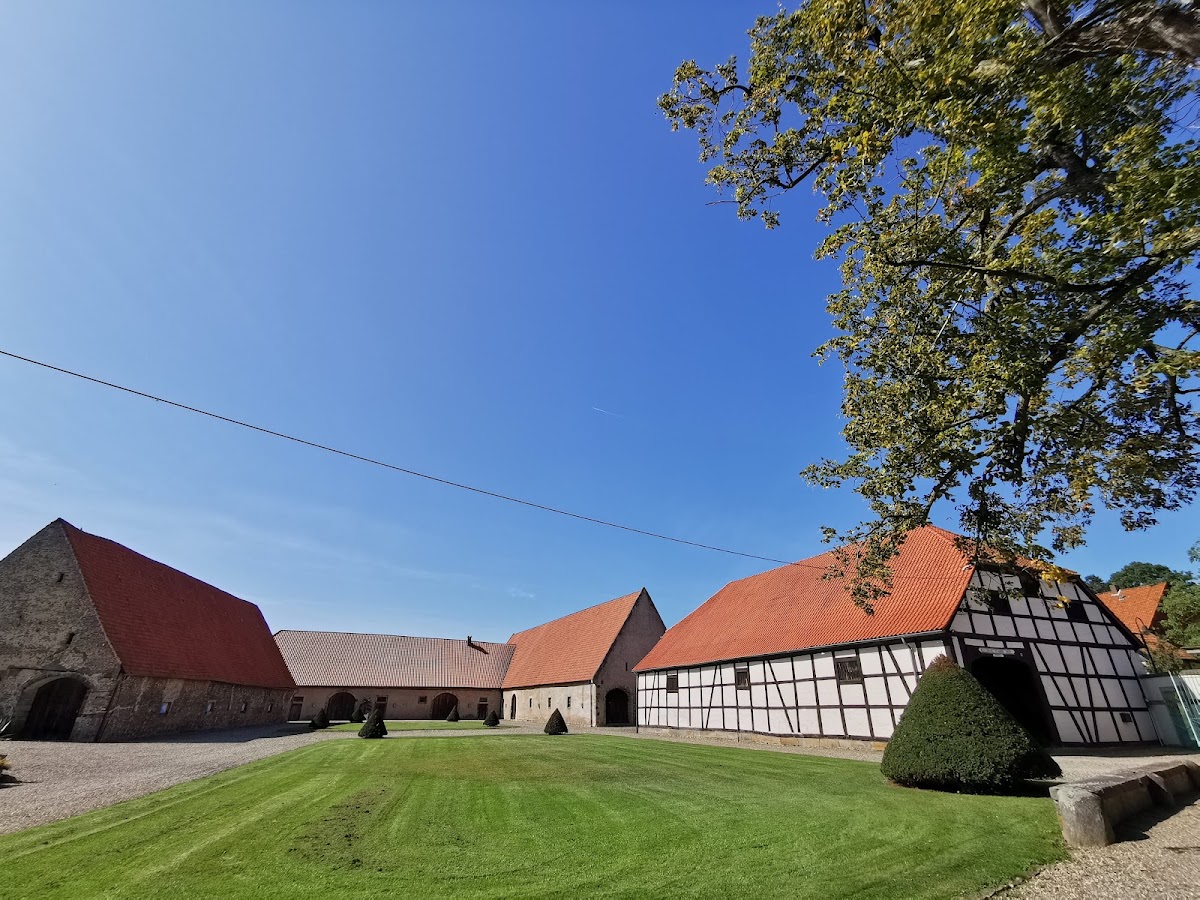
A separate stair tower was erected in the southern corner of the courtyard in 1589, providing internal vertical access while contributing to the overall Renaissance character of the complex. The current economic buildings connected to the castle primarily date from the first half of the 19th century, with the exception of a barn that survives from the 16th or 17th century. Together, these outbuildings reflect the estate’s long-standing agricultural functions.
In terms of decoration, the castle features modest ornamentation with subtle late Gothic influences typical of early Weser Renaissance architecture. This restrained style emphasizes functional design alongside an emerging architectural language without extensive embellishments.
Through these features, Hülsede Water Castle offers a well-preserved glimpse into the regional Renaissance era’s architectural developments, intertwined with centuries of noble residence and historical events.
Nearby sites