Gisacum: A Gallo-Roman Sanctuary Town in Normandy, France
Table of Contents


Visitor Information
Google Rating: 4.3
Popularity: Low
Google Maps: View on Google Maps
Official Website: www.gisacum-normandie.fr
Country: France
Civilization: Celtic, Roman
Remains: Burial, City, Civic, Domestic, Economic, Entertainment, Infrastructure, Military, Religious, Sanitation

Context
The Archaeological Site of Gisacum is situated near the present-day village of Le Vieil-Évreux in the Eure department of Normandy, France. It occupies a gently inclined plateau overlooking the Eure River valley, providing a strategic vantage point and ample space for urban development during antiquity. The surrounding landscape is predominantly rural and sparsely populated, which has contributed to the preservation of the site’s archaeological features.
Established primarily in the 1st century CE, the site developed through the early and high Roman Empire periods, featuring characteristic elements of Roman urbanism such as monumental religious complexes, public baths, and a sophisticated water supply system. Occupation declined by the late 3rd or early 4th century CE, with archaeological evidence indicating a gradual abandonment rather than abrupt destruction. The site’s location and preserved remains provide valuable insight into provincial urban planning and religious practices in Roman Gaul.
Systematic archaeological investigations began in the 19th century and intensified in the 20th century, revealing the extent of the Roman settlement and its infrastructure. The site retains substantial architectural remains, including thermal baths and public spaces, which have been the focus of conservation and research efforts. Gisacum is recognized as a significant example of a Gallo-Roman sanctuary town, offering a well-documented case study of Roman provincial urbanism in northern Gaul.
History
Gisacum represents a prominent Roman civitas center in northern Gaul, established as the religious and ceremonial focal point for the Eburovices tribe following the Roman conquest. Its development from a modest sacred precinct into a monumental sanctuary town with a distinctive urban plan reflects broader imperial processes of provincial integration and urbanization. The site’s history spans from the mid-1st century BCE through late antiquity, illustrating the evolution of religious, civic, and defensive functions within the Roman provincial framework.
Celtic and Early Roman Period (Mid-1st century BCE – Early 1st century CE)
After Julius Caesar’s conquest of Gaul in the mid-1st century BCE, the Eburovices territory was incorporated into the Roman provincial system. Archaeological data from Gisacum indicate initial occupation shortly after this conquest, centered on a sacred precinct with wooden and earth constructions. Excavations have revealed post holes, floors, and kilns, suggesting ritual or communal activities rather than dense urban settlement. Under Emperor Tiberius in the early 1st century CE, the sanctuary underwent substantial redevelopment. The original wooden structures were replaced by more durable stone buildings, including a circular temple with a central cella surrounded by a colonnaded gallery featuring a concrete floor. Subsequently, two twin square temples with colonnaded galleries were constructed, initially with simple mortar floors that were later upgraded to monumental limestone paving in the 2nd century CE. These three temples were enclosed within a defined precinct, possibly delineated by streets, marking the first formal sacred enclosure and reflecting the integration of local religious traditions within Roman architectural forms.
Urban Expansion and Monumentalization (Mid-1st century CE – Early 3rd century CE)
By the third quarter of the 1st century CE, Gisacum developed its first urban plan, incorporating residential districts west and north of the sanctuary and a public square known as the “Champ des Dés.” At the beginning of the 2nd century CE, the site underwent a comprehensive reorganization, adopting a unique hexagonal layout approximately 5.6 kilometers in perimeter—an urban design unprecedented in the Roman world. This plan enclosed a monumental center dedicated exclusively to public and religious functions, covering six to eight hectares. The sanctuary complex comprised three colossal temples on podiums about six meters high, with the central temple reaching nearly 25 meters in height. Architecturally, these temples combined traditional Gallo-Roman fanum plans—featuring a central cella with surrounding galleries—with Italic prostyle octostyle exteriors characterized by eight frontal columns. The temples were likely dedicated to Apollo Gisacus, Jupiter, and a third unidentified deity. The monumental precinct included multiple courtyards, terraces, and two large wells, all enclosed within a complex boundary. Residential areas were relocated to the periphery along the hexagonal ring road, where houses with inward-facing porticos lined the streets. This peripheral zone, covering approximately 60 hectares, also hosted artisanal workshops specializing in bronze working, bone crafting, and commercial activities, indicating a diversified urban economy linked to the sanctuary’s religious role.
During this period, Gisacum’s infrastructure included a sophisticated aqueduct system extending 25 to 27 kilometers, supplying water to public monuments and private residences. Public amenities comprised a large bath complex with symmetrical cold, warm, and hot rooms, a palaestra for athletic activities, and a theatre with a capacity of about 7,000 spectators. The theatre, aligned with the sanctuary, likely hosted religious ceremonies and theatrical performances. The forum area adjacent to the baths and sanctuary served as a venue for social and economic gatherings, particularly during religious festivals. Although Gisacum was not a political capital, it functioned as a major religious center for the Eburovices, complementing the nearby administrative center of Mediolanum Aulercorum (modern Évreux).
Mid-3rd century CE Decline and Late Antiquity (Mid-3rd century CE – Early 4th century CE)
The mid-3rd century CE marked a period of decline for Gisacum, coinciding with the broader regional instability of the Crisis of the Third Century. Archaeological evidence indicates that the monumental sanctuary was decommissioned and repurposed as a castellum, a fortified enclosure featuring a deep ditch (vallum) and an internal embankment (agger). This defensive adaptation reused existing courtyard floors and walls but was short-lived. By the late 3rd or early 4th century, the site was systematically dismantled, with large limestone blocks quarried from the temples to supply building materials for the new fortifications of Évreux. Only minor sculptural fragments, such as capitals and friezes, survived this destruction. The castellum’s earthworks and rubble were later incorporated into medieval fortifications during the 12th and 13th centuries, associated with the early lords of Le Vieil-Évreux. A parish church was established within the former temple precinct, indicating continued sacred use of the site into the medieval period.
Medieval Period and Later History
Following the Roman abandonment, the Gisacum site experienced limited occupation during the medieval era. The remains of the castellum were reused as foundations for a fortified manor house linked to the local lordship and the bishopric of Évreux. The construction of a parish church within the former temple precinct reflects a continuity of religious significance, now within a Christian context. There is no substantial evidence of major urban activity or military events at the site during the medieval period. The site’s historical importance was largely forgotten until its archaeological rediscovery in the 19th century.
Archaeological Rediscovery and Modern Research (19th century – Present)
Systematic archaeological investigations at Gisacum commenced in the early 19th century, beginning with the uncovering of the bath complex by François Rever. Subsequent excavations by Théodose Bonnin in the 1840s and further work by Émile Espérandieu and Marcel Baudot in the early 20th century expanded knowledge of the site’s urban layout, including the sanctuary, theatre, and residential zones. Aerial photography during the 1976 drought and geophysical surveys in the late 20th century further clarified the site’s extent and infrastructure, such as the aqueduct system. Recent excavations have concentrated on the sanctuary’s central temple complex, refining understanding of its architectural phases and religious functions. Since 2001, local authorities have developed visitor facilities and interpretive exhibitions to facilitate public engagement. Gisacum is now recognized as one of the largest and best-preserved Gallo-Roman sanctuary towns in Gaul, providing valuable insights into provincial urbanism and religious life during the Roman Empire.
Daily Life and Importance by Period
Celtic and Early Roman Period (Mid-1st century BCE – Early 1st century CE)
During the initial phase following the Roman conquest, the inhabitants of Gisacum were predominantly members of the Eburovices tribe, maintaining a strong Gallic cultural identity while gradually adopting Roman customs. Archaeological evidence suggests a community organized around ritual and communal activities rather than dense urban settlement. Social organization likely included tribal elites and religious specialists responsible for sanctuary rites, with gender roles reflecting traditional Gallic patterns, though direct evidence remains limited. Economic life centered on small-scale craft production and ritual offerings, as indicated by kilns and post holes associated with pottery or ritual object manufacture. Agriculture formed the subsistence base, with cereal cultivation and animal husbandry typical of rural Gaul. Dietary remains are scarce but likely included bread, domesticated and wild meats, and foraged fruits, consistent with regional practices. Clothing combined traditional Gallic woolen tunics and cloaks with emerging Roman influences. Domestic structures were modest, constructed of wood and earth, emphasizing communal religious functions over private residential comfort. Trade and transport were minimal, with goods procured locally or through limited regional exchange. Religious practices focused on indigenous deities, with early temples dedicated to local gods later Romanized. The site functioned primarily as a tribal sanctuary rather than a civic center, serving as a focal point for Eburovices identity and ritual life.
Urban Expansion and Monumentalization (Mid-1st century CE – Early 3rd century CE)
As Gisacum transitioned into a planned urban center, its population diversified to include Roman settlers, local Gallic elites, artisans, slaves, and religious functionaries. Epigraphic evidence attests to civic officials such as duumviri overseeing municipal affairs, indicating formal governance within the civitas framework. Family structures conformed to Roman patriarchal norms, with nuclear households supported by slaves and freedmen. Elite residences along the hexagonal ring road featured inward-facing porticos, reflecting social status and domestic privacy. Economic activities expanded significantly, with artisanal workshops specializing in bronze working, bone crafting, and other trades operating at household and workshop scales within the peripheral residential zone. The presence of a sophisticated aqueduct and large bath complex underscores investment in public amenities supporting urban life. Agriculture remained vital in surrounding rural areas, supplying grain, olives, and wine, while the sanctuary attracted pilgrims who stimulated local commerce. Marketplaces near the forum facilitated trade in everyday goods and luxury items, including imported ceramics and wine amphorae. Diet incorporated cereals, legumes, olives, fish, and domesticated meats, consistent with Gallo-Roman culinary patterns. Clothing combined Roman tunics, cloaks, and sandals, with local textile production likely. Wealthier homes featured mosaic floors and painted walls, with furnishings such as wooden tables, benches, and storage chests. Household layouts included courtyards, kitchens, and storage rooms supporting family life and artisanal production. Transportation relied on footpaths and animal-drawn carts along the hexagonal road system, with regional connections to Mediolanum Aulercorum (Évreux) facilitating movement of goods and people. Religious life centered on the monumental sanctuary complex, which hosted festivals, pilgrimages, and theatrical performances dedicated to deities such as Apollo Gisacus and Jupiter. These events reinforced social cohesion and the town’s role as a regional religious hub. Despite lacking political capital status, Gisacum’s civic structure included magistrates and councils managing urban planning, religious ceremonies, and economic regulation.
Mid-3rd century CE Decline and Late Antiquity (Mid-3rd century CE – Early 4th century CE)
The mid-3rd century brought demographic contraction and functional transformation. The population diminished amid regional instability during the Crisis of the Third Century. The monumental sanctuary was decommissioned and repurposed as a castellum, reflecting a shift toward military and defensive priorities. Social hierarchy adapted accordingly, with military personnel and local elites overseeing fortification efforts, while civilian urban life waned. Economic activities contracted, with artisanal production and trade reduced to subsistence levels. The dismantling of monumental buildings and quarrying of limestone for Évreux’s fortifications reflect resource reallocation and declining urban investment. Food consumption likely became more localized and limited, with fewer imported goods. Clothing and domestic decoration simplified in line with economic hardship. Transport and market functions diminished as the site lost its religious and civic prominence. Religious practices transitioned from pagan cults to Christian worship, evidenced by the establishment of a parish church within the former temple precinct. Cultural life shifted accordingly, with ecclesiastical authorities assuming spiritual leadership, though no direct evidence of organized Christian education survives. Gisacum’s civic role transformed from a religious sanctuary town to a minor fortified site supporting regional defense. Administrative functions largely transferred to neighboring Évreux, which became the primary urban center. The site’s decline exemplifies broader patterns of urban contraction and reorganization in late Roman Gaul.
Remains
Architectural Features
The Archaeological Site of Gisacum encompasses extensive remains of a Roman civitas center primarily developed between the 1st and 3rd centuries CE. The site covers approximately 230 to 250 hectares and is distinguished by a unique hexagonal urban plan established in the early 2nd century CE. This hexagonal layout, unprecedented in the Roman world, encloses a monumental core dedicated to religious and public functions, surrounded by residential and artisanal districts along a porticoed ring road approximately 5.6 kilometers in length. Construction techniques include ashlar masonry and stone podiums, with many buildings raised on terraces. The city’s perimeter measures about 6 kilometers, with a diameter near 2.2 kilometers. The urban fabric reflects a primarily religious and civic character, with no evidence of Roman military fortifications, although later defensive adaptations occurred in late antiquity and the medieval era.
Over time, the city expanded from an initial sacred precinct with wooden structures in the mid-1st century CE to a monumental sanctuary complex by the late 2nd century. The site’s infrastructure included a sophisticated aqueduct system extending 25 to 27 kilometers, supplying water to public baths, fountains, and private residences. By the mid-3rd century, the site experienced decline, with the sanctuary repurposed as a castellum (fortified enclosure) before systematic dismantling in the late 3rd or early 4th century. Many monumental stones were quarried for construction in nearby Évreux. The remains today vary from well-preserved architectural elements to fragmentary foundations and earthworks.
Key Buildings and Structures
Sanctuary (Main Temple Complex)
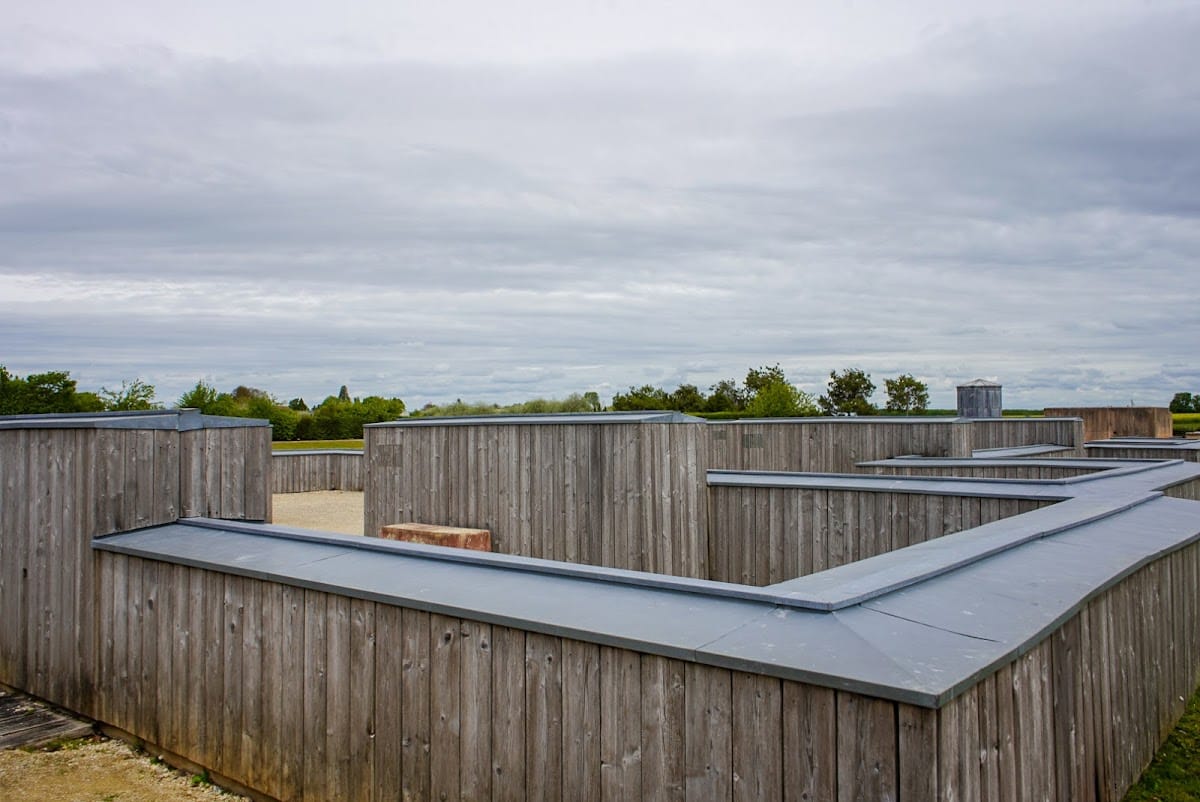
The sanctuary, constructed primarily during the Severan period (late 2nd to early 3rd century CE), occupies the central area of Gisacum and covers between 6 and 8 hectares. It consists of three large temples built on a podium approximately 6 meters high. The central temple is the tallest, reaching nearly 25 meters in height. Architecturally, the temples combine a Gallo-Roman fanum plan—featuring a central cella (inner chamber) surrounded by a gallery—with an Italic prostyle octostyle exterior, characterized by eight columns at the front.
The three temples are interconnected by covered galleries and face east onto a terrace that overlooks an eastern courtyard by about 6 meters. Two large wells are located on the southern terrace, one with an opening roughly 1.7 meters wide. The sanctuary precinct includes multiple courtyards and complex boundary walls. Earlier phases of the sanctuary, dating from the mid-1st century CE, comprised three smaller temples—one circular and two square fana (small temples)—which were demolished to make way for the Severan monumental complex. The sanctuary was dedicated to deities including Apollo Gisacus, Jupiter, and a third unidentified god. It was surrounded by extensive open esplanades.
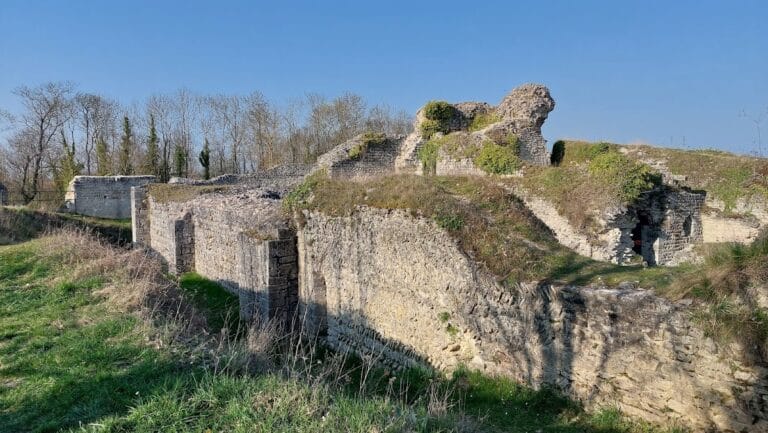
In the late 3rd century CE, the sanctuary was abandoned as a religious center and transformed into a castellum. This fortification included a deep surrounding ditch (vallum) and an internal embankment (agger), reusing the sanctuary’s eastern courtyard floor and walls. The castellum was short-lived and was dismantled by the late 3rd or early 4th century, with large limestone blocks removed for the construction of Évreux’s ramparts. During the 12th and 13th centuries, the castellum remains were incorporated into a fortified manor house (maison forte), and a parish church was established within the former temple precinct.
Bath Complex
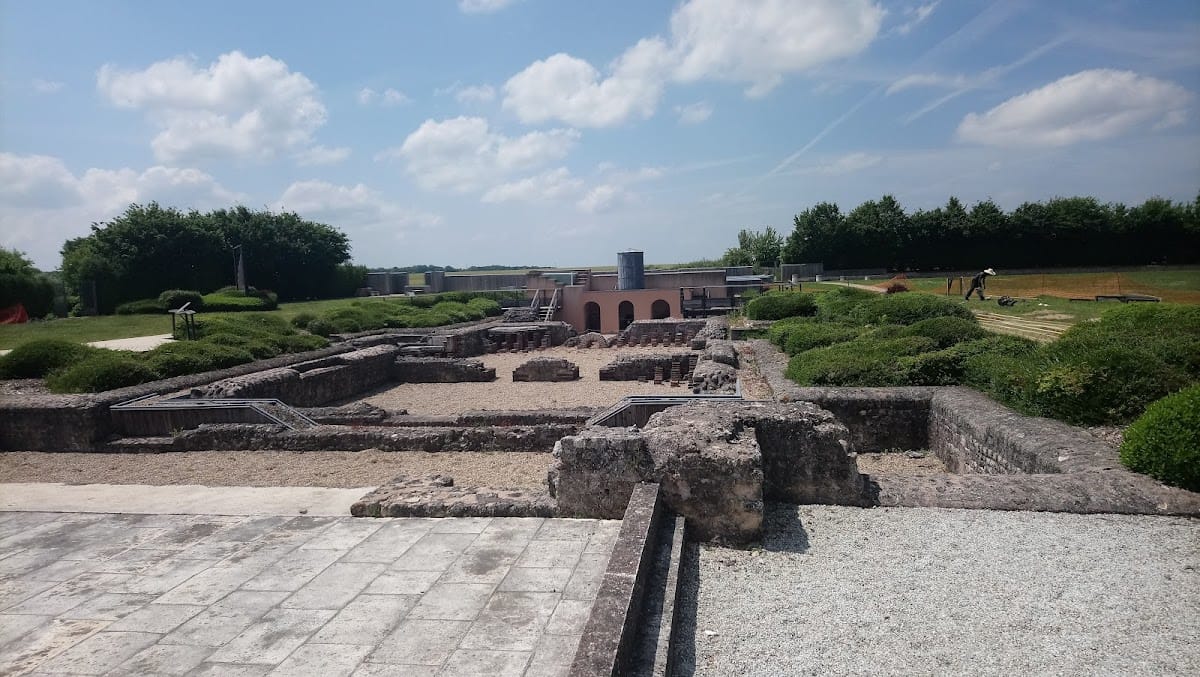
The public baths, constructed and expanded by the early 3rd century CE, occupy a large area measuring approximately 109 by 84 meters in the southwestern sector of the city. The complex is divided into three main parts: a southern service courtyard containing latrines, a central bathing building, and a northern palaestra (an open-air sports area) surrounded by a columned portico. The bathing section features symmetrical pools flanking a central heating room, with distinct chambers for changing (apodyteria), cold baths (frigidaria), warm baths (tepidaria), and hot baths (caldaria).
The palaestra was used for athletic activities such as wrestling, shot put, and ball games. Water was supplied by the aqueduct system, and wastewater was channeled through the service courtyard to latrines before being evacuated outside the city via a sewer. The baths were abandoned in the mid-3rd century and destroyed in the 4th century. Presently, the bath complex has been developed as an archaeological garden, with foundations and some structural elements visible.
Theatre
The theatre, located within the monumental center near the sanctuary, was constructed in multiple phases, with the main structure dating to the Roman imperial period, likely between the 1st and 3rd centuries CE. It has a diameter of approximately 106 meters and could accommodate around 7,000 spectators. The theatre’s main entrance is aligned to face the temple complex, providing direct access to the orchestra (performance area), indicating its use for religious ceremonies and theatrical performances.
Excavations in 2010 revealed three construction phases, though earlier theatres may have existed beneath the current remains. The surviving elements include masonry walls and the general shape of the semicircular seating area (cavea). The theatre remains are fragmentary but sufficiently preserved to outline its original form.
Forum (Edifice du Champ des Dés)
The forum, known as the Edifice du Champ des Dés, is a large public square or marketplace situated near the sanctuary and baths. It consists of several interconnected squares or courtyards surrounded by buildings. Although Gisacum was not a political capital, the forum likely hosted municipal activities, especially during religious festivals. The forum lies north of a second public square and is integrated within the monumental core of the city.
Residential Areas and Houses
Residential districts were located along the hexagonal ring road forming the city’s perimeter. Houses faced inward toward the monumental center and sanctuary, with their fronts aligned along a continuous porticoed street approximately 5.6 kilometers long. The residential zone covers about 60 hectares and includes houses of varying sizes, some set back from the road. Many houses featured porticoes at their fronts. This area also contained artisanal workshops producing goods such as bronze items and bone crafts, indicating a mixed residential and economic function.
Aqueduct
The aqueduct supplying Gisacum was approximately 25 to 27 kilometers long, bringing water from sources near Damville. Its exact origin remains uncertain, with hypotheses including a groundwater spring or diversion of the Iton River. The aqueduct’s route was predominantly underground, with regularly spaced access shafts. Near the city, it crossed three valleys using wooden bridges, earthen embankments, or masonry aqueduct bridges. Upon entering Gisacum, water was collected in a large settling basin and distributed via two main branches to public monuments and private residences. The aqueduct was essential for supplying water to baths, fountains, and houses.
Other Temples (Fana)
In addition to the main sanctuary, several smaller Gaulish-style temples (fana) have been identified within the city, including locations near the baths and marketplace. These smaller temples confirm the religious character of the town beyond the central sanctuary complex. Some of these fana date to the mid-1st century CE and were later demolished or incorporated into larger structures.
Urban Layout and City Walls
The city’s urban plan, established in the early 2nd century CE, is characterized by a hexagonal ring road enclosing the monumental center and residential districts. The perimeter measures about 6 kilometers, enclosing an area of roughly 230 to 250 hectares. Large open spaces and the aqueduct network surround the monumental core. No substantial Roman city walls or gates have been identified, suggesting the city was not heavily fortified during its peak occupation. Activity at the site ceased around the mid-3rd century CE.
Monument des Eaux
Excavations conducted in 2003–2004 uncovered a water-related monument associated with the city’s hydraulic infrastructure. Although detailed descriptions are limited, this structure likely functioned as a water distribution or regulation facility connected to the aqueduct system.
Other Remains
Surface surveys and geophysical prospections have identified additional buildings and structural remains, including an unidentified group of buildings east of the sanctuary precinct. Archaeological finds include pottery shards, statues, ceremonial masks, and architectural fragments. Stratigraphic layers up to four meters deep preserve well-preserved remains predating the late 2nd century CE. These scattered remains contribute to understanding the city’s spatial organization and functional zones beyond the monumental core.
Archaeological Discoveries
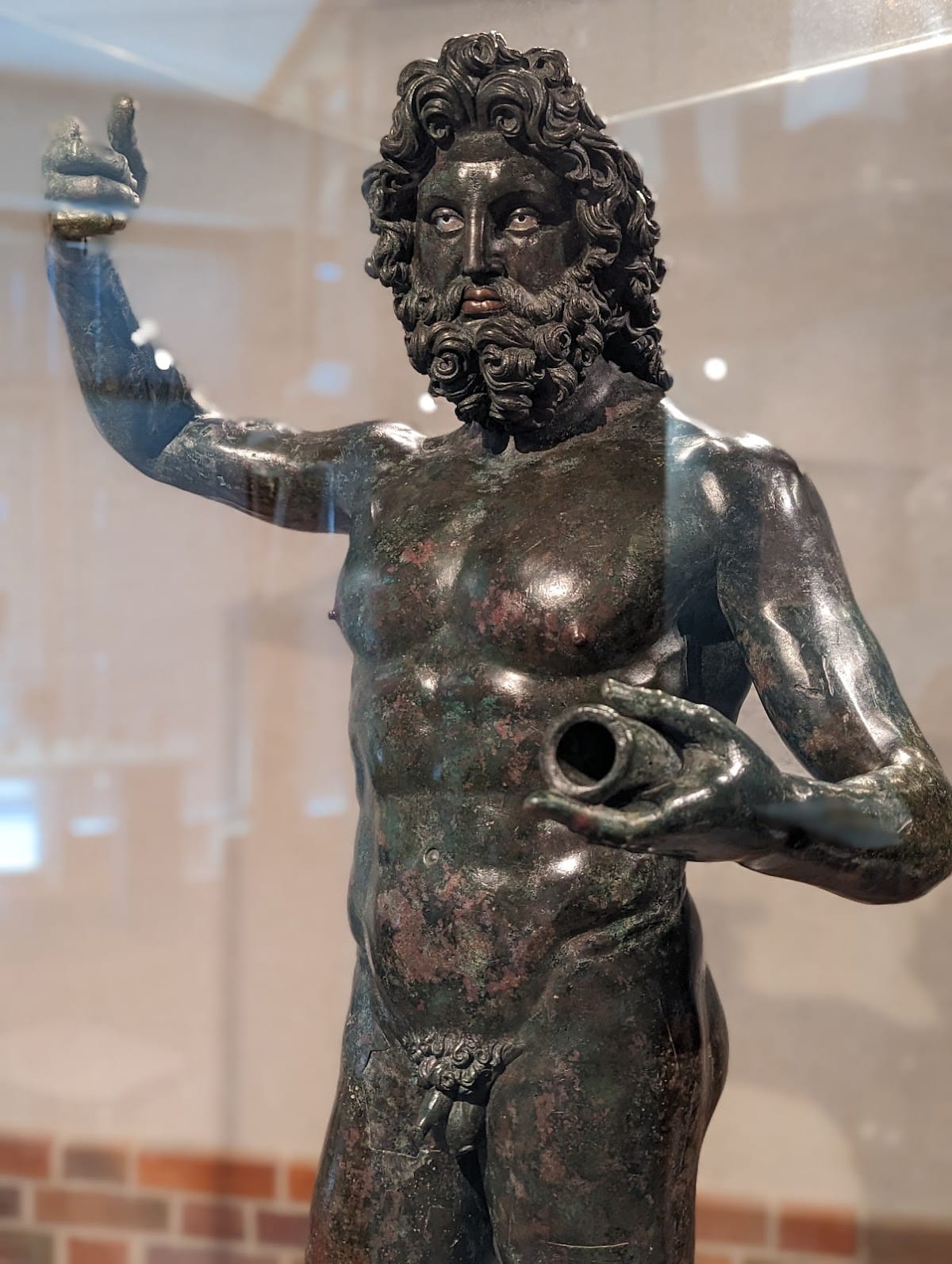
Excavations at Gisacum have yielded a variety of artifacts spanning from the Late Iron Age through late antiquity. Pottery finds include locally produced and imported amphorae and tableware, recovered primarily from domestic quarters, workshops, and sanctuary contexts. These ceramics illustrate trade connections and everyday consumption patterns. Inscriptions found at the site include dedicatory texts associated with the sanctuary temples, naming deities such as Apollo Gisacus and Jupiter. Coins from various Roman emperors provide chronological markers for occupation phases. Tools related to artisanal activities, including bronze working and bone crafting, have been discovered in residential and workshop areas. Domestic objects such as oil lamps, cooking vessels, and personal items have been found throughout the city, reflecting daily life. Religious artifacts include statuettes, altars, and ritual vessels recovered mainly from the sanctuary precinct, documenting the religious practices of the Aulerci Eburovices tribe within the Roman provincial context.
Preservation and Current Status
The remains of Gisacum vary in preservation. The sanctuary’s podiums and temple foundations are partially preserved, with some walls and terraces visible. The bath complex retains substantial foundations and structural elements, now developed as an archaeological garden. The theatre’s masonry and seating area remain fragmentary but discernible. Residential foundations and street layouts survive mainly as subsurface remains revealed by excavation and geophysical surveys. Restoration efforts have stabilized exposed structures, particularly in the sanctuary and baths, though most remains are conserved in situ without full reconstruction. The castellum earthworks and medieval fortification traces survive as earth mounds and rubble. Environmental factors such as vegetation growth and erosion pose ongoing challenges. Local heritage authorities continue excavation, conservation, and research, focusing on the sanctuary and urban layout. The majority of artifacts and statuary are conserved at the Évreux museum.
Unexcavated Areas
Significant portions of the site remain unexcavated, including large sections of the residential districts along the hexagonal ring road and the eastern groups of buildings adjacent to the sanctuary precinct. Surface surveys and geophysical prospections indicate buried remains in these areas, but detailed excavation has not yet been conducted. Modern land use and conservation policies limit extensive excavation, though targeted sondages have been undertaken to clarify specific features such as the aqueduct and monument des eaux. Future archaeological work is planned to continue refining the understanding of the site’s urban organization and infrastructure, with a focus on non-invasive methods to preserve the site’s integrity. No major modern developments currently obstruct potential excavation zones.
Nearby sites