Mithraeum of Septeuil: A Roman Sanctuary of Mithra in France
Site at a Glance
- Rating
- 3.7
- Popularity
- Very Low
- Country
- France
- Primary era
- Classical
- External website
- Open
- Eras represented
- Classical
- Civilizations
- Roman
- Site type
- Religious
- Remains
- Mithraeum
On this page6 sections
History
Spring sanctuary
The Mithraeum of Septeuil is a Roman sanctuary of Mithra in France, remodeled during the second half of the fourth century from an earlier Gallo-Roman spring sanctuary. Gallo-Roman describes the Roman-period culture of Gaul. The earlier building, a nymphaeum or sanctuary associated with a spring or other water source, dated from the first century AD and occupied the site of a former arm of the Vaucouleurs. Its religious purpose was connected with the cult of water.
Transformation into a mithraeum
During the second half of the fourth century, the earlier building was being demolished when it was remodeled as a sanctuary dedicated to Mithra. A mithraeum was a sanctuary of the Roman mystery cult devoted to Mithra, a deity associated with initiation and communal ritual. The Mithraeum of Septeuil was excavated after the discovery of the earlier Gallo-Roman construction elements during road-diversion works on the RD 983 in 1984. Sculptural fragments and bas-reliefs recovered in the excavation are exhibited at the National Archaeology Museum in Saint-Germain-en-Laye.
Remains
Sanctuary layout
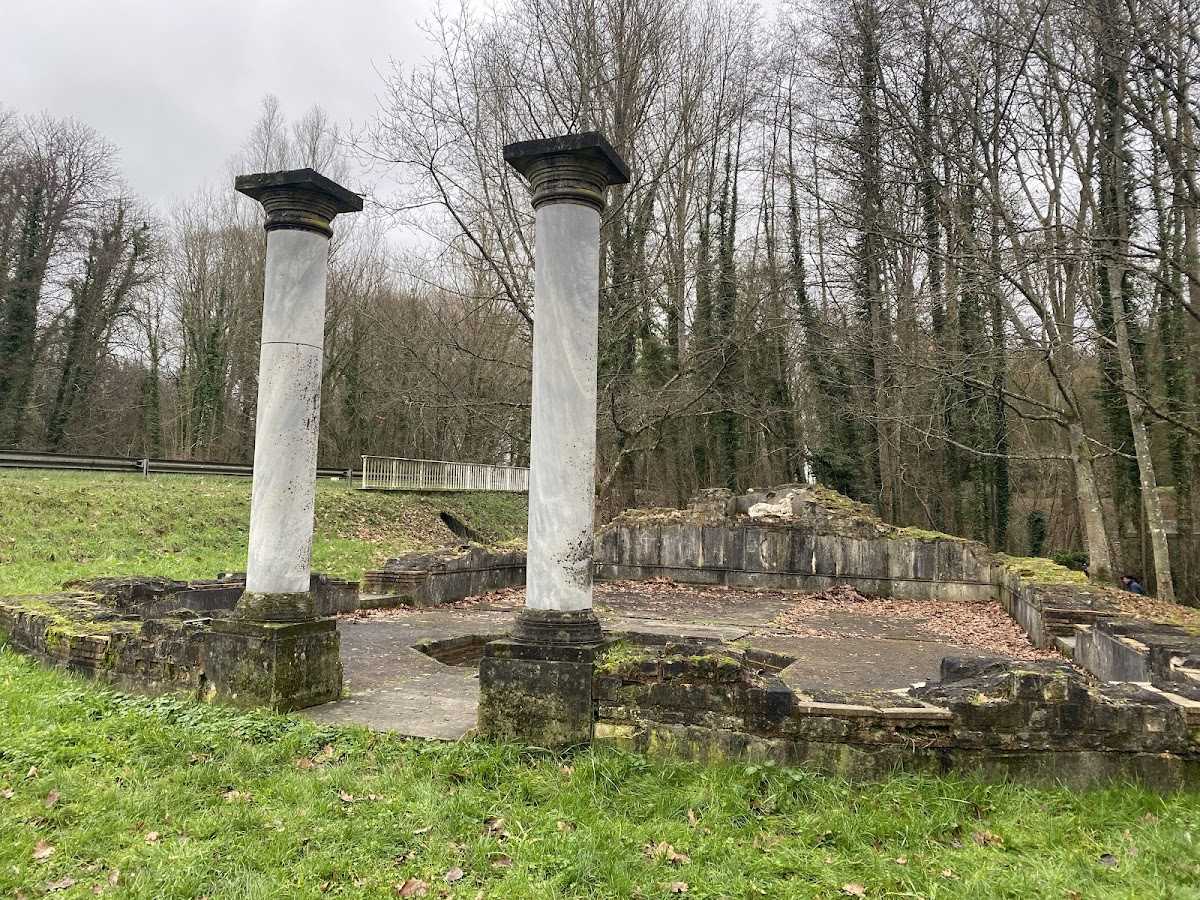
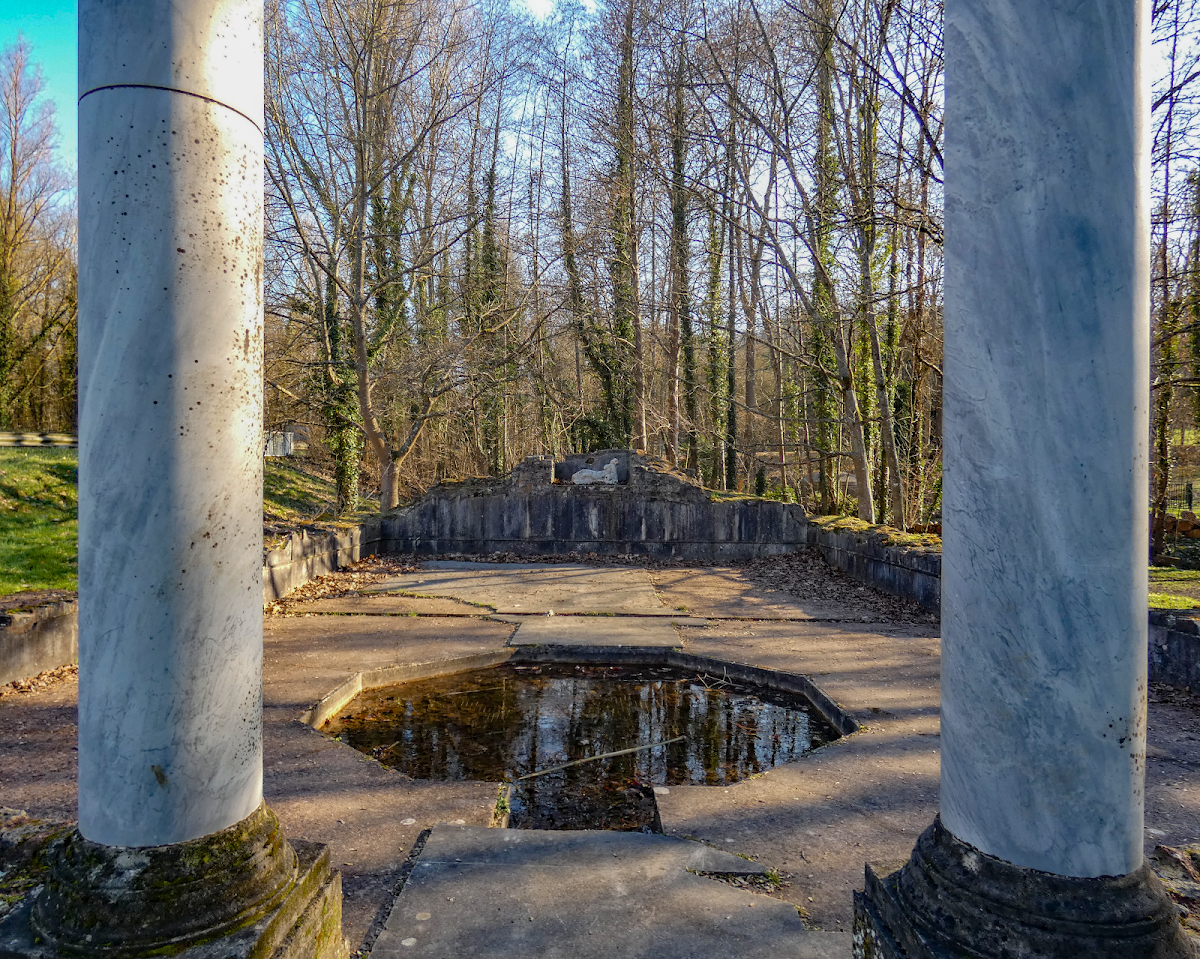
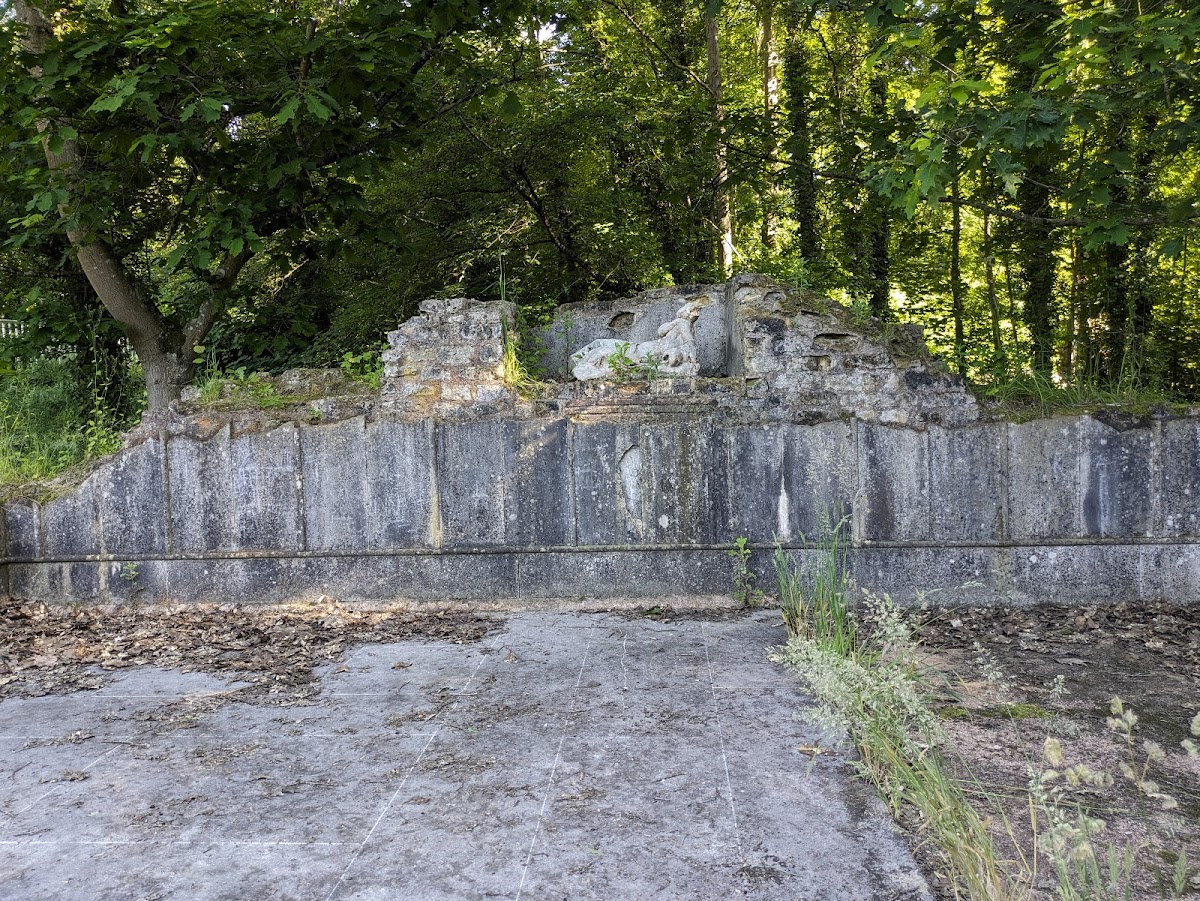
The sanctuary is semi-subterranean and has three parts. A central nave, 2.60 metres wide, is flanked by two broad benches, each 1.30 metres wide. Worshippers gathered on these benches, while the central space formed the main axis of the sanctuary.
Sculptural remains
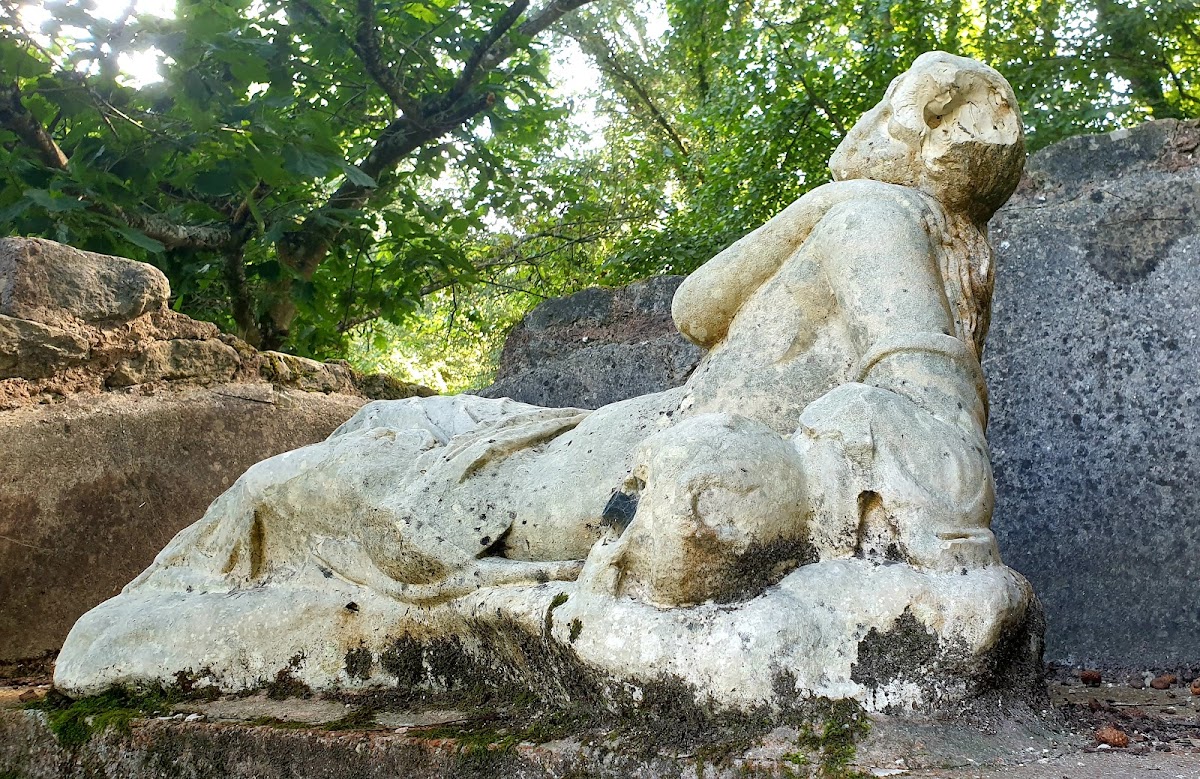
Excavated finds include fragments showing Mithra as the bull-slayer, the central artistic motif of Mithraic worship, together with Aion, a personification associated with cosmic or infinite time; the rock-born Mithra; torchbearers, attendants commonly represented with Mithraic imagery; and Luna, the Roman goddess of the Moon. A three-dimensional nymph sculpture was also reused in the mithraeum. The recovered sculptures and bas-reliefs are exhibited at the National Archaeology Museum in Saint-Germain-en-Laye.