Fosteau Castle: A Historic Medieval Fortress in Belgium


Visitor Information
Google Rating: 4.5
Popularity: Low
Google Maps: View on Google Maps
Official Website: www.chateaufosteau.be
Country: Belgium
Civilization: Medieval European
Remains: Military

History
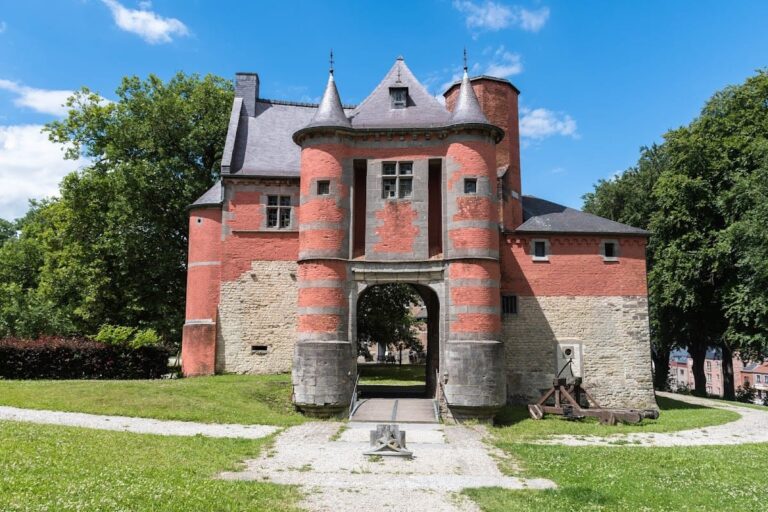
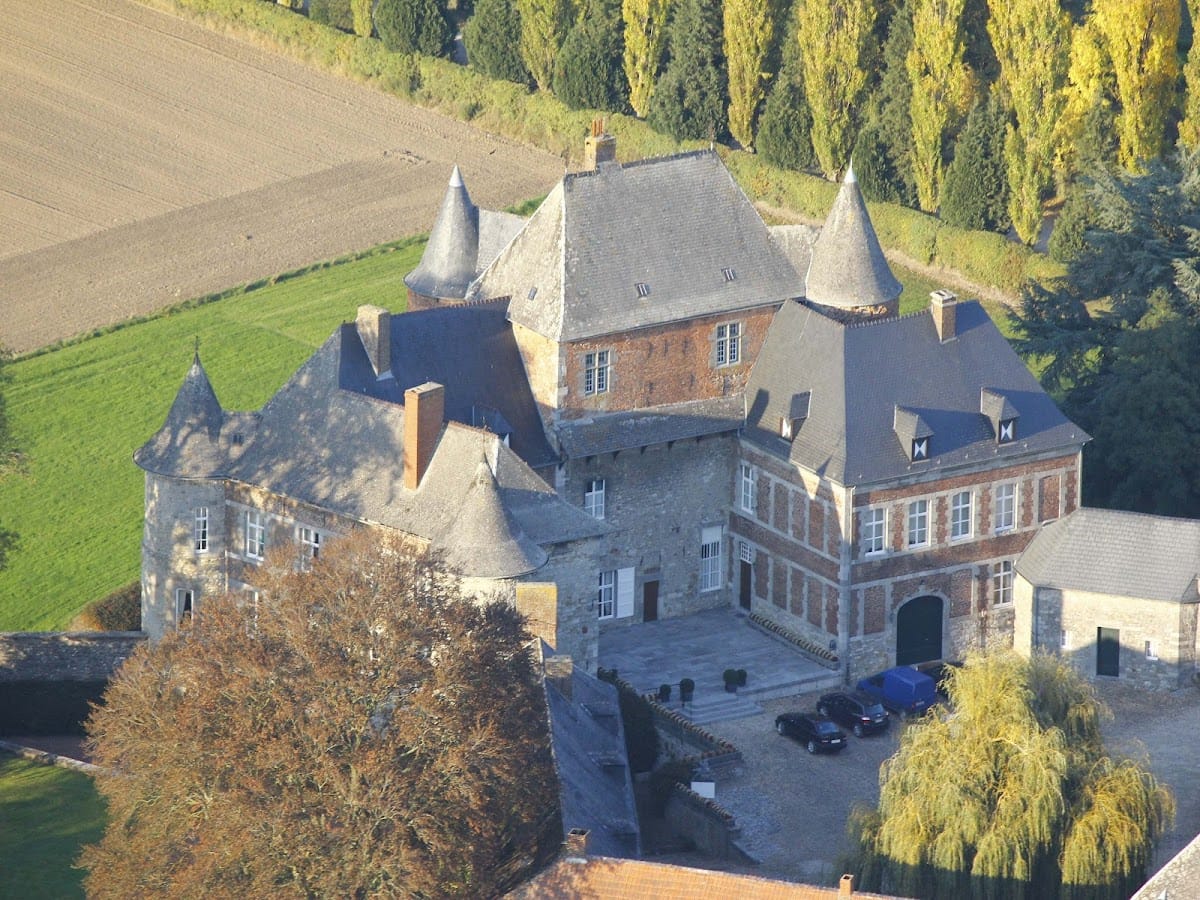
Fosteau Castle is located near the village of Leers-et-Fosteau in the Hainaut region of Belgium, positioned on a gentle rise of the lower Thudinien plateau. Its origins trace back to the medieval period, with the earliest known mention dating from 1235 in a cartulary belonging to the Abbey of Lobbes. At that time, the site consisted of a donjon, a type of fortified tower common in medieval Europe, serving as a defensive stronghold.
Around 1380, the donjon was expanded into a fortified residence by Jean Clutinc, also known as Wauthier de Semousies. This development occurred under the authority of Duchess Joan of Brabant, who granted ownership to Wauthier. This period marked the transformation of the site from a purely military structure into a more complex fortified house, reflecting changing needs for defense and habitation.
Over the following centuries, the castle passed through several noble families, including the Sars, Zwemme (or Zwenne), de Marotte, de Henry, and de Jamblines. The Zwenne family experienced a particularly difficult episode in 1597 when troops sent by creditors besieged and pillaged the castle, indicating the turbulent political and financial climate of the time.
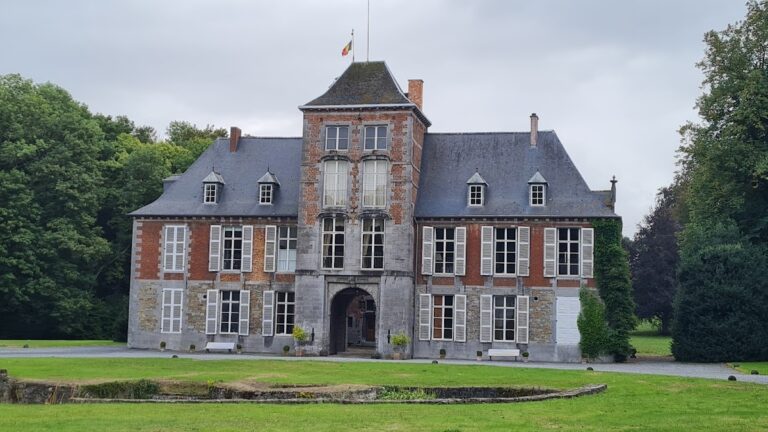
The Marotte family later undertook major restorations, shifting the castle’s character toward that of a residential estate. They added a formal French garden on the western side of the property, reflecting the influence of French landscaping styles and a move toward aesthetic refinement. Further construction and landscaping in the 18th and 19th centuries completed the estate’s harmonious appearance.
In 1815, the castle played a brief but notable role during the Napoleonic Wars. General Honoré Charles Reille, a Count of the Empire, stayed at Fosteau Castle with his 25,000 troops of the 2nd corps as they moved toward the Battle of Waterloo. The room where he lodged has been preserved, marking this moment in the castle’s history.
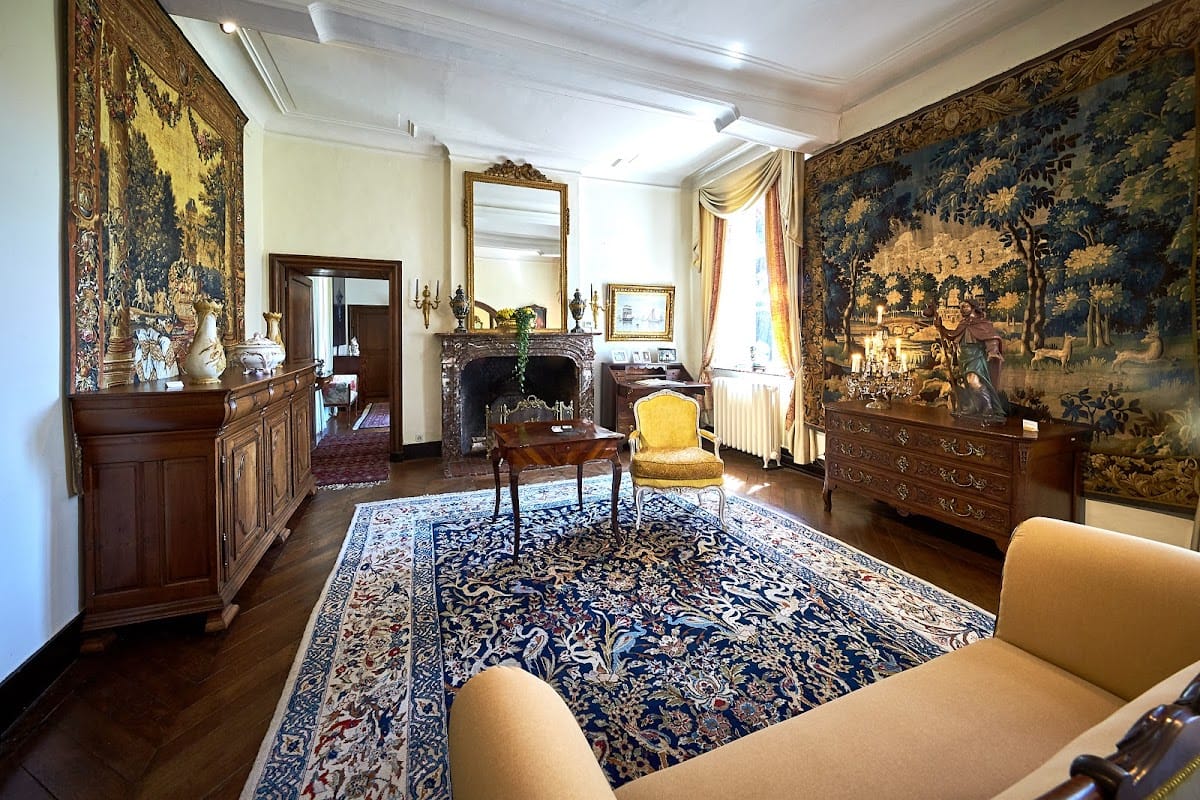
In recognition of its historical and cultural value, Fosteau Castle was declared a protected monument in 1979. Since 1980, it has housed exhibitions of antique furniture and a pharmacy museum, reflecting its ongoing connection to heritage and preservation.
Remains
The core of Fosteau Castle includes the original medieval donjon, which remains an integral part of the structure. This fortified tower dates back to the early 13th century and forms the historical foundation of the site. The donjon’s construction reflects typical medieval techniques, using local stone and masonry to create a defensible stronghold.
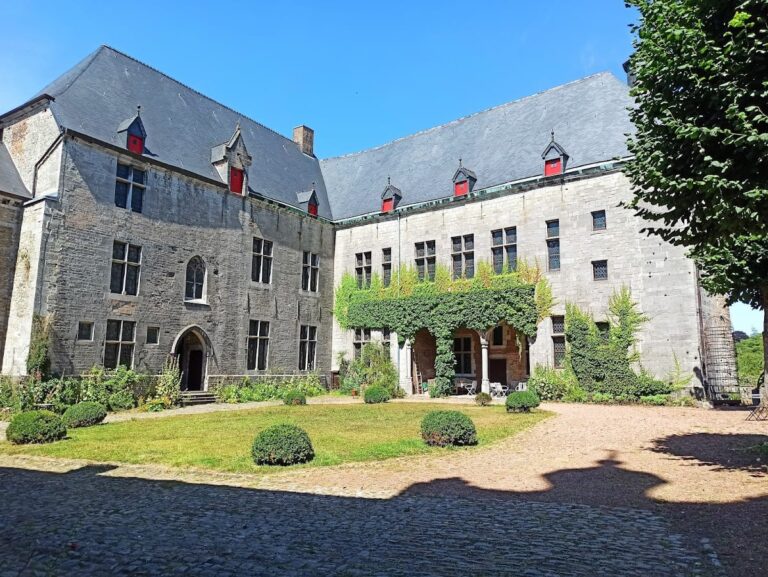
One of the castle’s most notable features is the Gothic Knights’ Hall, or Salle des Chevaliers, built in the late 14th century. This hall is recognized as one of Belgium’s finest examples of Gothic architecture, characterized by its vaulted ceilings and stone detailing. It served as a ceremonial and gathering space within the castle.
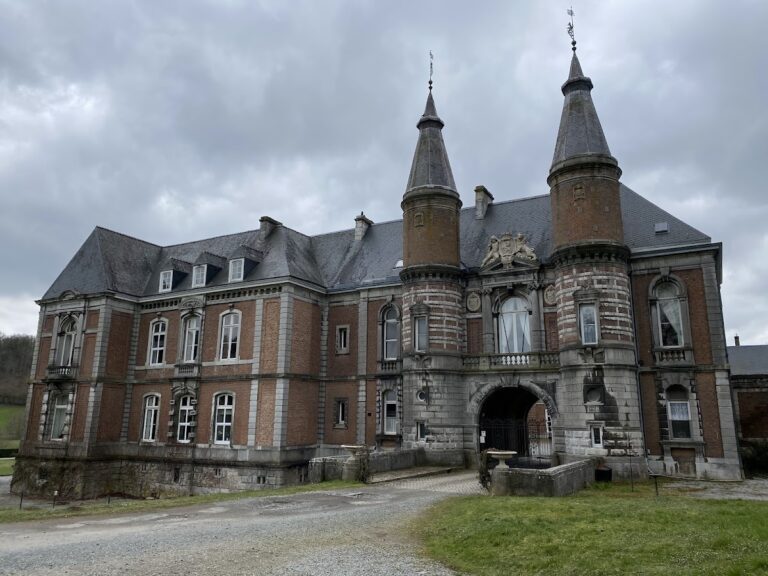
Additional buildings were added over time by successive owners, particularly during the 18th and 19th centuries. These later constructions complement the medieval core, creating a cohesive ensemble that blends different architectural periods. The materials and styles reflect evolving tastes and functions, moving from purely defensive to residential and representational.
The formal French garden, established by the Marotte family, lies on the western side of the estate. This garden follows the principles of symmetry and order typical of French landscaping, enhancing the castle’s residential character and providing a designed natural setting.
Today, the castle is well preserved, allowing for public access and the display of historical interiors. The bedroom of General Reille remains intact, offering a direct link to the castle’s role in the Napoleonic era. Overall, the site retains its historical layers, showcasing medieval origins alongside later adaptations.