Fortezza Rohan: A Baroque Fortress in Zernez, Switzerland

Visitor Information
Google Rating: 4.5
Popularity: Very Low
Google Maps: View on Google Maps
Country: Switzerland
Civilization: Unclassified
Remains: Military

History
Fortezza Rohan is located in the municipality of Zernez, Switzerland. The fortress that stands today was constructed by the forces led by the French Duke Henri II de Rohan during the early modern period.
Before the Baroque fortress was built in the 17th century, the site was home to a medieval castle complex that served as the ancestral residence of the Cazins family. This earlier castle was first recorded in 1578. When the current fortress was constructed in 1635, it is likely that much of the medieval structure was dismantled to provide building materials, erasing visible traces of the previous castle.
The present fortress arose in the context of the Thirty Years’ War and specifically the Bündner Wirren, conflicts involving control over the Valtellina territory. Duke Henri II de Rohan commissioned the fortress in 1635 as a military stronghold to aid in efforts against Spanish and Austrian forces vying for influence in the region. Construction took place with remarkable speed between May 19 and 27 of that year. Approximately 600 men, under the direction of Captain Borel de la Roque-Servière and the local leader Jörg Jenatsch, worked to complete the fortress within this very brief period, despite doubts about accomplishing such a rapid build.
Materials for the project were gathered locally. Stone came from the ruins of the old medieval castle, while sand was extracted from a natural sand deposit visible beneath the fortress site. Swamp lime, a kind of building mortar, was taken from community and church stores, provoking dissatisfaction among the inhabitants of nearby Susch, as recorded in Jenatsch’s critical letters. These details highlight the logistical challenges and community impact involved in the fortress’s construction.
In the 20th century, the site saw further changes. A rectangular building stood on the fortress grounds until the 1930s but was later demolished during World War II to make way for modern military defenses connected to the Susch-Zernez defensive line. These World War II fortifications were eventually removed.
Since 1985, efforts to preserve and stabilize the ruins have been spearheaded by the Pro Fortezza Rohan association. Investigations during restoration work in 1990, led by expert Felix Nöthiger, confirmed the feasibility of the fortress’ swift construction given the manpower and locally sourced materials available at that time, providing valuable insight into 17th-century building methods.
Remains
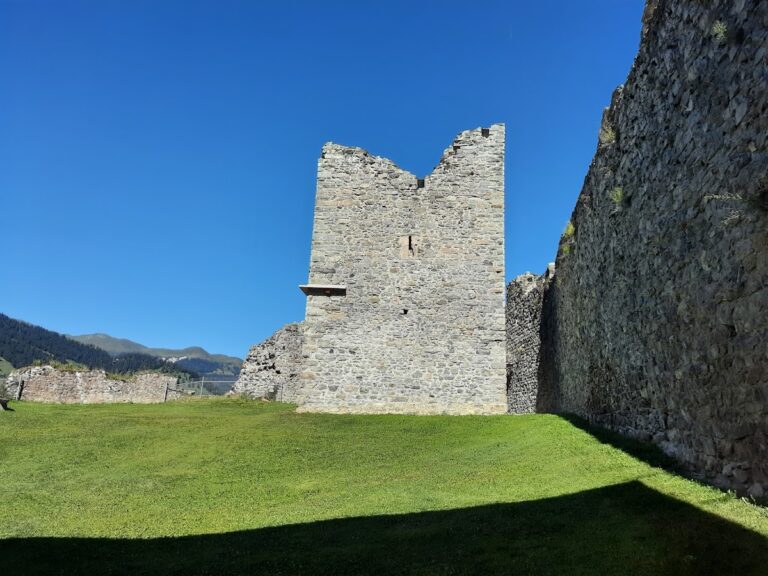
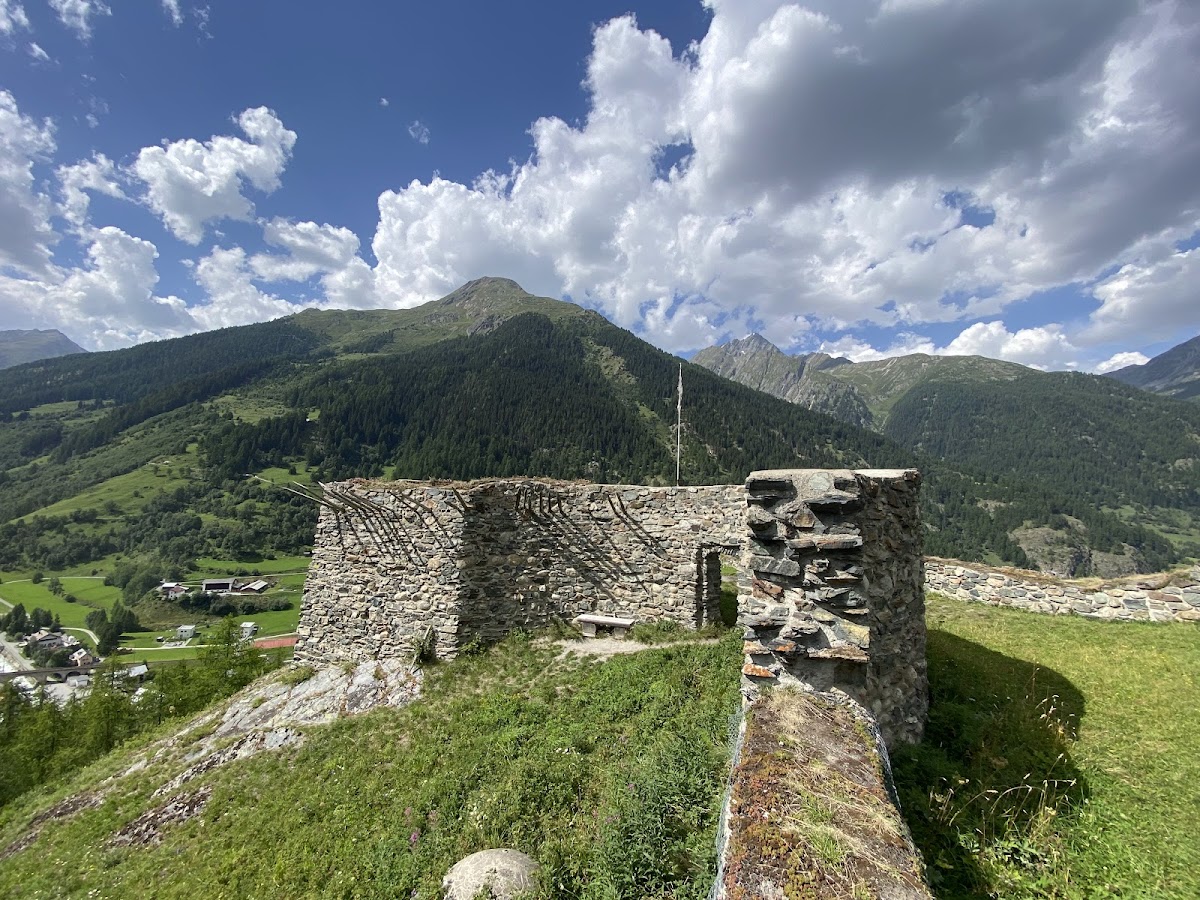
Fortezza Rohan exhibits a star-shaped design, a form typical of fortified structures built in the Baroque era to better resist artillery attacks. The walls still stand in sections, with heights ranging from approximately 2.5 to 5 meters and thickness between half a meter and one and a half meters, demonstrating robust construction methods of the 17th century.
Encircling the fortress, original wooden battlements once ran just below the tops of the walls. These walkways, which allowed defenders to move along the fortifications while protected, were restored in the 1990s using larch wood to replace the horizontal supporting beams. The use of larch, known for its durability, reflects restoration choices aimed at longevity.
The fortress’s exterior walls were also defended by numerous wooden stakes placed at an upward angle. These stakes acted as obstacles intended to prevent attackers from leaning assault ladders against the walls during sieges. During the 1990 conservation, about eighty percent of these wooden stakes made from larch wood were reinstalled, restoring the defensive profile of the fortress.
At the southwest corner stands a notable two-story round tower, which originally included a cellar room. The platform atop this tower was likely used to mount artillery pieces, providing opportunities for defensive fire over approaching enemies. This tower adds a significant vertical element to the fortress’s overall arrangement.
A central wall divides the fortress nearly in half, containing a passageway that connected the two sections. The main entrance to the fortress was situated on the southeastern side, serving as the primary point of access. Historical records and restoration efforts uncovered and reconstructed parts of the battlements above this gate based on drawings dating back to 1675, allowing for an accurate representation of its original appearance.
Several structural works have been undertaken to stabilize and restore the site. This includes rebuilding the connecting gate that once linked the outer fortifications with the main fortress—an element that had been destroyed during later military modifications involving an artillery observation post. Restoration also repaired two fallen gate arches and reconstructed a gun embrasure, a small opening in the wall designed for firing artillery, on the round tower.
These surviving features provide a tangible connection to the fortress’s historical function as a fortified military base constructed in a critical period of regional conflict. The preservation efforts have helped maintain both the appearance and structural integrity of Fortezza Rohan’s distinctive star-shaped layout and defensive installations.
Nearby sites