Columns of San Lorenzo, Milan


Visitor Information
Google Rating: 4.4
Popularity: Very High
Google Maps: View on Google Maps
Country: Italy
Civilization: Roman
Remains: Religious

History
The Columns of San Lorenzo stand in Corso di Porta Ticinese, Milan, Italy, and date back to ancient Roman times. Originally, these sixteen columns were part of a Roman structure built in the 2nd or 3rd century CE, likely a pagan temple or a public bathhouse. Their initial location was near what is now Piazza Santa Maria Beltrade, before being moved to their current site in front of the Basilica of San Lorenzo during the 4th century.
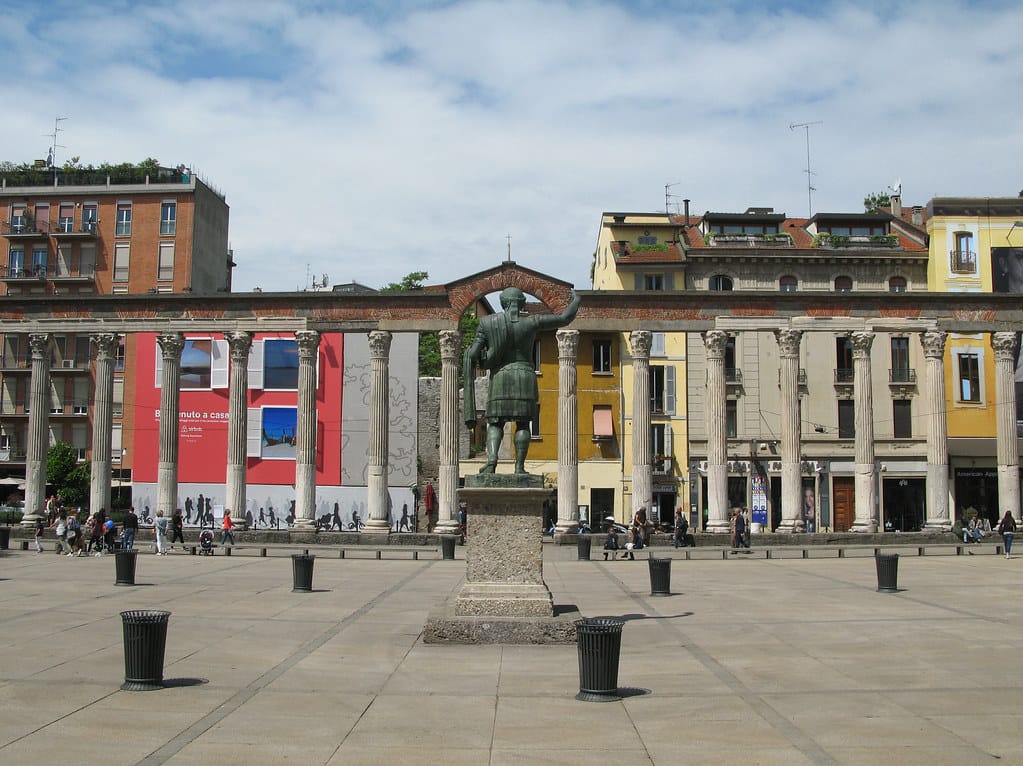
During the medieval period, between the 11th and 12th centuries, the columns were reassembled in their present arrangement. This reconstruction included adding brickwork to level some capitals and building an arch topped with a cross at the center, aligning the colonnade with the adjacent basilica. The area was closely linked to the medieval Porta Ticinese, a city gate that still preserves Roman marble decorations, reflecting the continuity of Roman influence in the urban fabric.
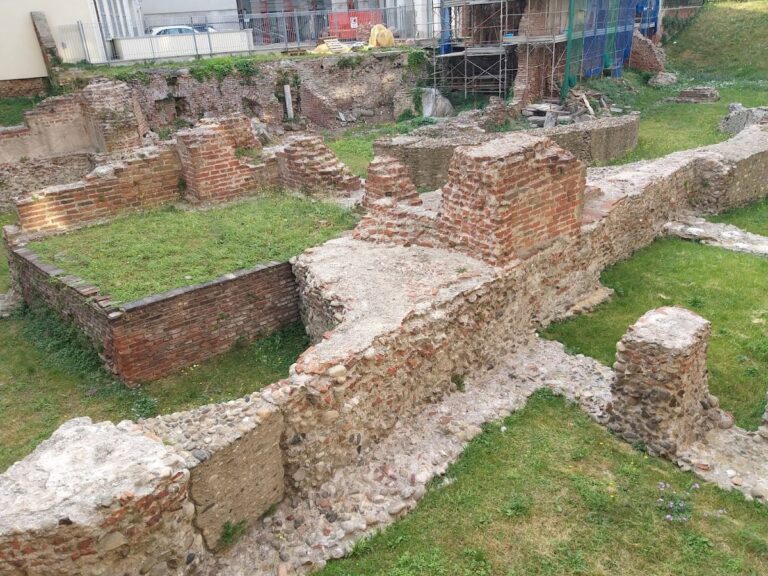
In the 16th century, there was a proposal to dismantle the colonnade to widen a procession route for Philip II of Spain. This plan was ultimately rejected by Ferrante Gonzaga, preserving the columns. Up until 1935, the space between the basilica and the columns was crowded with old houses. Their demolition created an open square, enhancing the monument’s visibility. Later, World War II bombings further isolated the complex, and the area behind the basilica was transformed into a fenced public park.
In 1937, a bronze statue of Emperor Constantine was installed near the columns. This statue is a modern copy of a late antique original kept in Rome. Constantine is historically significant for the Edict of Milan in 313 AD, which granted religious tolerance to Christians and linked him closely to the city’s history. The columns remain a rare surviving element of imperial Milan, known as Mediolanum, and hold cultural importance for the city.
Remains
The site features a single row of sixteen tall Corinthian columns, each about 7.5 meters high, made from Musso marble. These columns were originally part of Roman buildings from the 2nd or 3rd century CE and were relocated in the 4th century to their current position. The capitals atop the columns vary in style and size, as they come from two different Roman structures. Some capitals were adjusted with brickwork during medieval reassembly to create a uniform appearance.
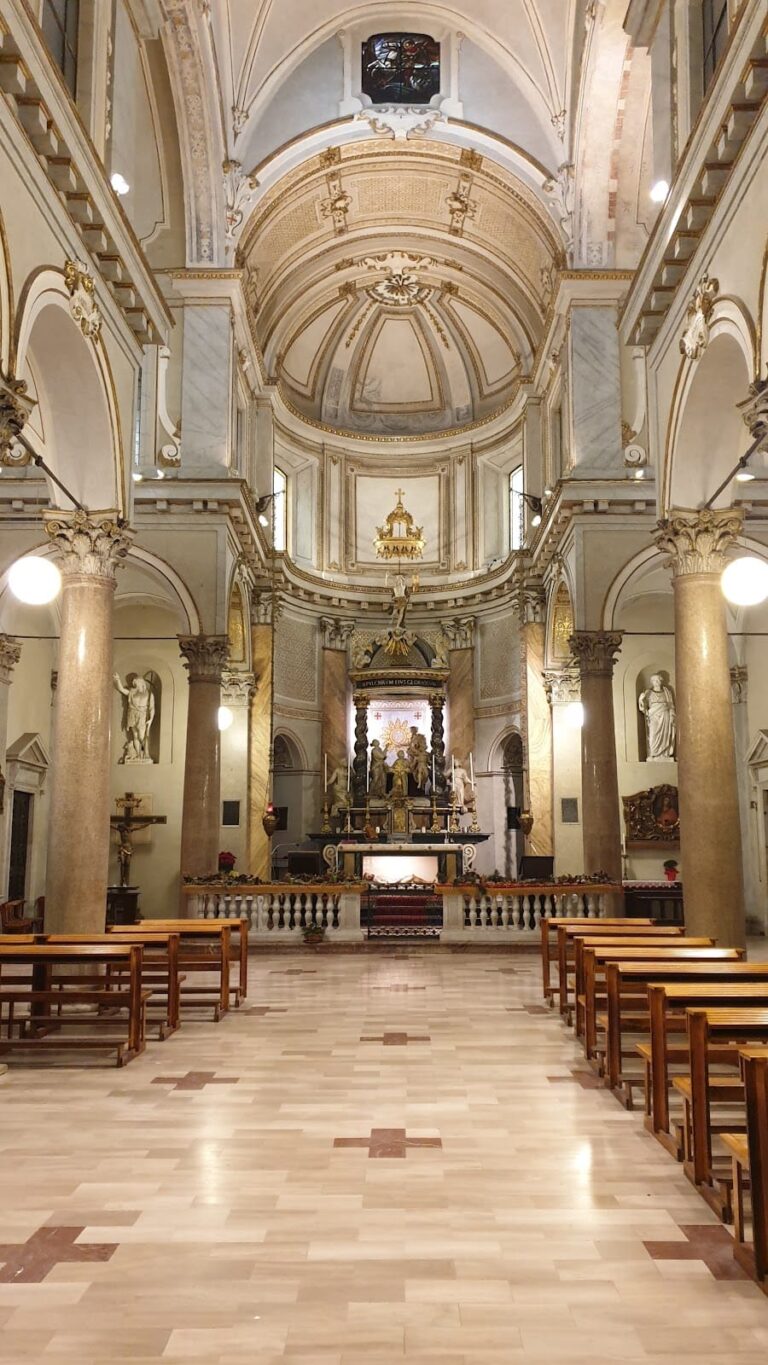
At the center of the colonnade stands an arch supporting a small column topped by a cross, a medieval addition from the 11th or 12th century. The columns carry an entablature completed with brickwork from the same period. The colonnade faces the Basilica of San Lorenzo, which includes the Chapel of Sant’Aquilino, notable for its Roman-era mosaics.
Embedded in the columns is a Roman marble inscription, a plaque dedicated to Lucius Verus dated 167 AD, linking the site to specific historical figures. The surrounding urban fabric once enclosed the columns and basilica, but 20th-century demolitions cleared the area to highlight the monument. Tram tracks that once ran between the columns and the basilica were moved in the 1990s to preserve the site’s integrity.