Chillon Castle: A Historic Fortress on Lake Geneva, Switzerland
Visitor Information
Google Rating: 4.7
Popularity: Very High
Google Maps: View on Google Maps
Official Website: www.chillon.ch
Country: Switzerland
Civilization: Medieval European
Remains: Military

History
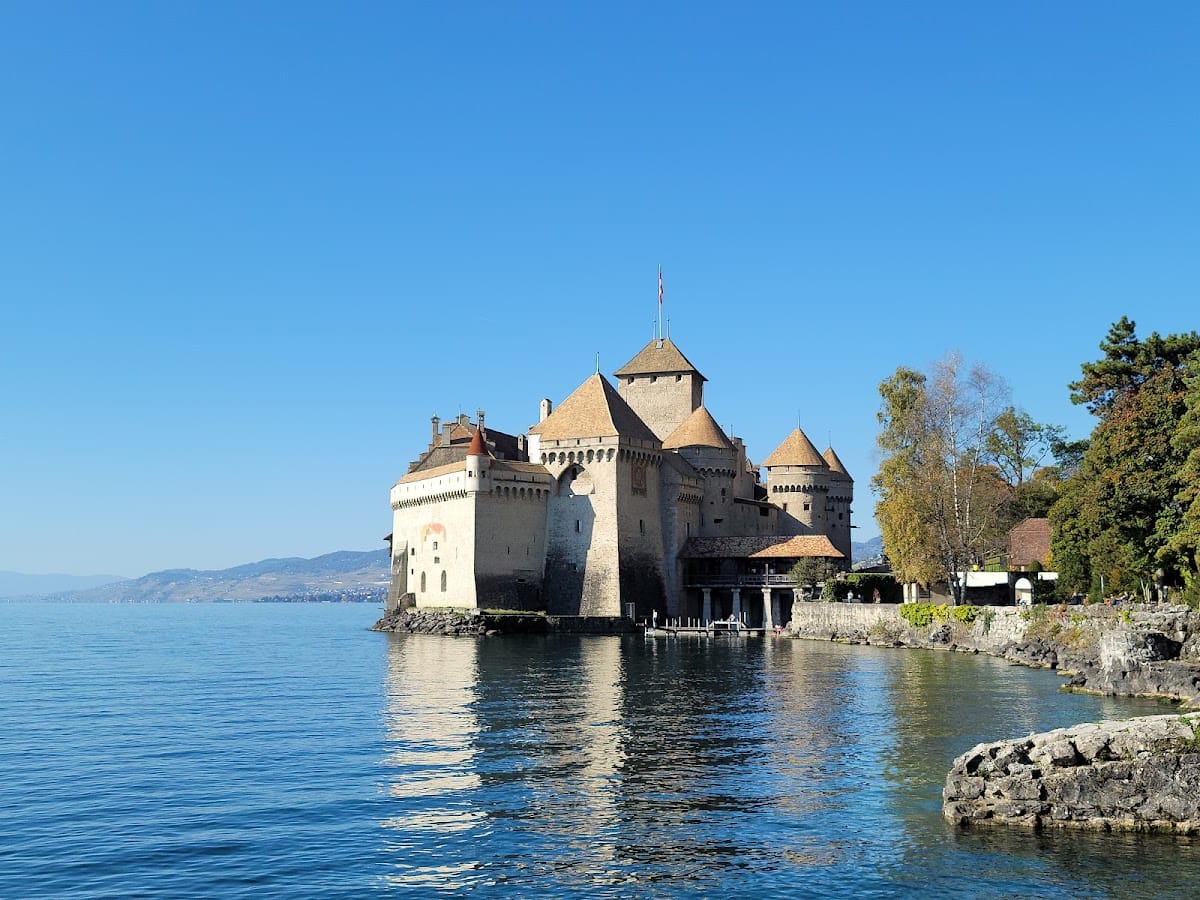
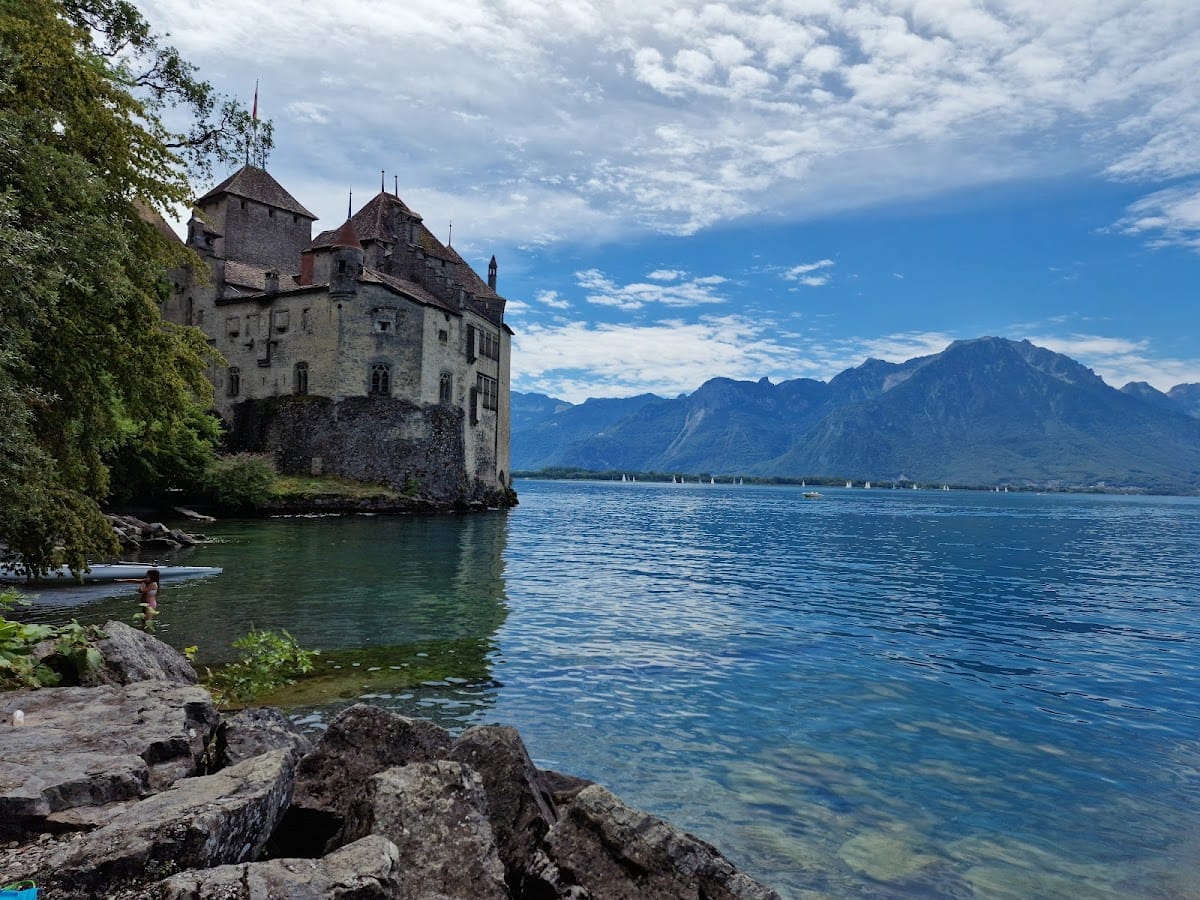
Chillon Castle stands on a limestone island in Lake Geneva, between Montreux and Villeneuve, Switzerland. Archaeological evidence shows the site was occupied since the Bronze Age and Roman times. The earliest fortifications date from the 10th to 11th centuries. The castle first appears in written records in 1150, when Count Humbert III of Savoy confirmed his control over it, making Chillon the oldest Savoyard stronghold north of Lake Geneva.
From the 12th century until the early 16th century, the House of Savoy developed Chillon as a military fortress, administrative center, and residence. Counts such as Thomas I, Peter II, and Amadeus VI expanded the castle with defensive walls, towers, and richly decorated living quarters. The castle also housed a chapel with 14th-century frescoes by Jean de Grandson, reflecting religious and heraldic themes. From the mid-14th century, Chillon served as a prison, famously holding François Bonivard in the early 1500s.
In 1536, Bernese forces captured Chillon during their conflict with Savoy, ending Savoyard rule. Under Bernese administration, the castle became the seat of the bailiff of Vevey. The Bernese adapted the fortress for firearms, adding gunports and defensive modifications. They also built stables, an external clock tower with a 16th-century mechanism, and renovated residential spaces. After 1733, the bailiff moved to Vevey, and Chillon was mainly used as a military depot and prison.
The castle was nationalized during the Vaudois Revolution in 1798 and became property of the canton of Vaud in 1803. Throughout the 19th century, it functioned as a military arsenal, prison, and storage site. Restoration proposals began in the 1840s but gained momentum only in the 1880s with the founding of the Association for the Restoration of Chillon. Between 1896 and 1898, architect and archaeologist Albert Naef led extensive excavations and restorations, applying scientific methods to preserve the castle.
Chillon inspired many artists and writers, including Jean-Jacques Rousseau and Lord Byron, who wrote “The Prisoner of Chillon” about Bonivard. Other notable figures such as Henry James, William Turner, Eugène Delacroix, and Gustave Courbet also drew inspiration from the castle. Today, Chillon Castle is recognized as a cultural property of national significance in Switzerland.
Remains
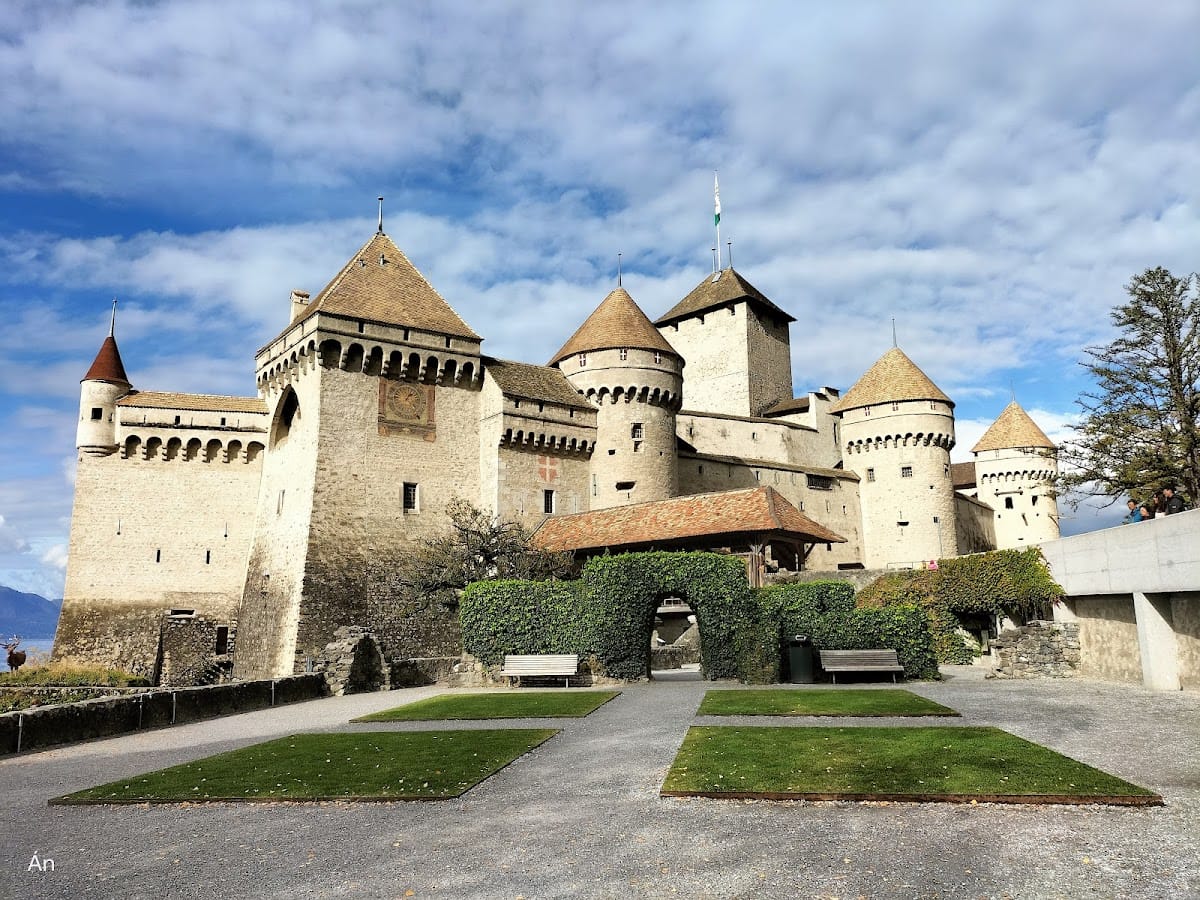
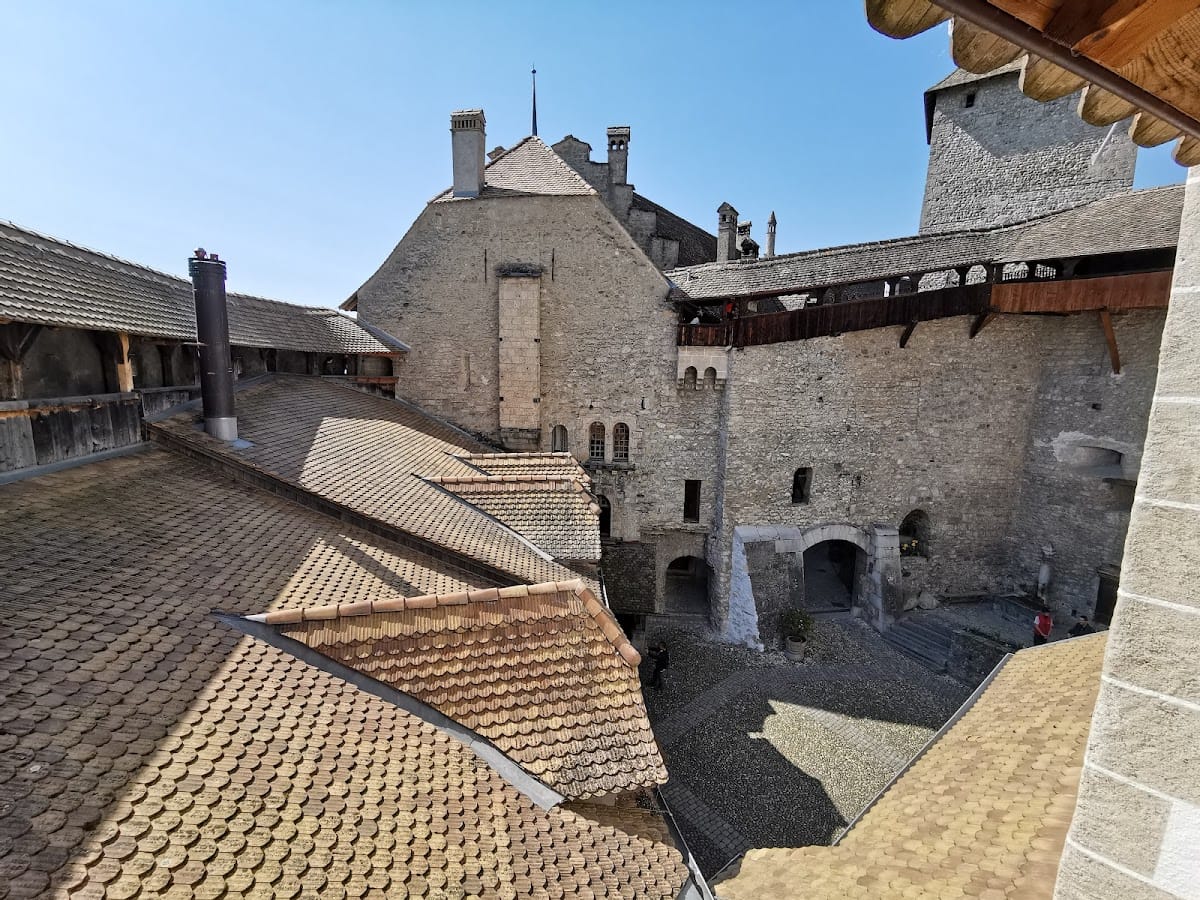
Chillon Castle occupies an oblong limestone island rising about eight meters above Lake Geneva. The complex measures roughly 110 meters long and 50 meters wide. It includes around 25 buildings and 40 interior rooms arranged on several levels. The site features two concentric defensive walls, semi-circular towers, a large rectangular donjon (main tower) about 25 meters high, residential quarters, a chapel, halls, kitchens, stables, and prison cells.
The oldest visible structures date from the 10th to 11th centuries. These include the foundations of a chapel dedicated to Saint Tryphon, parts of the inner curtain wall, and the lower section of the donjon. The 13th-century expansion added a second defensive wall with three half-round towers on the landward side. This phase also introduced vaulted cellars and a long residential building along the lakefront, which contains the great hall (aula nova), kitchens, and the Camera domini, or ducal chamber, with richly painted vaulted ceilings and frescoes.
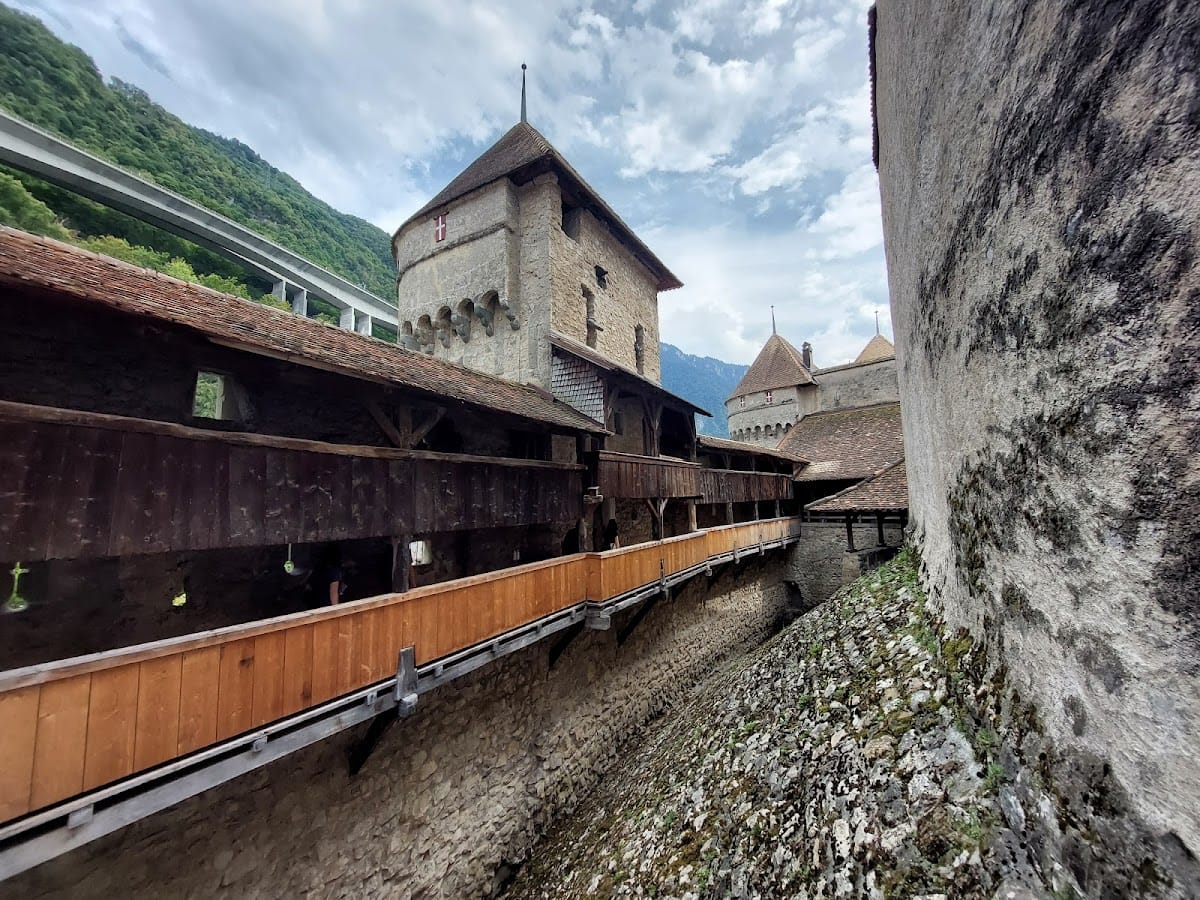
Defensive features include machicolations—openings in the walls for dropping objects on attackers—and large arrow slits. During the Bernese period, these were adapted with gunports for arquebuses and muskets, combining narrow loopholes and wider rectangular openings for surveillance. Interior decorations include 14th-century tempera frescoes by Jean de Grandson, depicting Saint George slaying the dragon, and heraldic friezes showing the coats of arms of Savoy, Montferrat, and Geneva. The 15th century added painted ceilings and elaborate fireplaces.
The castle contains hundreds of medieval graffiti, including a well-preserved knight figure incised in the fireplace of the Petit Salon, possibly linked to Count Amadeus V. The Bernese left a heraldic frieze in the Hall of Arms painted by Andreas Stoss in 1586, displaying coats of arms of Bern and local bailiffs, with additions extending to 1917. The castle’s moat, filled in during the 18th century, was excavated and restored to its original water-filled state in the early 20th century.
Restoration efforts from the late 19th century onward involved detailed archaeological documentation, structural consolidation, and partial reconstruction. New additions were clearly marked to distinguish them from the original medieval fabric. Access to the castle is provided by a bridge built in 1861 over the railway line, one of Switzerland’s oldest iron bridges, with a roof added in 1937. The surrounding area includes a Savoyard park listed among Switzerland’s historic gardens and a lakeside promenade connecting Montreux and Villeneuve. Modern visitor facilities were added in 2020 to support the site’s preservation.
Nearby sites