Château de Labarre: A Medieval Fortress in Foix, France

Visitor Information
Google Rating: 4.8
Popularity: Very Low
Google Maps: View on Google Maps
Official Website: castella-labarre.fr
Country: France
Civilization: Unclassified
Remains: Military

History
The Château de Labarre is situated in the town of Foix in modern-day France and was originally constructed during the 12th century by the rulers of the County of Foix. The first recorded mention of this fortress appears in the late 1160s under the name Castrum de Barra. At that time, Count Roger Bernard of Foix transferred ownership of the site to the abbot of Saint-Volusien de Foix, indicating the castle’s early connections with both secular and religious powers.
During the late 12th century, Château de Labarre played a key role in the defensive network of the County of Foix, leveraging its strategic position overlooking the Alses river. However, the castle’s military importance brought it into conflict during the Albigensian Crusade, a campaign aimed at suppressing the Cathar heresy in southern France. In 1210, forces led by Simon de Montfort attacked the surrounding Pas de la Barre area, and the castle itself was destroyed shortly after during Montfort’s return in 1211.
Efforts to restore defensive functions at the site took place in the late Middle Ages when an enclosure was erected around the smaller castle keep, known as a châtelet. Despite this revival, the continuous military presence was short-lived, as by the early 16th century the settlement near the castle shifted downward toward the local church, leading to the abandonment of the fortress prior to 1540. In the following Wars of Religion during the 16th and 17th centuries, the ruins again saw intermittent use, occupied sporadically by soldiers or bandits, until the castle was permanently deserted by the close of the 17th century.
Remains
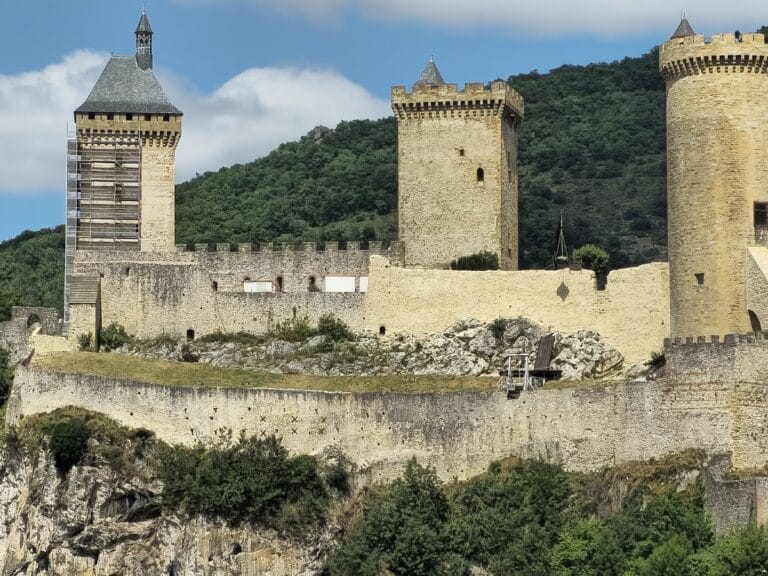
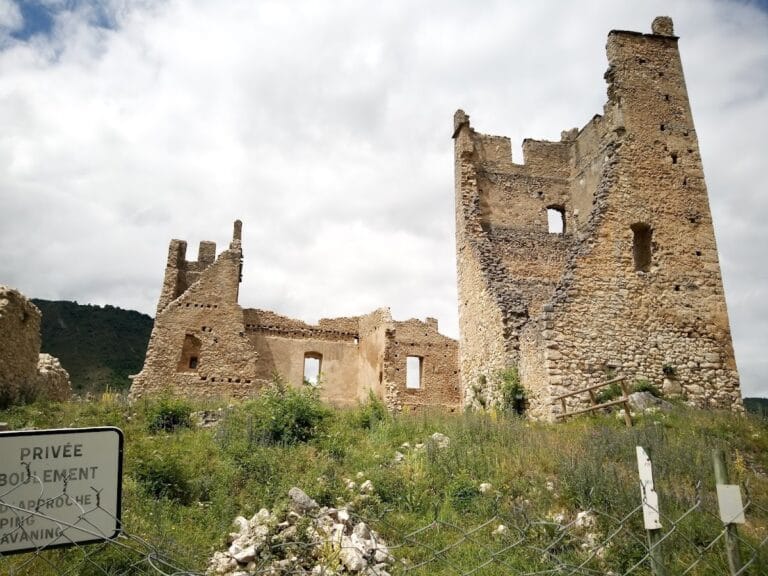
The remains of Château de Labarre occupy a rocky outcrop called the Grès de Labarre, offering commanding views over the Château de Foix and the surrounding valley. What survives today are only fragments of the original 12th-century fortress, though these ruins reflect its early medieval construction on this naturally defensible site.
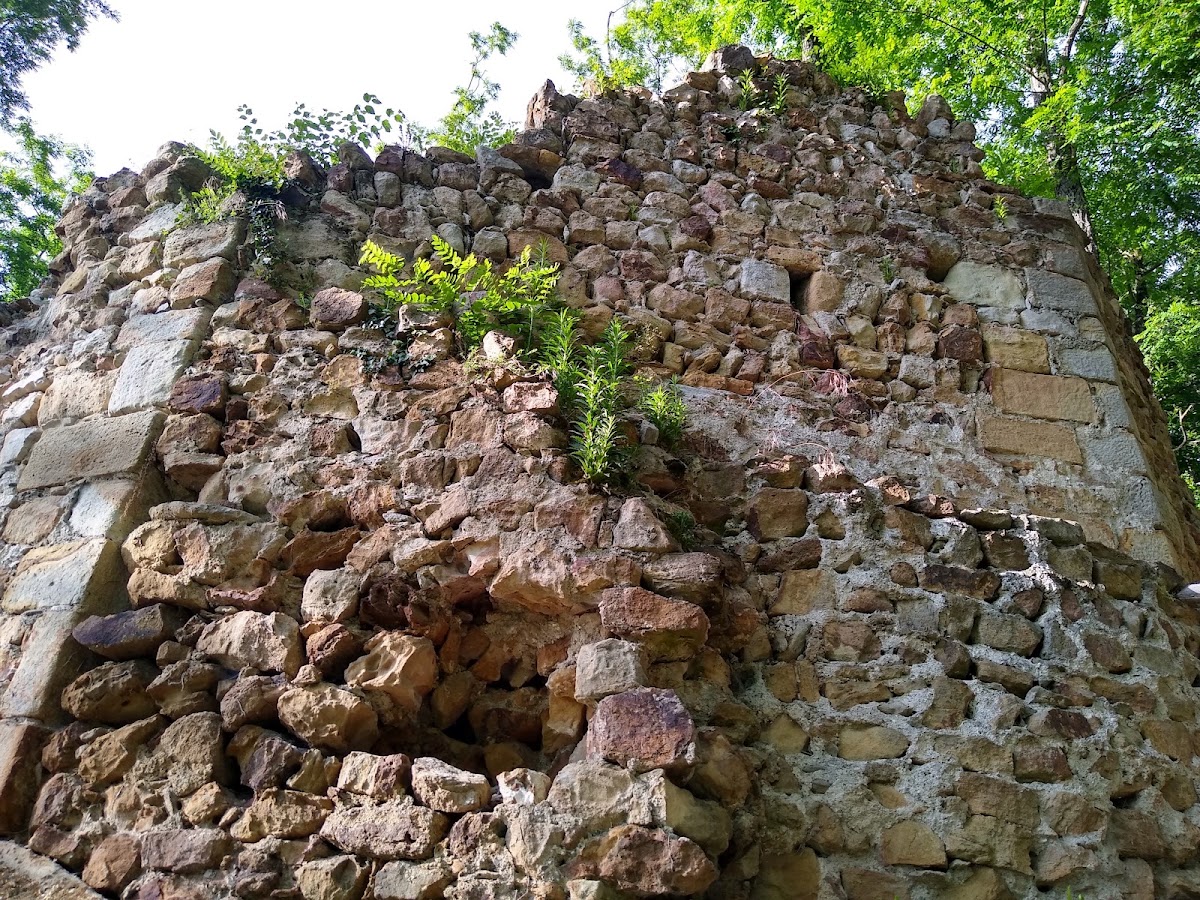
One notable element from the later medieval period is the enclosure built around the châtelet, a smaller fortified structure that once stood within the castle complex. This defensive wall represents the efforts to maintain some military function in the later Middle Ages. The materials used in the surviving structures primarily consist of local stone, laid directly on the rocky platform that supports the ruins.
While details such as gates, staircases, or decorative features have not been documented, the castle’s position above the Alses river and near the larger Château de Foix underline its strategic importance in controlling the surrounding territory. Today, the remains stand in a fragmentary state, preserved in situ, silently marking the layers of conflict and habitation that shaped the site over several centuries.
Nearby sites