Catacombs of Vigna Randanini: Jewish Burial Site in Ancient Rome

Visitor Information
Google Rating: 4.8
Popularity: Very Low
Google Maps: View on Google Maps
Official Website: www.sotterraneidiroma.it
Country: Italy
Civilization: Roman
Remains: Burial

History
The Catacombs of Vigna Randanini are located in Rome, Italy, and were established by the Jewish community during the Roman Empire. These burial sites lie along the ancient Appian Way, a major road leading out of the city, and reflect the presence and growth of Jewish residents in Rome from the 2nd century CE onward.
The earliest phase of the catacombs dates back to the 2nd century CE, when the site began as a quarry for pozzolana, a type of volcanic ash used in Roman concrete. Over time, this quarry was repurposed into an underground burial complex. As the Jewish population in Rome expanded, the catacombs grew through successive land acquisitions, accommodating increasing numbers of interments. The majority of burials occurred in the late 4th century, with some evidence suggesting continued use into the 5th century.
During this period, the catacombs served exclusively as Jewish cemeteries, distinct from nearby Christian burial sites such as the catacombs of Saint Sebastian. The entrance area of the complex includes a building originally constructed for pagan purposes, which was later adapted, possibly as a synagogue.
Remains
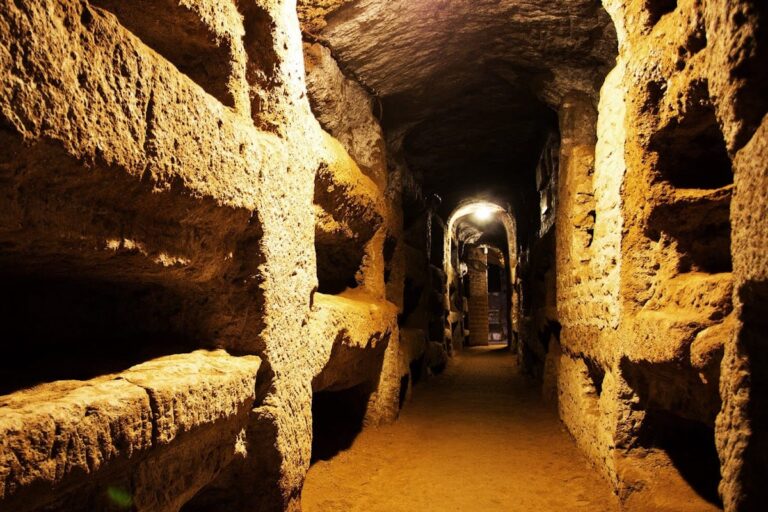
The Catacombs of Vigna Randanini cover an area of about 18,000 square meters and extend underground to a length of approximately 700 meters, with around 400 meters accessible today. The complex consists of two levels, situated between 5 and 16 meters below the surface, arranged in an irregular pattern divided into separate sectors rather than a unified plan. This layout reflects the gradual expansion of the site over time.
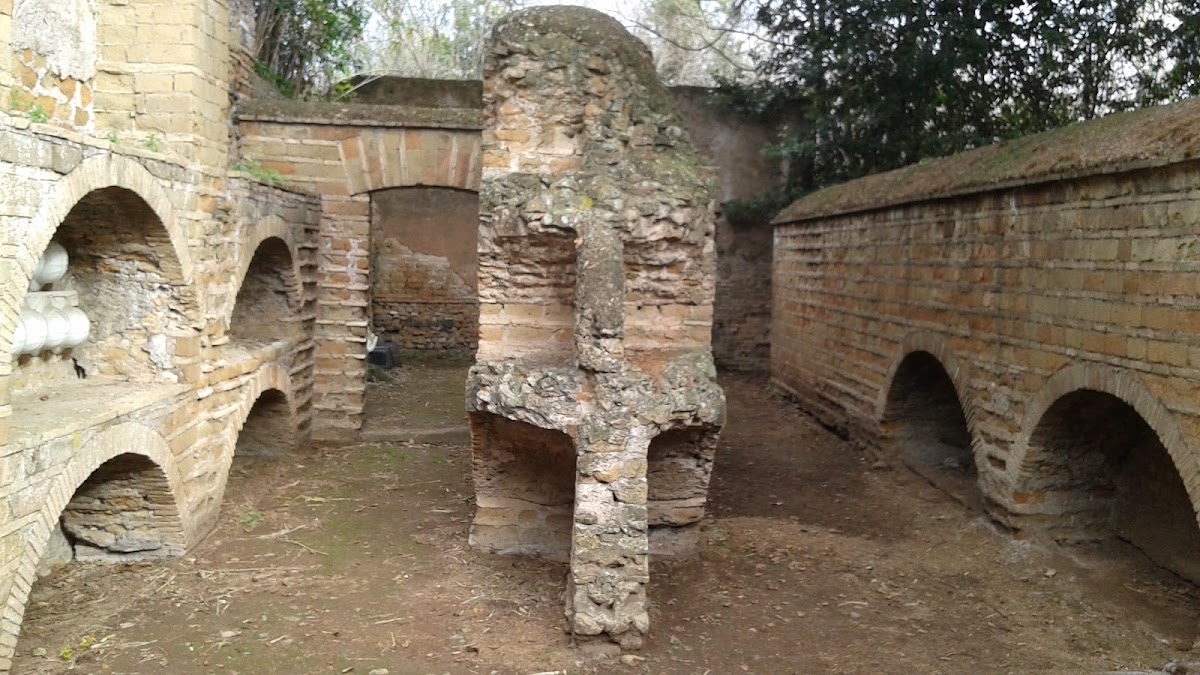
Burials within the catacombs include kokhim tombs, which are narrow niches cut perpendicular to the walls of the galleries. This style of burial is characteristic of Jewish tombs found in Palestine and Israel, indicating cultural continuity. In addition to kokhim, the site contains arcosolia—arched recesses used for interment—and stone-carved niches. Several family chapels, known as cubicula, are present and some are adorned with painted decorations featuring flowers, animals, and Jewish religious symbols such as the seven-branched menorah.
The decorative program of the catacombs is notable for its combination of Jewish iconography alongside pagan motifs. Images such as the menorah, lulav (palm branch), shofar (ram’s horn), and Torah scrolls appear alongside figures like winged Victory, Pegasus, Fortuna, hippocampi, dolphins, peacocks, birds, and floral baskets. This mixture suggests either an earlier pagan use of parts of the site or the reuse of decorative elements, highlighting the complex cultural environment of late antique Rome.
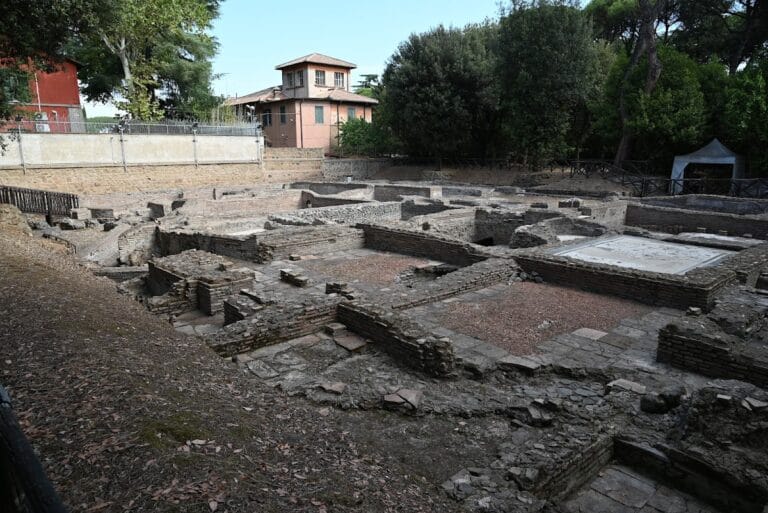
At the entrance, a vaulted room with a black-and-white mosaic floor has been identified as a possible synagogue. This space includes apses and separate areas likely intended for men and women, consistent with known synagogue architecture. A well designed to drain water from the mosaic floor further supports the interpretation of this area as a place of worship.
Hundreds of inscriptions remain visible throughout the catacombs, written primarily in Greek, with about a quarter in Latin or Aramaic. These inscriptions reflect the linguistic diversity of the Jewish community in Rome during this period. The catacombs lie beneath modern structures, including a restaurant and private villa, with two known entrances providing access from the Appian Way.
Nearby sites