Castle of Soria: A Historic Fortress in Spain



Visitor Information
Google Rating: 4.2
Popularity: Low
Google Maps: View on Google Maps
Country: Spain
Civilization: Unclassified
Remains: Military

History
The Castle of Soria stands on a hill known as “Cerro del Castillo” in the city of Soria, Spain. Its roots trace back to ancient times, with evidence showing human presence on this site since at least the Bronze Age. Early settlements included a Celtiberian hillfort, or castro, which had strong ties to the nearby Numancia, a well-known ancient settlement.
Throughout antiquity, the area saw various cultural transitions. Contrary to older, now discarded stories suggesting Greek Dorian or Suevic origins for its early inhabitants, archaeological findings do not support these claims. During Roman times, the site hosted a small village, playing a modest role in the region.
The castle’s strategic significance rose notably after a border was established in 1016 between the Kingdoms of Castile and Navarra. This placed Soria near an important frontier along the Duero River. Under Muslim rule, the castle functioned primarily as a watchtower overseeing the Muslim town of Medina-Soria.
Christian forces reclaimed the area in the early 12th century, with King Alfonso I of Aragon and Queen Urraca I of León leading the conquest. The medieval castle was likely constructed during this period, with traditional attributions crediting Count Fernán González. In the following decades, Alfonso VII strengthened defenses by adding inner walls, while Sancho IV expanded fortifications with an outer wall, probably in response to the Navarrese invasion of 1195-1196 led by Sancho VII.
During the Peninsular War in the early 1800s, French troops occupied the castle until 1812. Following directives from the Cortes of Cádiz, Spanish General José Joaquín Durán ordered the castle’s demolition to prevent its further military use. The resulting explosion destroyed much of the structure, leaving the site in ruins and abandoned for many years.
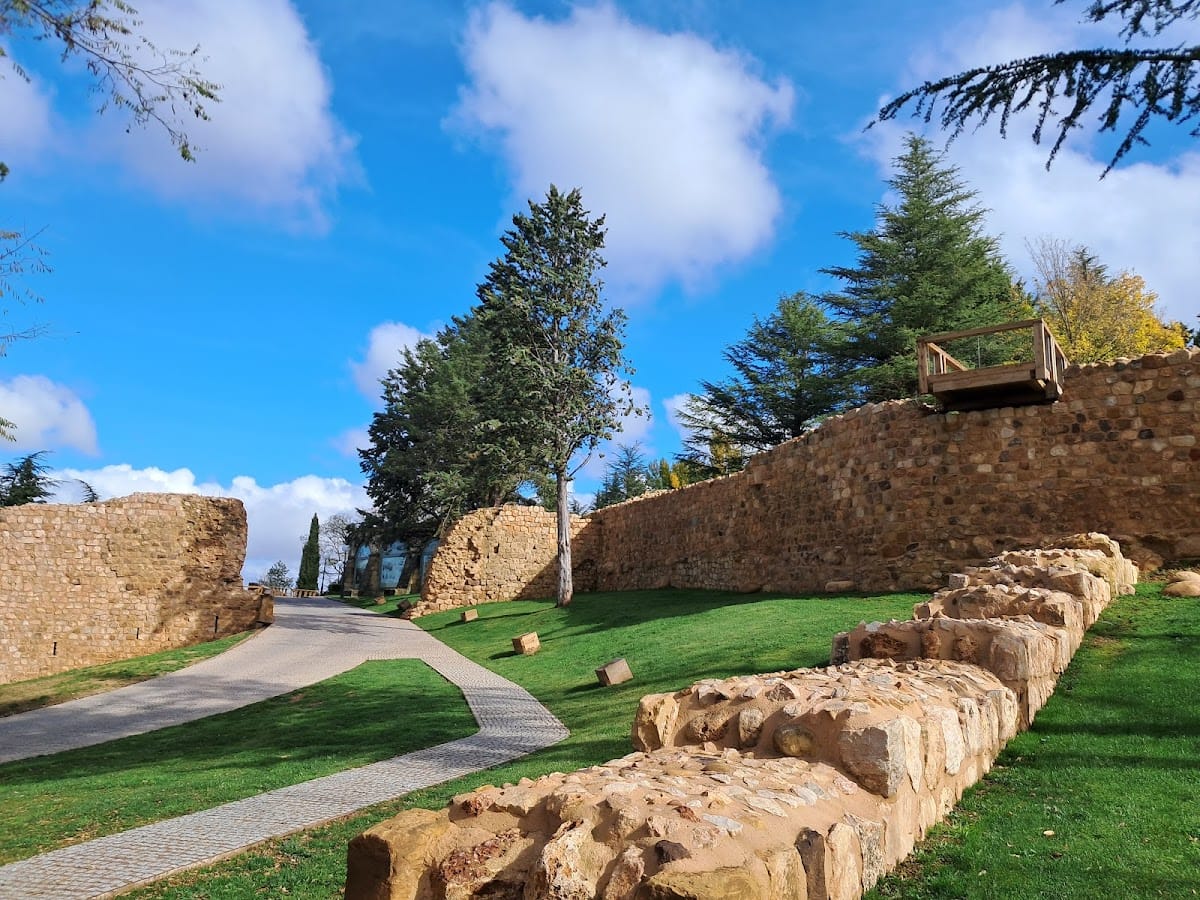
In recent decades, archaeological excavations and restoration projects, such as the “Soria Intramuros” initiative, have aimed to recover and preserve the castle’s remains along with the adjacent medieval city walls. These efforts are supported by European and regional heritage organizations.
Remains
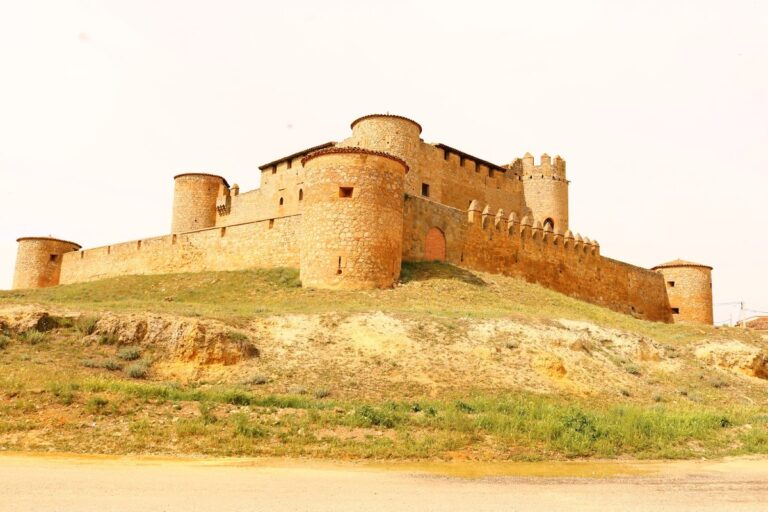
The castle was designed with a slightly trapezoidal layout, featuring four smaller towers positioned at each corner and a larger tower marking the main entrance. The most heavily fortified section was the keep, known as the Torre del Homenaje, situated on the eastern side of the enclosure near a large stone cistern, or aljibe, used for collecting and storing water.
Surrounding the castle was a high inner wall shaped to follow the contours of the hill, providing a sturdy defensive barrier. On the western side lay an outer defensive wall, which allowed access to the main gate; by the early 19th century, this outer enclosure was already in a state of ruin. Within the castle grounds stood the church of San Salvador, which served as the castle chapel. It had fallen into disuse and ruin by the early 1600s.
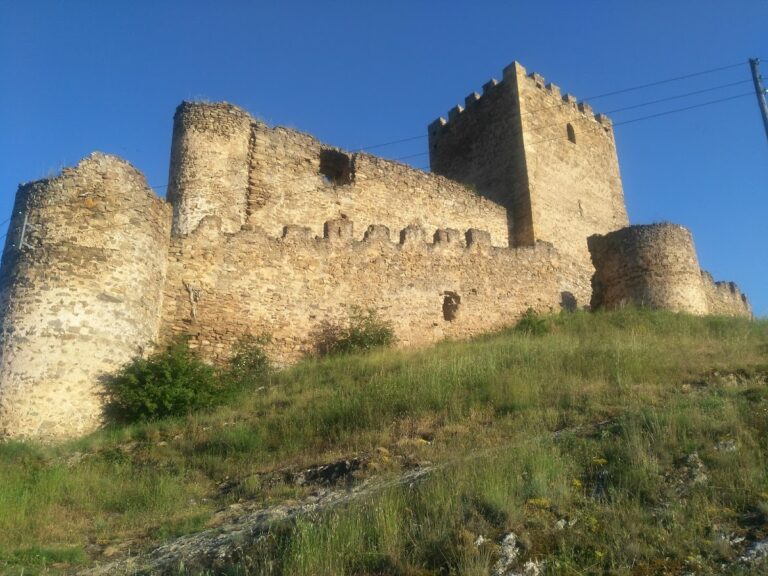
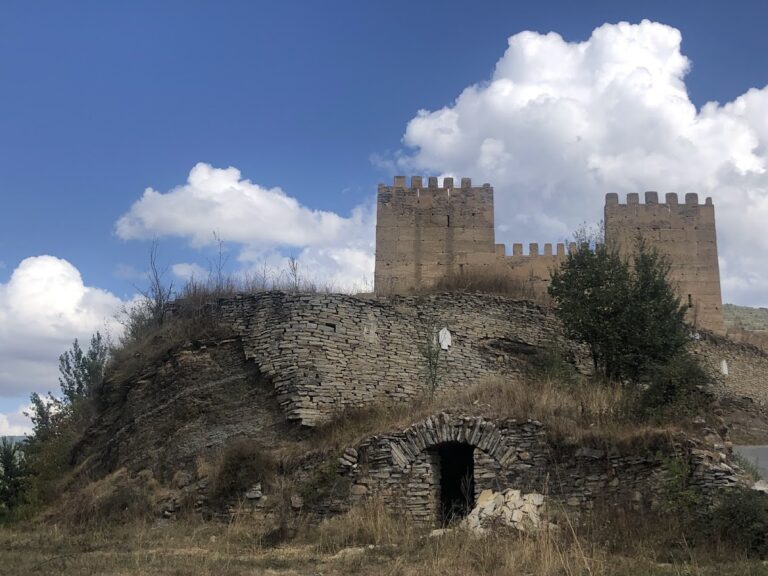
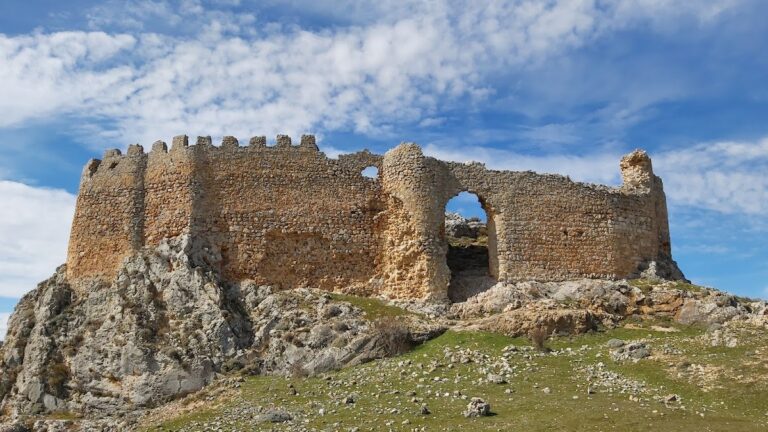
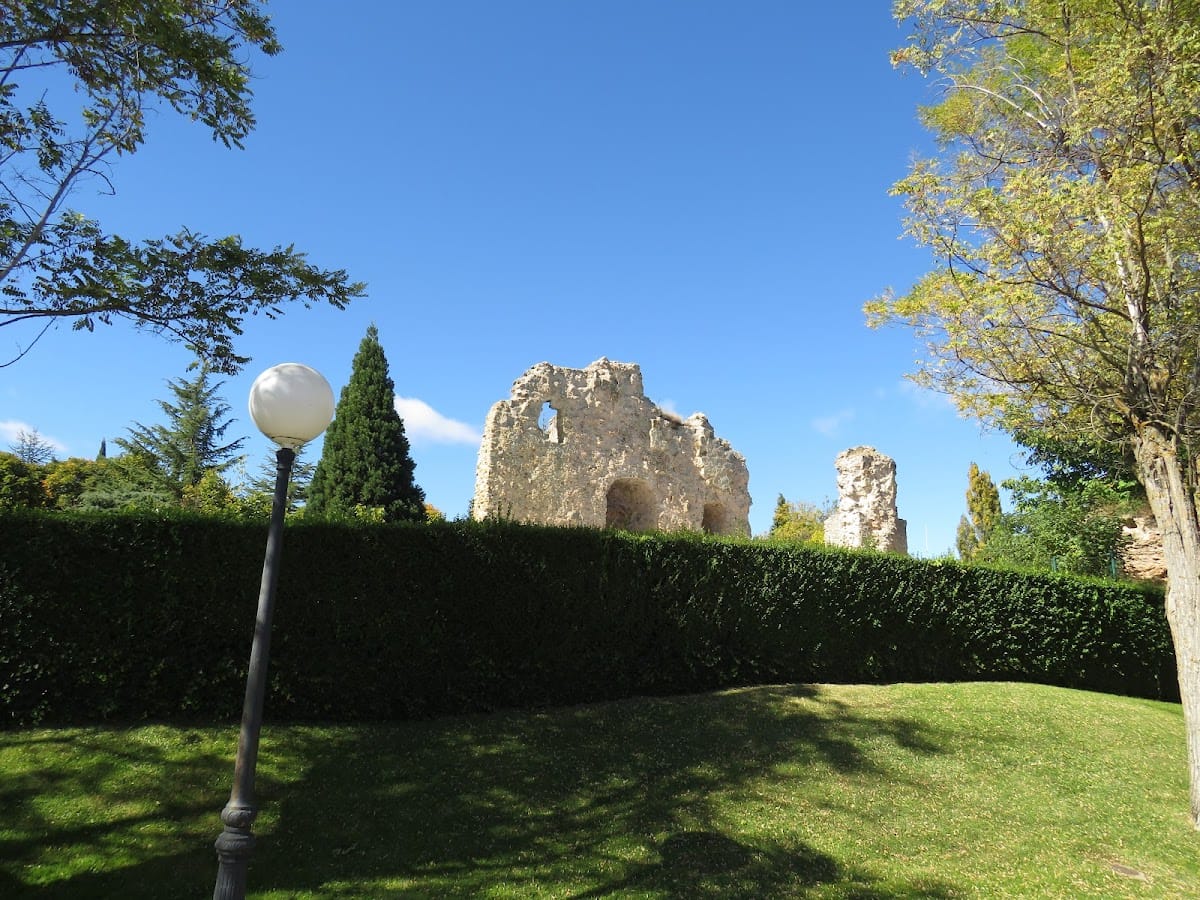
Notably, the castle precinct included one of the two Jewish quarters, or aljamas, of Soria, recognized in medieval times for its vibrant intellectual, economic, and commercial life. Today, only the ruins of the keep tower and fragments of the inner and outer walls remain visible. The main gate’s entrance is flanked by two cylindrical towers that survive in part.
Modern installations on the site incorporate the old cistern’s water reserves, including swimming pools that make use of its storage capacity. In addition, the Parador Nacional Antonio Machado, a historic hotel, occupies a nearby area of the castle grounds.
Extending beyond the castle itself, the city walls of Soria enclosed an area of about 100 hectares with a perimeter roughly 4,100 meters long, a scale comparable to ancient Jerusalem’s fortifications. Most of these walls were built of stone masonry during the 13th century under Sancho IV’s reign. They were reinforced by cylindrical towers known as cubos and included six main gates alongside smaller openings called posterns (postiguillos) and an intermediate gate (portillo).
Of these entrances, only the posterns named San Ginés and San Agustín have survived to the present day and have undergone recent restoration. The sections of wall lining the Duero River were built using carefully cut ashlar blocks without towers, utilizing the river as a natural defensive obstacle. Other stretches of the wall rose higher and included masonry reinforcements and towers.
Six principal gates once controlled access to the city: Puerta del Postigo (the main city gate), Puerta de Valobos, Puerta de Santa Clara (also called Puerta Nueva), Puerta de Rabanera, Puerta del Rosario, and Puerta de Nájera. Of these, most were demolished during the 19th century due to decay or urban development.
Puerta del Postigo held particular prominence—it was opened in 1328 and underwent various changes over the centuries. In the early 1600s, a monumental tower featuring an imperial coat of arms and a clock tower was added. This gate was eventually dismantled between 1865 and 1866.
Another important feature was the stone bridge over the Duero River, known as Puente de Piedra. This bridge originally had two gate towers that collected tolls from travelers; one tower was removed in 1851. The bridge itself comprises eight semicircular arches and has been restored multiple times across the 17th, 18th, and 21st centuries.
Recent archaeological work around the city walls has uncovered the foundations of several towers and identified a previously unknown postern. These discoveries contribute significantly to the understanding of Soria’s medieval fortifications and the extent of its defensive network.
Nearby sites