Castle of Molina de Aragon: A Historic Fortress in Guadalajara, Spain


Visitor Information
Google Rating: 4.3
Popularity: Low
Google Maps: View on Google Maps
Official Website: www.museosdemolina.es
Country: Spain
Civilization: Medieval European
Remains: Military

History
The Castle of Molina de Aragon is located in Molina de Aragón, Guadalajara, Spain, along the N-211 road. Its origins trace back to the 10th or 11th century when Andalusian Muslims constructed an alcázar, or fortress, on the site of an earlier Celtiberian fortification. This stronghold served as the residence for the taifa kings who ruled the region during the period of Muslim fragmentation in the Iberian Peninsula.
Historical accounts mention a caíd named Ibn Galbun, who defended Córdoba against Alfonso VII of Castile. This figure is associated with the Abengalbón mentioned in the medieval epic Cantar de mio Cid, where he is described as the castle’s alcaide, or governor, and an ally of the Castilian hero El Cid. The castle’s strategic position allowed control over key routes between the kingdoms of Aragon and Castile, making it a contested site during the Reconquista.
In 1129, Alfonso I of Aragon captured the fortress and ordered its reconstruction in the Romanesque style. He granted the castle and its surrounding territory to the noble Lara family, who governed Molina from the castle until the late 13th century. The castle then became a seigneurie, or lordship, under the Castilian crown through the marriage of Doña María Lara to King Sancho IV of Castile.
For nearly two centuries, the castle retained a degree of autonomy under successive lords who expanded and improved its defenses. The fortress reached its present size and appearance during the tenure of Doña Blanca de Molina, who oversaw significant enhancements. In 1875, the castle was attacked by Carlist forces led by General Vallés during the Carlist Wars. Throughout the 19th century, it served as a military barracks until the army abandoned it in the early 20th century.
The castle was declared a National Monument on June 3, 1931, and is protected under Spanish heritage laws enacted in 1949 and 1985. It has also appeared in cultural media, including the cover of the 1985 album “Songs” by the Norwegian band Fra Lippo Lippi and on a 2005 Spanish postage stamp, which was printed inverted horizontally.
Remains
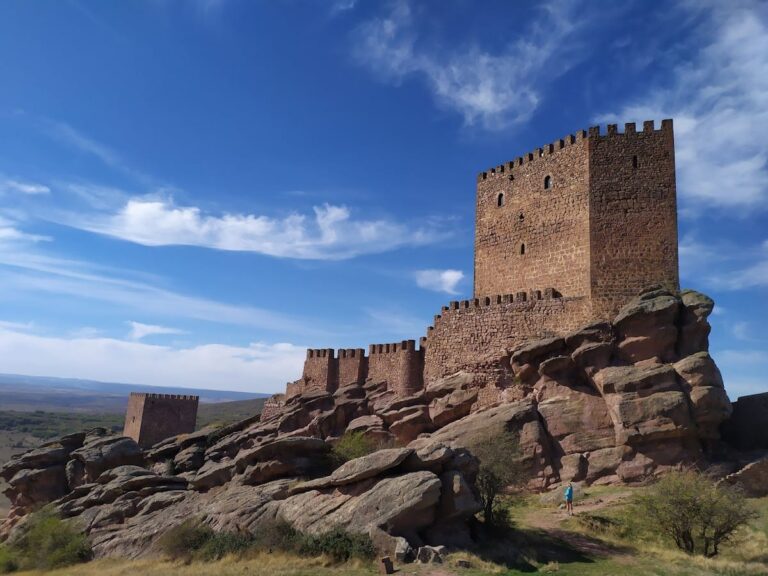
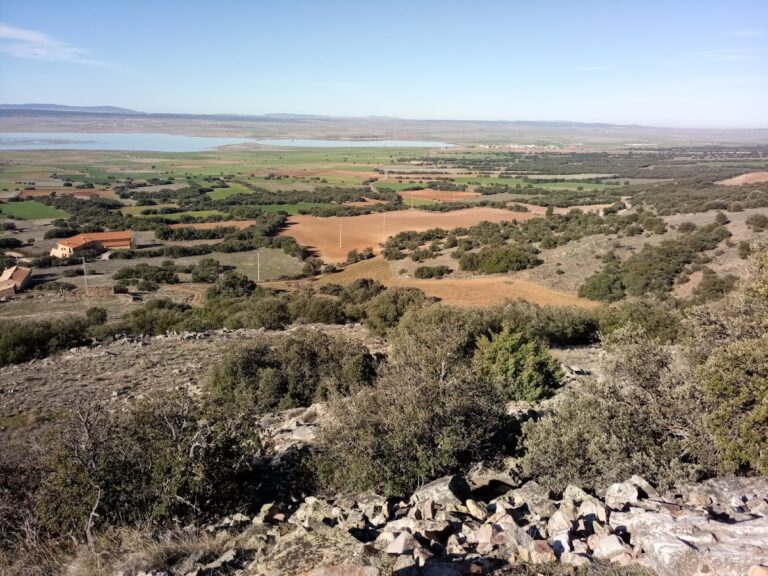
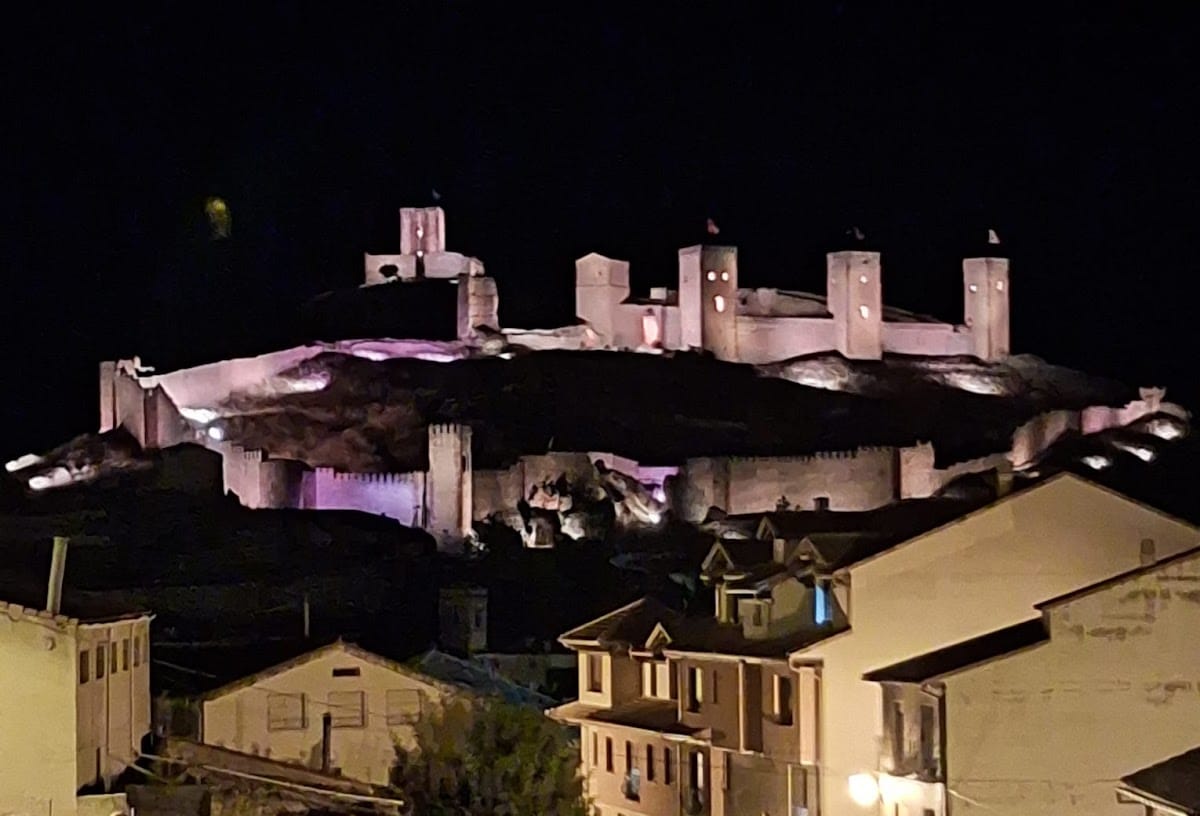
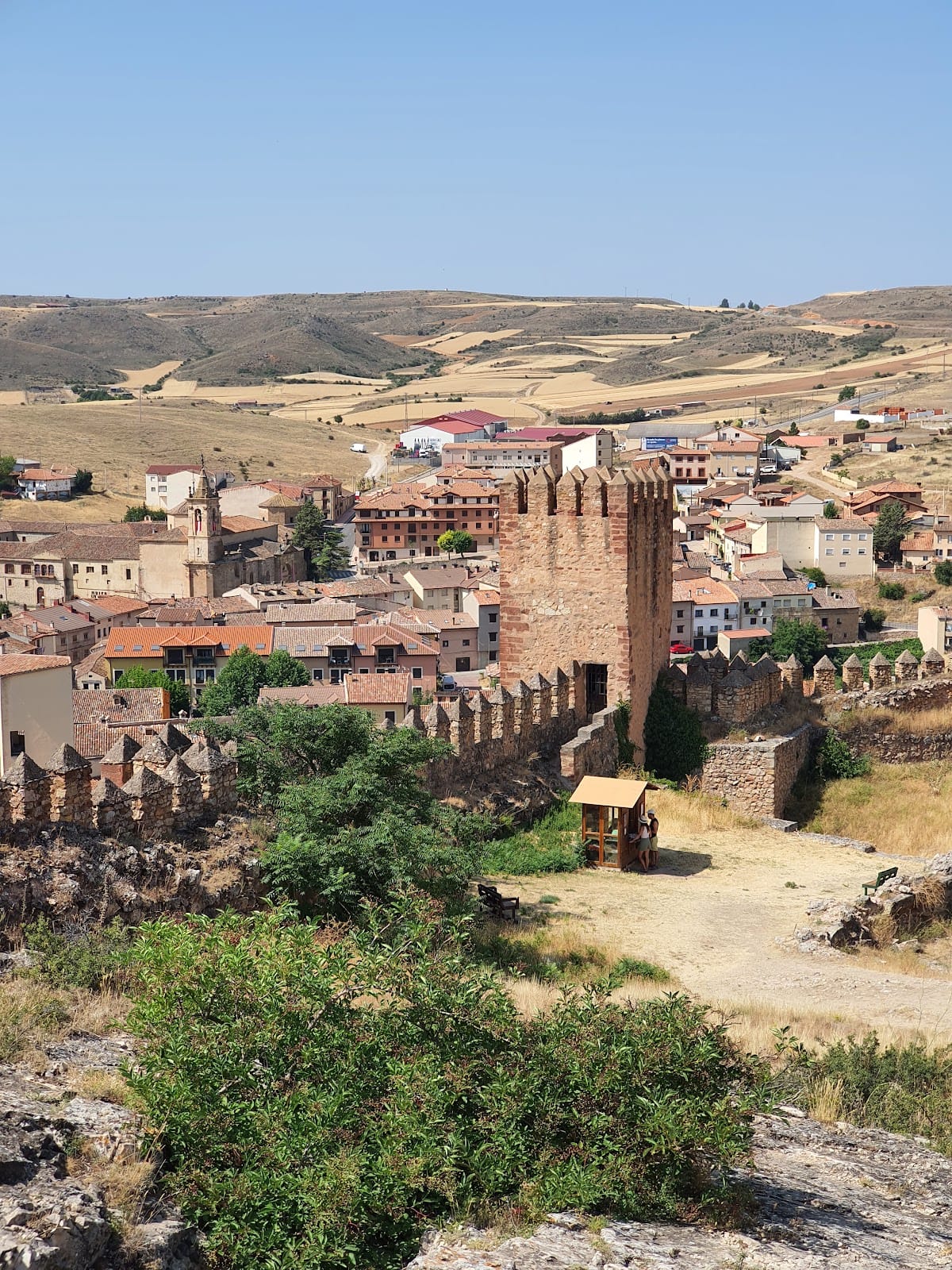
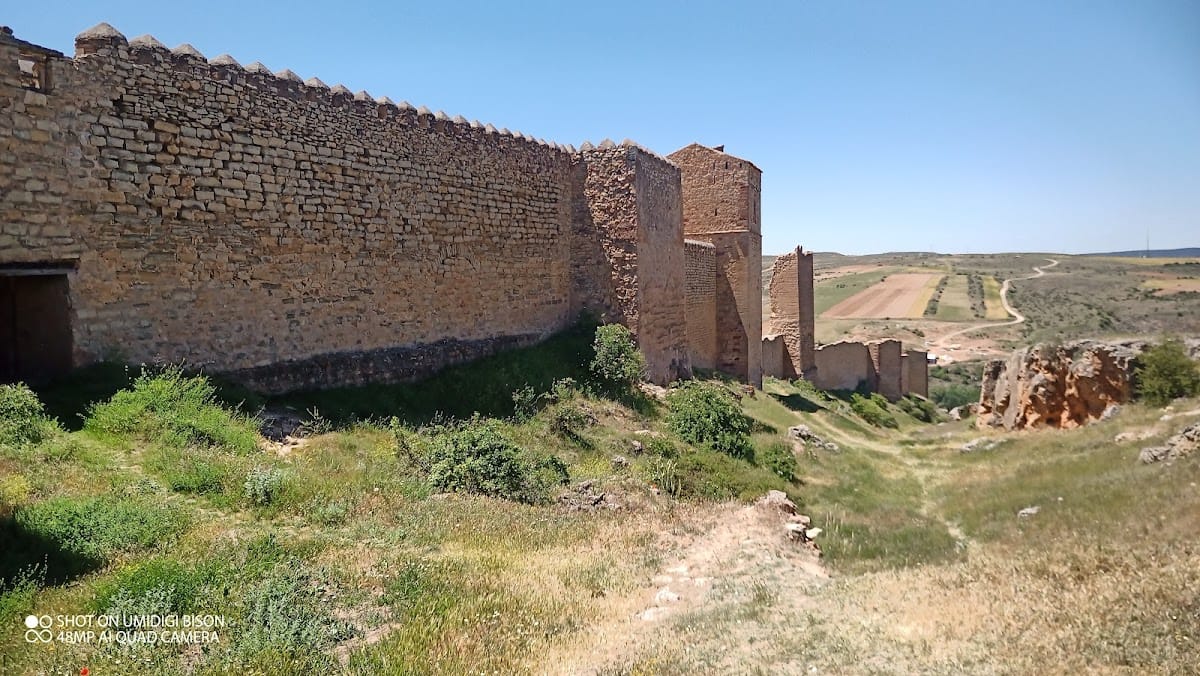
The Castle of Molina de Aragon is the largest surviving fortress in Guadalajara province. It occupies a hillside overlooking the Gallo River valley and consists of two main sections: an outer bailey, known as the albacara, and an inner castle. The outer enclosure measures roughly 80 by 40 meters and is surrounded by crenellated walls with several defensive towers.
The outer walls feature five principal gates: the Traitor’s Gate to the north, the Horses’ Gate to the south, the Field Gate to the east, and the Clock Tower and Hogalobos gates to the west. Additional gates once existed in the medieval city walls, including Medinaceli, Baños, Valencia, and Puente gates. The main entrance to the outer enclosure is marked by a semicircular arch flanked by two towers.
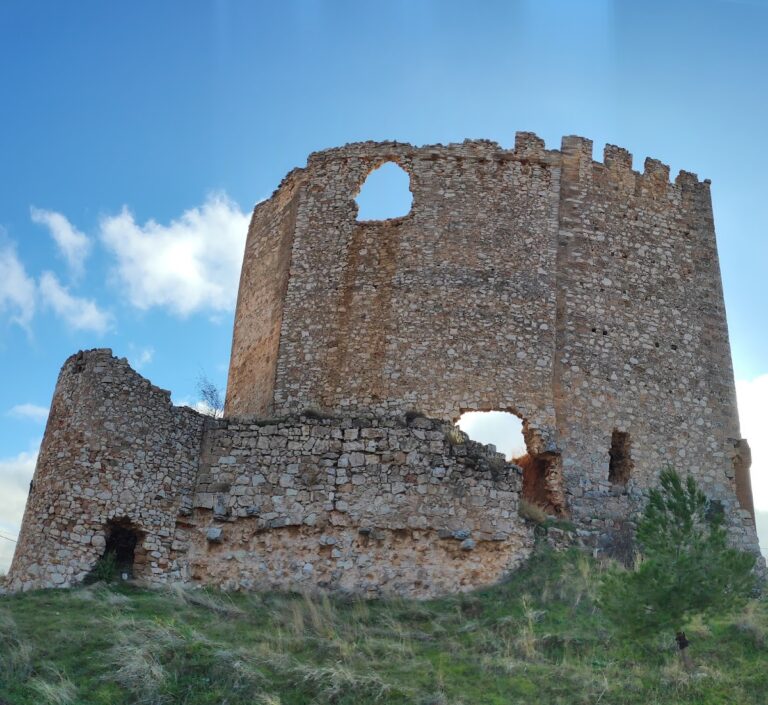
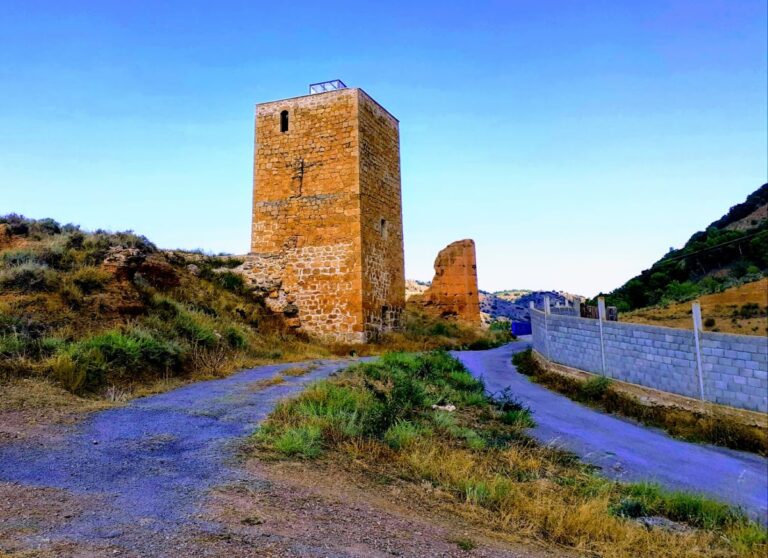
Originally, the inner castle had eight towers. Today, two towers have been lost, two remain in ruins, and four are either well preserved or restored. These towers are connected by a battlemented wall-walk, called an adarve, which allowed defenders to move along the walls. Notable towers include the Veladores Tower in the southwest, the central Arms Tower, the Keep or Doña Blanca’s Tower in the southeast, and the Covered or Knights’ Tower on the northern wall.
Stone mason marks have been identified on the western walls of both enclosures. These marks consist of 46 signs of 16 different types, found on the exterior of the outer enclosure and on both sides of the inner enclosure walls. The castle’s construction reflects the Romanesque style established during the 12th-century reconstruction ordered by Alfonso I.
Within or adjacent to the fortress complex stands the Church of Santa María del Collado, which forms part of the site’s historical fabric. Today, the castle remains in a state of consolidated ruin but retains much of its original layout and defensive features. It is accessible to visitors by prior arrangement.
Nearby sites