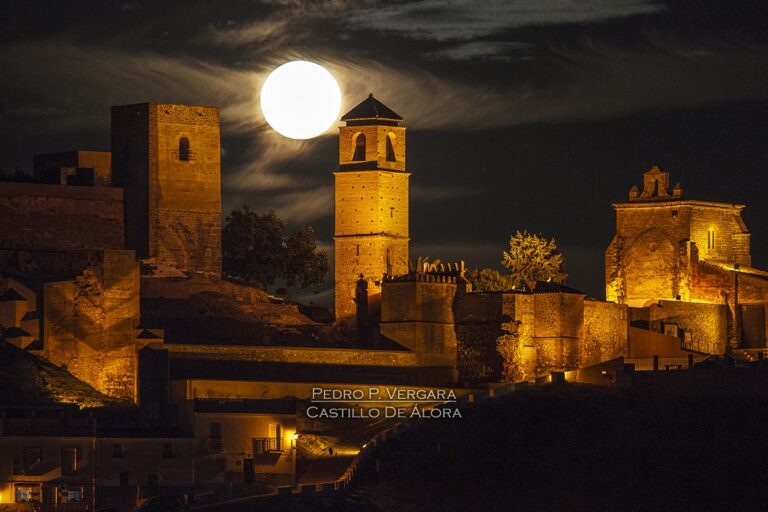
Castle of Gibralfaro: A Historic Fortress in Málaga, Spain



Visitor Information
Google Rating: 4.5
Popularity: High
Google Maps: View on Google Maps
Official Website: alcazabaygibralfaro.malaga.eu
Country: Spain
Civilization: Unclassified
Remains: Military

History
The Castle of Gibralfaro stands on a hill in the city of Málaga, Spain. Its origins trace back to the Phoenicians, an ancient seafaring civilization, who initially established a fortified enclosure on the site. This early construction included a lighthouse, which inspired the hill’s name, derived from the Arabic “Jbel-Faro,” meaning “mountain of the lighthouse.”
In the 10th century, Abd ar-Rahman III, a ruler of the Umayyad Caliphate in Al-Andalus, transformed the area’s pre-Roman ruins into a formidable fortress. Centuries later, in 1340, King Yusuf I of the Nasrid dynasty expanded the fortress into a more complex alcázar—a fortified palace that served both defensive and residential purposes. This development enhanced the castle’s role as a military stronghold in the region.
During the summer of 1487, the castle endured a prolonged siege by the Catholic Monarchs, Ferdinand and Isabella. The monarchs ultimately captured the fortress, marking the end of Muslim rule in Málaga. Following the conquest, King Ferdinand used the castle as a residence, while Queen Isabella chose to reside elsewhere in the city. Throughout its history, the fortress was designed primarily to house soldiers and defend the adjoining Alcazaba, especially during times of attack, earning a reputation as one of the most resilient fortifications on the Iberian Peninsula.
In recognition of its cultural and historic importance, the Castle of Gibralfaro was officially designated a Historic-Artistic Monument in 1931. Later, in 1985, it gained the status of Bien de Interés Cultural, emphasizing its value as a protected cultural asset.
Remains
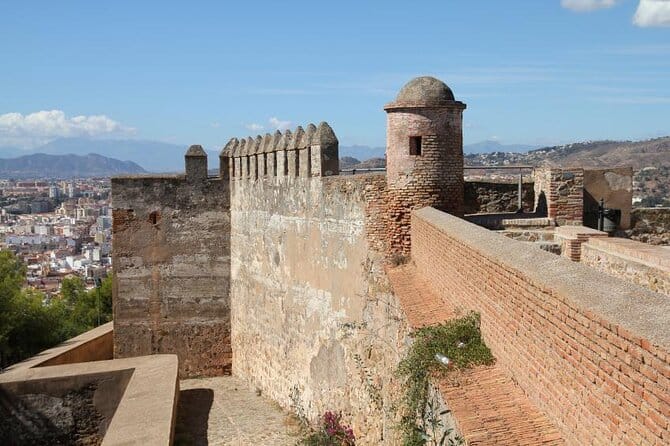
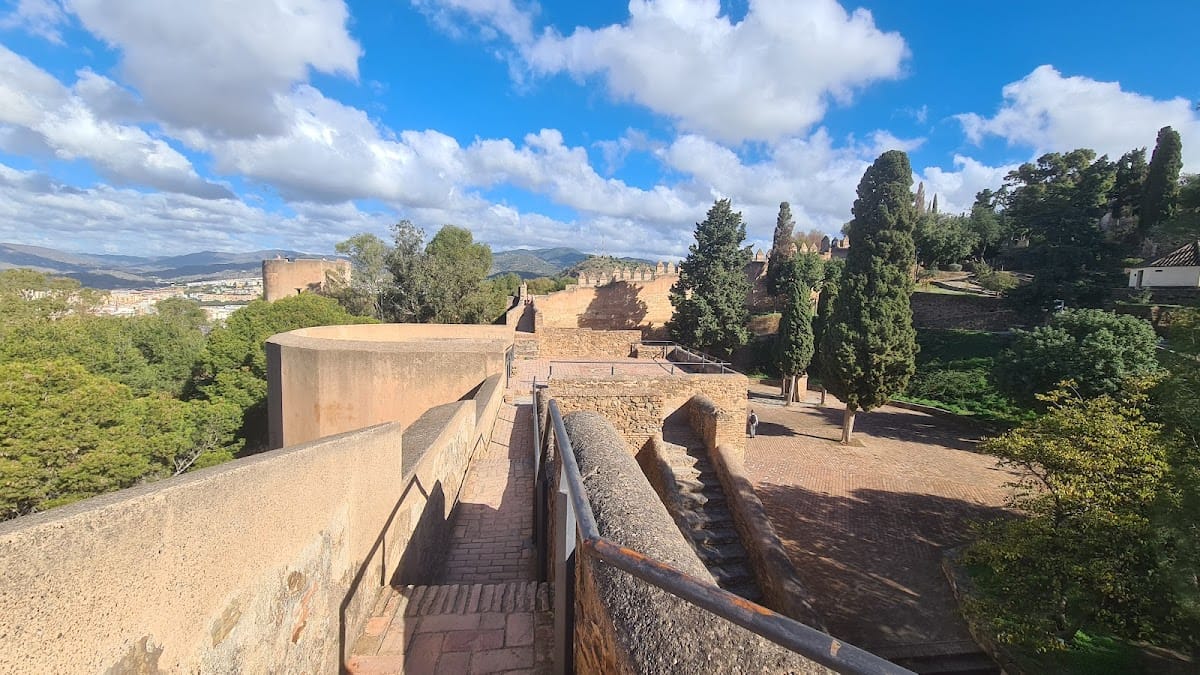
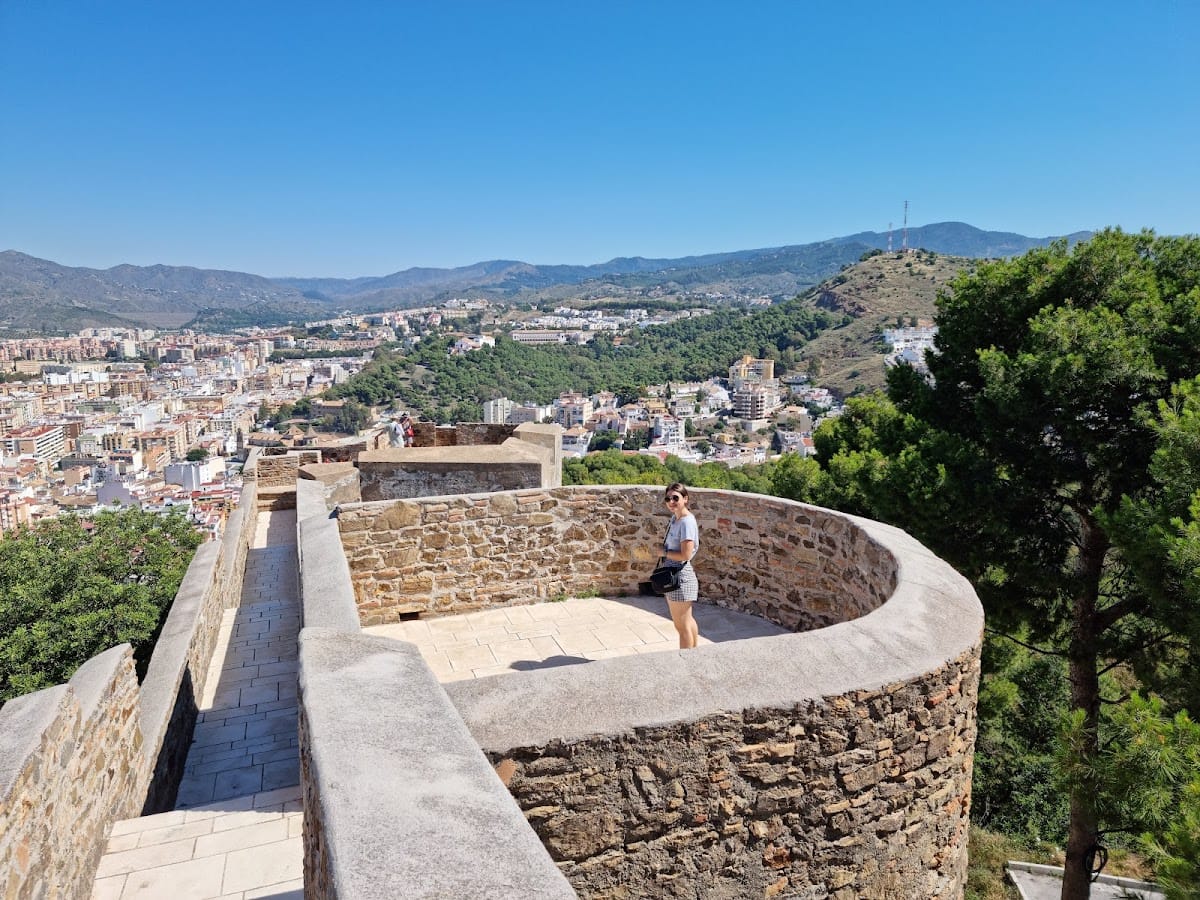
The Castle of Gibralfaro is perched between approximately 121 and 132 meters above sea level on a strategic hill that offers sweeping views of Málaga, the Rif mountains in Africa, and the Strait of Gibraltar on clear days. The fortress is defined by two concentric rings of walls punctuated by eight towers. These defensive walls form a protective barrier with the outer wall linked to the nearby Alcazaba via an irregularly shaped, zigzagging wall called the coracha. The inner wall includes a continuous patrol path encircling the fortress, allowing guards to monitor the entire perimeter effectively.
The fortress itself is divided into two main areas. The higher section comprises the main courtyard hosting the 17-meter tall main tower, known as the torre Mayor. Within this elevated zone lies the Pozo de Airón, a well carved directly into rock that reaches a depth of 40 meters and is attributed to Phoenician origins. This area also contained baths, which likely served the occupants of the castle. The lower section, sometimes referred to as the parade ground, was reserved for housing troops in barracks and keeping horses in stables.
One of the most prominent towers is the albarrana tower, or White Tower, facing northeast. This tower included several interior spaces such as cisterns (water storage tanks known as aljibes), rooms, and storage areas. The connectivity between this tower and the rest of the fortress enhanced defense and resource management during times of siege.
The castle features a passageway physically linking it to the adjoining Alcazaba. This connection allowed the fortress commander to retreat with family into the more fortified castle if the city or surrounding areas were under attack.
The castle’s defensive walls and towers have been preserved through the centuries well enough to allow modern-day exploration. Inside the site is a modern Interpretation Center housed within the former powder magazine, exhibiting various military uniforms and artifacts that reflect the history of the castle’s garrisons across different periods.
Nearby sites