Castle of Cofrentes: A Historic Fortress in Spain

Visitor Information
Google Rating: 4.3
Popularity: Low
Country: Spain
Civilization: Unclassified
Site type: Military
Remains: Castle

History
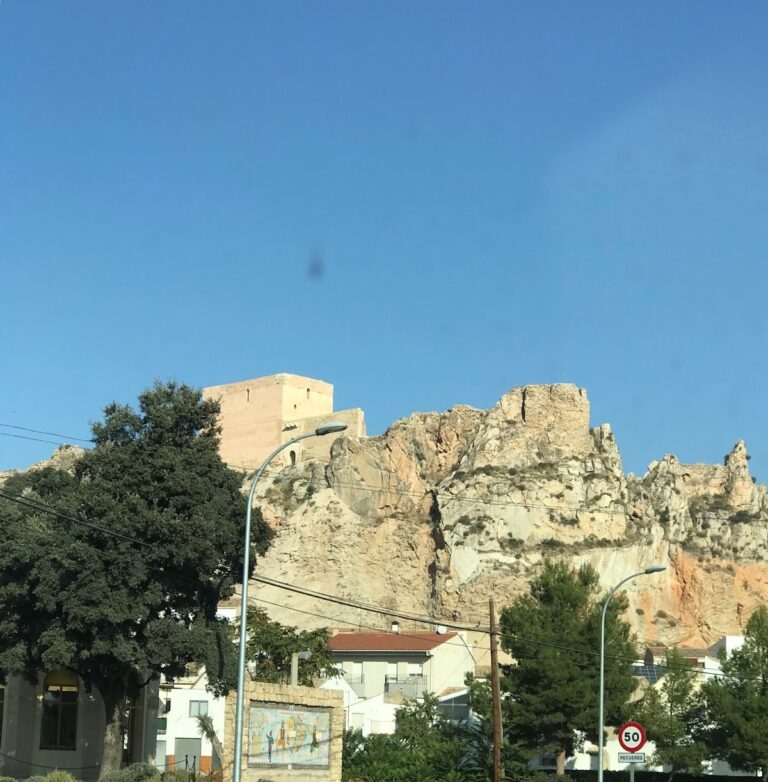
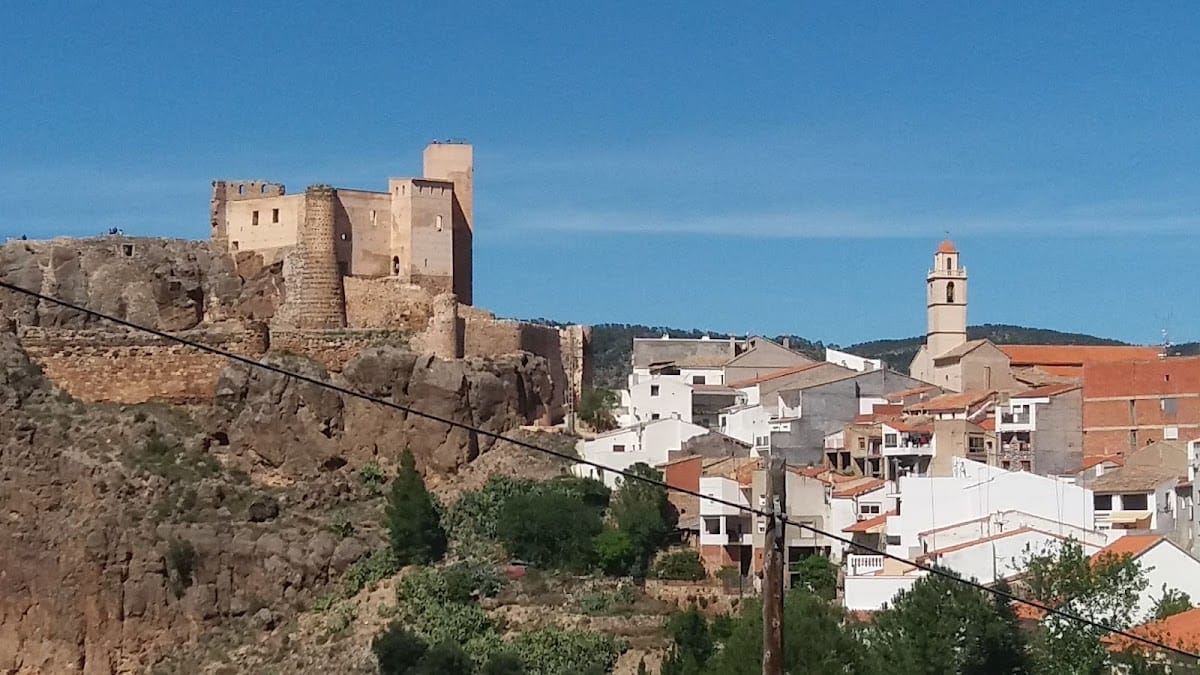
The Castle of Cofrentes stands in the municipality of Cofrentes, Spain, occupying a volcanic hill known as Cerro de Agrás. This fortress was originally built by Islamic builders during the 12th century, with construction starting sometime between 1147 and 1172. Its position above the meeting point of the Júcar and Cabriel rivers made it a strategic stronghold in the region.
Archaeological evidence shows that the site experienced human activity long before the castle’s construction. Ceramic fragments discovered here date back to the Bronze Age and extend through the Iberian and Roman periods, illustrating a history of continuous occupation. The fortress first functioned as a defensive barrier along the Júcar river route under Muslim control.
In the late 13th century, the castle changed hands as part of the political arrangements between emerging Christian kingdoms. Following the Treaty of Campillo in 1281, Alfonso X of Castile and Pedro III of Aragon agreed on borders that resulted in the castle becoming part of the Kingdom of Valencia under Castilian authority. This marked an important shift in its role as a frontier fortress.
During the 16th and 17th centuries, the Castle of Cofrentes underwent a transformation from purely military use to serving as a palace residence. This change in function reflects broader trends in fortifications adapting to peacetime needs and residential comfort. In the 18th century, the castle witnessed conflict again during the War of Spanish Succession. It was seized by Bourbon forces loyal to Philip V, opposing local factions that supported Archduke Charles.
Later, the castle was caught up in struggles during the French War of Independence and the Carlist Wars, which inflicted severe damage and accelerated its decline. By the early 20th century, the fortress had fallen into ruins. Recognizing its cultural and historical importance, Spanish authorities declared the site a Bien de Interés Cultural (a category of cultural heritage protection) in 2001.
Remains
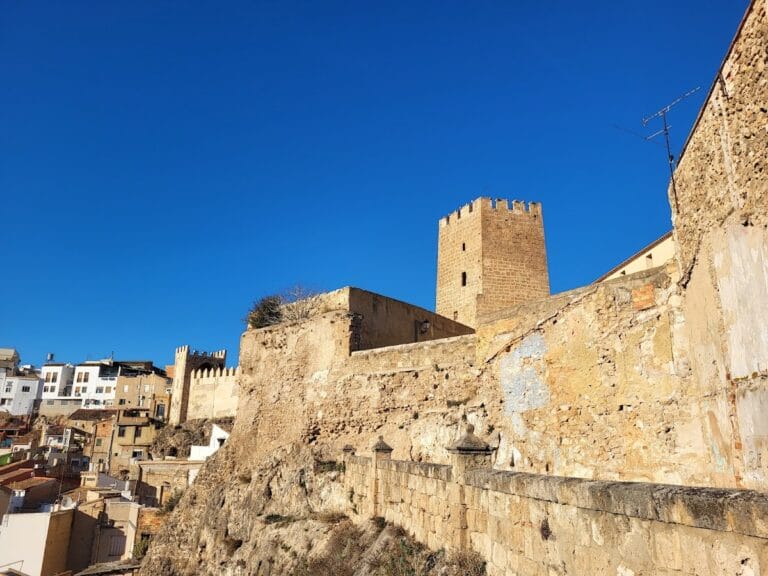
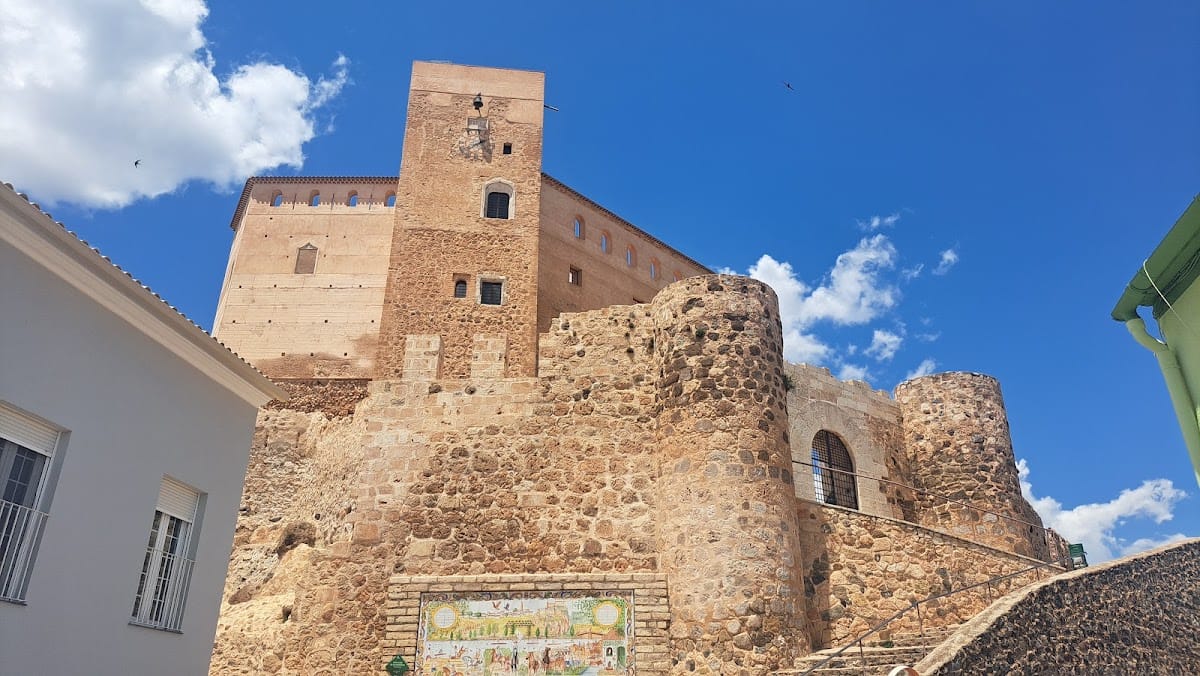
The castle’s layout covers an area roughly rectangular in shape, measuring about 800 by 600 meters. It is built with hard stone characteristic of its defensive purpose, using masonry techniques suited to military architecture. The fortress includes two main sections: a lower courtyard known as an albacar, which historically served as an enclosure for livestock, and an upper enclosure where the main buildings are located.
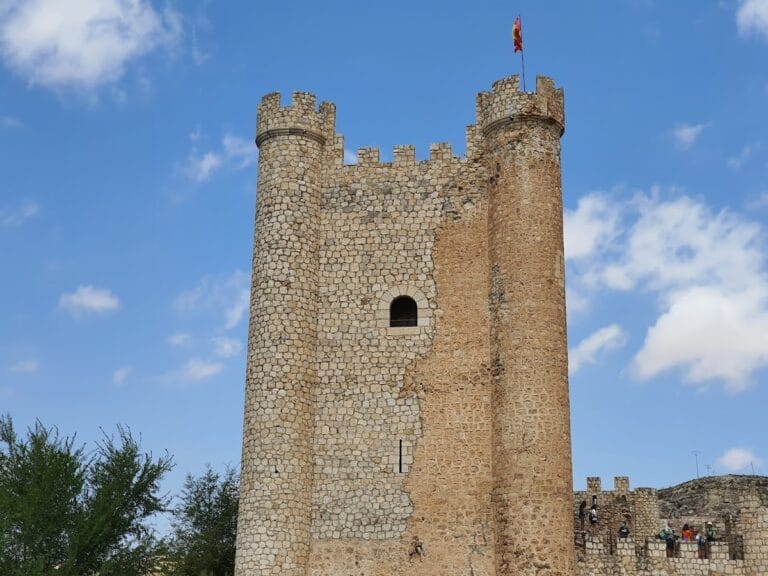
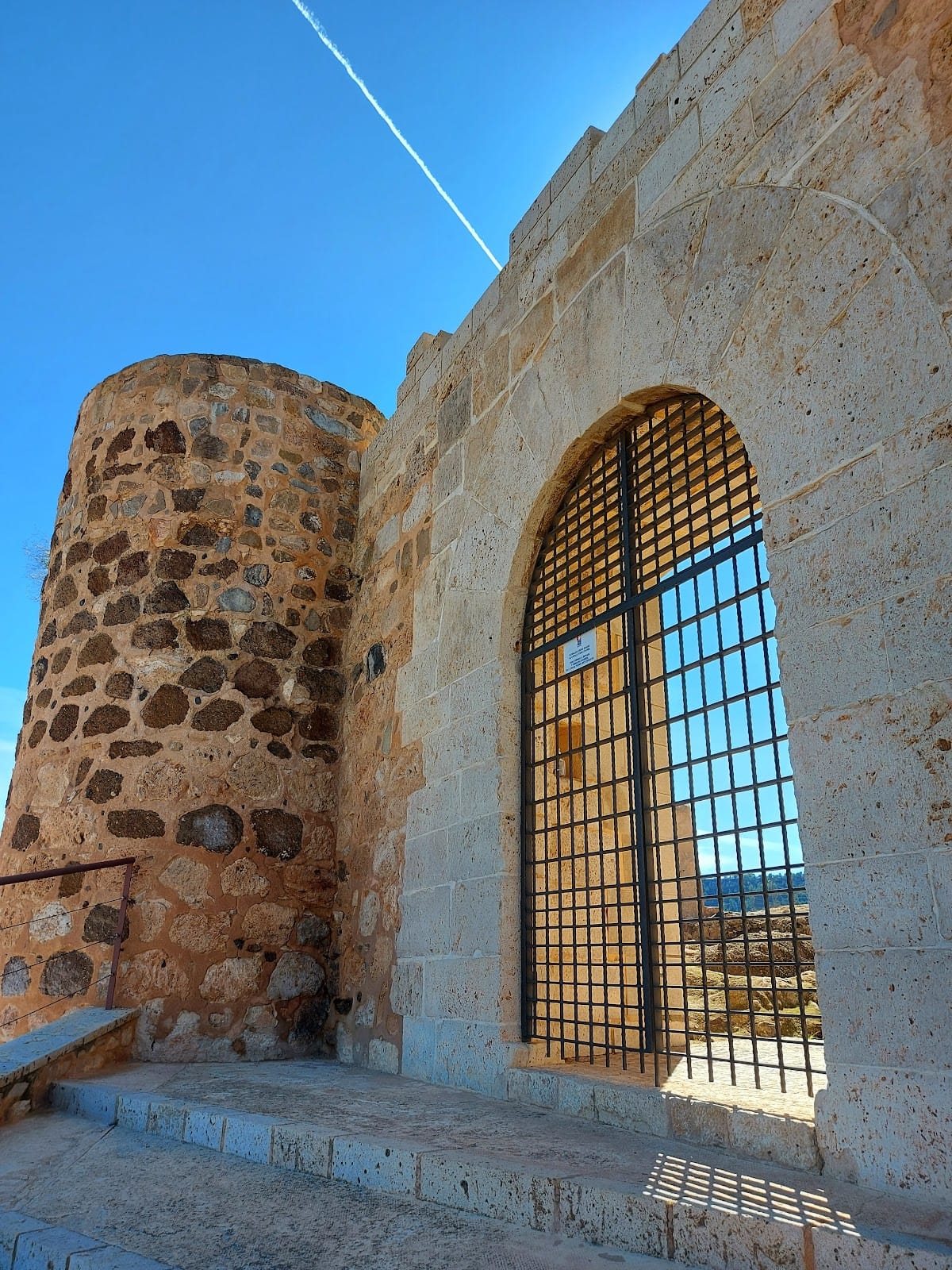
Access to the fortified area is gained through a ramp leading to a prominent gateway. This entrance is reinforced by two semicircular towers constructed from roughly hewn small ashlar stones, a form of finely dressed square stone blocks. The gate itself showcases masonry made from carefully cut blocks arranged with a semicircular arch, demonstrating skilled craftsmanship.
In addition to the gate towers, four other towers stand within the complex—two positioned toward the northeast and two to the southwest—providing flanking defense. At the heart of the upper enclosure lies the keep, or Torre del Homenaje, a square-shaped tower rising across four levels. This stronghold includes a distinctive window framed by a slightly pointed Gothic arch, featuring a unique keystone notch that creates an upward-pointing vertex.
A clock installed on the keep is a notable element, with Valencian Heritage authorities dating it to the 19th century, although some sources suggest it could originate from the 16th century. This clock underwent restoration in the early 21st century, preserving its presence on the tower.
Surrounding the fortress is a defensive wall, parts of which have deteriorated over time. One of the surviving structures is a tall barbican tower, originally constructed to safeguard the entrance by providing an additional layer of defense. The castle remains a visible reminder of the complex military and political history that shaped the region across centuries.
Nearby sites