Castle of Castelnuovo Magra: A Medieval Fortress in Italy



Visitor Information
Google Rating: 4.5
Popularity: Low
Google Maps: View on Google Maps
Country: Italy
Civilization: Unclassified
Remains: Military

History
The Castle of Castelnuovo Magra is located in the municipality of Castelnuovo Magra in Italy. It was originally built under the direction of the medieval Christian bishops overseeing the diocese of Luni, serving both residential and defensive purposes.
The first known fortification at the site dates back to the early 13th century, established by Bishop Gualtiero II simultaneously with the founding of Castelnuovo Magra itself. This initial defensive post laid the groundwork for subsequent developments, aligning the castle’s role with the growing ecclesiastical and communal organization of the region.
By the late 13th century, Bishop Enrico da Fucecchio initiated the construction of a more substantial castle-palace complex as a residence and stronghold for the bishops of Luni. This phase marked the castle’s transformation into a significant center of both administration and defense within the diocese.
During the first half of the 15th century, the castle experienced restorative work under the influence of Florentine control, specifically the Medici family who governed the territory at that time. Notably, in 1468, the quadrangular tower received sandstone corbels, strengthening its structure and symbolizing the period’s architectural renewal.
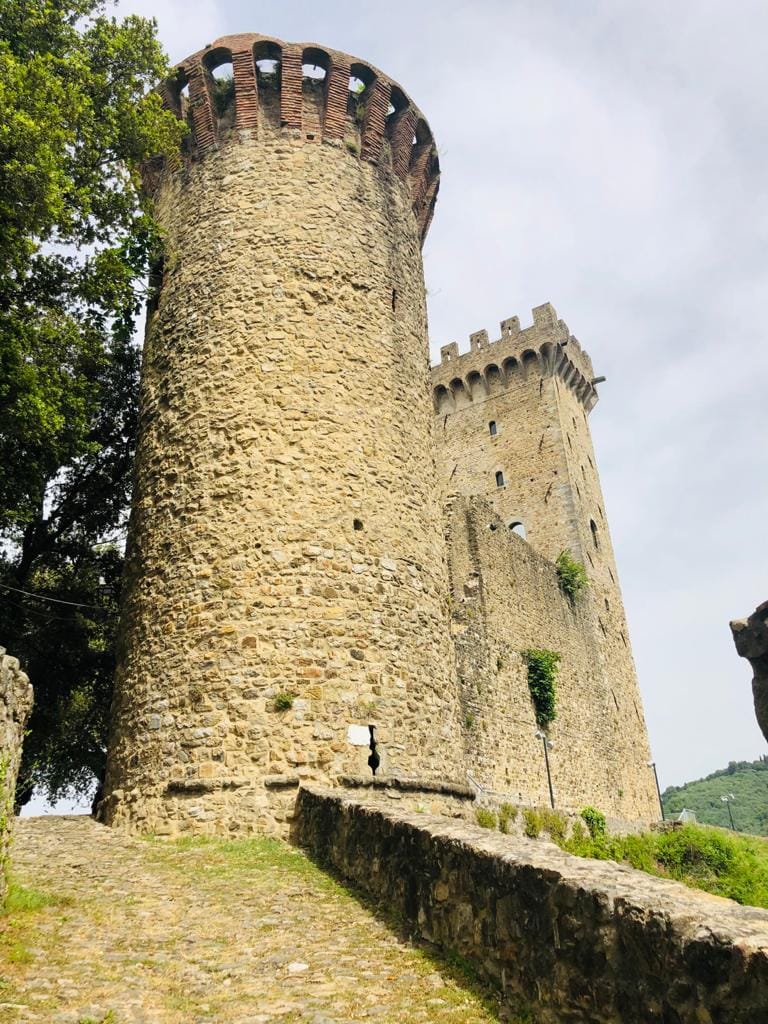
The 16th century brought further military enhancements when the Republic of Genoa added a second, circular tower designed for ammunition storage. This addition, featuring brick corbels, reflected the evolving defensive needs of the castle within the context of Genoese regional power.
Over time, the castle also functioned as a complex housing representative halls, quarters for troops, cellars, a millstone, and an internal chapel, illustrating its multifaceted role in both governance and defense. However, in subsequent centuries, the structure fell into disuse and was dismantled. Stones from the ruined castle were repurposed locally, notably for constructing the choir section of the parish church of Santa Maria Maddalena in the 19th century.
Today, the castle’s legacy is preserved through the remaining structures that continue to testify to its historical significance in the region.
Remains
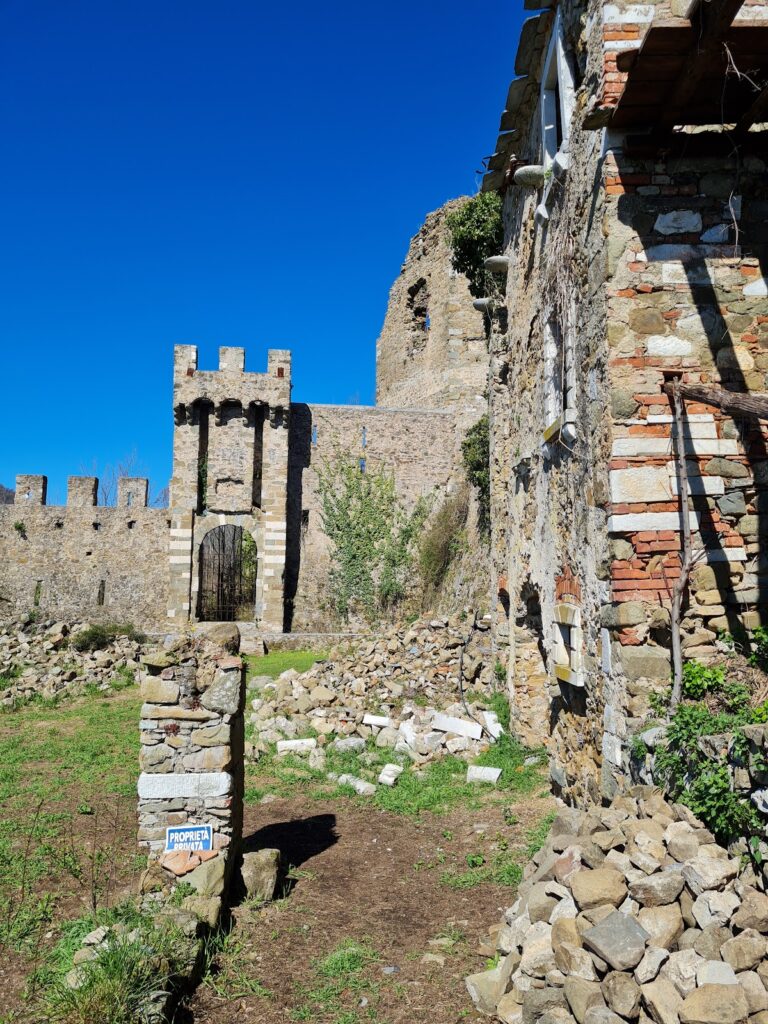
The Castle of Castelnuovo Magra occupies a prominent position within the historic center of the town, specifically in Piazza Querciola, part of an area known as the Borghetto. The surviving castle elements display a combination of sandstone and brick masonry, reflecting the building materials used during different construction phases.
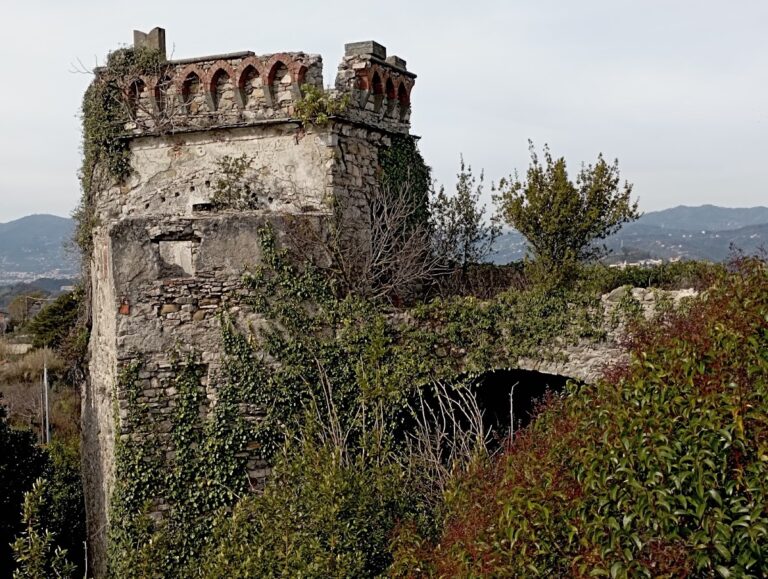
Two main towers remain visible. The first is a quadrangular tower, dating primarily from the late Middle Ages but notably refurbished in the 15th century during Florentine rule. This tower received sandstone corbels in 1468—these are projecting stones that support parapets or eaves, contributing both to structural stability and defensive functionality. The quadrangular tower retains much of its medieval character and stands prominently over the site.
The second tower, built in the 16th century by the Republic of Genoa, is circular and served as an ammunition depot. Its distinctive brick corbels differentiate it from the earlier sandstone features and highlight the practical adaptations introduced during Genoese control. Both towers form important visible markers of the castle’s successive defensive modifications.
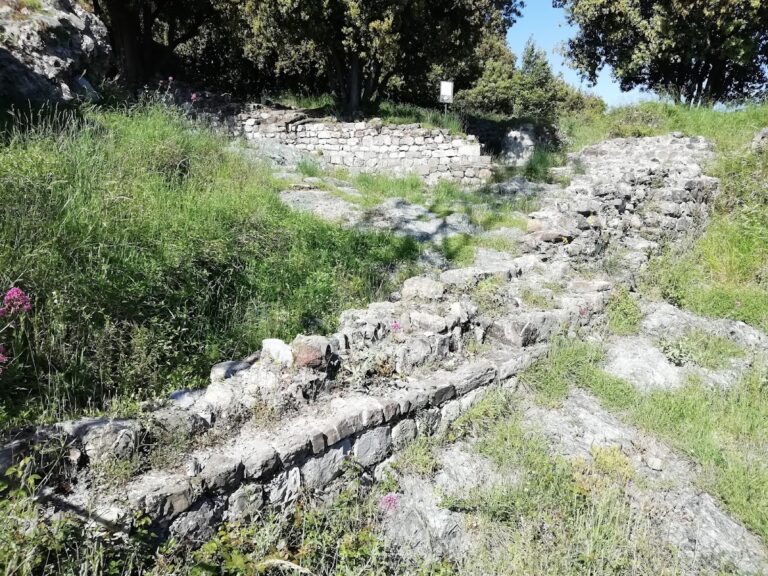
Fragments of the castle’s perimeter walls also survive, providing partial insight into the original extent and layout of the fortification. Although the castle has been partially dismantled over the centuries, these remnants allow a glimpse into its medieval footprint.
Within the original complex, there were spaces designated for official representation, housing troops, food storage cellars, a millstone used likely for grain processing, and a private chapel. While these interior features have not survived intact, historical records confirm their existence, showing the castle was as much a residence and administrative center as a military stronghold.
Today, the large quadrangular tower, sometimes referred to as the turris magna, remains accessible and has been adapted for cultural use, bridging the castle’s medieval past with contemporary community activities.
Nearby sites