Castle of Atienza: A Historic Fortress in Spain
Visitor Information
Google Rating: 4.5
Popularity: Medium
Google Maps: View on Google Maps
Official Website: cultura.castillalamancha.es
Country: Spain
Civilization: Unclassified
Remains: Military

History
The Castle of Atienza stands in the town of Atienza, located in present-day Spain. Its origins trace back to the Muslim period, having been built between the 11th and 12th centuries atop an earlier site fortified by Roman and Visigoth peoples. This location had been strategically important for centuries due to its naturally defensible rocky promontory.
Before the castle’s Muslim construction, the Celtiberian inhabitants knew the place as Thytia, using it as a stronghold against Roman expansion. Later, as part of the Visigothic domain, it maintained its significance until Muslim rulers established a fortress here. During the early Reconquista—Christian efforts to reclaim Iberian lands—the castle frequently exchanged hands. Alfonso III briefly seized Atienza between 870 and 874, but control soon reverted to Muslim forces. Ultimately, Alfonso VI secured the fortress in 1085, ensuring Christian dominance in the region.
In 1149, Alfonso VII granted Atienza an extensive communal territory, reflecting its growing importance as a settlement. The castle saw significant enlargement under Alfonso VIII, who added a second, outer wall surrounding the expanded town, including new neighborhoods such as Puertacaballos and the Jewish quarter. Alfonso VIII’s connection to Atienza was personal; his childhood rescue by the town’s inhabitants inspired a long-standing festival known as the Caballada de Atienza, which commemorates that event.
The 15th century brought conflict and damage to both the castle and the town. Navarrese troops clashed with forces loyal to John II of Castile, who, aided by the noble Álvaro de Luna, besieged and retook the fortress. Around this time, in 1487, Garcí Bravo de Medrano was appointed the castle’s perpetual alcaide, or castellan, underscoring its continued military and administrative role.
In the centuries that followed, the castle’s function evolved. It was used as a prison for nobles and, for a period, served as a residence for King Philip V. However, by 1811, the structure began to decline. Later damage occurred during the Peninsular War and again in the Spanish Civil War. Recognizing its historical value, the castle was declared a National Monument on June 3, 1931.
Remains
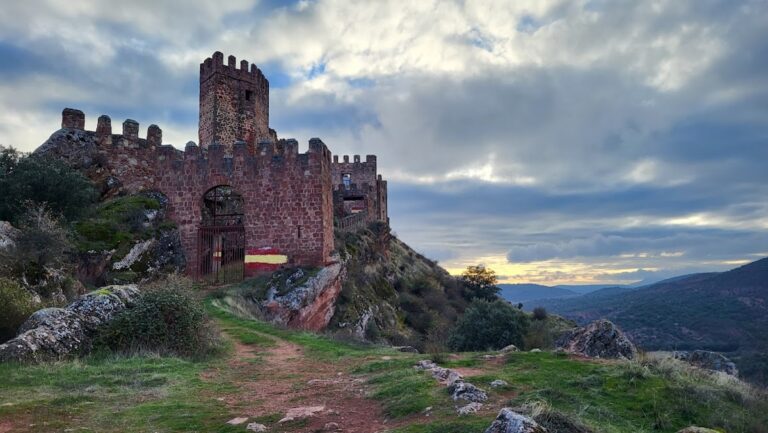
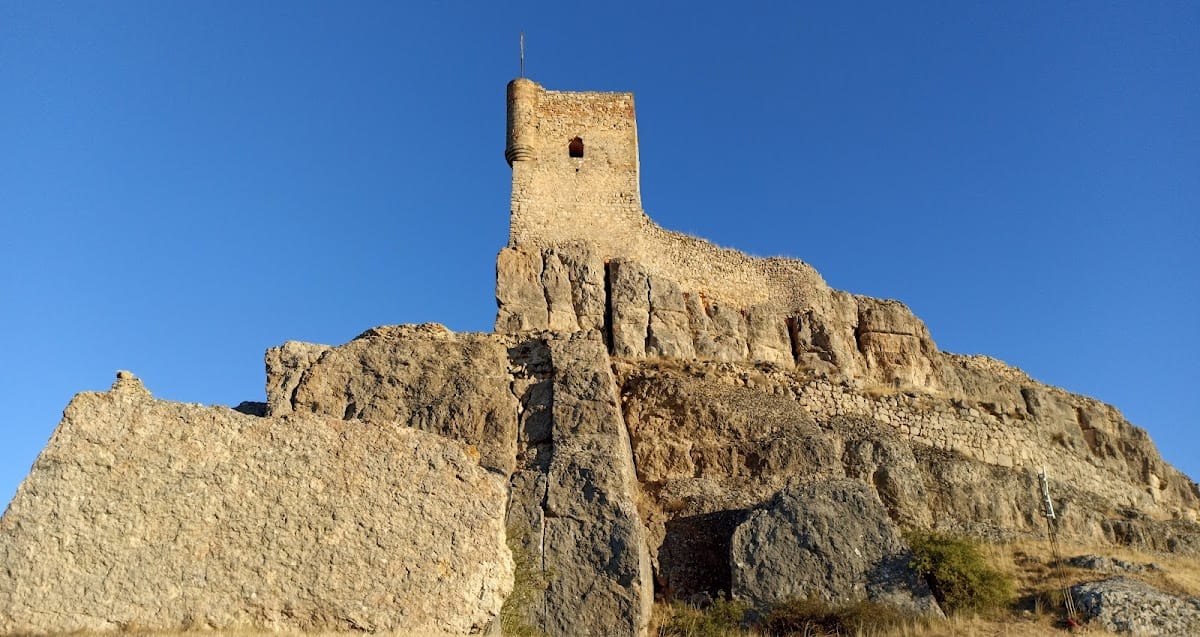
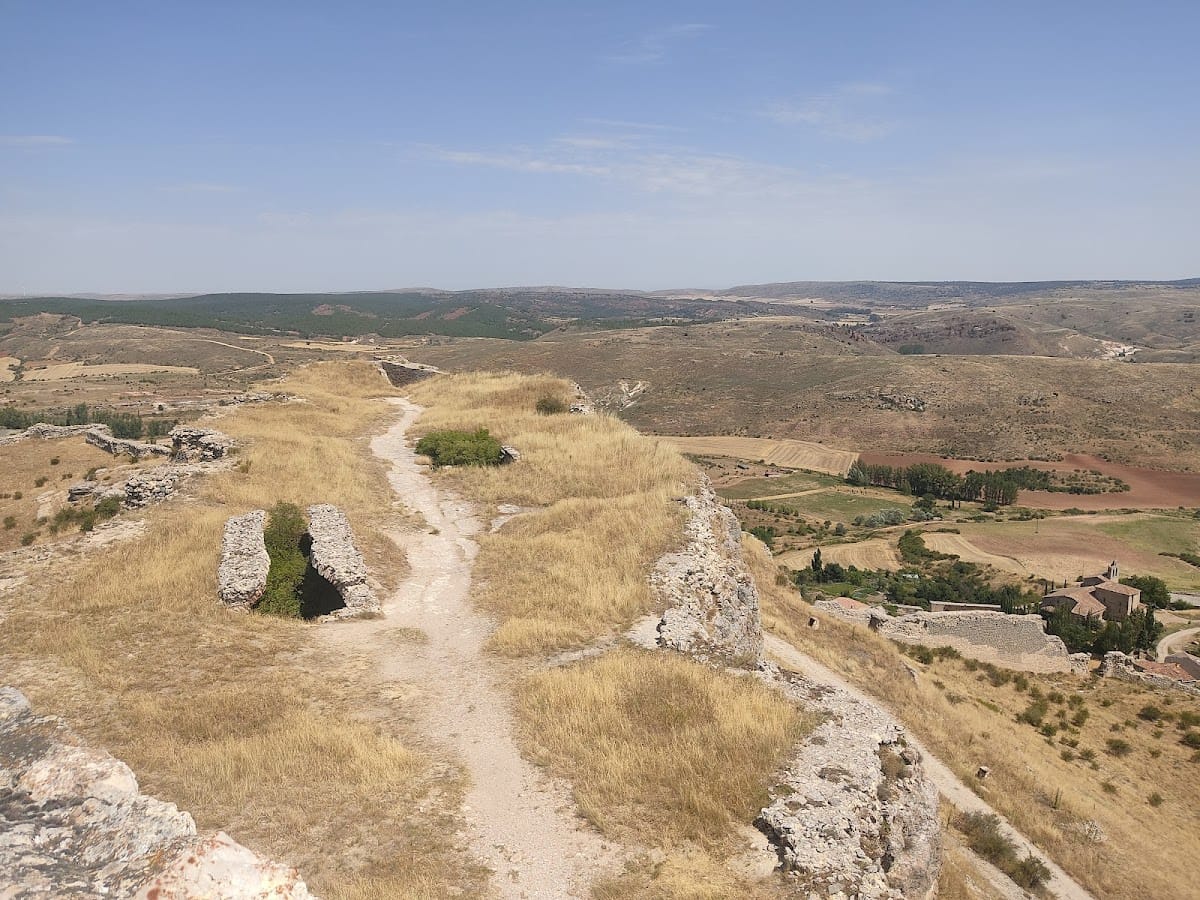
The Castle of Atienza crowns a narrow, elongated rocky outcrop, a choice location offering natural defense and visibility. The fortress retains visible remains of both its original Muslim alcazaba—a citadel or fortified enclosure—and subsequent Christian expansions. The walls follow the irregular terrain and form a double enclosure: an inner wall safeguarding the initial medieval settlement, and an outer wall, constructed during the 12th and 13th centuries, which enclosed a broader area including additional neighborhoods.
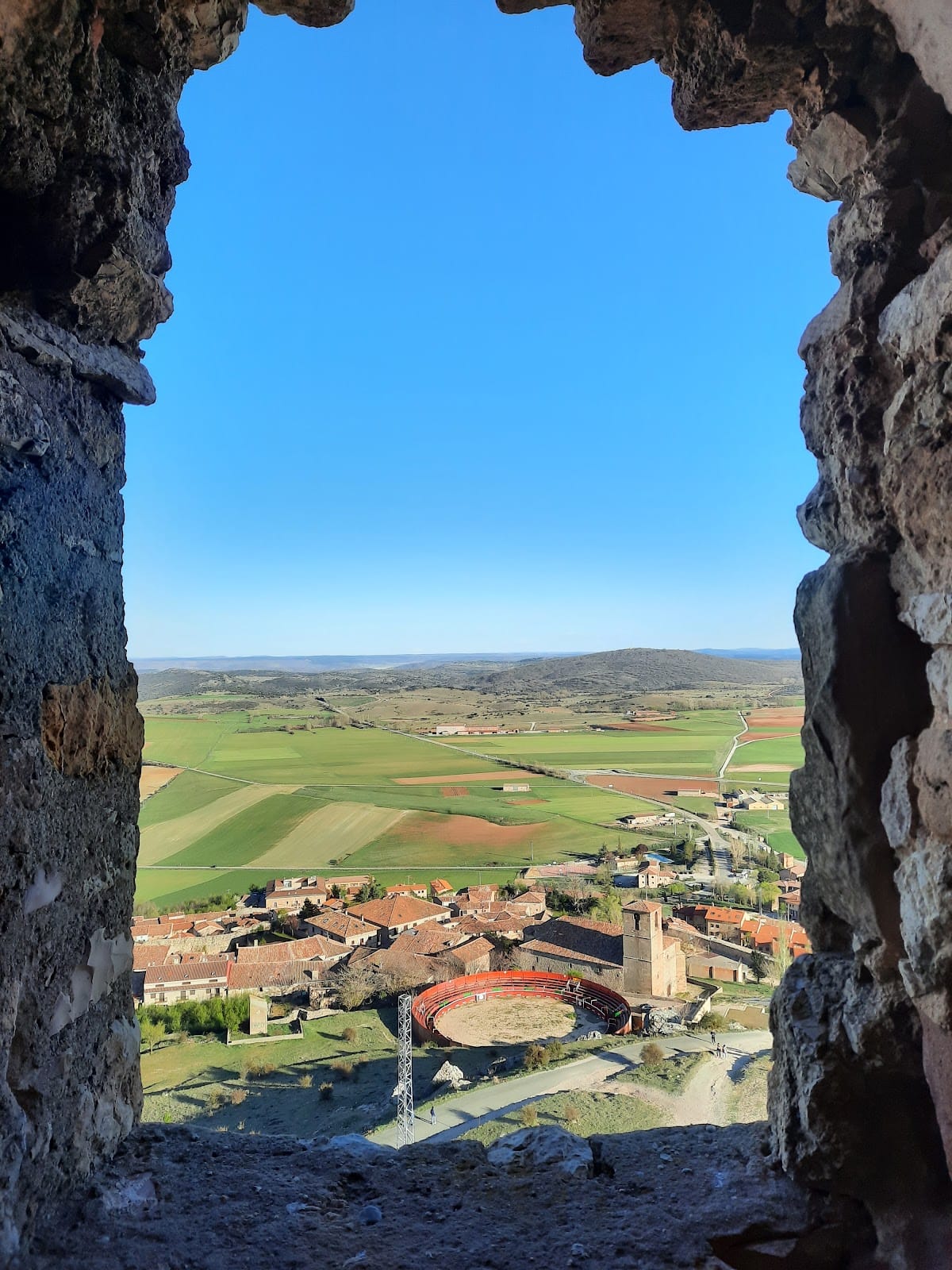
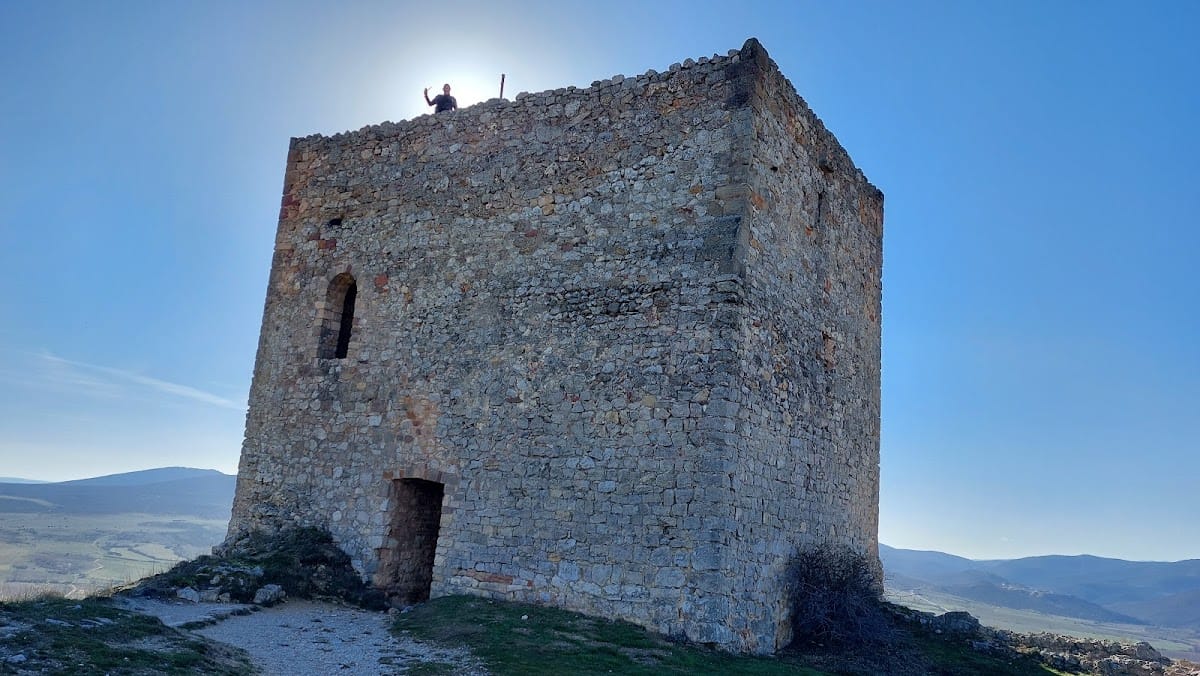
Central to the castle’s design are two large cisterns, carved into the rock and positioned to collect rainwater, demonstrating essential planning for sustaining the fortress during sieges. The main defensive tower, or keep, stands at the southernmost corner. This tower has a straightforward square layout with a ground-level entrance leading into interior rooms and a concealed staircase built within the thick walls. The staircase ascends to upper floors and a terrace that offers expansive views of the surrounding lands. Of particular note is a projecting bartizan—an overhanging turret—uniquely located at the tower’s southern corner, uncommon among similar fortifications in the area.
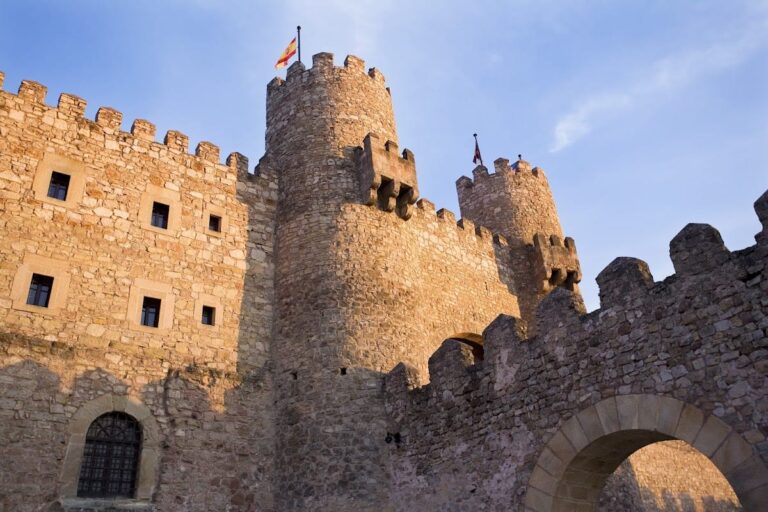
The principal entrance to the castle lies between two square towers and is accessed via a wall walk called a chemin de ronde, which allowed defenders to move along the fortifications. The walls themselves are built from strong ashlar masonry using dressed stone blocks arranged carefully to provide both sturdiness and longevity. Throughout the fortification, multiple gates offer access, with the Arco Arrebatacapas or San Juan gate being the most prominent. This gate, dating from the 18th century, connects the town hall square to the medieval market square, known as Plaza del Trigo, and stands as a significant architectural feature within the town’s urban fabric.
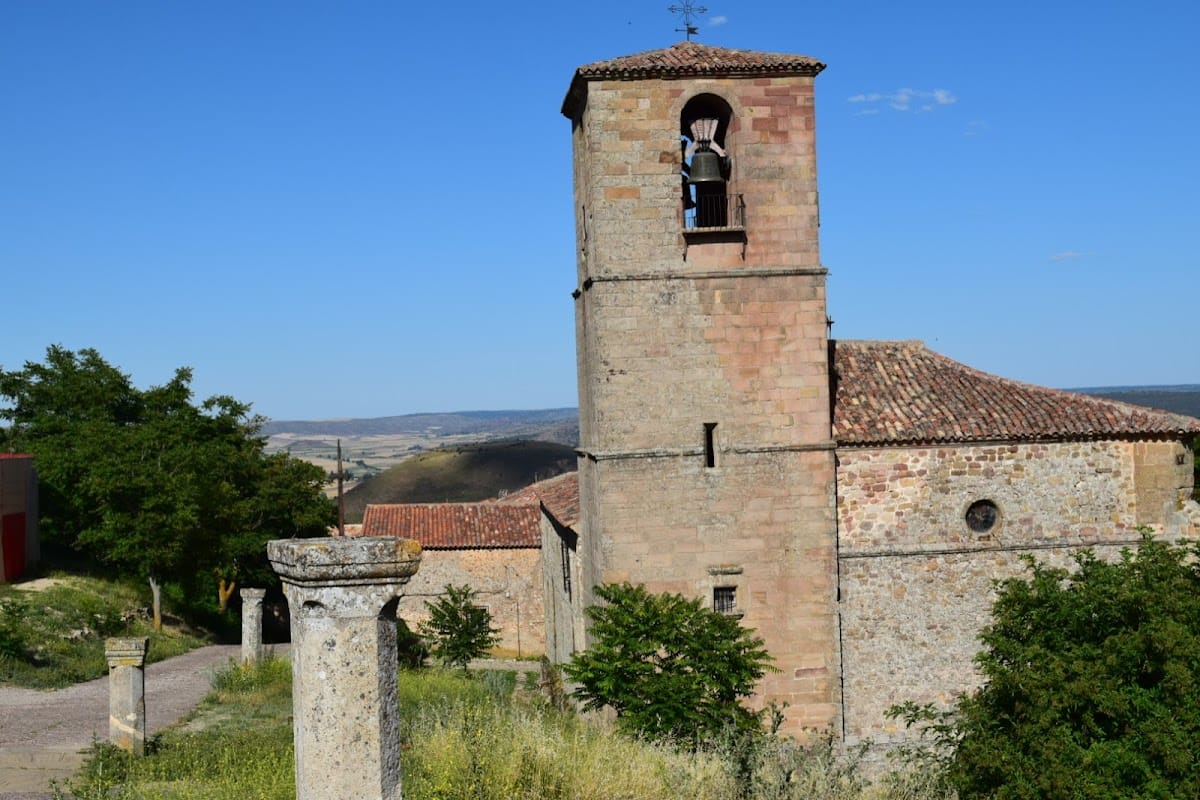
Within the inner enclosure, which measures roughly 130 meters in length by 30 meters in width, the main tower originally rose to four storeys. Historical evidence shows tunnels linking the castle with local churches, suggesting communication or escape routes. The keep’s upper floor contained a fireplace, indicating its use not only as a military bastion but also as a habitable space.
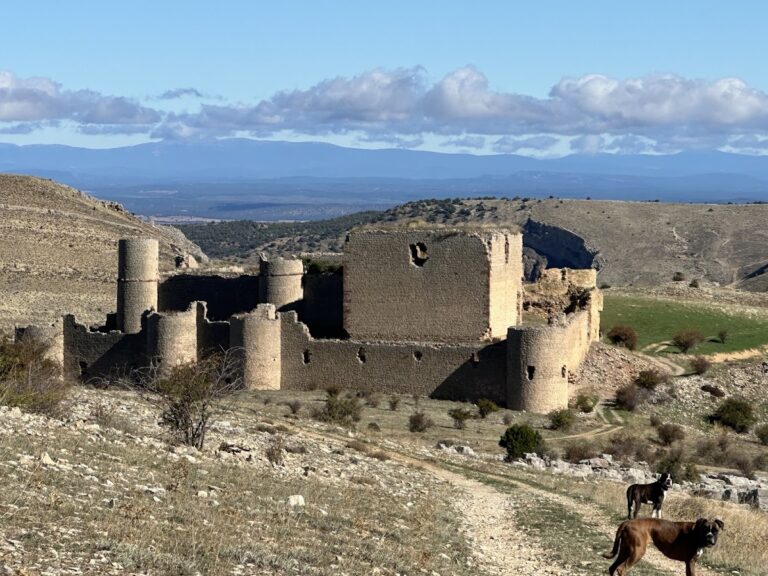
Today, although large sections of the outer walls and some accompanying towers remain visible both within the urban area and in the castle’s surroundings, the site is in a state of ruin. It is owned by the local municipality and remains unused due to its condition. Despite this, its visible ruins continue to reflect the complex history and layered architectural phases that the Castle of Atienza underwent through the centuries.