Castle Hauenstein: A Medieval Fortress in Seis am Schlern, Italy


Visitor Information
Google Rating: 4.5
Popularity: Low
Google Maps: View on Google Maps
Official Website: www.seiser-alm.it
Country: Italy
Civilization: Unclassified
Remains: Military

History
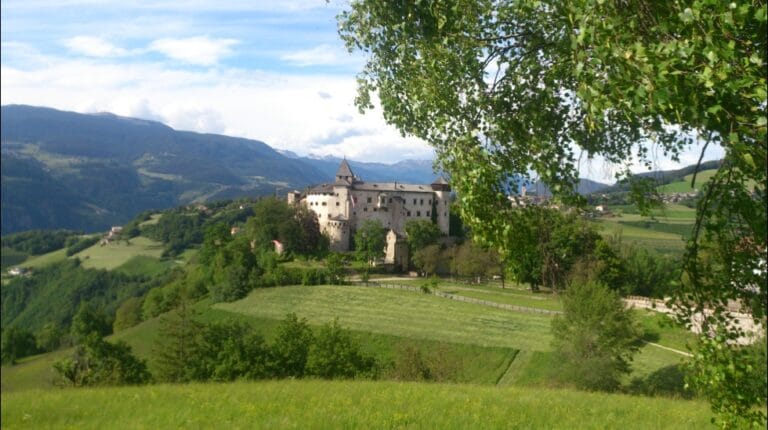
Castle Hauenstein, also known as Castelvecchio, stands above the village of Seis am Schlern in what is today Italy. This medieval hilltop fortress was constructed during the 12th century by the local noble family known as the lords of Hauenstein.
The first known mention of Castle Hauenstein dates to 1186, marking it as a significant landmark in the region during the Middle Ages. Over the following centuries, the castle expanded, particularly through the 15th and 16th centuries, as it adjusted to the evolving needs and status of its owners. During this later period, the castle became intertwined with the life of the Tyrolean poet Oswald von Wolkenstein, who inherited a partial share. Oswald, an important figure of late medieval culture, spent several years living within the castle walls, composing some of his songs and hosting his family, including his wife Margareta von Schwangau and their children.
The centuries following the castle’s founding were marked by a series of ownership disputes. In the 14th and 15th centuries, conflicts over the property involved various noble families, including the Hauensteins, Ekhard von Villanders, Friedrich von Wolkenstein, and the Jäger family. These disputes culminated in legal agreements reached through Oswald von Wolkenstein’s intervention in 1427, which secured his full rights to the estate.
On January 1, 1551, the castle officially passed to Baron Christoph von Wolkenstein. Despite this formal acquisition, the castle’s fortunes declined from the 17th century onward as Christoph’s descendants gradually neglected the property. This lack of upkeep led the fortress to fall into ruin over time.
Excavations in modern times have brought to light personal items connected to Oswald von Wolkenstein, including a distinctive bronze sword, confirming the poet’s direct association with the castle. Restoration efforts in the 1970s, timed to coincide with the 600th anniversary of Oswald von Wolkenstein’s death, stabilized the remains and preserved what was found. Presently, the ruins remain under the care of the local diocese.
Remains
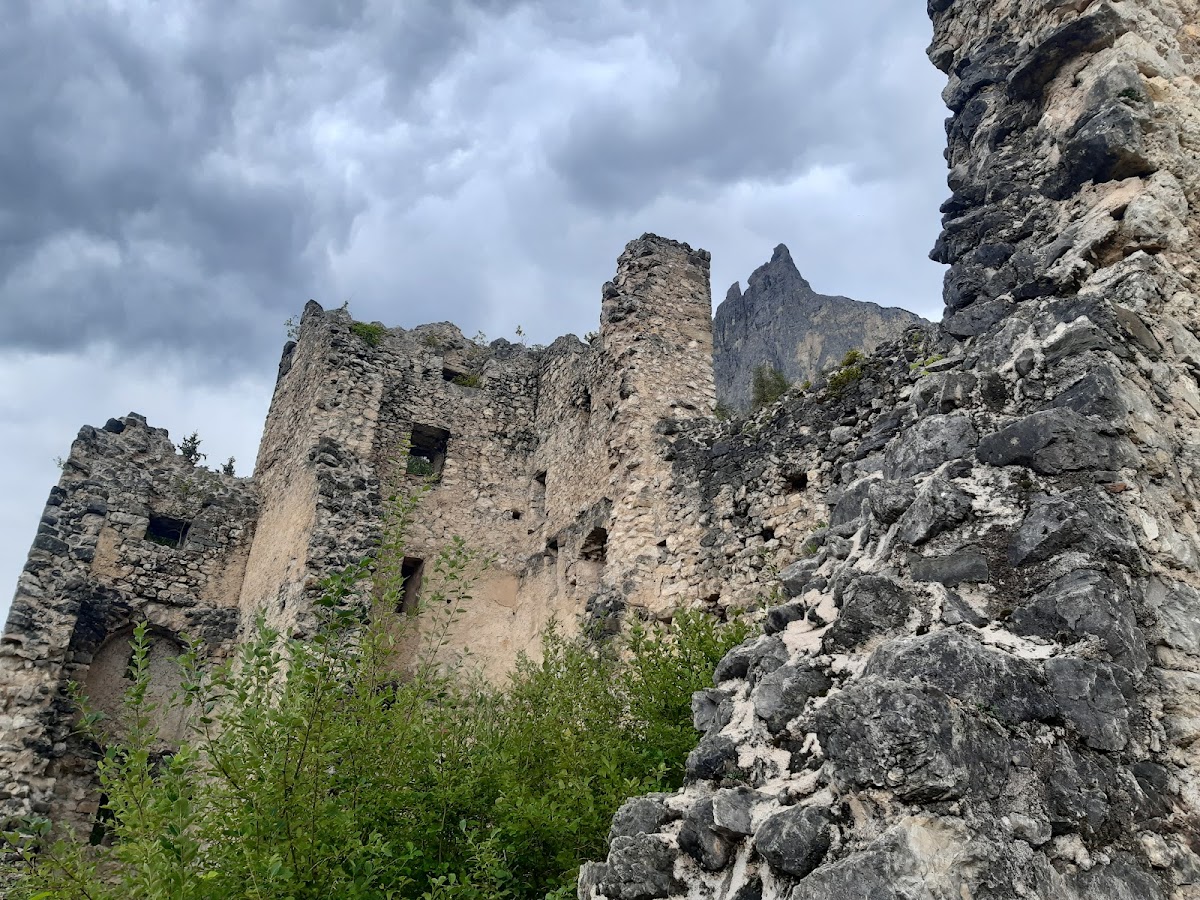
Castle Hauenstein is perched at roughly 1,273 meters above sea level on a prominent dolomitic rock formation at the base of the Schlern mountain. Constructed primarily from local stone, the castle exemplifies the typical building materials of medieval hill castles in this part of the Alps. The overall layout, while not fully documented, centers around the natural rocky outcrop that provided a defensible position.
Today, visitors encounter fragments of the castle’s thick stone walls, which were carefully restored during conservation work performed between 1976 and 1977. These restored sections reveal aspects of the castle’s once formidable fortifications. Within the ruins lies a chapel, where traces of fresco paintings were discovered during archaeological investigation. These fresco remnants have been conserved to preserve their historical character.
Artifacts recovered on-site further illuminate the castle’s residential and defensive roles. Among these, the most notable is the bronze sword believed to have belonged to Oswald von Wolkenstein, underscoring the site’s personal connection to the poet-warrior. Various other finds complement this narrative by indicating the castle’s use as a noble residence with strategic importance.
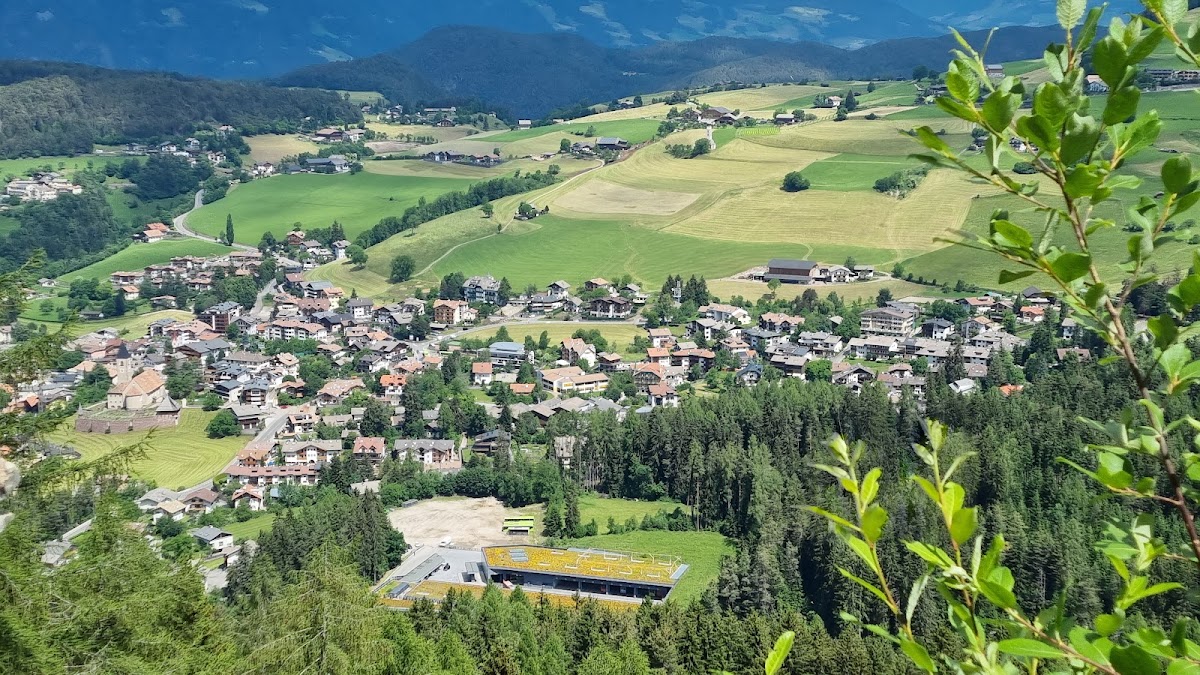
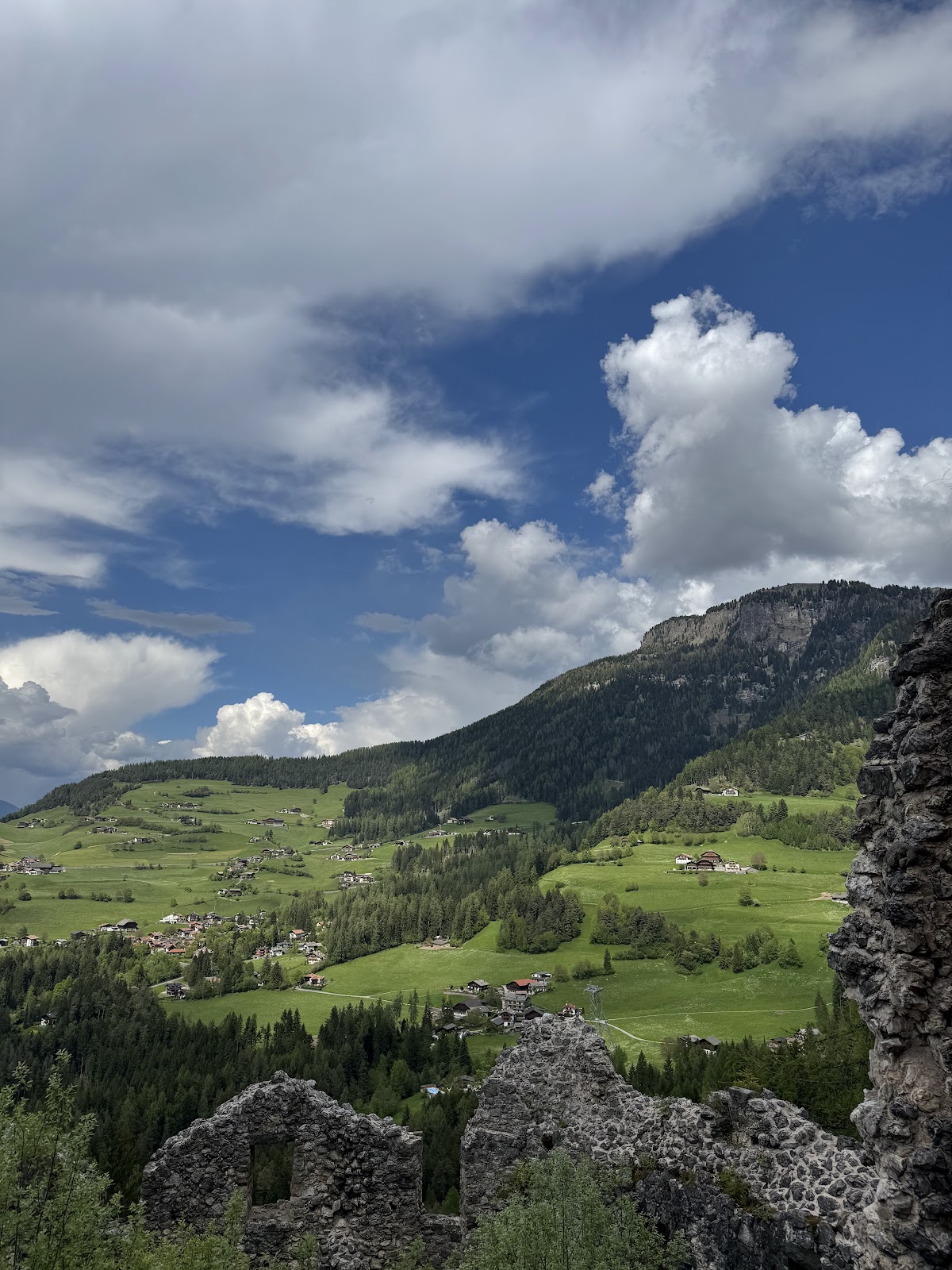
A well-marked hiking path, designated as trail number 8, leads from the nearby village of Siusi am Schlern to the castle ruins within approximately half an hour. The site is open to the public and provides direct access to the tangible remains of this medieval fortress, set against the dramatic backdrop of the Dolomites.
Nearby sites