Castillo Palacio Arzobispal: A Historic Castle-Palace in Albalate del Arzobispo, Spain


Visitor Information
Google Rating: 4.4
Popularity: Low
Google Maps: View on Google Maps
Country: Spain
Civilization: Unclassified
Remains: Military

History
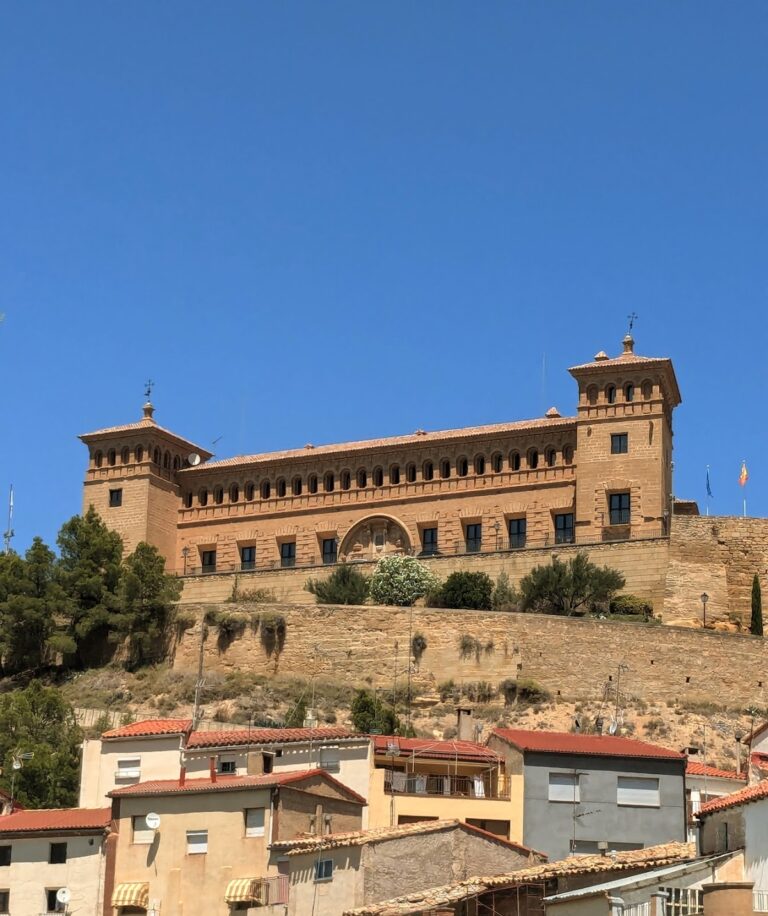
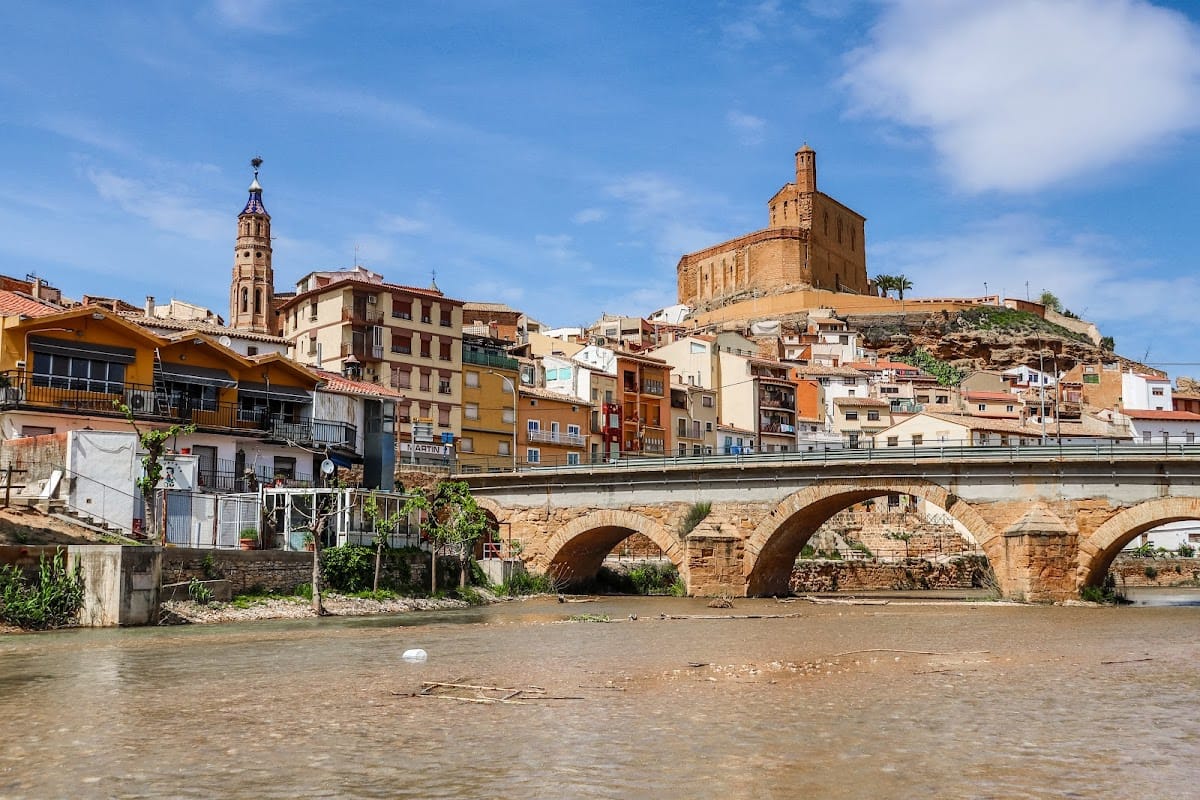
The Castillo Palacio Arzobispal is located in the town of Albalate del Arzobispo in Spain. Its origins are linked to the Christian reconquest of the area in the mid-12th century, when the territory was taken by Ramón Berenguer IV’s forces in 1149. Following this conquest, Albalate became a domain under the authority of the Archbishopric of Zaragoza, which initiated the construction of what would become the castle-palace.
The first recorded mention of the castle dates from 1240, indicating its early establishment as a fortified residence of ecclesiastical power in the region. Substantial restoration and enlargement work took place during the late 13th and early 14th centuries under the direction of don Ximeno de Luna, who held the office from 1296 to 1309. His involvement is particularly commemorated by a historic coat of arms bearing his name, situated at the old boundary of the palace.
Further development occurred in the 15th century, especially under Archbishop Dalmacio de Mur y Cervellón between 1431 and 1456. It is believed that the building reached completion by the middle of that century. The castle’s location appears to have been chosen strategically, likely replacing a former Muslim fortress or alcazaba, although no remains of this earlier structure survive to confirm its appearance or layout.
Throughout its history, the castle combined defensive functions with those of a residential palace, reflecting its role as the main seat of the archbishopric’s lordship in Albalate. It also served as the nucleus around which the early settlement of the town developed, sited on a small plateau near the Martín River. Recognizing its historical and cultural value, the castle was granted official protection and catalogued as a Bien de Interés Cultural—a status under Aragonese heritage law—in 2006.
Remains
The castle-palace occupies an elongated quadrilateral area atop a strategic small plateau, with its structure divided into residential quarters and an outer courtyard known as the patio de armas. The residential section lies on the southern end, featuring a quadrangular plan organized around an open central courtyard surrounded by various chambers. The southeastern wing is notable for containing the principal lordly residence, whereas the other surrounding wings are constructed as single-story buildings.
Construction materials include finely dressed ashlar stone and brick, with decorative ceramic elements enhancing certain areas. The castle walls underwent modifications and expansions, particularly during the 19th century, when both new construction materials and recycled stones from earlier phases were incorporated. The northwest buildings are situated at a slightly different height compared to the rest and are connected by a large pointed barrel vault—a type of long, arched ceiling. Similarly, the southwest area retains a barrel vault roof supported by transverse arches, although only one of these arches remains fully intact.
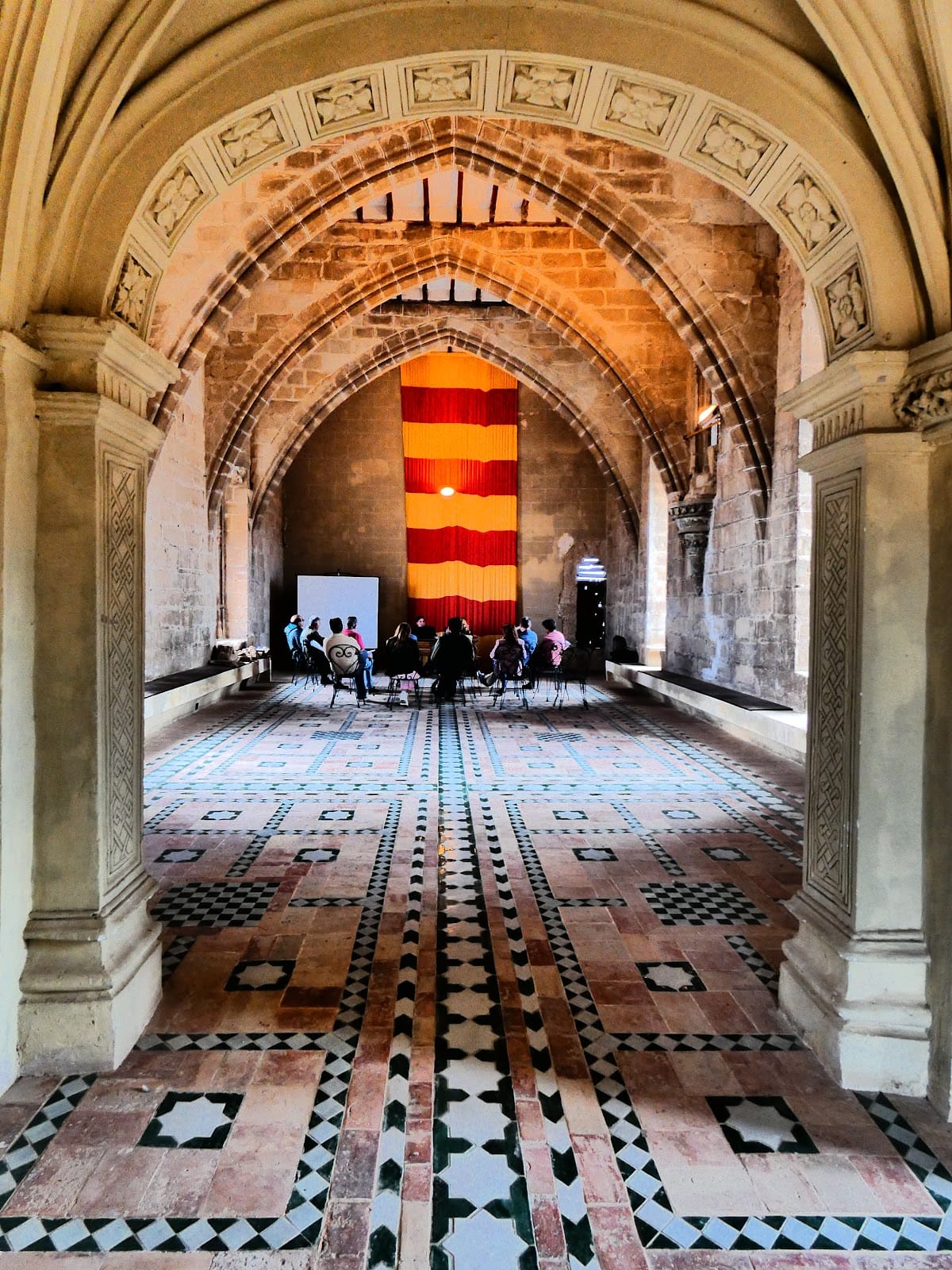
The palace has two floors. On the ground level, a large rectangular room is covered by a pointed barrel vault and includes three narrow windows that splay outward toward the southeast. These windows are decorated with three-lobed tracery, a type of ornamental stonework shaping the openings into a trefoil pattern. Above, the upper floor houses the chapel, a trapezoidal room constructed between the 14th and 16th centuries in the Gothic style. Around 1530, this room was definitively transformed into a chapel, equipped with ceramic decoration enhancing its interior.
Inside the chapel, six bays are delineated by pointed arches with molded profiles. A polychromed wooden cornice runs along these arches, which rest upon supports adorned with polychrome shields. Natural light enters through five large windows—two facing the inner courtyard and one directed outward—each featuring two lights and trilobed tracery, along with a narrow arrow slit that pierces the exterior wall. Near this slit, a small pulpit is present, supported by paired small columns and a pointed arch. The pulpit’s conical base is decorated with vegetal and geometric motifs.
The chapel floor showcases restored Mudéjar-style ceramic tiles in green and white, arranged in patterns featuring eight-pointed stars. These tiles likely date to the mid-14th century and reflect the coexistence of Christian and Islamic artistic traditions. The small presbytery, accessed through a depressed arch supported on pilasters, is covered by a star-shaped vault and may have been added after the other parts of the chapel.
At one corner of the chapel stands an octagonal bell tower, a later addition combining ashlar stone at its base with brickwork styled in the Mudéjar tradition above. The tower’s first level contains no openings but is decorated with corner bands, while the upper level features eight semicircular arched openings paired with decorative double arches and corner bands. A cornice crowns the tower, topped by a conical spire added in a subsequent period.
Together, these features attest to the castle-palace’s layered construction history and its role as both a fortified residence and religious center adapted over several centuries.
Nearby sites